
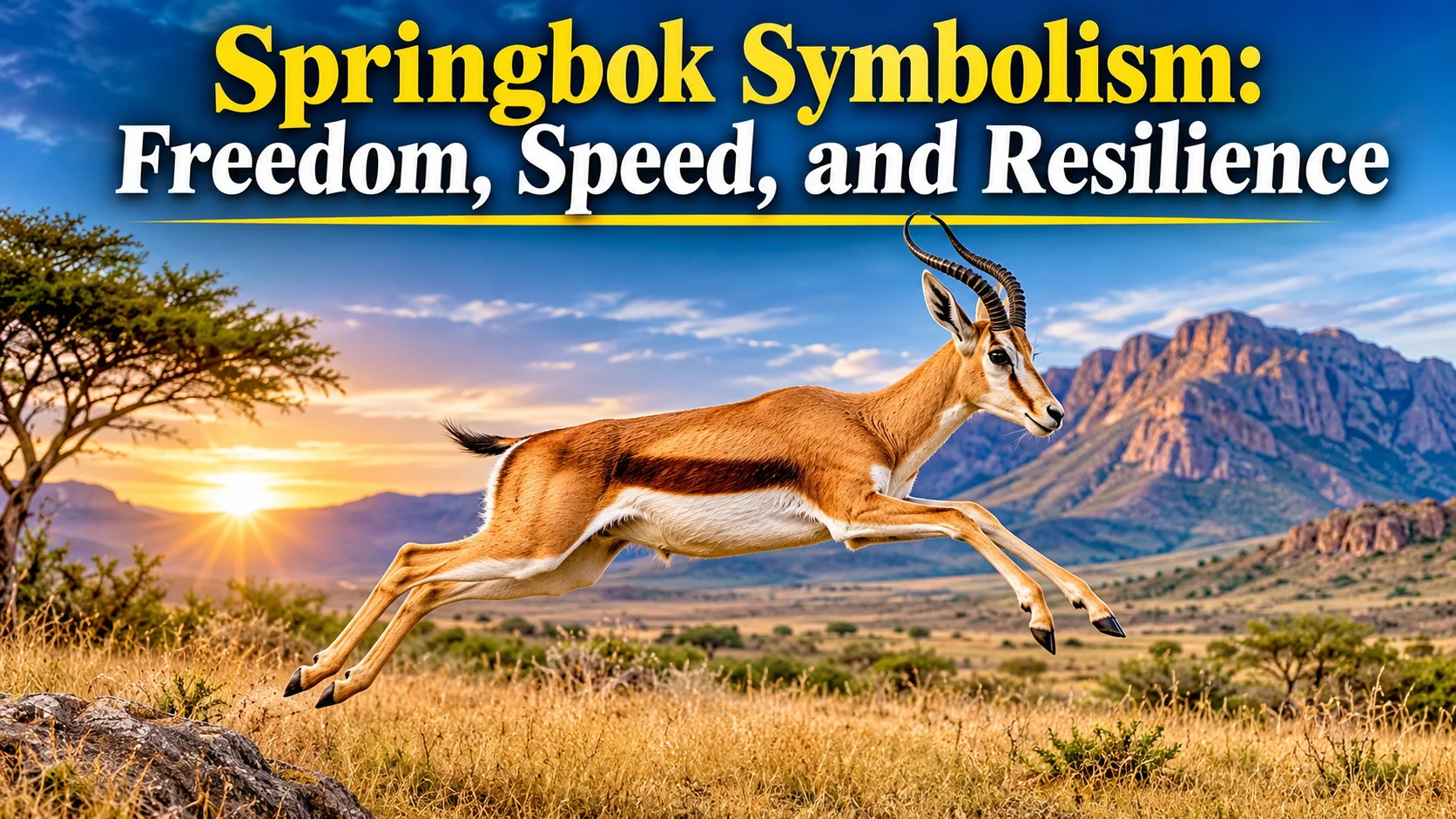
Springbok symbolism connects this remarkable antelope with freedom, agility, resilience, and the ability to move forward. Native to southern Africa, the springbok is known for its incredible speed, graceful movements, and distinctive high jumps. These qualities make it a powerful symbol of adaptability and confidence.
For readers in the United States, the springbok may represent the courage to face challenges, the importance of independence, and the strength to adapt when life changes. Although it isn’t as familiar in American culture as the eagle, bison, or deer, it carries a rich cultural identity through its association with South Africa.
The springbok also offers a meaningful way to think about personal growth. Its sudden leaps can remind us that progress sometimes requires taking a risk rather than remaining in familiar surroundings. Meanwhile, its ability to thrive in open, dry landscapes reflects endurance and resourcefulness.
Whether you’ve encountered a springbok in a wildlife documentary, a sports emblem, a dream, or a spiritual discussion, its symbolism can offer several interesting perspectives. Understanding its natural behavior and cultural history helps separate established associations from modern personal interpretations.
Quick Answer
Springbok symbolism commonly represents freedom, agility, resilience, and the courage to embrace change. In the United States, people may interpret it as a symbol of independence and overcoming obstacles, while its strongest established cultural association is with South Africa, where it represents national identity and sporting pride.
TL;DR
- Freedom: The springbok’s open habitat suggests independence and unrestricted movement.
- Agility: Its speed and leaps represent quick thinking and adaptability.
- Resilience: Its ability to survive challenging environments reflects endurance.
- National pride: The springbok is an important symbol of South African identity.
- Spiritual growth: Its leaps can inspire personal renewal and forward movement.
- Modern meaning: Springbok imagery can express confidence, athleticism, and determination.
What Does a Springbok Look Like?
The springbok is a graceful antelope recognized by its slender body, long legs, and remarkable jumping ability. Its physical features help explain why people associate it with speed, elegance, and freedom. For American readers, its appearance also offers a useful starting point for understanding its symbolic meaning.
Colors, Shape, and Movement
Springboks usually have a sandy brown back, a white underside, and a dark reddish-brown stripe along each side. Their faces feature contrasting dark and pale markings, while both males and females grow curved horns.
These features create a striking appearance without making the animal look heavy or intimidating. Its lean build suggests efficiency, while its long legs communicate movement and readiness.
The springbok’s most famous behavior is called pronking. During this display, it makes repeated high jumps with a stiff-legged posture and an arched back. The behavior is one reason people connect the animal with energy, confidence, and playful freedom.
What Its Appearance Symbolizes
Different visual details can inspire different personal interpretations.
- Long legs: Forward movement, ambition, and readiness to act.
- Curved horns: Alertness, natural strength, and self-protection.
- White markings: Clarity, balance, and a fresh perspective.
- High jumps: Joy, boldness, and the willingness to rise above obstacles.
These meanings are symbolic interpretations, not scientific claims about the animal’s spiritual purpose.
Historical Background of Springbok Symbolism
The springbok has a long relationship with the people and landscapes of southern Africa. Its history includes practical importance, national identity, and the development of sporting traditions. Understanding this background helps American readers appreciate why its symbolism extends beyond its natural beauty.
The Springbok in Southern African History
Springboks have long been part of the region’s ecological and human history. Indigenous communities encountered these animals as part of their surroundings and used wildlife resources in different ways.
The animal’s ability to live in dry environments made it a familiar feature of the landscape. Its movements across open plains also made it a memorable presence in southern African wildlife.
However, specific traditional meanings varied among communities. It would be inaccurate to assign one spiritual interpretation to every Indigenous African culture.
From Wildlife to National Emblem
The springbok gradually became a recognizable emblem of South African identity. It appeared on coins, institutional insignia, and sporting symbols, helping establish its place in public life.
Its adoption by the national rugby team in the early twentieth century strengthened its association with athletic performance and national pride. Over time, the animal became more than a representation of wildlife. It also came to express ideas about belonging, competition, and shared identity.
Today, its historical significance includes both pride in South African heritage and difficult memories of exclusion during apartheid.
Springbok Symbolism in the United States
In the United States, the springbok doesn’t have the same established national role that it holds in South Africa. Americans are more likely to encounter it through wildlife programming, international sports, travel, or personal interest in African animals. Nevertheless, its physical qualities support several relatable symbolic meanings.
Freedom and the American Spirit
American culture often celebrates independence, self-reliance, and the freedom to choose one’s direction. The springbok’s open habitat and rapid movement fit naturally into these themes.
Someone who admires the animal might see it as a reminder to avoid unnecessary restrictions. Its image can also represent the confidence to explore unfamiliar opportunities.
However, this is a modern personal interpretation rather than a traditional American symbol. The springbok isn’t an official emblem of American freedom.
Strength, Competition, and Teamwork
American sports culture places considerable value on athletic ability, discipline, and determination. The springbok’s speed and jumping power make it an appealing image for people who appreciate these qualities.
Its association with South African rugby also gives it an international sporting dimension. American fans can recognize it as a symbol of preparation, teamwork, and competitive spirit.
For example, a runner might admire the springbok for its agility, while a coach might use its image to encourage quick decisions and perseverance.
A Connection With African Wildlife
Wildlife documentaries and nature photography introduce American audiences to animals they might never encounter in person. The springbok can represent curiosity about unfamiliar landscapes and respect for biodiversity.
It may also remind people that nature offers different models of strength. A powerful animal doesn’t always need massive size or aggressive behavior. Sometimes, speed, awareness, and efficient movement are equally important.
Spiritual Meaning of the Springbok
In modern spiritual discussions, the springbok can serve as a symbol of movement, renewal, and trust in personal growth. These interpretations often draw on its jumping behavior and ability to navigate challenging environments. They are best understood as reflective ideas rather than universal religious teachings.
Leaping Into a New Chapter
A springbok’s leap can represent the moment when someone decides to move beyond an old situation. This might mean starting a new job, learning a skill, ending an unhelpful habit, or exploring a different direction.
The image encourages a simple question: What might change if you allowed yourself to move forward?
Rather than promising success, the springbok offers a reminder that change often begins with action.
Spiritual Resilience
The springbok’s natural ability to survive in dry landscapes can inspire reflections about patience and resourcefulness. Its example suggests that strength involves responding wisely to the conditions around you.
In this sense, spiritual resilience means maintaining your values while adjusting your approach. You don’t have to control every circumstance to make meaningful progress.
A Symbol of Personal Renewal
Some people interpret a springbok sighting, image, or dream as a personal reminder to welcome change. Others simply appreciate its beauty and energy.
Neither response needs to be treated as a fixed spiritual rule. If the animal feels meaningful to you, consider what its movement, alertness, or freedom represents in your current life.
Springbok Symbolism Across Cultures
Animal symbols rarely carry exactly the same meaning everywhere. The springbok’s clearest cultural significance comes from southern Africa, while its broader meanings can be interpreted differently by people around the world.
South African Cultural Meaning
South Africa recognizes the springbok as its national animal. Its sporting identity, especially through rugby, has made it an internationally recognizable emblem.
For many supporters, the animal represents pride, determination, and the emotional experience of following a national team. However, its meaning isn’t identical for every South African because its history is connected to changing political and social experiences.
Broader Interpretations of Antelope Symbols
Antelope species appear in many African landscapes and cultural settings. Their grace, alertness, and speed can make them useful subjects in art and storytelling.
Still, the symbolism of one antelope species shouldn’t automatically be transferred to another. Different communities have their own histories, beliefs, and relationships with local wildlife.
Personal Spiritual Interpretations
Outside southern Africa, people may associate the springbok with freedom, lightness, or an ability to adapt. These ideas often come from observing its behavior rather than following a specific ancient tradition.
It’s important to distinguish contemporary spiritual interpretations from documented cultural practices. Doing so allows people to appreciate the animal without inventing traditions or speaking for communities they don’t represent.
The Emotional and Psychological Meaning of the Springbok
Animals can become powerful personal symbols because their behavior reminds us of our own experiences. The springbok’s combination of alertness, speed, and graceful movement can evoke feelings of hope, excitement, and independence.
Confidence Without Aggression
A springbok can appear energetic without looking threatening. This makes it an interesting symbol for a type of confidence that doesn’t depend on dominating others.
In everyday life, this interpretation might encourage you to express your abilities without constantly comparing yourself with other people. Confidence can involve knowing when to act and when to remain observant.
Adaptability During Difficult Times
The springbok’s survival in challenging habitats can remind people that circumstances change. Sometimes, a successful response requires flexibility rather than greater effort.
For example, someone facing a career setback might interpret the animal as a reminder to reconsider their approach. The goal isn’t to ignore the difficulty but to find a workable path through it.
Joy and Emotional Lightness
The springbok’s high jumps can also inspire a sense of playfulness. Its movement offers a visual contrast to the seriousness of everyday responsibilities.
People may connect this quality with reconnecting to hobbies, spending time outdoors, or making room for experiences that bring happiness.
These associations aren’t formal psychological diagnoses. They’re ways people use natural imagery to reflect on emotions and personal values.
Read More: Puffin Symbolism: Hope, Loyalty, and Resilience
Springbok Symbolism in Dreams
Dream interpretations are personal and depend on the dreamer’s circumstances. Seeing a springbok in a dream doesn’t establish that a particular event will happen. However, examining the animal’s behavior in the dream may help you explore your feelings.
Seeing a Springbok Jump
A jumping springbok may remind you of an opportunity, a bold decision, or a desire for greater freedom. If the jump felt exciting, it could reflect enthusiasm about a change.
If it felt frightening, consider whether you feel pressured to take a risk before you’re ready.
Seeing a Herd of Springboks
A herd may bring to mind belonging, cooperation, and awareness of other people. Depending on the dream, it could reflect comfort in a group or a desire to find your community.
Notice whether the herd seemed peaceful, restless, or scattered. Your emotional response may offer more useful insight than a generic dream dictionary.
Seeing an Injured or Frightened Springbok
An injured animal might reflect concerns about vulnerability, lost confidence, or feeling unable to move forward. It doesn’t predict misfortune.
Instead, consider whether something in your waking life has made you feel restricted or uncertain. A dream can be an invitation to reflect, not a guaranteed message from a supernatural source.
Springbok Tattoos, Art, and Modern Usage
The springbok’s distinctive silhouette makes it suitable for tattoos, illustrations, sports graphics, and decorative designs. In modern settings, its meaning often depends on the person choosing the image and the context in which it appears.
Springbok Tattoo Meaning
A springbok tattoo can represent qualities that someone wants to celebrate or develop.
- A leaping springbok: Personal freedom, fresh beginnings, and courage.
- A running springbok: Momentum, ambition, and determination.
- A springbok with a landscape: Connection with nature, travel, or African wildlife.
- A minimalist springbok outline: Simplicity, independence, and understated strength.
- A springbok with a national flag: Cultural heritage, national pride, or sporting loyalty.
These meanings aren’t fixed. Someone might choose the design simply because they admire the animal or have a meaningful connection to South Africa.
Home Decor and Personal Style
Springbok imagery can appear in wildlife prints, framed photographs, sculptures, and nature-inspired interiors. Its earthy colors work well with natural materials and open landscapes.
A photograph of a springbok in motion may create a sense of energy in a room. In contrast, a calm portrait can emphasize grace and the beauty of wildlife.
Social Media and Branding
Online, the springbok can communicate athleticism, resilience, speed, and an interest in African wildlife. Its recognizable shape also works well in profile graphics and sports-related designs.
However, the meaning depends on the audience. A South African rugby supporter may see a national emblem, while an American wildlife enthusiast may simply see a remarkable antelope.
Springbok Symbolism at a Glance
The following table summarizes common interpretations and explains how they might appear in American life.
| Context | Symbolic Meaning | Common Association |
| Wildlife and nature | Adaptability and resilience | Respect for animals and natural habitats |
| Personal growth | Courage and forward movement | Beginning a new chapter |
| Sports | Speed and determination | Athletic discipline and teamwork |
| Spiritual reflection | Renewal and freedom | Openness to change |
| Tattoos and artwork | Independence and confidence | Personal values and identity |
| South African heritage | National pride and belonging | Rugby and cultural history |
These interpretations range from established cultural associations to modern personal meanings. The distinction matters, especially when discussing the springbok outside its native region.
Misunderstandings and Controversies Around Springbok Symbolism
The springbok is a beloved national animal, but its public meaning isn’t entirely separate from politics. Its history demonstrates how a symbol can inspire pride for some people while reminding others of exclusion.
The Springbok and Apartheid
During apartheid, South Africa enforced racial segregation and systematically excluded nonwhite people from many areas of public life. The springbok became strongly associated with the national rugby team and sporting structures that reflected these divisions.
For many people, the emblem represented national pride and sporting tradition. For others, it became a painful reminder of unequal access and racial exclusion.
Both the animal’s cultural importance and this difficult history deserve recognition.
Change and Reconciliation in Rugby
South Africa’s democratic transition created new questions about national identity and sporting symbols. In 1995, President Nelson Mandela publicly supported the Springboks during the Rugby World Cup, using the occasion to encourage reconciliation across racial divisions.
The episode became an important moment in the country’s post-apartheid sporting history. The team name continued, even as the meaning of the emblem evolved for many supporters.
This history illustrates that symbols can change through the actions and experiences of the people who use them.
Respectful Use Today
Outside South Africa, using a springbok image generally doesn’t carry one automatic political message. Nevertheless, context matters when the design includes historical insignia, political slogans, or other symbols associated with exclusion.
A respectful approach recognizes the animal’s natural beauty, its sporting legacy, and the different experiences people connect with it.
How Springbok Symbolism Has Changed Over Time
The springbok’s meaning has developed through its changing relationship with people. Its natural characteristics remained recognizable, but its cultural role expanded from wildlife to national and sporting identity.
From Natural Animal to National Symbol
Historically, the springbok was part of the ecology and everyday environment of southern Africa. Its appearance and jumping behavior helped make it distinctive.
As it became a national emblem, its image began to communicate ideas beyond wildlife. Sporting events, public institutions, and national representation gave it a wider public identity.
From Division to Broader National Conversation
The apartheid era attached painful political meanings to the springbok emblem for many people. After democracy, its continued use in rugby became part of a broader conversation about shared identity and reconciliation.
Its meaning didn’t change instantly or become identical for everyone. Instead, people continued to interpret it through their own experiences and the country’s evolving history.
Contemporary Personal Meaning
Today, the springbok can represent South African heritage, sporting achievement, wildlife conservation, or personal resilience. International audiences may also use it as an image of agility and freedom.
Social media and modern design allow people to encounter the animal outside its original cultural setting. However, learning its history makes those encounters more informed and respectful.
FAQs:
What does the springbok symbolize spiritually?
The springbok can symbolize freedom, adaptability, personal growth, and the courage to embrace change. These are contemporary spiritual interpretations rather than universal teachings shared by all traditions.
Is the springbok a symbol of good luck?
Some people may personally associate the springbok with positive opportunities or a hopeful new beginning. However, there’s no universal cultural rule that seeing one guarantees good luck.
Why is the springbok important to South Africa?
The springbok is South Africa’s national animal and is closely associated with its national rugby team. Its emblem also carries a complex history involving national pride, apartheid, and reconciliation.
What does a springbok tattoo mean?
A springbok tattoo may represent independence, resilience, speed, or a willingness to move forward. For someone with South African connections, it may also express heritage or sporting loyalty.
What does it mean to dream about a springbok?
A springbok dream may invite reflection on freedom, ambition, belonging, or a desire for change. The animal’s behavior and your feelings during the dream can help you develop a personal interpretation.
What does a jumping springbok symbolize?
A jumping springbok often suggests agility, energy, confidence, and forward movement. Some people interpret the leap as a reminder to approach opportunities with courage while remaining aware of risks.
Conclusion:
Springbok symbolism brings together freedom, agility, resilience, and the courage to move forward. Its extraordinary jumps and ability to survive in dry environments offer natural examples of adaptability and strength. For American readers, these qualities can provide inspiration for personal growth, independence, and a more flexible approach to life’s challenges.
However, the springbok’s deepest established cultural connection belongs to South Africa. Its role as a national animal and rugby emblem carries a history of pride, division, and reconciliation that adds important meaning to its image.

1 thought on “Springbok Symbolism: Freedom, Speed, and Resilience”