
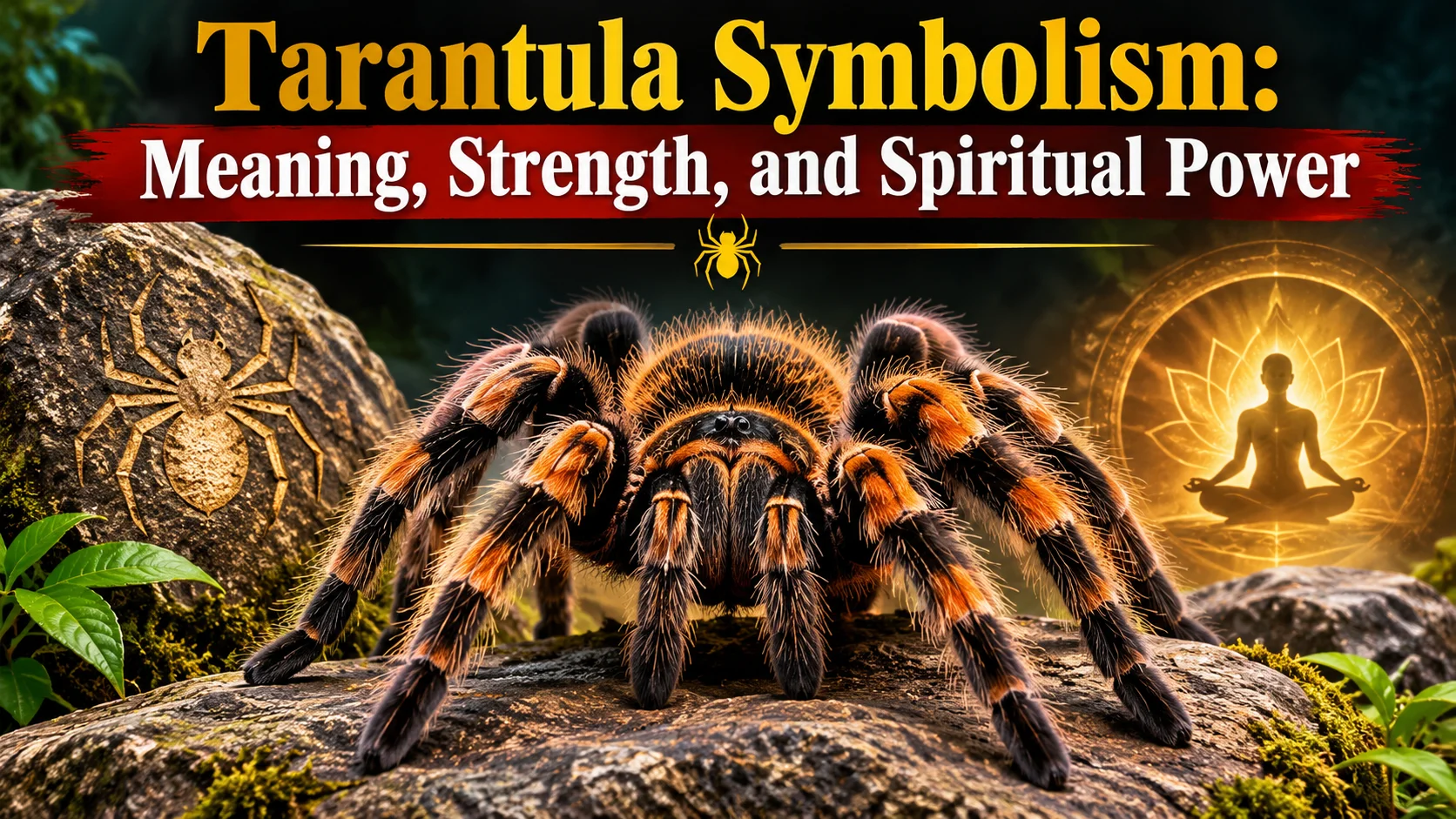
A tarantula is one of nature’s most fascinating creatures. Its large body, hairy legs, and quiet movements can make people feel both curious and uneasy. However, Tarantula Symbolism reaches far beyond its frightening appearance. This remarkable spider can represent patience, personal power, protection, independence, and transformation.
In the United States, tarantulas are strongly connected with desert landscapes, the American Southwest, and the mysteries of the natural world. Their appearance in folklore, Halloween imagery, wildlife documentaries, and popular culture has also shaped how people understand them. Some see tarantulas as frightening creatures, while others admire their calm behavior and unusual beauty.
Spiritually, encountering a tarantula may inspire reflection about hidden fears, personal boundaries, and the strength needed to face unfamiliar situations. Its slow, deliberate movements also encourage patience and thoughtful decisions. Although these interpretations aren’t universal spiritual rules, they offer interesting ways to understand this animal as a symbol.
Whether you encountered a tarantula in nature, dreamed about one, or simply feel drawn to its appearance, exploring its symbolism can reveal meaningful connections between human emotions and the natural world.
Quick Answer:
In American symbolism, the tarantula commonly represents strength, patience, independence, protection, and the ability to face fear. Spiritually, it can symbolize transformation, personal boundaries, hidden power, and awareness of life’s less familiar experiences.
TL;DR: Tarantula Symbolism at a Glance
- Strength: Represents quiet power and inner resilience.
- Patience: Encourages waiting for the right moment.
- Protection: Symbolizes boundaries and self-defense.
- Transformation: Reflects personal growth and changing circumstances.
- Independence: Represents self-reliance and individual identity.
- Fear: Encourages confronting uncomfortable emotions.
- Mystery: Connects with hidden knowledge and unfamiliar experiences.
What Is the Symbolism of a Tarantula?
A tarantula is a large, hairy spider belonging to the family Theraphosidae. Its thick legs, noticeable body, and sometimes striking colors make it instantly recognizable. Depending on the species, it may appear brown, black, reddish, orange, or covered with contrasting markings.
Symbolically, these physical characteristics inspire several interpretations. Its powerful appearance suggests strength, while its patient hunting behavior connects with careful planning.
The Main Symbolic Meanings
Tarantula symbolism generally revolves around these ideas:
- Quiet strength: Having power without constantly displaying it.
- Strategic patience: Understanding when to wait and when to act.
- Personal protection: Recognizing the importance of healthy boundaries.
- Hidden potential: Discovering abilities that others might overlook.
- Self-reliance: Learning to trust your own instincts.
The tarantula also has an interesting relationship with fear. Its appearance can trigger discomfort, yet observing it closely reveals a creature adapted to survive in challenging environments.
This contrast makes it a useful symbol of misunderstood strength.
Why Its Appearance Matters
Different physical features can inspire different symbolic associations.
Its thick, hairy legs suggest physical presence and defense. Its multiple eyes can represent awareness, although tarantulas generally have relatively poor eyesight.
Meanwhile, its ability to sense vibrations through its surroundings can inspire interpretations involving intuition and sensitivity.
These meanings are symbolic rather than scientifically established spiritual properties.
Spiritual Meaning of a Tarantula
Spiritually, a tarantula can represent the strength required to face uncomfortable situations. Its presence may encourage you to examine your fears, protect your personal space, and recognize abilities you haven’t fully developed.
For American readers interested in animal symbolism, the tarantula offers an interesting reminder. Something that initially appears frightening may have a completely different nature when understood more closely.
A Reminder to Trust Yourself
The tarantula often symbolizes confidence that doesn’t depend on outside approval.
It doesn’t need to constantly move or attract attention. Instead, it relies on its natural abilities and responds to its environment.
Symbolically, this can encourage you to:
- Trust your judgment when making difficult decisions.
- Stop seeking approval for every personal choice.
- Recognize your strengths without comparing yourself with others.
- Remain confident during uncertain situations.
A Symbol of Spiritual Awareness
A tarantula’s sensitivity to vibrations can also inspire spiritual interpretations about awareness.
It may represent paying attention to subtle changes around you. Sometimes, small details reveal more than dramatic events.
However, this doesn’t mean a tarantula predicts the future. Its symbolism offers a personal reflection rather than a guaranteed supernatural message.
Tarantula Symbolism in American Culture
In the United States, tarantulas have a particularly strong connection with the Southwest. States such as Arizona, Texas, New Mexico, and California provide habitats for different tarantula species.
Their presence in these landscapes has shaped regional folklore, wildlife appreciation, and popular imagination.
The American Southwest Connection
Tarantulas are familiar symbols of desert wildlife. Their ability to survive in dry environments makes them interesting examples of adaptation and resilience.
In American cultural imagery, they can represent:
- The rugged character of Southwestern landscapes.
- Survival in challenging natural environments.
- Independence and the ability to adapt.
- The mystery of desert wildlife.
- Respect for creatures that people don’t fully understand.
Texas and other Southwestern communities have also developed local stories about tarantulas. Some older folk beliefs exaggerated their abilities or associated their movements with weather changes.
These stories reflect regional imagination rather than reliable predictions.
Tarantulas in American Entertainment
American movies, television, and Halloween decorations often portray tarantulas as dangerous creatures.
Their large bodies and noticeable movements make them popular choices for horror scenes. However, this entertainment image doesn’t accurately represent their usual behavior.
Wildlife programs have helped create a more balanced understanding. They show tarantulas as important predators that help control insect populations.
Consequently, their cultural image has gradually expanded beyond fear.
Historical Origins and Ancient Tarantula Symbolism
Tarantulas have existed for millions of years, long before modern human civilizations. Their ancient evolutionary history contributes to their symbolic association with endurance and survival.
However, their specific cultural symbolism developed differently across regions.
The Origin of the Word Tarantula
The word tarantula has an interesting European history. It comes from Taranto, a city in southern Italy.
Historically, the name referred to a local wolf spider, rather than the large American spiders now commonly called tarantulas.
European stories connected the spider’s bite with a condition called tarantism. People believed that affected individuals needed energetic dancing to recover.
This belief eventually became associated with the Italian tarantella dance.
As Europeans encountered large spiders in the Americas, they began applying the familiar name to these different animals.
This historical connection explains why tarantula symbolism sometimes includes themes of music, movement, and emotional release.
Etymology, Origin & Meaning+2
Ancient and Indigenous Connections
Spiders appear in many ancient cultural stories. However, it’s important to distinguish general spider symbolism from specific tarantula traditions.
For example, the Nahua peoples of central Mexico had cultural connections with tarantulas. Historical accounts describe a name translated approximately as an old owner of a large piece of land.
This association connects the animal with age, territory, and the natural environment.
Such traditions show that large spiders haven’t always represented danger. In some cultural settings, they also inspired respect and curiosity.
Texas Parks & Wildlife Magazine+1
What Does a Tarantula Represent in Different Cultures?
Tarantula and spider symbolism varies considerably across the world. Some traditions emphasize creativity and wisdom, while others associate spiders with danger, mystery, or transformation.
These interpretations shouldn’t be treated as one universal belief system.
Native American Spider Symbolism
Some Native American traditions feature Spider Woman or other spider-related figures.
These stories can connect spiders with creation, weaving, knowledge, and the relationships between living things.
However, traditions differ among Indigenous nations. Spider Woman stories shouldn’t automatically be presented as tarantula-specific beliefs.
Respecting these distinctions is important when discussing Indigenous symbolism.
West African Traditions
In West African folklore, particularly among Akan communities, Anansi is a well-known spider figure.
Anansi stories often explore intelligence, storytelling, cleverness, and the ability to overcome stronger opponents.
Although Anansi isn’t specifically a tarantula, his symbolism provides an interesting comparison.
Both figures can inspire reflections about using intelligence rather than physical power.
European Folklore
European spider traditions contain both positive and negative interpretations.
Spiders sometimes represent creativity, patience, and the ability to construct something from almost nothing.
Other stories portray them as dangerous or deceptive creatures.
The Italian tarantism tradition adds another historical layer through its connection with music and emotional release.
Asian Symbolism
In Japanese folklore, spider-like supernatural beings appear in stories involving transformation, deception, and mystery.
Some traditions portray these creatures as dangerous, while others explore their unusual abilities.
These are broader spider-related traditions rather than universal interpretations of tarantulas.
Psychological Meaning of Seeing a Tarantula
Seeing a tarantula can produce a strong emotional reaction. Some people feel fascinated, while others immediately experience fear or discomfort.
Psychologically, this reaction can make the animal an interesting symbol of emotions that people struggle to understand.
Facing Your Fears
A tarantula may symbolize something you’ve avoided confronting.
It could represent an uncomfortable conversation, an important decision, or a situation that feels outside your control.
Its appearance can encourage you to examine whether your fear reflects actual danger or uncertainty.
Recognizing Hidden Strength
The tarantula’s physical presence can also represent personal confidence.
You might associate it with a period when you need to become more assertive or protect your interests.
Its symbolism suggests that strength doesn’t always require aggression.
Understanding Personal Boundaries
Tarantulas generally prefer avoiding unnecessary confrontation. When threatened, they may use defensive behaviors.
This creates a useful psychological association with boundaries.
The symbolic lesson is simple: protecting your personal space doesn’t make you unfriendly. Sometimes, it simply means understanding what you’re comfortable accepting.
Tarantula Symbolism in Dreams
Dreaming about a tarantula can feel unusually vivid because of its size and appearance. However, dreams don’t have universally accepted meanings or reliable predictive powers.
Your emotions, personal experiences, and the dream’s setting can influence its interpretation.
Dreaming About a Large Tarantula
A large tarantula may represent a problem that feels bigger than expected.
It could reflect pressure, uncertainty, or something demanding your attention.
However, the dream might also reflect admiration for strength and independence.
Dreaming About a Tarantula Crawling on You
This experience may symbolize discomfort with a situation that feels too personal.
You might feel that someone is crossing your boundaries or that an unresolved concern is becoming difficult to ignore.
Consider how you felt during the dream rather than relying on one fixed interpretation.
Dreaming About Killing a Tarantula
Killing a tarantula in a dream might represent confronting a fear or attempting to regain control.
However, it could also reflect frustration or a desire to remove something uncomfortable from your life.
Dreaming About a Friendly Tarantula
A calm or friendly tarantula may represent growing acceptance of something you previously misunderstood.
It can also symbolize becoming more comfortable with your own unusual qualities.
Emotional and Personality Associations of the Tarantula
Tarantula symbolism can connect with personality traits that people admire or struggle to express. Its unusual appearance and independent lifestyle make it an interesting symbol of individuality.
Independence and Self-Confidence
Tarantulas generally live solitary lives. They don’t depend on large social groups to survive.
Symbolically, this behavior can represent people who appreciate independence and personal freedom.
Someone attracted to tarantula imagery might identify with:
- Enjoying solitude without feeling lonely.
- Making independent decisions.
- Protecting personal beliefs and values.
- Remaining comfortable with an unconventional identity.
- Building confidence without seeking constant attention.
Patience and Emotional Control
Tarantulas often spend considerable time waiting for suitable opportunities.
This behavior can represent emotional discipline and thoughtful action.
Instead of reacting immediately, the symbolism encourages you to pause and understand a situation.
Accepting Your Unusual Side
Tarantulas aren’t conventional symbols of beauty or popularity.
However, their unusual appearance attracts dedicated admirers.
As a result, they can represent accepting characteristics that make you different from others.
Tarantula Symbolism in Tattoos, Art, and Home Decor
Tarantula imagery appears in tattoos, illustrations, clothing, jewelry, and alternative fashion. Its dramatic appearance makes it suitable for artistic expressions involving strength, mystery, and individuality.
In modern American culture, its meaning depends heavily on the person using it.
Tarantula Tattoos
A tarantula tattoo can communicate several personal ideas.
Some people choose it because they appreciate spiders and their natural behavior. Others connect it with personal experiences or symbolic meanings.
Common interpretations include:
- Strength: Representing resilience during difficult experiences.
- Independence: Celebrating individuality and self-reliance.
- Protection: Expressing the importance of personal boundaries.
- Transformation: Marking a significant period of personal growth.
- Fearlessness: Showing comfort with unconventional imagery.
A realistic tarantula tattoo may emphasize respect for nature. A darker design might communicate mystery or an interest in horror aesthetics.
Tarantula Art and Fashion
Artists often use tarantulas to create dramatic compositions.
Their detailed bodies and contrasting colors work well in illustrations, gothic artwork, and nature-inspired designs.
In fashion, tarantula imagery may appear on shirts, accessories, patches, and alternative clothing.
Tarantulas in Home Decor
Some people use spider-themed decorations to express their interest in unusual wildlife.
Tarantula imagery also appears in Halloween displays and seasonal decorations.
However, outside Halloween, realistic spider artwork can communicate appreciation for biodiversity and natural beauty.
Read More: Coral Symbolism: Meaning, History, and Spiritual Significance
Different Tarantula Colors and Their Symbolic Meanings
Tarantulas come in several striking colors. Their appearance varies by species, age, and natural habitat.
Although color symbolism is subjective, different shades can inspire interesting interpretations.
Black Tarantula
Black tarantulas can symbolize mystery, protection, strength, and the unknown.
Their dark appearance also connects naturally with gothic artwork and Halloween imagery.
Brown Tarantula
Brown tarantulas often inspire associations with stability and the natural world.
Their earthy appearance connects with desert landscapes, soil, and survival.
Red Tarantula
Red markings can represent courage, energy, passion, and confidence.
For example, the Mexican red-knee tarantula is particularly recognizable for its contrasting reddish-orange markings.
Blue Tarantula
Blue tarantulas can symbolize individuality, mystery, and uniqueness.
The cobalt blue tarantula is a striking example of how unusual colors appear in nature.
Golden and Orange Tarantula
Golden or orange markings may inspire associations with creativity, optimism, and vitality.
These colors can also suggest warmth and personal expression.
| Tarantula Appearance | Symbolic Meaning | Common Association |
| Black | Mystery and protection | Hidden strength |
| Brown | Stability and resilience | Nature and survival |
| Red markings | Courage and energy | Confidence |
| Blue | Individuality and mystery | Uniqueness |
| Golden or orange | Creativity and vitality | Optimism |
These are modern symbolic interpretations, not established meanings shared by every culture.
Tarantula as a Symbol of Protection and Personal Boundaries
One of the most meaningful interpretations of tarantula symbolism involves protection.
Tarantulas are often misunderstood as aggressive animals. In reality, many species prefer avoiding confrontation and use defensive behaviors when threatened.
This behavior provides an interesting lesson about personal boundaries.
Protection Without Aggression
A tarantula doesn’t need to chase everything around it.
Instead, it responds when its safety is threatened.
Symbolically, this can represent the ability to protect yourself without becoming unnecessarily confrontational.
Recognizing Your Limits
The tarantula may also represent understanding your emotional limits.
For example, you might need to reconsider relationships or situations that repeatedly leave you uncomfortable.
Its symbolism encourages you to respect your boundaries rather than constantly ignoring them.
Strength Through Self-Respect
Protection isn’t always about physical defense.
Sometimes, it means choosing where to spend your time and energy.
The tarantula can represent the confidence to make those decisions.
Negative Symbolism and Common Misunderstandings About Tarantulas
Tarantulas often receive negative attention because of their appearance. Their large bodies, noticeable hairs, and unusual movements can make them seem threatening.
However, cultural fear and biological reality aren’t the same thing.
Fear and Danger
Movies and horror stories frequently exaggerate tarantula behavior.
Most tarantulas aren’t interested in attacking humans. Bites are uncommon and generally aren’t considered medically dangerous, although reactions can vary by species and individual circumstances.
Some New World tarantulas also release irritating defensive hairs. These hairs can cause discomfort, especially when they contact sensitive skin or eyes.
Symbolism of Manipulation
Some negative spider interpretations associate webs with traps, deception, and control.
However, tarantulas don’t typically catch prey using large aerial webs. Many species hunt from burrows or wait for prey nearby.
Therefore, automatically associating every tarantula with manipulation misses important differences in spider behavior.
Avoiding Unfair Cultural Assumptions
Spider imagery can carry different meanings in different communities.
It’s important not to label an entire cultural or religious tradition as frightening because of one spider-related story.
Similarly, modern horror imagery shouldn’t replace the historical meanings found in folklore.
Tarantula Symbolism Compared With Other Spiders
All spiders share certain biological characteristics, but different species inspire different symbolic associations.
The tarantula’s size and distinctive appearance give it a particular identity in modern symbolism.
Tarantula vs. Black Widow
The tarantula often represents strength, patience, and misunderstood power.
The black widow is more commonly associated with danger, mystery, independence, and feminine power in popular imagery.
Tarantula vs. Wolf Spider
Wolf spiders are active hunters rather than traditional web-dependent predators.
Symbolically, they can represent independence, determination, and direct action.
Tarantula vs. Jumping Spider
Jumping spiders are known for their active movements and noticeable visual behavior.
They can inspire associations with curiosity, confidence, and adaptability.
Why These Differences Matter
Not every spider carries the same symbolic message.
Understanding the animal’s physical characteristics and behavior helps create a more meaningful interpretation.
It also prevents people from confusing one species with another.
How Tarantula Symbolism Has Changed Over Time
Tarantula symbolism has developed through folklore, scientific discoveries, popular entertainment, and changing attitudes toward wildlife.
Older interpretations often emphasized danger and supernatural mystery. Modern perspectives increasingly include ecological awareness and appreciation for unusual animals.
From Fear to Curiosity
Historically, unfamiliar spiders often inspired frightening stories.
Limited scientific knowledge made it easier for myths to develop around their size and defensive abilities.
However, modern wildlife education has helped people understand their natural behavior.
The Influence of Modern Media
Horror movies and Halloween decorations continue to associate tarantulas with suspense.
At the same time, wildlife photography and educational programs present them as fascinating animals.
These different portrayals exist side by side.
A More Balanced Modern Meaning
Today, tarantulas can represent both fear and admiration.
For some people, they’re symbols of mystery and personal strength. For others, they’re simply remarkable examples of natural adaptation.
This broader interpretation allows the animal to carry more positive meanings without ignoring its intimidating appearance.
FAQs:
What Does Seeing a Tarantula Symbolize Spiritually?
Seeing a tarantula may symbolize patience, inner strength, personal protection, or confronting hidden fears. Your personal feelings and circumstances can influence the interpretation.
Is a Tarantula a Symbol of Good Luck?
Some people associate tarantulas with good fortune, resilience, and protection. However, there’s no universal cultural belief that seeing one guarantees good luck.
What Does a Tarantula Mean in a Dream?
A tarantula in a dream may represent anxiety, personal boundaries, hidden strength, or an uncomfortable situation. The dream’s setting and your emotional reaction provide useful context.
What Does a Black Tarantula Symbolize?
A black tarantula commonly represents mystery, protection, independence, and hidden strength. Its dark appearance also makes it popular in gothic and alternative artwork.
Does a Tarantula Symbolize Transformation?
Yes, modern symbolic interpretations sometimes connect tarantulas with transformation and personal growth. Their molting process, in which they shed their old exoskeleton, provides a natural example of physical change.
What Does a Tarantula Tattoo Mean?
A tarantula tattoo can represent independence, resilience, courage, protection, or individuality. Its meaning ultimately depends on the wearer’s personal experiences and artistic choices.
Conclusion:
Tarantula symbolism brings together several powerful ideas, including patience, independence, protection, resilience, and personal transformation. Its unusual appearance might initially inspire fear, but its natural behavior reveals a creature adapted to survive through patience and careful responses.
In American culture, the tarantula remains closely connected with Southwestern wildlife, desert environments, folklore, and popular entertainment. Across broader cultural traditions, spider imagery also carries connections with creativity, intelligence, storytelling, and the natural world.

1 thought on “Tarantula Symbolism: Meaning, Strength, and Spiritual Power”