
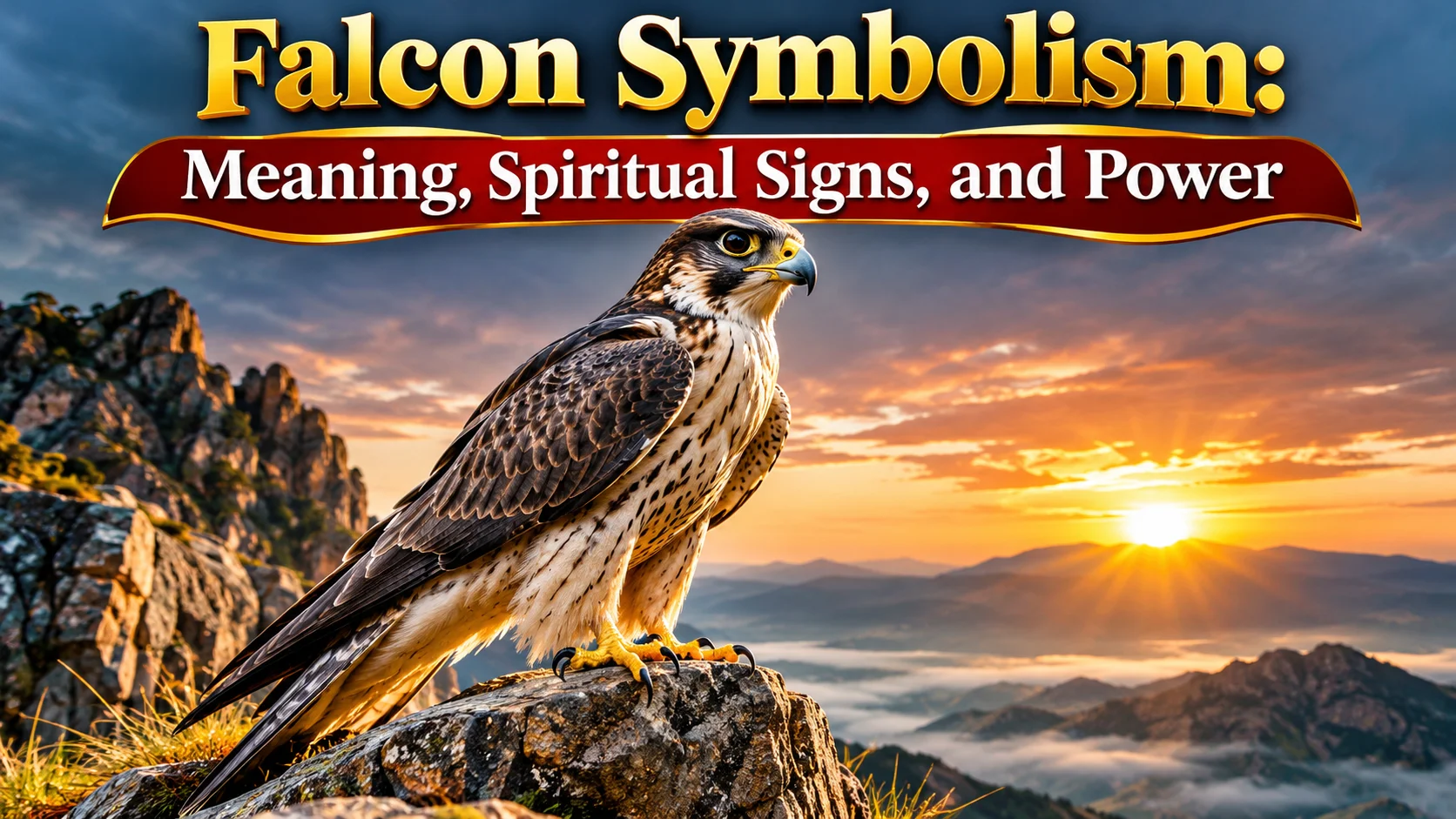
A falcon is more than a powerful bird of prey. Its remarkable speed, sharp eyesight, and confident flight have made it a lasting symbol of strength and independence. Falcon Symbolism often represents freedom, ambition, focus, courage, and the ability to recognize opportunities before others notice them.
In the United States, falcons carry several interesting cultural meanings. They represent natural power, personal determination, and the beauty of wildlife. The peregrine falcon, in particular, has become associated with resilience and environmental recovery. Its return from near extinction tells an inspiring American conservation story.
However, falcon symbolism extends beyond nature. Ancient civilizations connected falcons with the sky, divine protection, kingship, and spiritual authority. Today, people also use falcon imagery in tattoos, artwork, personal branding, and spiritual discussions.
Whether you recently spotted a falcon, dreamed about one, or simply feel drawn to this bird, understanding its symbolism can offer interesting insights. Let’s explore its historical roots, American associations, spiritual interpretations, and modern meanings.
Quick Answer:
Falcon symbolism in the United States primarily represents freedom, sharp vision, courage, independence, and determination. Spiritually, people often associate falcons with higher awareness, protection, transformation, and recognizing new opportunities.
TL;DR: Falcon Symbolism at a Glance
- Freedom: Represents independence and the desire to follow your own path.
- Vision: Symbolizes clear thinking, awareness, and recognizing opportunities.
- Courage: Reflects bravery when facing difficult situations.
- Focus: Represents discipline, patience, and purposeful action.
- Spiritual Awareness: Connects with intuition and higher understanding.
- Resilience: Reflects survival, recovery, and the ability to overcome challenges.
What Is the Symbolism of a Falcon?
UNDERSTANDING THE SYMBOL
Falcons are members of the Falconidae family, a group of birds known for their hunting abilities. They have compact bodies, pointed wings, sharp talons, and strong hooked beaks. Their physical features naturally inspire associations with power, precision, and determination.
However, different falcon species can carry different visual associations. Peregrine falcons are famous for their spectacular hunting dives. American kestrels, which are also falcons, have colorful feathers and smaller bodies.
What Makes a Falcon Symbolic?
Several natural characteristics help explain why people connect falcons with particular qualities.
- Their sharp eyesight represents awareness and clear judgment.
- Their powerful flight suggests freedom and personal independence.
- Their hunting precision symbolizes patience and focused effort.
- Their ability to adapt reflects resilience and survival.
A falcon doesn’t waste much energy during a hunt. It observes, waits, and acts when the opportunity appears.
This behavior creates a useful symbolic lesson. Sometimes, success requires careful observation rather than constant movement.
Common Falcon Colors and Their Associations
Falcon feathers can appear in different shades, depending on the species.
- Gray: Wisdom, balance, maturity, and calm thinking.
- Brown: Grounding, stability, and connection with nature.
- White: Clarity, peace, and spiritual awareness.
- Black: Mystery, authority, and inner strength.
- Reddish-brown: Energy, confidence, and determination.
These color interpretations are symbolic rather than universal cultural rules.
The Main Meanings Associated With Falcons
Falcons carry several overlapping meanings. Their natural behavior provides a foundation for understanding these associations.
Freedom and Independence
A falcon flying high above the ground often represents personal freedom. Its ability to travel across large landscapes creates a powerful image of independence.
For Americans, this interpretation connects naturally with personal choice and self-reliance. It can represent the desire to build your own future without unnecessary restrictions.
Vision and Awareness
Falcons have exceptional eyesight. They can identify movement from considerable distances and respond quickly.
Therefore, people often associate them with:
- Recognizing opportunities before they disappear.
- Understanding situations from a wider perspective.
- Paying attention to important details.
- Trusting careful observation over assumptions.
Courage and Determination
A falcon’s hunting behavior requires confidence and precise action. It doesn’t simply chase every opportunity.
Instead, it studies its surroundings and chooses the right moment. Symbolically, this represents courage guided by intelligence.
Speed and Decisiveness
The peregrine falcon is especially famous for its high-speed hunting dive. This extraordinary ability makes it a natural symbol of quick thinking and decisive action.
Its symbolism can remind people to act confidently when preparation meets opportunity.
Historical Meaning of Falcons Across Ancient Civilizations
Falcon imagery has a long history in human civilization. Ancient societies admired these birds because of their impressive flight and hunting abilities.
Their connection with the sky also made them important in religious artwork and royal traditions.
Falcons in Ancient Egypt
Ancient Egypt provides one of the strongest historical examples of falcon symbolism.
The falcon was closely associated with Horus. This important deity was commonly represented as a falcon or a human figure with a falcon’s head.
Horus was connected with the sky, kingship, protection, and divine authority.
The Egyptian ruler was also associated with Horus through royal religious traditions. Falcon imagery appeared in royal symbols and artistic representations.
The Eye of Horus became another important symbol. Although associated with Horus, it represents an eye rather than a literal falcon image.
Falcons in Ancient Mediterranean Traditions
Falcons also appeared in ancient Mediterranean cultures.
Their speed and hunting abilities attracted attention from people who connected powerful animals with divine qualities. Greek and Roman traditions included several birds of prey in their religious and artistic imagery.
However, not every ancient bird-of-prey symbol represented a falcon. Eagles, hawks, and other raptors had distinct associations.
Falcons in Medieval Europe
During medieval times, falconry became especially popular among European nobles.
Falconry involves training birds of prey to hunt with human handlers. It required knowledge, patience, expensive equipment, and considerable skill.
As a result, trained falcons became associated with:
- Noble status and royal authority.
- Discipline and skilled leadership.
- Wealth and social position.
- Hunting traditions and personal prestige.
Falconry also spread across different regions and cultures. Its traditions developed into an important part of human heritage.
Falcon Symbolism in American Culture
In the United States, falcons have several meaningful cultural associations. Their connection with freedom, wildlife, and environmental recovery makes them especially interesting to American audiences.
Unlike the bald eagle, the falcon isn’t an official national symbol. However, it still represents qualities that many Americans admire.
Freedom and the American Spirit
The image of a falcon soaring through an open sky can represent independence and self-determination.
These qualities connect with familiar American cultural themes. People often associate freedom with personal responsibility, opportunity, and the ability to choose their direction.
A falcon can express these ideas without representing a specific political belief.
Urban Falcons and American Cities
One fascinating part of American falcon symbolism involves city life.
Peregrine falcons have adapted to nesting on skyscrapers, bridges, and other tall structures. These locations can resemble the cliffs they naturally use for nesting.
Cities such as New York, Chicago, and Baltimore have become notable places for urban peregrine observations.
This creates an interesting symbolic connection between nature and modern development.
The falcon represents the ability to adapt without losing its natural identity.
Falcons and American Conservation
Perhaps the most meaningful American association comes from the peregrine falcon’s recovery.
During the twentieth century, widespread DDT use caused serious problems for peregrine populations. The chemical weakened eggshells, making successful reproduction difficult.
The United States banned most DDT uses in 1972. Conservation organizations, researchers, falconers, and government agencies also supported recovery programs.
In 1999, the peregrine falcon was removed from the federal endangered species list.
Today, its recovery represents cooperation, environmental responsibility, and the possibility of repairing damage caused by human activity.
For many Americans, the peregrine falcon has become a meaningful symbol of resilience.
Spiritual Meaning of a Falcon
In modern spiritual discussions, falcons often represent awareness, personal growth, and the ability to recognize important changes.
People sometimes interpret a falcon sighting as a meaningful reminder to pay attention to their surroundings.
These interpretations are personal beliefs rather than scientifically established messages.
Higher Awareness and Perspective
Because falcons spend much of their time flying above the landscape, people associate them with seeing beyond immediate problems.
Spiritually, this can represent understanding a situation from a broader perspective.
A falcon may remind someone to step back before making an important decision.
Protection and Guidance
Falcons have also been connected with protection and authority in certain historical traditions.
In modern spiritual interpretations, their presence can represent feeling supported while navigating uncertainty.
Some people view the bird as a reminder to trust their judgment and remain aware of their surroundings.
Transformation and Personal Growth
A falcon’s powerful flight can symbolize moving beyond old limitations.
This interpretation may feel meaningful during major life changes, including:
- Starting a new career or personal project.
- Leaving an unhealthy situation behind.
- Developing greater confidence and independence.
- Building a clearer sense of personal purpose.
Falcon Symbolism in Different Cultures and Religions
Falcon symbolism isn’t limited to American culture. Different societies have developed their own relationships with these birds.
However, interpretations vary depending on historical traditions, religious beliefs, and local practices.
Middle Eastern Traditions
Falconry has deep historical and cultural importance in several Middle Eastern societies.
In countries such as the United Arab Emirates and Qatar, falconry represents heritage, patience, knowledge, and a close relationship between humans and birds.
It also reflects traditions passed between generations.
Asian Cultural Associations
Falcons and other trained hunting birds have appeared in different Asian traditions.
Historical falconry practices in parts of Central and East Asia connected these birds with hunting skill, leadership, and social prestige.
However, these meanings aren’t identical across Asian cultures.
European Symbolism
In medieval European traditions, falcons frequently represented nobility, status, and hunting expertise.
They appeared in heraldry, literature, and artistic representations.
Some Christian artistic traditions also used birds of prey, although specific meanings depended on the artwork and religious context.
Indigenous American Perspectives
Indigenous nations across North America have distinct cultural traditions involving birds and the natural world.
However, there’s no single universal Native American interpretation of falcons.
Some communities hold particular animals as important within their own teachings and stories. Those meanings should be understood through the traditions of the specific nation rather than generalized.
Psychological and Emotional Meaning of a Falcon
Animal symbols can influence how people express their personalities and emotions.
Falcons often appeal to individuals who value independence, ambition, confidence, and personal discipline.
Their image can also represent a desire to overcome uncertainty.
Confidence and Personal Strength
A falcon’s powerful appearance can create feelings of confidence.
People who connect with this bird may see it as a reminder to trust their abilities.
It can represent standing firm during difficult circumstances without becoming unnecessarily aggressive.
Focus and Mental Clarity
Falcons are highly skilled hunters. Their ability to concentrate on a target creates a strong psychological association with mental discipline.
This symbolism may appeal to people working toward long-term goals.
It encourages three useful qualities:
- Knowing what deserves your attention.
- Avoiding distractions that weaken your progress.
- Acting with purpose instead of rushing.
Independence and Self-Identity
Some people identify with falcons because they prefer making their own decisions.
The bird’s solitary hunting behavior can represent self-reliance. However, it doesn’t mean independence requires avoiding relationships or cooperation.
Instead, its symbolism can reflect confidence in your personal direction.
Read More: Tarantula Symbolism: Meaning, Strength, and Spiritual Power
Falcon Symbolism in Dreams and Everyday Encounters
Dreams involving falcons can feel memorable because these birds have such distinctive appearances and movements.
From a psychological perspective, dreams may reflect emotions, memories, and personal experiences. Spiritual interpretations offer another way people explore their meaning.
Neither approach provides a universal explanation.
Dreaming About a Flying Falcon
A flying falcon may represent freedom, ambition, or a desire for greater independence.
It could also reflect your interest in exploring new opportunities.
The emotional atmosphere of the dream matters. A peaceful flight may feel different from a frightening or aggressive encounter.
Dreaming About a Hunting Falcon
A hunting falcon can symbolize focus and determination.
It may reflect a situation where you’re concentrating on an important personal goal.
Alternatively, it could represent the pressure to make a decision quickly.
Seeing a Falcon in Real Life
A real-life falcon encounter can become personally meaningful, especially when it happens during an important moment.
Some people interpret the experience as a reminder to stay alert or reconsider their priorities.
However, falcons are wild animals with natural hunting and migration patterns. Their appearance doesn’t necessarily indicate a supernatural message.
Falcon Symbolism in Tattoos, Art, and Modern Life
Falcon imagery remains popular in contemporary visual culture.
Its powerful shape, distinctive wings, and dramatic flight make it suitable for several artistic styles.
In the United States, people may choose falcon designs to express personal values or celebrate their interest in wildlife.
Falcon Tattoos and Their Meanings
Falcon tattoos often communicate strength, ambition, and independence.
Different designs can suggest different personal meanings.
- Flying falcon: Freedom, personal growth, and new beginnings.
- Falcon head: Awareness, confidence, and sharp judgment.
- Diving falcon: Determination, action, and focused ambition.
- Spread wings: Independence, protection, and personal power.
- Falcon with mountains: Adventure, resilience, and connection with nature.
A tattoo doesn’t have one fixed meaning. Its significance depends on the person wearing it.
Falcons in Home Decor and Artwork
Falcon artwork can create a sense of movement and strength.
People may use falcon paintings, sculptures, and decorative objects in offices, living rooms, or personal spaces.
These designs often appeal to people who enjoy wildlife and outdoor themes.
Falcons on Social Media
Falcon imagery also works well in digital spaces.
People may use photographs, illustrations, and bird-related content to communicate ideas about freedom, ambition, and determination.
Some creators also use falcon imagery when discussing wildlife photography, conservation, and birdwatching.
Different Falcon Species and Their Symbolic Associations
Not every falcon looks or behaves the same way. Different species can inspire slightly different symbolic interpretations.
The following table connects recognizable characteristics with common modern associations.
| Falcon Species | Distinctive Feature | Common Symbolic Association |
| Peregrine Falcon | Extraordinary diving speed | Precision, ambition, and determination |
| American Kestrel | Small body and colorful feathers | Adaptability and confidence |
| Gyrfalcon | Powerful build and Arctic habitat | Strength and endurance |
| Merlin | Fast, agile flight | Quick thinking and resourcefulness |
| Prairie Falcon | Open-country hunting | Independence and freedom |
These associations are interpretive rather than official meanings assigned to individual species.
Why the Peregrine Falcon Stands Out
The peregrine deserves special attention because of its extraordinary diving ability.
During a hunting dive, it can reach speeds exceeding 200 miles per hour under suitable conditions.
This remarkable ability has made it a popular symbol of speed and precision.
Its conservation history adds another layer of meaning. The bird represents not only natural power but also recovery and persistence.
Misunderstandings and Controversies About Falcon Symbolism
Falcons generally carry positive symbolic associations. However, some interpretations require additional context.
Understanding these differences prevents misleading claims about wildlife and cultural traditions.
Falcons Are Not the Same as Eagles or Hawks
People sometimes use bird-of-prey symbolism interchangeably.
However, falcons, hawks, and eagles belong to different biological groups.
Their physical features and hunting methods also differ.
For example, the bald eagle has a particularly strong connection with American national identity. The falcon doesn’t share that same official status.
Spiritual Interpretations Are Personal
Some websites describe every falcon sighting as a definite spiritual message.
There isn’t scientific evidence supporting such claims.
People are free to interpret personal experiences spiritually, but these interpretations shouldn’t be presented as established facts.
Falconry and Animal Welfare
Falconry has historical importance in many cultures.
However, keeping and training wild birds also involves responsibilities surrounding animal welfare, conservation, and legal protection.
Modern falconry practices vary by location and tradition. Responsible handling requires appropriate knowledge, permits, and care.
Avoiding Cultural Generalizations
Falcons have different meanings across religious and cultural traditions.
It would be inaccurate to claim that every Indigenous community, Asian society, or religious group interprets them identically.
Respectful symbolism recognizes these differences rather than combining unrelated traditions into one explanation.
How Falcon Symbolism Has Changed Over Time
Falcon symbolism has developed alongside changes in human society.
Ancient civilizations often connected the bird with divine authority and the sky. Medieval societies emphasized hunting skill, nobility, and prestige.
However, modern interpretations have expanded considerably.
From Royal Power to Personal Independence
Historically, falcons were associated with rulers, nobles, and people who could afford trained hunting birds.
Today, their imagery is more accessible.
A person doesn’t need a royal connection to appreciate the falcon as a symbol of freedom, ambition, or confidence.
From Hunting Tradition to Wildlife Conservation
Falconry remains culturally important, but modern wildlife conservation has introduced another perspective.
The peregrine falcon’s recovery changed how many Americans view the species.
Instead of representing only speed and hunting ability, it also represents environmental responsibility and successful conservation.
From Traditional Art to Digital Identity
Modern technology has expanded the ways people use animal imagery.
Falcons now appear in digital illustrations, personal profiles, clothing designs, tattoos, and photography.
Their symbolism continues to evolve as people connect traditional ideas with modern experiences.
FAQs:
What Does a Falcon Symbolize Spiritually?
Spiritually, a falcon commonly represents awareness, freedom, protection, and personal transformation. Some people interpret its appearance as encouragement to trust their judgment and recognize opportunities.
Is Seeing a Falcon a Good Sign?
Many modern spiritual interpretations consider seeing a falcon a positive experience. People often connect it with confidence, new opportunities, and greater awareness. However, its meaning depends on personal beliefs and circumstances.
What Does a Falcon Symbolize in Native American Culture?
There isn’t one universal Native American interpretation of falcons. Different Indigenous nations have distinct relationships with birds, wildlife, and spiritual teachings. Specific meanings should be understood within their respective cultural traditions.
What Does a Falcon Tattoo Represent?
A falcon tattoo commonly represents independence, courage, ambition, and determination. Some people choose it to express their love of wildlife or their desire to overcome personal challenges.
What Does a Flying Falcon Symbolize?
A flying falcon often represents freedom, personal growth, and independence. Its movement through the sky can also symbolize ambition and the ability to see beyond immediate limitations.
Why Is the Falcon Associated With Vision?
Falcons have exceptionally sharp eyesight, which helps them identify prey from considerable distances. This natural ability has inspired symbolic associations with awareness, observation, and clear thinking.
Conclusion:
Falcons represent some of the most admired qualities found in nature. Their speed, powerful flight, sharp eyesight, and hunting abilities have inspired associations with freedom, courage, ambition, and focus.
Throughout history, falcons have appeared in royal traditions, religious imagery, falconry, and cultural artwork. In the United States, the peregrine falcon adds another meaningful connection through its remarkable recovery from endangered status.

1 thought on “Falcon Symbolism: Meaning, Spiritual Signs, and Power”