
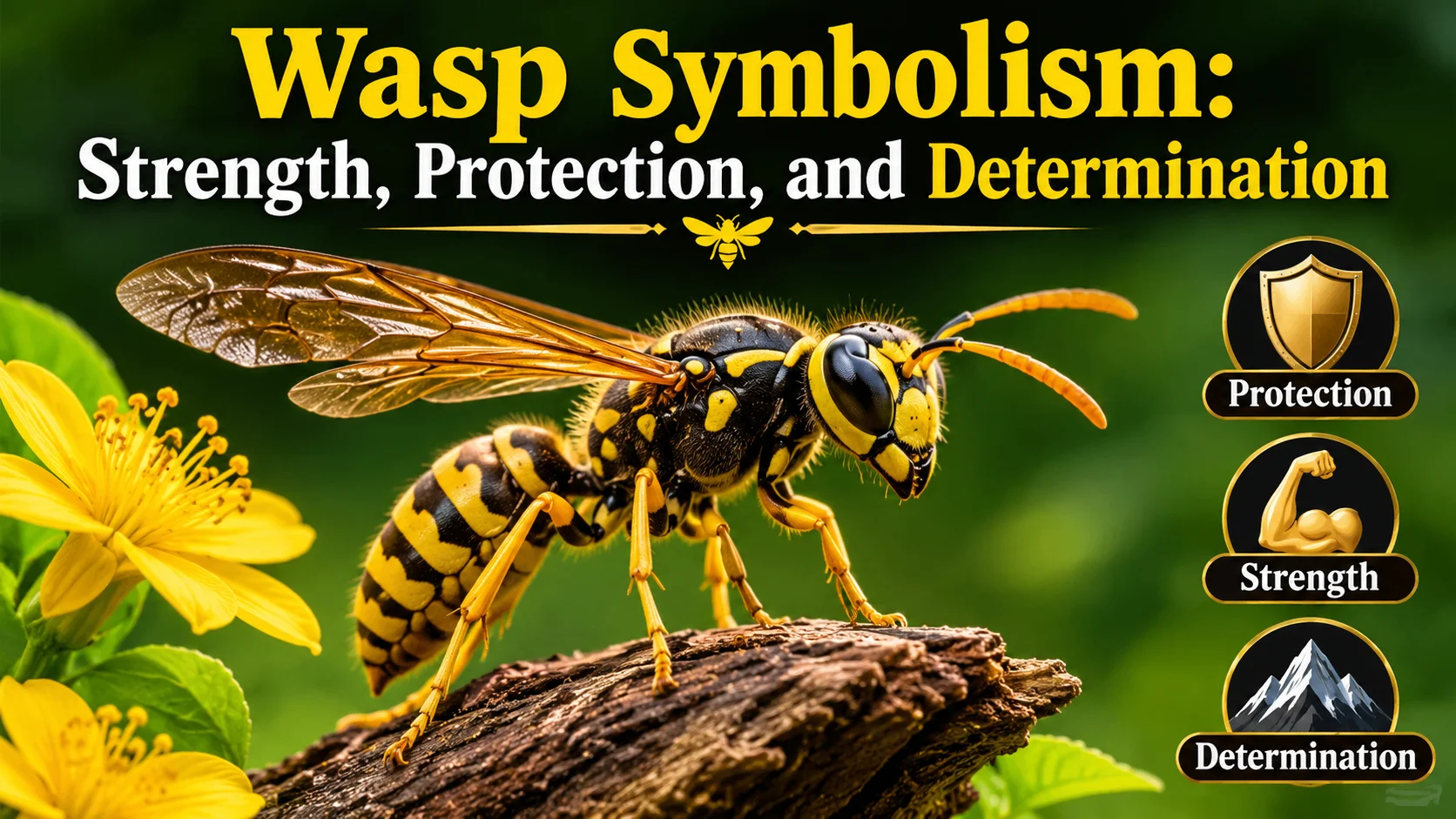
A wasp may look small, but its presence can make people stop and pay attention. In wasp symbolism, this striking insect often represents protection, determination, independence, and the courage to defend personal boundaries. Its sharp appearance and defensive behavior have also made it a symbol of strength and warning.
In the United States, wasps are familiar sights around gardens, porches, picnics, and outdoor gatherings. Some people see them as dangerous pests, while others recognize their role in nature. These contrasting experiences give the wasp a complex symbolic identity.
Unlike butterflies, which commonly represent transformation, wasps carry a stronger message about action and self-protection. They remind us that strength doesn’t always come from size. Sometimes, it comes from knowing when to stand firm and when to protect what matters.
However, wasp meanings aren’t universal or scientifically established spiritual messages. Their interpretations depend on personal experiences, cultural traditions, and the circumstances in which someone encounters one.
Understanding these different perspectives can help you explore what this fascinating insect represents in everyday American culture and spiritual symbolism.
Quick Answer
Wasp symbolism in the United States primarily represents protection, courage, determination, independence, and strong personal boundaries. Spiritually, wasps can also symbolize transformation, focused action, teamwork, and the importance of defending what matters.
TL;DR
- Wasps commonly symbolize protection, courage, and personal boundaries.
- Their persistence represents determination and focused action.
- Their nests can symbolize teamwork, organization, and community.
- Spiritually, they may represent change and personal growth.
- Their stings can symbolize warnings and defensive strength.
- Modern wasp imagery often represents independence and fearless identity.
What Does a Wasp Symbolize?
A wasp is a flying insect recognized by its narrow waist, powerful wings, and often striking body patterns. Many familiar American species display black and yellow markings, although some are brown, reddish, metallic, or mostly dark.
These physical characteristics influence how people interpret wasps as symbols. Their appearance suggests alertness, while their defensive behavior encourages associations with protection and boundaries.
Core Symbolic Meanings
Wasps generally carry several connected meanings:
- Protection: Defending yourself, your family, and your personal space.
- Determination: Continuing toward a goal despite obstacles.
- Independence: Trusting your abilities and making your own decisions.
- Teamwork: Working together to build something meaningful.
- Transformation: Leaving an old situation behind and beginning again.
- Warning: Recognizing danger and responding before problems grow.
Not every wasp represents all these qualities. A solitary wasp and a large social colony can suggest very different ideas.
Why Wasps Have Powerful Symbolism
Wasps combine delicate construction with defensive strength. Their nests demonstrate patience, while their stingers create an unmistakable impression of protection.
This contrast makes them interesting symbols of controlled power. They suggest that being gentle and being strong aren’t necessarily opposing qualities.
Wasp Spiritual Meaning and Symbolism
In contemporary spiritual interpretations, a wasp can represent a reminder to become more intentional about your choices. Its appearance may encourage reflection about boundaries, confidence, and unfinished responsibilities.
These meanings are matters of personal belief rather than proven supernatural communication. Still, they can offer useful ways to examine your circumstances.
A Reminder to Protect Your Energy
A wasp’s defensive nature often connects with the idea of protecting your emotional space. Its symbolism may encourage you to recognize situations that leave you feeling overwhelmed.
For example, you might consider whether certain relationships require healthier boundaries. The wasp becomes a reminder that protecting your peace doesn’t require constant explanations.
A Symbol of Determination
Wasps build nests, gather food, and care for their young through demanding conditions. Their persistence makes them natural symbols of focused effort.
Seeing one might inspire you to reconsider a goal you’ve neglected. Rather than waiting for perfect circumstances, you can take one practical step forward.
A Message About Personal Change
A wasp’s seasonal life cycle can also inspire thoughts about renewal. Many social wasp colonies decline in autumn, while newly produced queens survive winter and establish new colonies in spring.
Symbolically, this pattern can represent endings that make room for beginnings. It offers a reminder that change sometimes requires releasing something familiar.
Historical Background of Wasp Symbolism
Wasps have appeared in human stories, art, and cultural records for thousands of years. Their historical meanings often reflect the same qualities people notice today: danger, defense, persistence, and power.
However, different societies interpreted these insects in different ways. Some viewed them as threats, while others used their appearance to communicate strength.
Wasps in Ancient Egypt
In ancient Egypt, the hornet or wasp-like insect appeared in royal symbolism. The insect sign was associated with Lower Egypt and formed part of the traditional royal title connecting the ruler with the land.
Its fierce reputation may have contributed to associations with authority and power. This example shows how a small creature could carry meaning beyond its physical size.
Wasps in Ancient Greek Culture
Ancient Greek culture offers another interesting example. Aristophanes wrote The Wasps, a comedy performed in 422 BCE.
The play portrayed Athenian jurors as a group resembling stinging wasps. Their collective behavior and readiness to attack became part of its political humor.
Greek vase paintings also occasionally featured bees and wasps as shield decorations. Some interpretations connect these images with protection, death, and rebirth.
However, surviving examples are limited. Therefore, it’s important not to suggest that ancient Greeks had one universal interpretation of wasps.
Wasps in European Traditions
European literature often portrayed wasps as troublesome or spiteful creatures. Their painful stings made them useful comparisons for people who used harsh words or displayed an aggressive attitude.
Medieval and Renaissance heraldry also included insects as decorative or identifying symbols. For example, wasp-like figures appeared in the coat of arms associated with the Vespucci family in Renaissance Florence.
These examples demonstrate that wasp imagery could communicate identity, reputation, and danger.
Wasp Symbolism in American Culture
In the United States, wasps have a complicated cultural identity. They’re familiar backyard insects, agricultural predators, and recognizable symbols in sports and popular imagery.
Unlike the bald eagle or American bison, the wasp doesn’t have an established national symbolic status. However, its associations with defense, strength, and collective action fit several familiar American cultural themes.
The American Backyard Experience
Many Americans encounter wasps during summer activities. Picnics, barbecues, gardening, camping, and outdoor sports frequently bring people into contact with these insects.
Consequently, wasps often symbolize caution and the need to respect personal space.
Their presence can also remind people that nature isn’t always comfortable or predictable. Even familiar outdoor spaces contain creatures with their own boundaries.
Wasps as Sports and Community Symbols
Yellowjackets and other wasp-related names appear in American school and athletic identities. These mascots often communicate energy, competitiveness, aggression, and determination.
A yellow-and-black mascot can create a strong visual identity. Its appearance suggests a team that refuses to back down.
For American audiences, this symbolism connects the wasp with school pride, teamwork, and competitive spirit.
Wasps and American Independence
The wasp can also serve as a personal symbol of independence. Its defensive nature suggests someone who values freedom and refuses to tolerate unnecessary interference.
This interpretation isn’t a traditional national emblem. Instead, it’s a modern symbolic association that fits broader American ideas about self-reliance and personal freedom.
Wasp Symbolism of Protection and Personal Boundaries
Protection is one of the strongest modern interpretations of wasp symbolism. A wasp doesn’t need to be large to defend itself, and this behavior creates a powerful connection with personal boundaries.
For American readers, this meaning can apply to family relationships, friendships, workplaces, and individual identity.
Defending What Matters
Social wasps protect their colonies when they perceive a threat. Their behavior illustrates how defense can become a priority when something important is at risk.
Symbolically, this can represent:
- Protecting family members and loved ones.
- Standing up for personal values and beliefs.
- Refusing to accept repeated disrespect.
- Recognizing when a situation requires a firm response.
- Creating healthier emotional and social boundaries.
Strength Without Intimidation
Wasp symbolism doesn’t necessarily encourage confrontation. Instead, it can represent knowing your limits and communicating them clearly.
For example, someone who struggles to say no might interpret a wasp encounter as an opportunity for self-reflection. The important lesson is confidence, not aggression.
A healthy boundary protects your well-being without requiring you to hurt others.
Wasp Symbolism of Teamwork and Community
Although people often focus on a wasp’s sting, social species demonstrate remarkable cooperation. Their colonies depend on shared responsibilities, communication, and coordinated activity.
This makes wasps meaningful symbols of teamwork and collective responsibility.
The Meaning of a Wasp Nest
A wasp nest is more than a shelter. It’s a carefully constructed environment where colony members support different stages of development.
Paper wasps create their nests using wood fibers mixed with saliva. The resulting material resembles thin, layered paper.
Symbolically, this construction can represent:
- Building a stable home through consistent effort.
- Creating something meaningful with limited resources.
- Sharing responsibilities within a family.
- Supporting a common purpose.
- Appreciating the value of organized cooperation.
Family and Social Connections
A wasp colony can inspire reflection about the relationships that support your life. Its structure highlights the importance of cooperation rather than complete independence.
However, not every wasp lives in a colony. Many species are solitary, making independence another equally important interpretation.
Together, these behaviors show that strength can come from either individual effort or shared responsibility.
Wasp Symbolism of Transformation and Renewal
Wasps can represent transformation because their life cycles involve distinct stages and seasonal changes. This meaning is especially relevant when someone experiences an ending, a fresh start, or a major personal transition.
Unlike butterfly symbolism, wasp-related transformation is less commonly associated with graceful beauty. Instead, it emphasizes adaptation and purposeful action.
Letting Go of Old Situations
Many social wasp colonies follow an annual cycle. Workers and males generally die as the season ends, while newly produced queens survive winter.
These queens establish new colonies when warmer weather returns.
As a metaphor, this pattern suggests that some endings create opportunities for new beginnings.
Starting a New Chapter
Wasp symbolism can encourage you to:
- Release habits that no longer support your goals.
- Accept changes that require difficult decisions.
- Build confidence after disappointing experiences.
- Approach new opportunities with greater determination.
- Focus on what you can create next.
The deeper message is that renewal doesn’t always happen comfortably. Sometimes, growth begins when you stop holding onto an outdated situation.
Wasp Colors and Their Symbolic Meanings
A wasp’s appearance can influence its symbolic interpretation. Different species have different color patterns, although yellow and black remain the most recognizable combination in American popular imagery.
Color meanings are symbolic associations rather than fixed cultural rules.
Yellow and Black Wasp Symbolism
Yellow and black create a noticeable contrast. In nature, these colors can function as warning signals that discourage potential predators.
Symbolically, this combination may suggest:
- Yellow: Awareness, energy, confidence, and attention.
- Black: Protection, mystery, authority, and personal strength.
- Combined colors: Caution, confidence, and defensive power.
Red and Brown Wasps
Some paper wasps have reddish-brown or dark brown bodies. Their appearance creates different visual associations.
Red can suggest passion, courage, urgency, and strong emotions. Brown often represents stability, practicality, and connection with the natural world.
Together, these colors can symbolize grounded strength and determined action.
Black and White Wasps
Black-and-white markings create a striking visual contrast. In symbolic interpretations, this combination can suggest balance, clarity, and the ability to recognize opposing choices.
It may also represent the difference between protecting yourself and reacting unnecessarily.
Wasp Symbolism Across Cultures and Spiritual Traditions
Wasp interpretations aren’t identical around the world. Historical records show that insects have appeared in different religious, artistic, and cultural settings.
However, it’s important to distinguish documented traditions from modern spiritual interpretations.
Ancient Egyptian Associations
Ancient Egyptian royal imagery included a hornet or wasp-like sign associated with Lower Egypt. This provides a historical connection between the insect and royal authority.
Its appearance in royal symbolism suggests that fierce natural creatures could communicate power and territorial identity.
Ancient Greek Interpretations
Greek literature sometimes used wasps to describe people who were sharp-tempered or quick to attack.
At the same time, images of bees and wasps appeared in certain artistic and ritual contexts. Their possible protective meanings depend on the specific artwork and its setting.
Japanese Cultural Perspectives
Japan has a rich modern tradition of appreciating and studying insects. However, this shouldn’t be confused with a universal positive spiritual meaning for wasps.
Research examining ancient Japanese texts found relatively few insect references. It also identified a negative portrayal involving wasps.
Meanwhile, some contemporary Japanese communities have developed distinctive relationships with hornets and other wasps through food traditions and nest care.
These examples show that cultural attitudes can be more complex than simple positive or negative labels.
Contemporary Spiritual Interpretations
In modern spiritual discussions, wasps are sometimes connected with:
- Personal awakening and increased awareness.
- Protection from negative influences.
- Courage during challenging periods.
- Independence and self-confidence.
- Persistence during major life changes.
These interpretations reflect contemporary beliefs rather than universal teachings shared by established religions.
Emotional and Psychological Meaning of Wasps
Wasps can trigger strong emotional reactions. Some people feel frightened when they see one, while others admire their persistence and independence.
These reactions influence the insect’s psychological symbolism. A wasp can represent both the discomfort of facing challenges and the confidence needed to handle them.
Courage and Self-Confidence
A wasp’s small body and defensive abilities create an interesting contrast. It reminds people that physical size doesn’t determine personal strength.
Psychologically, this can represent confidence during difficult situations. You don’t have to be the loudest person in a room to stand up for yourself.
Anger and Irritation
Wasps also carry negative emotional associations. Their sudden movements and painful stings can remind people of conflict, frustration, or unexpected problems.
In symbolic interpretations, a wasp may encourage you to examine:
- Unexpressed anger or unresolved frustration.
- Situations where you feel constantly defensive.
- Relationships involving repeated disagreements.
- Fear of losing control over personal circumstances.
- The difference between confidence and unnecessary hostility.
Focus and Mental Discipline
Wasps spend considerable time finding food, maintaining nests, and caring for developing young. Their behavior can symbolize concentration and commitment.
This interpretation encourages you to direct your attention toward meaningful goals. Instead of becoming distracted by every obstacle, focus on what deserves your energy.
What Does It Mean When You See a Wasp?
Seeing a wasp can have different symbolic interpretations depending on your circumstances. Some people view the encounter as a reminder about protection, while others associate it with determination or change.
There isn’t scientific evidence that a wasp’s appearance predicts future events. However, you can use the experience as an opportunity for personal reflection.
Seeing a Wasp Alone
A single wasp may symbolize independence and self-reliance.
Its appearance can remind you to trust your abilities and take responsibility for your decisions. It may also encourage you to establish stronger personal boundaries.
Seeing Multiple Wasps
Several wasps can represent cooperation, community, and collective strength.
Their presence may inspire you to consider the people around you. Are you receiving enough support, or are you trying to handle everything alone?
Seeing a Wasp Near Your Home
A wasp near your house can carry symbolic associations with family protection and domestic boundaries.
Some spiritual interpretations connect this encounter with protecting your private life. However, a wasp may simply be searching for food or investigating a suitable nesting location.
Seeing a Wasp Repeatedly
Repeated encounters can encourage you to examine a particular concern or pattern in your life.
Perhaps you’ve been avoiding a difficult conversation or postponing an important decision. The wasp can serve as a personal reminder to address the situation.
Read More: Arabian Horse Symbolism: Meaning, History, and Spiritual Significance
Wasp Symbolism in Tattoos, Art, and Modern Identity
Wasp imagery has become an interesting choice for people who appreciate bold animal symbolism. Its recognizable shape and defensive reputation make it suitable for expressing individuality.
Unlike softer insect designs, wasp imagery often communicates determination and confidence.
Wasp Tattoo Meaning
A wasp tattoo can represent personal strength, independence, and the ability to defend yourself.
Common interpretations include:
- Protection: A reminder to defend your boundaries.
- Resilience: Strength through difficult experiences.
- Independence: Confidence in your personal identity.
- Determination: Commitment to goals and ambitions.
- Fearlessness: Willingness to face uncomfortable situations.
Some people choose realistic designs, while others prefer geometric outlines or traditional tattoo styles.
Wasp Imagery in Fashion
Wasp-inspired designs can appear on clothing, accessories, jewelry, and decorative artwork.
Yellow-and-black patterns create a bold appearance. Meanwhile, minimalist wasp outlines offer a more subtle way to express individuality.
Wasps in Digital Culture
On social media, wasp imagery can communicate confidence, attitude, and an unwillingness to tolerate disrespect.
It may also appear in memes and humorous posts about unexpected encounters with stinging insects.
However, these meanings depend on context. A wasp emoji or illustration doesn’t automatically communicate a particular spiritual message.
Wasps in Home Decor
Wasp illustrations can appear in nature-inspired artwork, scientific prints, and insect collections.
For some people, these designs celebrate the complexity of the natural world. Others appreciate their unusual shapes and strong visual patterns.
Wasp Symbolism, Misunderstandings, and Controversies
Wasp symbolism can become misleading when people treat personal interpretations as universal cultural facts. It’s also important to distinguish an insect’s actual behavior from the meanings humans assign to it.
Are Wasps Naturally Aggressive?
Wasps have a reputation for attacking people without warning. However, this description doesn’t accurately represent every species or encounter.
Many wasps are solitary and rarely interact with humans. Social species generally defend their nests when they perceive a threat.
Their defensive behavior shouldn’t automatically be interpreted as hostility.
Are Wasps Bad Omens?
Some modern spiritual interpretations describe a wasp as a warning or an unfavorable sign. Others connect it with protection and positive personal change.
Neither interpretation is universally accepted.
An ordinary wasp encounter doesn’t establish that something good or bad will happen. Personal beliefs and circumstances shape the meaning.
Wasp Symbolism Versus Bee Symbolism
Wasps and bees are often confused because they share similar body structures. However, their symbolic associations can differ.
| Symbol | Common Symbolic Meaning | Emotional Association |
| Wasp | Protection and independence | Alertness and confidence |
| Honeybee | Cooperation and productivity | Harmony and dedication |
| Hornet | Defensive power and intensity | Caution and strength |
| Butterfly | Transformation and freedom | Hope and renewal |
| Ant | Discipline and collective effort | Responsibility and persistence |
These are common interpretive associations, not fixed meanings across every culture.
Avoiding Cultural Misrepresentation
Not every spiritual interpretation comes from an ancient tradition. Some meanings develop through modern personal beliefs, online discussions, and creative expression.
Therefore, it’s better to describe a wasp as a modern symbol of protection than to claim every culture considers it sacred.
This distinction respects cultural history while allowing individuals to develop their own interpretations.
How Wasp Symbolism Has Changed Over Time
Wasp symbolism has evolved as people’s relationships with nature have changed. Earlier representations often emphasized danger, aggression, and unpleasant behavior.
Today, the insect can represent more positive qualities, including resilience, independence, and community.
From Ancient Warning to Modern Strength
Ancient and historical references sometimes connected wasps with punishment, conflict, and destructive behavior.
Their painful stings made them convenient symbols for sharp words and hostile personalities.
Modern interpretations have expanded beyond these negative associations. People increasingly use the insect’s behavior as a metaphor for confidence and self-protection.
Changing Attitudes Toward Nature
Environmental awareness has also influenced how Americans view wasps.
Universities and agricultural organizations explain that many wasps provide important ecological benefits. They prey on insects that damage gardens and crops.
This knowledge challenges the idea that all wasps are simply unwanted pests.
Which Meanings Remain Relevant?
Several symbolic interpretations continue to make sense today:
- Protection remains connected with defensive behavior.
- Determination reflects persistence and focused activity.
- Teamwork relates to the organization of social colonies.
- Independence reflects the behavior of solitary species.
- Transformation connects with seasonal life cycles.
The modern wasp is therefore more than a symbol of danger. It represents a complicated balance between defense, cooperation, and survival.
FAQs:
What Does a Wasp Mean Spiritually?
A wasp is commonly associated with protection, determination, independence, and personal strength. In contemporary spiritual interpretations, it can also represent the need to establish boundaries and take action.
Is Seeing a Wasp a Good or Bad Omen?
A wasp isn’t universally considered either a good or bad omen. Some interpretations connect it with protection and courage, while others associate it with caution and unresolved conflict.
What Does a Wasp Symbolize in the Bible?
Wasps and hornets appear in biblical passages as instruments of driving enemies away from certain territories. In particular, the hornet appears in Exodus 23:28 and Deuteronomy 7:20. These references emphasize divine judgment and the removal of opposition rather than a general spiritual meaning for wasps.
What Does a Wasp Tattoo Represent?
A wasp tattoo commonly represents independence, courage, resilience, and self-protection. Some people choose this design to express their determination to overcome challenges and defend their personal values.
What Does a Wasp Nest Symbolize?
A wasp nest can symbolize teamwork, family responsibility, organization, and community. Its construction also represents patience and the ability to create something meaningful through consistent effort.
What Does It Mean When a Wasp Lands on You?
In modern spiritual interpretations, a wasp landing on someone may represent awareness, confidence, or a reminder to protect personal boundaries. However, it doesn’t necessarily carry a supernatural message. The insect may simply be exploring its surroundings.
Conclusion:
Wasp symbolism carries several meaningful interpretations, including protection, courage, independence, determination, and teamwork. Its defensive nature represents the importance of maintaining boundaries, while its nest-building behavior highlights cooperation and persistence.
In American culture, wasps have both negative and positive associations. Although many people fear their stings, these insects also provide important benefits to the natural environment. Their symbolism has consequently expanded beyond danger to include resilience, confidence, and respect for personal space.

1 thought on “Wasp Symbolism: Strength, Protection, and Determination”