
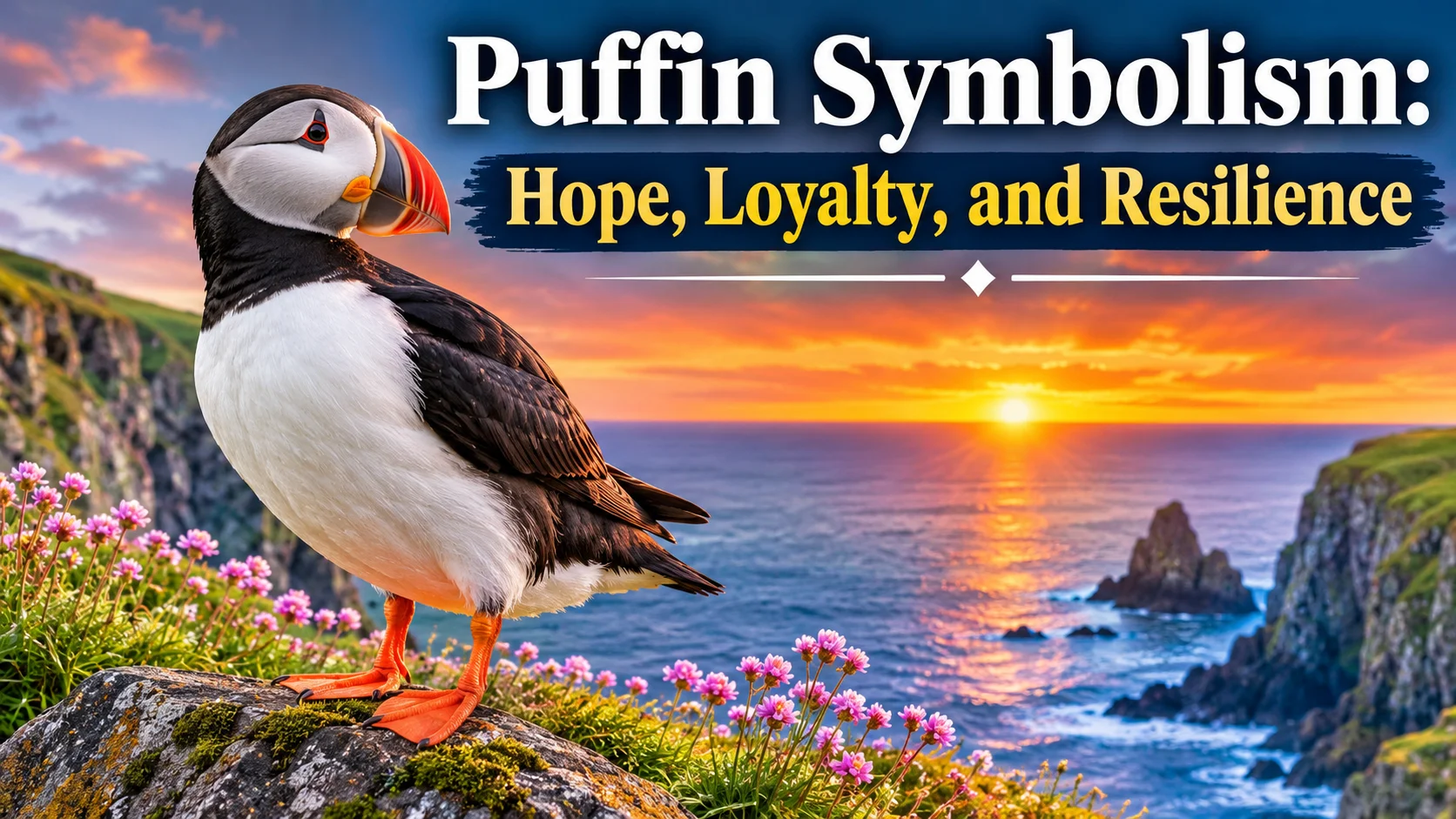
Puffins are small seabirds with colorful beaks, dark feathers, and a distinctive appearance. Their ability to survive in challenging coastal environments makes them fascinating symbols of strength and adaptability. Puffin Symbolism often represents loyalty, resilience, emotional balance, and the courage to face life’s changing conditions.
In the United States, puffins are especially associated with coastal wildlife, ocean conservation, and the rugged beauty of the North Atlantic. Their appearance on rocky islands and their remarkable swimming and diving abilities inspire people who admire independence and perseverance. Although puffins aren’t as famous as eagles or owls in American symbolism, they have a special place in nature photography, wildlife education, and coastal culture.
Puffins also attract attention because of their unusual appearance and social behavior. Their colorful bills make them look cheerful, while their commitment to breeding partners and nesting sites encourages associations with loyalty and home. However, these meanings are modern interpretations rather than universal spiritual rules. Understanding their natural behavior helps explain why people connect these birds with hope, devotion, and inner strength.
Quick Answer
Puffin symbolism in the United States commonly represents loyalty, resilience, hope, and a strong connection with nature. Spiritually, people may interpret the puffin as a reminder to trust meaningful relationships, adapt to change, and remain emotionally grounded during difficult times.
TL;DR
- Loyalty: Puffins represent devotion and lasting relationships.
- Resilience: Their ocean lifestyle reflects strength through difficult conditions.
- Hope: Their colorful bills suggest joy and renewed optimism.
- Freedom: Their ability to fly and dive represents independence.
- Home: Their return to familiar nesting sites symbolizes belonging.
- Conservation: Puffins remind Americans to protect vulnerable marine wildlife.
What Does a Puffin Symbolize?
Puffins combine an unusual appearance with impressive survival skills. Their symbolism often comes from these natural characteristics, especially their relationships, adaptability, and connection with the ocean.
For American readers, puffins can represent a quieter kind of strength. They aren’t powerful predators like eagles, yet they survive in demanding environments through cooperation and specialized abilities.
Core Symbolic Meanings
Puffins are commonly associated with several positive qualities.
- Loyalty: Their breeding behavior inspires ideas about commitment and partnership.
- Adaptability: They navigate life between the air, land, and sea.
- Resilience: Their survival reflects persistence in challenging environments.
- Joy: Their colorful bills create associations with playfulness and optimism.
- Belonging: Their use of established breeding sites suggests familiarity and home.
- Balance: Their lives connect different environments and ways of moving.
These interpretations aren’t fixed meanings shared by everyone. Instead, they offer ways to reflect on personal experiences through the bird’s natural characteristics.
Why Puffins Stand Out as Symbols
Puffins look somewhat awkward when walking on land, yet they’re skilled swimmers and divers. This contrast makes them meaningful symbols of hidden abilities.
For example, someone who feels uncomfortable in a new job might connect with a puffin. The bird suggests that struggling in one environment doesn’t mean lacking talent.
Similarly, puffins can remind people that appearances don’t reveal the full story. Confidence often develops when individuals find environments that suit their strengths.
Historical Background of Puffin Symbolism
Puffins have lived around North Atlantic coastlines for thousands of years. Their history is closely connected with maritime communities, fishing traditions, and the changing relationship between humans and seabirds.
Unlike animals featured prominently in ancient mythology, puffins don’t have one widely recognized symbolic tradition across major civilizations. Their meanings developed more through practical encounters, local stories, natural history, and modern wildlife appreciation.
Puffins in Early Coastal Communities
For communities near the North Atlantic, seabirds were important parts of the natural environment. They could indicate nearby land, breeding grounds, seasonal changes, and the presence of marine food sources.
Puffins also provided food in some northern communities. Their eggs and meat were historically harvested in certain regions, showing that human relationships with wildlife weren’t always based on admiration or conservation.
Consequently, older interpretations of puffins were often practical rather than mystical. Their presence could reflect the rhythms of coastal life and the resources available to people living near the sea.
From Survival to Conservation
Over time, scientific observation and wildlife protection changed how many people viewed puffins. Their unusual appearance made them popular subjects for naturalists, photographers, and bird enthusiasts.
Today, puffins frequently represent the beauty and vulnerability of marine ecosystems. Their conservation challenges also give them a broader meaning: protecting a recognizable animal can help people understand the importance of preserving entire habitats.
This shift reflects a larger cultural change. Wildlife that once served mainly as a food source or natural resource can also become a symbol of environmental responsibility.
Puffin Symbolism in the United States
In the United States, puffins are most strongly associated with the North Atlantic coast, especially Maine. They aren’t national symbols in the formal sense, but they have become recognizable representatives of coastal wildlife.
Their American symbolism combines regional identity, environmental awareness, and appreciation for the ocean.
Puffins and Maine’s Coastal Identity
The Atlantic puffin is an important part of Maine’s wildlife heritage. Offshore islands provide breeding habitat, while rocky shorelines and cold marine waters help define the environment associated with these birds.
For many visitors, seeing a puffin represents a memorable encounter with wild nature. The experience can evoke curiosity, excitement, and appreciation for places that remain relatively untouched by busy urban life.
Puffins can therefore symbolize:
- Coastal identity: A connection with Maine’s islands and Atlantic landscapes.
- Natural beauty: Appreciation for unusual wildlife and dramatic shorelines.
- Regional pride: Affection for distinctive animals associated with northern coastal environments.
- Environmental care: Support for protecting seabirds and their breeding habitats.
These associations are particularly meaningful for people who enjoy birdwatching, coastal travel, and marine conservation.
Puffins in American Wildlife Education
Puffins also appear in wildlife photography, educational programs, nature documentaries, and conservation campaigns. Their colorful bills and recognizable faces make them appealing subjects for audiences of different ages.
In educational settings, puffins help explain migration, marine food chains, breeding behavior, and habitat protection. Their lives also demonstrate how changes in ocean conditions can affect wildlife.
As a result, the puffin can represent curiosity and environmental responsibility. It encourages people to look beyond a bird’s appearance and consider the larger ecosystem supporting it.
The Spiritual Meaning of Puffins
People interested in animal symbolism sometimes interpret puffins as spiritual reminders of loyalty, balance, courage, and emotional renewal. These interpretations generally draw inspiration from the bird’s natural behavior rather than one established religious teaching.
A puffin sighting may feel meaningful when it happens during a period of change. However, its spiritual significance depends on personal beliefs, circumstances, and individual reflection.
Puffins as Symbols of Balance
Puffins spend time in different environments. They fly above the water, dive beneath its surface, and return to land for breeding.
Spiritually, this behavior can represent the ability to move between different parts of life without losing a sense of identity. It may encourage a healthier balance between work, relationships, personal goals, and rest.
For someone feeling overwhelmed, the puffin can serve as a reminder to pause and reconsider priorities. It suggests that adaptability doesn’t require abandoning the things that matter most.
Puffins as Signs of Hope and Renewal
A puffin returning to its breeding grounds can inspire ideas about new beginnings and familiar connections. Its seasonal return may symbolize the possibility of rebuilding after a difficult period.
People might connect this interpretation with starting a new relationship, returning to an old passion, or recovering confidence after disappointment.
Still, seeing a puffin doesn’t objectively predict a particular event. Its spiritual meaning is better understood as a personal source of reflection than a guaranteed message about the future.
Puffin Symbolism in Different Cultures
Puffins inhabit regions around the North Atlantic, including parts of North America and northern Europe. Their cultural associations therefore differ from those of animals with long-standing roles in global religious traditions.
A respectful interpretation begins by recognizing that local relationships with puffins have included food gathering, storytelling, scientific study, and wildlife protection.
Northern European Connections
In parts of northern Europe, puffins have long been familiar coastal birds. Their presence in local life has influenced regional food traditions, wildlife observation, and tourism.
Iceland, the Faroe Islands, and other North Atlantic regions have distinct relationships with seabirds. However, it would be misleading to assign one spiritual meaning to every community in these places.
In modern settings, puffins often evoke island landscapes, maritime heritage, and the appeal of northern wildlife. Their symbolism may also reflect local concerns about environmental change.
Broader Spiritual Interpretations
Outside specific cultural traditions, people may interpret puffins through general themes found in animal symbolism.
- Partnership: Their breeding behavior suggests commitment and cooperation.
- Persistence: Their lives reflect adaptation to demanding natural conditions.
- Connection: Their return to familiar breeding areas evokes belonging.
- Renewal: Their seasonal breeding cycle suggests fresh beginnings.
- Individuality: Their distinctive appearance encourages appreciation of differences.
These meanings are personal interpretations, not universal beliefs shared across religions or cultures. Puffins shouldn’t be assigned sacred status or traditional teachings without reliable cultural evidence.
The Psychological Meaning of Puffins
Animals can become powerful personal symbols because people connect their behavior and appearance with human experiences. Puffins offer several qualities that can encourage reflection, especially when someone is navigating uncertainty.
Their combination of awkwardness, skill, independence, and social behavior makes them particularly interesting symbols of self-acceptance.
Embracing Your Unusual Qualities
Puffins have distinctive bodies, colorful bills, and a somewhat clumsy appearance when moving on land. However, they are remarkably capable in the water.
This contrast can remind people that being different doesn’t mean being inadequate. A person might struggle in one setting but thrive in another.
For example, someone who finds large social gatherings exhausting may excel in smaller groups or independent work. The puffin symbolizes the freedom to recognize personal strengths without measuring everything against someone else’s abilities.
Finding Strength Through Connection
Puffins also offer a symbol of cooperation. Their breeding relationships and return to familiar nesting areas can inspire thoughts about trust and emotional security.
Psychologically, this meaning may appeal to people who value dependable friendships and stable relationships. It suggests that independence and connection can exist together.
However, the bird shouldn’t be treated as proof that a particular relationship is healthy or destined to last. Its symbolism can inspire reflection, but real relationships depend on communication, respect, and consistent behavior.
Puffin Symbolism in Love and Relationships
Puffins are often interpreted as symbols of romantic devotion because many breeding pairs reunite at familiar nesting sites. Their behavior makes them appealing representations of commitment and shared responsibility.
However, puffins shouldn’t be described as universally monogamous for life. Their breeding patterns vary, and natural behavior doesn’t always match human ideas about romance.
Loyalty and Partnership
In symbolic interpretations, puffins can represent a relationship built on trust and mutual effort. They may appeal to couples who value consistency more than dramatic displays of affection.
Their nesting behavior also suggests the importance of creating a shared home. A lasting partnership often depends on returning to one another through ordinary routines, not simply experiencing intense emotions.
What a Puffin Might Mean for Your Love Life
Someone who encounters puffin imagery during a relationship transition might use it as a prompt to consider personal values.
- Commitment: Are both partners investing in the relationship?
- Trust: Can each person express concerns without fear?
- Independence: Do both partners retain their individual identities?
- Belonging: Does the relationship provide mutual comfort and support?
These questions offer practical ways to explore the symbolism. A puffin can’t predict a proposal, guarantee reconciliation, or establish whether someone is your soulmate.
Puffin Symbolism in Dreams
Dreams about puffins may reflect personal associations with the ocean, relationships, freedom, or the need to adapt. Their meaning depends on the dreamer’s feelings and experiences rather than a universal interpretation.
Because puffins live between land, air, and water, they can also serve as images of transition.
Seeing a Puffin in a Dream
A calm puffin might represent comfort, curiosity, or a desire for stronger connections. A puffin struggling in rough water could reflect feelings of uncertainty or difficulty adjusting to a changing situation.
The emotional atmosphere of the dream matters more than any fixed dictionary meaning. A pleasant dream may bring reassurance, while a stressful one may encourage reflection on current concerns.
Different Puffin Dream Scenarios
Common personal interpretations include:
- A flying puffin: A desire for freedom or a fresh perspective.
- A swimming puffin: Confidence in navigating emotional challenges.
- A pair of puffins: Thoughts about partnership, trust, or companionship.
- A puffin returning home: A longing for stability or familiar surroundings.
- An injured puffin: Concern about vulnerability, loss, or environmental harm.
These interpretations are possibilities rather than predictions. Dreams can reflect memories, recent experiences, emotions, and random mental activity.
Puffin Symbolism in Tattoos and Art
Puffin tattoos and artwork can communicate individuality, affection for nature, and a connection with the coast. Their distinctive appearance also makes them suitable for designs that feel cheerful without being overly elaborate.
In the United States, puffin imagery may appeal to coastal residents, travelers, birdwatchers, and people who enjoy marine wildlife.
Popular Puffin Tattoo Meanings
A puffin tattoo can represent several personal values.
- Loyalty: A reminder of a valued relationship or friendship.
- Resilience: A symbol of surviving difficult circumstances.
- Individuality: Appreciation for being different from the crowd.
- Adventure: A connection with ocean travel and wild places.
- Conservation: A visible expression of concern for marine ecosystems.
The meaning often depends on the design. Two puffins together might emphasize partnership, while a single bird above ocean waves could suggest freedom and adaptability.
Colors and Artistic Styles
Puffins have black-and-white plumage and bright orange, yellow, or reddish markings on their bills and feet. These contrasting colors create several artistic possibilities.
Realistic designs can emphasize the bird’s natural appearance. Minimalist outlines may suggest simplicity, while watercolor styles can highlight the colors of the sea and sky.
A puffin can also appear in coastal prints, children’s illustrations, greeting cards, and decorative objects. In these settings, it often communicates playfulness, warmth, and an appreciation for wildlife.
Puffin Symbolism in Home Decor and Social Media
Puffins have an approachable appearance that works well in everyday design. Their rounded bodies and colorful bills make them popular subjects for illustrations, decorative ornaments, and playful visual themes.
Unlike symbols associated with strong political or religious movements, puffin imagery generally carries a lighthearted and nature-focused tone.
Puffins in Home Decor
Puffin-themed decor can suggest a love of coastal landscapes and wildlife. It may appear in beach houses, vacation homes, children’s bedrooms, and spaces inspired by the ocean.
Common examples include:
- Wall art: Puffins perched on rocks or standing beside waves.
- Ceramics: Decorative figures inspired by the bird’s rounded shape.
- Textiles: Coastal cushions, blankets, and nature-themed patterns.
- Greeting cards: Cheerful designs celebrating friendship or special occasions.
- Travel souvenirs: Artwork recalling memorable visits to northern coastlines.
These objects don’t have fixed symbolic meanings. Their significance comes from the memories, preferences, and values people attach to them.
Puffins on Social Media
On social media, puffin photographs often attract attention because the birds look expressive and unusual. Their bright bills and distinctive posture make them appealing subjects for wildlife photography.
People may share puffin images to express happiness, celebrate a coastal trip, or support environmental awareness. Others use puffin illustrations simply because they find the birds charming.
The overall message is usually playful and positive. However, a photograph alone doesn’t reveal someone’s spiritual beliefs or personality.
Read More: Donkey Symbolism: Strength, Humility, and Patience
Puffin Symbolism and Environmental Conservation
Puffins are more than attractive seabirds. They can also represent the delicate relationship between wildlife and the environments that sustain it.
Atlantic puffins face pressures that vary by location, including changes in food availability, climate-related shifts in marine ecosystems, and other human-driven environmental challenges.
A Symbol of Vulnerability and Resilience
Puffins demonstrate that even highly adapted animals can face serious challenges when their surroundings change. Their ability to dive and catch fish doesn’t protect them from every environmental threat.
Symbolically, this contrast represents resilience without invulnerability. Strength helps living things survive, but supportive conditions still matter.
For American readers, puffins can encourage greater awareness of coastal habitats. Protecting seabirds often involves protecting the broader marine systems on which many species depend.
What Puffins Teach About Environmental Responsibility
The puffin’s story can encourage people to think about conservation in practical ways.
- Habitat protection: Healthy breeding sites give seabirds places to raise young.
- Marine awareness: Ocean conditions affect the availability of food.
- Responsible tourism: Wildlife viewing should avoid disturbing nesting birds.
- Scientific research: Monitoring populations helps researchers understand environmental changes.
- Community involvement: Conservation groups connect local action with broader protection efforts.
These ideas make puffins useful symbols of shared responsibility. Their survival depends on more than individual strength, just as environmental progress requires cooperation among communities.
Negative Meanings and Misunderstandings About Puffins
Puffins generally have positive associations, but symbolic interpretations can become misleading when people treat them as universal truths. Their natural behavior should be distinguished from stories, personal beliefs, and unsupported spiritual claims.
Understanding these limits helps keep puffin symbolism meaningful without exaggeration.
Are Puffins Always Symbols of Loyalty?
Puffins are often used to represent loyalty because breeding pairs may reunite and use familiar nesting locations. However, their behavior shouldn’t be simplified into a perfect model of human relationships.
Wild animals respond to biological needs and environmental conditions. Their mating patterns aren’t identical to human ideas about lifelong devotion.
Therefore, puffin imagery can celebrate commitment without suggesting that every relationship should follow one pattern.
Do Puffins Bring Good or Bad Luck?
There is no widely established, universal belief that puffins bring either good or bad luck. Some people may interpret an encounter as encouraging or personally significant.
Others may simply appreciate seeing an unusual seabird. Both responses are reasonable.
A puffin sighting doesn’t reliably predict future events. Its importance may come from the memories, emotions, or personal reflections associated with the experience.
Avoiding Overstated Spiritual Claims
Online animal symbolism content sometimes presents personal interpretations as ancient facts. This can blur the difference between documented cultural traditions and modern spiritual ideas.
A balanced approach recognizes that puffins can inspire meaningful reflection without claiming that every interpretation has historical authority. Their real biology and ecological importance are valuable enough to support thoughtful symbolism.
How Puffin Symbolism Has Changed Over Time
Puffin symbolism has shifted alongside changing relationships between people and wildlife. Practical encounters with seabirds gradually became part of broader interests in natural history, regional identity, and environmental protection.
Today, puffins can represent both the charm of coastal wildlife and the challenges facing marine ecosystems.
From Practical Importance to Cultural Appreciation
In some historical coastal communities, puffins were valued partly as sources of food. Their eggs and meat contributed to local traditions in certain regions.
Later, natural history, wildlife photography, and tourism helped bring these birds to wider audiences. Their distinctive appearance made them recognizable even to people who had never visited their breeding grounds.
This change illustrates how cultural meanings develop. An animal can move from being part of everyday survival to becoming a treasured symbol of a place or environmental cause.
Modern Meanings in American Culture
In the United States, puffins are now closely associated with coastal nature experiences, especially around Maine. They appear in educational materials, wildlife imagery, and nature-focused souvenirs.
Their symbolism has also expanded through personal interpretation. People may see puffins as reminders of loyalty, self-acceptance, adaptability, and hope.
These modern meanings coexist with the bird’s biological reality. The most balanced interpretation respects both the emotional connections people form and the natural history that inspires them.
Puffin Symbolism at a Glance
Puffins can represent different ideas depending on where they appear and how people relate to them. The following table summarizes common interpretations in the United States.
| Context | Symbolic Meaning | Common Association | Important Note |
| Coastal wildlife | Belonging and regional identity | Maine’s Atlantic coastline | Primarily a cultural and geographic association |
| Relationships | Loyalty and cooperation | Breeding pairs and familiar nesting sites | Not proof of lifelong monogamy |
| Spiritual reflection | Balance and renewal | Life between land, air, and sea | Personal interpretation, not universal doctrine |
| Dreams | Change and emotional awareness | Water, movement, and familiar places | Meaning depends on personal experience |
| Tattoos and art | Individuality and resilience | Distinctive appearance and survival skills | Design and personal intention shape meaning |
| Conservation | Vulnerability and responsibility | Marine habitats and wildlife protection | Ecological meaning connects symbolism with real concerns |
FAQs:
What Does a Puffin Symbolize Spiritually?
A puffin can symbolize loyalty, adaptability, balance, and hope in modern spiritual interpretations. Its natural behavior may encourage reflection on relationships, personal growth, and finding stability during change.
However, these meanings aren’t universal religious teachings. Their significance depends on individual beliefs and experiences.
Is Seeing a Puffin a Sign of Good Luck?
Some people may view a puffin sighting as a positive or memorable experience. Its cheerful appearance can inspire optimism, especially when the encounter happens during a meaningful time.
However, there is no established universal tradition that guarantees puffins bring good luck. The experience can be personally meaningful without predicting the future.
What Does a Puffin Symbolize in Love?
Puffins commonly represent loyalty, partnership, and emotional connection. These associations come partly from their breeding behavior and use of familiar nesting sites.
A puffin image can serve as a reminder to value trust and mutual effort. It doesn’t guarantee romantic compatibility or predict the outcome of a relationship.
What Does a Puffin Mean in a Dream?
A puffin dream may reflect thoughts about freedom, relationships, change, or belonging. A swimming bird might suggest adapting to challenges, while a pair could bring relationships to mind.
Dream meanings depend on personal circumstances and emotions. There isn’t one interpretation that applies to everyone.
Why Are Puffins Associated With Maine?
Atlantic puffins breed on offshore islands along parts of Maine’s coast. Their presence makes them recognizable representatives of the state’s marine wildlife and natural heritage.
Wildlife viewing and conservation efforts have also strengthened their association with the region. For many visitors, seeing a puffin is a memorable coastal experience.
What Does a Puffin Tattoo Mean?
A puffin tattoo may represent loyalty, resilience, individuality, adventure, or a love of marine wildlife. Some people choose the bird because of a personal memory or connection with the coast.
The design can change the emphasis. Two puffins may suggest partnership, while a single puffin can represent independence or personal strength.
Conclusion:
Puffin symbolism brings together loyalty, resilience, hope, individuality, and a strong connection with nature. In the United States, these birds are especially associated with Maine’s coastal wildlife and the beauty of the North Atlantic. Their distinctive appearance also makes them appealing symbols of self-acceptance and the freedom to be different.
Spiritually, puffins can inspire reflection on relationships, balance, and fresh beginnings. Their natural behavior offers useful ideas about cooperation and adaptability, while their conservation challenges highlight the importance of protecting vulnerable wildlife. These meanings are most valuable when understood as interpretations rather than universal rules.

1 thought on “Puffin Symbolism: Hope, Loyalty, and Resilience”