
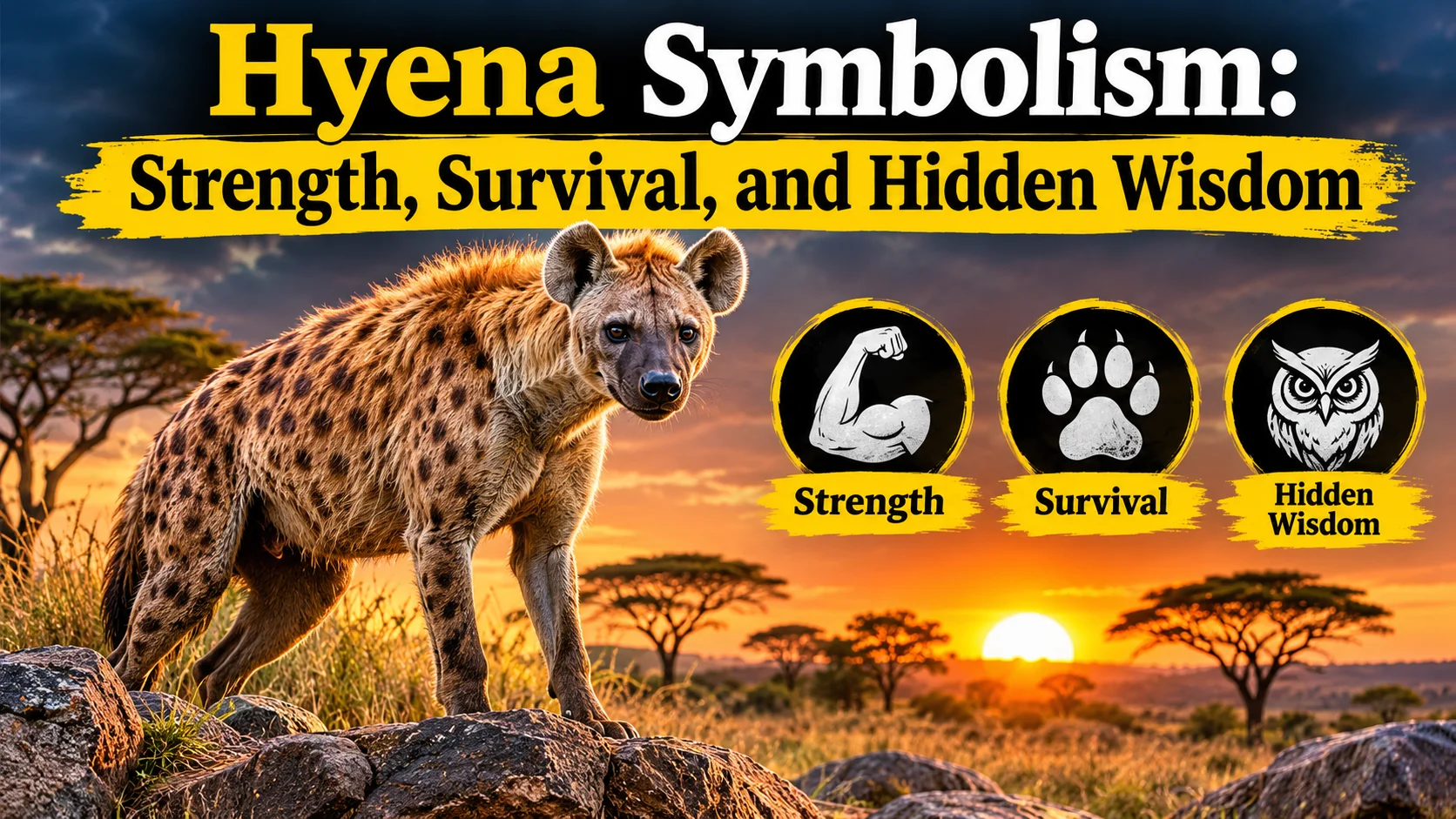
Hyena symbolism explores the deeper meanings people connect with this unusual animal, from survival and intelligence to social power and misunderstood strength. In the United States, hyenas often appear in movies, wildlife documentaries, folklore, and popular culture. Their distinctive calls, powerful jaws, and complex social behavior make them fascinating symbols of both danger and adaptability.
However, hyenas aren’t simply symbols of cruelty or darkness. These animals survive in challenging environments, work within complex social groups, and use remarkable intelligence to find food and protect themselves. Their behavior challenges the common belief that strength always means acting alone or overpowering others.
For many people, the hyena represents the ability to survive when circumstances become difficult. For others, it symbolizes laughter in uncomfortable situations, hidden motives, social pressure, or the courage to challenge expectations. Its meaning often depends on the setting and the emotions surrounding the animal.
Understanding hyena symbolism means looking beyond its reputation as a scavenger. By exploring its natural behavior, historical associations, cultural interpretations, and modern representations, you can discover why this animal carries such complicated meanings today.
Quick Answer
Hyena symbolism in the United States commonly represents survival, intelligence, resilience, and misunderstood strength. Spiritually, some people associate hyenas with adaptability, intuition, and confronting hidden fears. Their meaning can also involve community, opportunism, and the difference between appearances and reality.
TL;DR
- Hyenas symbolize survival, adaptability, intelligence, and resilience.
- Their social behavior represents community, cooperation, and complex relationships.
- Their laughter-like calls can symbolize emotional release or uncomfortable truths.
- American movies often portray hyenas as dangerous, deceptive, or comic characters.
- Spiritual interpretations frequently connect hyenas with intuition and confronting fears.
- Modern hyena imagery can express independence, unconventional identity, and misunderstood strength.
What Does Hyena Symbolism Mean?
Hyena symbolism reflects the contrast between an animal’s negative reputation and its impressive survival abilities. In American culture, hyenas often represent cunning, danger, and opportunism. Yet their real behavior reveals intelligence, social complexity, and remarkable adaptability.
The Core Symbolic Meanings
Three major themes help explain why people connect hyenas with deeper ideas.
Survival and resilience: Hyenas live in demanding environments and use flexible strategies to obtain food. Symbolically, they represent people who adapt when life becomes unpredictable.
Intelligence and strategy: Hyenas can assess opportunities, communicate socially, and adjust their behavior to changing circumstances. Their symbolism can suggest thinking carefully rather than relying entirely on physical strength.
Misunderstood power: Hyenas have long received less admiration than animals such as lions. Consequently, they can represent individuals who possess real abilities but struggle against unfair assumptions.
These meanings aren’t universal rules. A hyena appearing in a wildlife documentary may represent ecological balance, while one appearing in a frightening dream might reflect anxiety or distrust.
What Makes the Hyena a Powerful Symbol?
Hyenas occupy an unusual place in the animal world. Spotted hyenas, in particular, live in complex societies and can compete successfully with much larger predators.
Their loud, laughter-like calls also create a memorable impression. Because human beings often interpret unfamiliar animal sounds through their own emotions, these calls can suggest nervousness, mockery, excitement, or hidden communication.
The result is a symbol that combines strength with discomfort. Hyenas remind us that something can appear threatening or unpleasant without being entirely understood.
Historical Origins of Hyena Symbolism
Hyenas have attracted human attention for thousands of years. Their presence in ancient landscapes, folklore, and encounters with livestock helped shape the stories people told about them.
Hyenas in the Ancient World
Hyenas lived near human communities across parts of Africa, the Middle East, and Asia. Their scavenging behavior sometimes brought them into contact with settlements, burial grounds, and livestock.
These encounters could create fear and suspicion. An animal feeding on remains might become associated with death, danger, or disturbing nighttime activity.
However, historical interpretations varied. Ancient communities didn’t all view hyenas through one shared set of beliefs, and surviving evidence doesn’t support a single universal symbolism.
Some ancient Egyptian animal imagery included powerful creatures associated with the desert and dangerous wilderness. However, identifying a particular image as a hyena requires care because artistic depictions of wild animals can be difficult to distinguish.
Folklore and Traditional Beliefs
In different African and Middle Eastern storytelling traditions, hyenas have appeared as cunning animals, dangerous predators, comic figures, or creatures associated with unusual powers.
Some stories emphasize their ability to exploit opportunities. Others use the hyena to explore greed, foolishness, deception, or the consequences of ignoring warnings.
These stories shouldn’t be treated as representative of every community in a region. Africa and the Middle East contain many distinct languages, histories, and storytelling traditions.
Nevertheless, a recurring theme is the hyena’s uncertain position between fear and fascination. It can be a threat in one story and a clever survivor in another.
How the Symbol Changed Over Time
As written stories, travel accounts, and popular entertainment spread, the hyena’s reputation often became simplified.
Its association with carcasses encouraged the idea that it was dirty or cowardly. Meanwhile, its unusual vocalizations made it an effective character in frightening tales.
Modern wildlife research has challenged many of these assumptions. Today, hyenas are increasingly understood as intelligent animals with important ecological roles, although older negative associations remain influential.
Hyena Symbolism in American Culture
In the United States, hyenas often represent cunning, cruelty, comic disorder, or opportunistic behavior. Their portrayal in entertainment has strongly influenced public perceptions, sometimes overshadowing what scientists know about them.
Hyenas in American Movies and Television
Animated films and television programs have helped shape the American image of the hyena.
For example, Disney’s The Lion King presents hyenas as antagonistic characters associated with disorder and threats to the established social structure. Their group behavior, vocalizations, and exaggerated expressions make them memorable villains.
Such portrayals are fictional choices rather than accurate descriptions of every hyena’s behavior. Still, familiar characters can influence how viewers interpret the real animal.
In other media, hyenas appear as comic troublemakers or unpredictable creatures. Their laughter-like calls make them particularly useful for scenes involving nervous humor, confusion, or danger.
What Hyenas Represent in Everyday American Language
The word hyena sometimes appears in informal speech as an insult. Someone might use it to describe a person perceived as greedy, cruel, excessively loud, or eager to take advantage of others.
However, this comparison carries a negative judgment about both the person and the animal.
The expression reflects cultural attitudes rather than a scientific conclusion. Real hyenas have complex social lives and aren’t accurately described by every negative trait associated with their name.
Hyenas and the American Idea of the Underdog
Another interpretation emerges when we look beyond traditional villain portrayals.
Hyenas often compete with lions, face environmental pressures, and survive through flexible behavior. These characteristics can make them symbols of people who succeed without receiving admiration or recognition.
In this sense, the hyena resembles an underdog who refuses to give up. It represents the ability to find opportunities where others see obstacles.
This interpretation may appeal to people who feel underestimated because of their background, personality, appearance, or unconventional approach to life.
Spiritual Meaning of Hyenas
Hyena symbolism in spiritual contexts often centers on survival, intuition, transformation, and the courage to face uncomfortable truths. These interpretations are personal or tradition-specific rather than scientifically established messages from the animal.
Hyenas as Symbols of Intuition
Some contemporary spiritual interpretations connect hyenas with heightened awareness. Their social communication and ability to respond to changing conditions make them useful symbols of paying attention to one’s surroundings.
A hyena may therefore represent the importance of noticing details before making a decision.
For example, someone facing a difficult relationship might interpret the animal as a reminder to observe behavior carefully instead of relying entirely on promises.
This is a reflective interpretation, not proof that an animal predicts another person’s intentions.
Hyenas and Personal Transformation
Hyenas can also represent change through difficult circumstances. Their ability to survive in demanding environments offers a metaphor for learning from experiences that initially feel uncomfortable.
This meaning may resonate during periods of personal growth, career changes, or the end of a familiar routine.
The hyena’s symbolism encourages a practical question: What abilities might you develop when your usual approach no longer works?
The Shadow Side of Spiritual Symbolism
In some modern spiritual writing, hyenas represent hidden fears, unhealthy attachments, manipulation, or unresolved emotional conflict.
Psychological language sometimes uses the idea of a shadow to describe aspects of ourselves that we avoid acknowledging. A hyena can serve as a personal symbol for examining those uncomfortable feelings.
However, no single interpretation applies to everyone. The meaning depends on personal experiences, cultural background, and the context in which the animal appears.
Hyena Symbolism Across Cultures
Hyena meanings vary across communities and historical periods. Although certain themes recur, responsible interpretation requires distinguishing documented traditions from modern spiritual ideas.
African Cultural Interpretations
Hyenas appear in numerous African oral traditions, but there is no single African understanding of the animal.
In some folktales, hyenas are portrayed as greedy, foolish, cunning, or easily deceived. Other stories use them to explore power, social relationships, and the consequences of selfish behavior.
These narratives often teach lessons through humor or exaggeration. The animal’s familiar traits make it an effective character for exploring human behavior.
However, traditional stories shouldn’t be treated as zoological descriptions or as evidence that every African community views hyenas negatively.
Middle Eastern and South Asian Associations
Hyenas have also appeared in regional folklore and historical accounts across parts of the Middle East and South Asia.
Some traditions associate them with danger, nighttime activity, or unusual powers. In other contexts, the animal appears primarily as a predator or scavenger within the natural environment.
Specific beliefs differ by place, period, and community. Broad claims that all people in these regions share one spiritual interpretation would be misleading.
Contemporary Spiritual Interpretations
Modern spiritual discussions sometimes associate hyenas with adaptability, unconventional wisdom, community, and emotional honesty.
These interpretations may draw inspiration from the animal’s natural behavior rather than a specific inherited tradition.
| Context | Possible Symbolic Meaning | Common Association | Important Note |
| American popular culture | Cunning and disorder | Villains and comic troublemakers | Often shaped by fictional portrayals |
| African folktales | Intelligence, greed, or foolishness | Moral lessons and storytelling | Meanings differ between traditions |
| Contemporary spirituality | Adaptability and intuition | Personal growth and reflection | Interpretations aren’t universal |
| Wildlife education | Ecological importance | Predation and scavenging | Based on animal behavior |
| Personal symbolism | Resilience and independence | Identity and self-expression | Depends on individual experience |
The most useful approach is to consider the specific tradition rather than treating every interpretation as interchangeable.
Psychological Meaning of the Hyena
The hyena’s unusual appearance and behavior can produce strong emotional reactions. Psychologically, its symbolism often reflects how people respond to unfamiliarity, social judgment, and perceived threats.
Fear, Discomfort, and Hidden Anxiety
Hyenas may evoke fear because they possess powerful jaws, make unfamiliar sounds, and sometimes appear in groups.
Their laughter-like calls can be especially unsettling because people associate laughter with happiness or friendliness. When an animal makes a similar sound in an unfamiliar setting, the contrast can create discomfort.
Symbolically, a hyena may represent something that feels wrong but remains difficult to explain.
For example, someone experiencing uncertainty at work might associate the animal with mistrust or the fear of being taken advantage of. That connection reflects the person’s emotional response, not a prediction about future events.
Confidence and Resilience
The hyena can also represent confidence under pressure.
Its ability to compete for resources and navigate complex social relationships offers a useful metaphor for people who must remain resourceful in difficult situations.
This interpretation emphasizes practical strength rather than aggression. It suggests that confidence can come from observation, preparation, flexibility, and persistence.
Social Belonging and Independence
Spotted hyenas live in complex social groups, while other hyena species have different social patterns. Their behavior therefore offers several possible symbolic meanings.
A hyena may represent cooperation, social awareness, or the importance of knowing one’s place within a group. Alternatively, it may symbolize independence and the ability to survive without constant approval.
These meanings can seem contradictory, but both reflect different aspects of survival. Sometimes people need support, and sometimes they need to trust their own judgment.
Hyena Symbolism in Dreams
Dreams involving hyenas can feel intense because the animal carries strong associations with danger, laughter, and survival. However, dreams don’t have one scientifically established symbolic meaning, and their interpretation depends on the dreamer’s circumstances.
Dreaming of a Laughing Hyena
A laughing hyena in a dream might bring up feelings of embarrassment, nervousness, or suspicion.
If the sound feels threatening, you might connect it with a situation where you feel mocked or misunderstood. If it seems playful, the dream might remind you of humor during a difficult period.
Consider how you felt during the dream rather than assuming the sound carries a fixed message.
Dreaming of a Hyena Chasing You
A chasing hyena might symbolize pressure, conflict, or something you have been avoiding.
For example, the dream could reflect a difficult conversation or a responsibility that feels overwhelming. It doesn’t necessarily mean that someone is working against you.
Think about whether the chase felt frightening, exhausting, or strangely exciting. Your emotional response may offer more useful insight than the animal alone.
Dreaming of a Friendly Hyena
A friendly hyena might represent growing confidence around something you previously feared.
It could also reflect a willingness to reconsider someone or something you once misunderstood.
Rather than treating the dream as a supernatural warning, use it as an opportunity to examine your current feelings and experiences.
Read More: Snow Leopard Symbolism: Strength, Mystery, and Resilience
Hyena Symbolism in Tattoos, Art, and Home Decor
Hyena imagery offers a distinctive alternative to more familiar animal symbols such as wolves, lions, and eagles. In American fashion and art, it can communicate independence, resilience, dark humor, or a preference for unconventional imagery.
Hyena Tattoos and Personal Identity
A hyena tattoo can express different ideas depending on its design.
- Realistic hyena: May represent respect for wildlife, survival, or natural strength.
- Laughing hyena: Can suggest dark humor, unpredictability, or emotional complexity.
- Hyena with a pack: May symbolize loyalty, cooperation, or belonging.
- Stylized hyena portrait: Can communicate individuality and a willingness to challenge expectations.
- Hyena skull imagery: May suggest mortality, transformation, or an interest in darker artistic themes.
These interpretations aren’t fixed. A tattoo’s meaning ultimately depends on the person wearing it.
Art and Home Decor
In artwork, hyenas can introduce a sense of wilderness, tension, or unconventional beauty.
A realistic wildlife print might celebrate the animal’s ecological role. A dramatic illustration might emphasize its unusual expression, strong body, or distinctive silhouette.
In contrast, a cartoon hyena may communicate humor or playful mischief.
The setting matters as much as the image. A wildlife photograph in a study can express an interest in nature, while a stylized illustration might fit a more theatrical or alternative design.
Social Media and Digital Identity
On social media, animal imagery often works as a shorthand for personality.
Someone might choose a hyena avatar to communicate sarcasm, resilience, or a deliberately unconventional identity. Another person might use the animal to express an interest in wildlife conservation.
However, online meanings change quickly. A particular image may be humorous in one community and insulting in another.
Understanding the surrounding conversation helps prevent misinterpretation.
Hyena Symbolism in Nature and the Environment
Beyond folklore and entertainment, hyenas have real ecological importance. Their natural behavior provides a grounded foundation for understanding why people associate them with survival and adaptability.
The Symbolism of Scavenging
Hyenas are often described as scavengers, but this description is incomplete.
Spotted hyenas are skilled hunters and may obtain much of their food through active predation. They also consume carcasses, helping return nutrients to the environment.
Their flexible feeding behavior demonstrates how survival can involve several strategies rather than one fixed method.
Symbolically, scavenging can represent resourcefulness. It suggests finding value in overlooked opportunities instead of depending on ideal conditions.
Strength, Intelligence, and Cooperation
Spotted hyenas possess powerful jaws and live in societies with complex social relationships.
Members of a group may cooperate in certain situations, although competition and conflict also occur. Their social behavior is shaped by factors such as rank, relationships, food availability, and environmental conditions.
These traits make the hyena a useful symbol of strategic thinking.
Its strength doesn’t come only from physical power. It also reflects communication, adaptability, and the ability to respond to changing circumstances.
Ecological Balance and Modern Conservation
Hyenas contribute to ecosystems through hunting, scavenging, and interactions with other animals.
However, habitat loss, conflict with livestock owners, declining prey populations, and human persecution threaten some hyena populations.
The striped hyena, brown hyena, spotted hyena, and aardwolf have different ecological characteristics and conservation needs. They shouldn’t be treated as interchangeable animals.
Wildlife education can challenge negative symbolism by showing why these species matter. Their presence in an ecosystem is more complicated than the frightening or comic roles often assigned to them.
Misunderstandings and Controversies About Hyena Symbolism
Hyena symbolism can become misleading when fictional portrayals, cultural assumptions, and scientific facts are mixed together. Understanding these differences allows us to appreciate the symbol without reinforcing inaccurate beliefs.
Are Hyenas Cowardly or Cruel?
Hyenas are sometimes described as cowardly because they may avoid dangerous confrontations or take advantage of available food.
However, avoiding unnecessary injury is a normal survival strategy. Many predators choose when to fight based on the risks and benefits involved.
Similarly, feeding on carcasses doesn’t make an animal morally cruel. Moral judgments belong to human systems of thought, not to the biological behavior itself.
Are Hyenas Evil Spiritual Signs?
Some modern interpretations describe hyenas as warnings about deception, negative energy, or harmful relationships.
These meanings can be useful as personal metaphors, but they aren’t universal spiritual facts. Seeing a hyena in a dream, artwork, or wildlife setting doesn’t establish that something bad will happen.
A balanced interpretation considers personal feelings without turning an animal encounter into a source of unnecessary fear.
When Hyena Comparisons Become Insulting
Calling a person a hyena can imply that they’re greedy, cruel, or exploitative.
Although this comparison may appear in jokes or fictional dialogue, it can also become a personal insult. Its impact depends on the situation, relationship, and intent.
The broader issue is that negative animal stereotypes can influence how people understand real wildlife. Separating an animal’s natural behavior from human moral judgments encourages a more accurate view.
Cultural Context Matters
Hyenas appear in diverse storytelling traditions, so no single interpretation should stand for every community.
A story that portrays a hyena as foolish may serve a different purpose from one that emphasizes cleverness or danger. Both should be understood within their own cultural settings.
Respectful interpretation means avoiding sweeping claims and recognizing that symbols can change across generations.
How Hyena Symbolism Has Changed Over Time
The meaning of hyenas has shifted as people have moved from traditional storytelling toward scientific study, wildlife education, and modern entertainment.
From Feared Animal to Ecological Contributor
Historically, hyenas’ nighttime activity, scavenging behavior, and encounters with livestock helped create fear.
Over time, wildlife research revealed more about their hunting skills, social systems, and ecological roles. These discoveries challenged the idea that hyenas were merely dirty or cowardly animals.
Negative associations haven’t disappeared, but modern wildlife education offers a more balanced perspective.
From Fictional Villain to Complex Character
American entertainment continues to use hyenas as villains, comic characters, and symbols of unpredictability.
At the same time, documentaries and conservation projects increasingly present them as complex animals worthy of understanding.
These different portrayals can exist together. Fiction uses recognizable traits to tell stories, while scientific research examines animal behavior through observation and evidence.
Why the Symbol Still Matters Today
The hyena remains compelling because it challenges familiar ideas about strength and social status.
It can represent someone who succeeds without receiving approval or an individual who adapts when conventional methods fail.
For modern readers, this symbolism offers an alternative to the usual images of power. It suggests that intelligence, flexibility, and persistence can matter as much as appearance or reputation.
FAQs:
What Does a Hyena Symbolize Spiritually?
A hyena may symbolize adaptability, intuition, resilience, and confronting uncomfortable truths in contemporary spiritual interpretations. However, meanings vary, and there is no universal spiritual definition.
Is Seeing a Hyena a Good or Bad Sign?
Seeing a hyena isn’t inherently a good or bad sign. Some people interpret the encounter as a reminder to remain resourceful, while others associate the animal with caution or uncertainty.
What Does a Laughing Hyena Symbolize?
A laughing hyena can represent nervousness, unpredictability, dark humor, or communication that others misunderstand. In nature, its vocalizations serve social purposes and don’t necessarily indicate happiness or amusement.
What Does a Hyena Mean in a Dream?
A hyena in a dream may reflect concerns about trust, social pressure, resilience, or uncomfortable emotions. Consider the dream’s setting and your feelings rather than assuming it predicts future events.
What Does a Hyena Tattoo Represent?
A hyena tattoo may represent survival, intelligence, unconventional identity, dark humor, or loyalty to a social group. Its specific meaning depends on the design and the wearer’s personal experiences.
Why Are Hyenas Often Portrayed as Villains?
Hyenas’ scavenging behavior, unusual calls, and interactions with other predators have contributed to their negative reputation. Popular entertainment, including animated films, has reinforced these associations, although real hyena behavior is more complex.
Conclusion:
Hyena symbolism brings together survival, intelligence, adaptability, and the struggle against unfair assumptions. In the United States, the animal’s image is often shaped by entertainment and negative stereotypes. However, its real behavior reveals a more complicated story involving social relationships, hunting skills, and ecological importance.
Spiritually and psychologically, the hyena can serve as a symbol of resilience, careful observation, and the courage to reconsider familiar judgments. Its meaning depends on the context, whether it appears in a dream, a tattoo, a traditional story, or a wildlife documentary.

1 thought on “Hyena Symbolism: Strength, Survival, and Hidden Wisdom”