
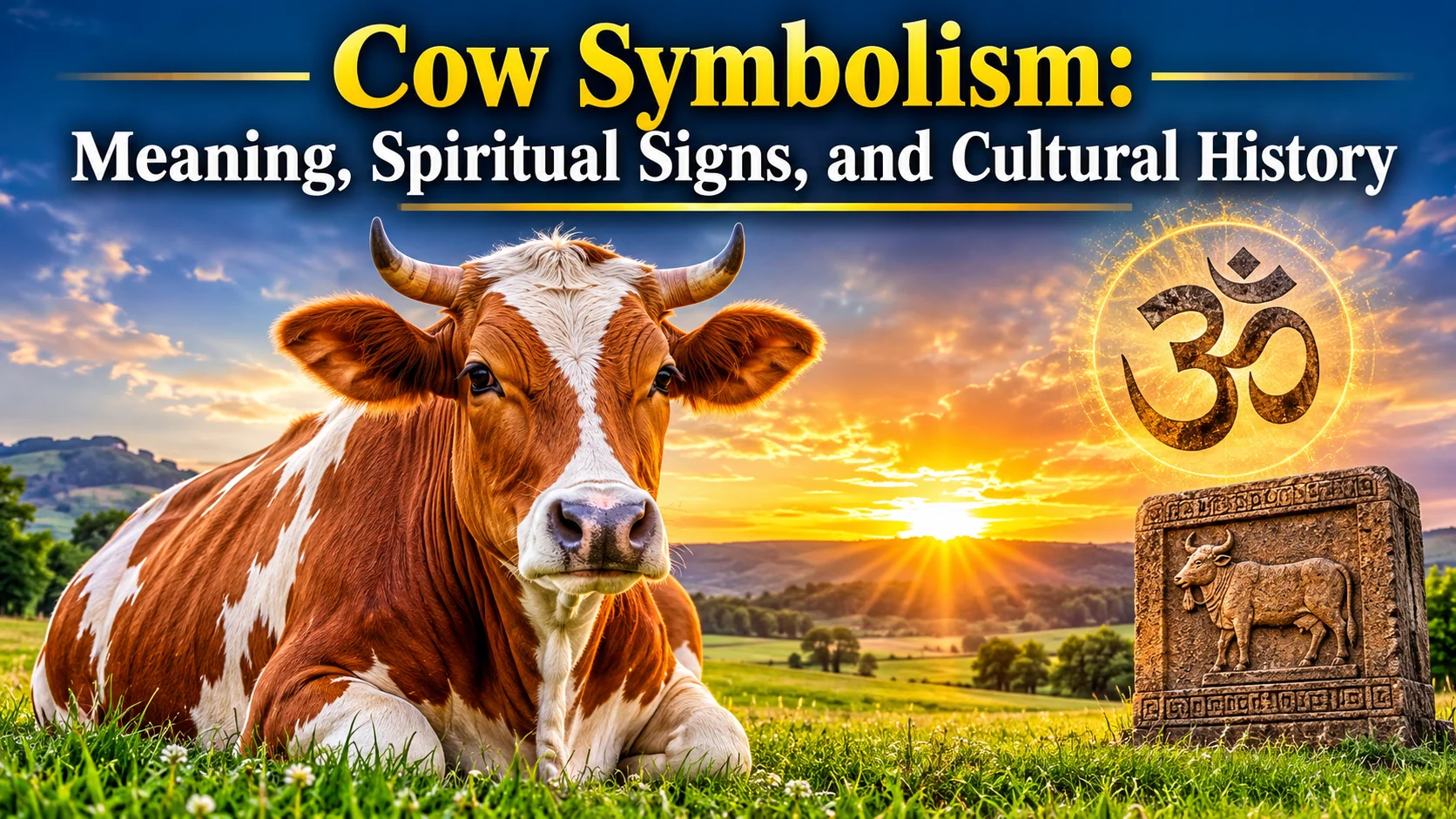
A cow is more than a familiar farm animal. Across history, people have connected cows with nourishment, motherhood, prosperity, patience, and the natural world. Cow symbolism explores these deeper meanings and explains why this gentle animal continues to hold cultural and spiritual importance.
In the United States, cows often represent farming traditions, rural life, family values, and the connection between people and the land. They appear in country artwork, farmhouse decorations, children’s stories, advertisements, and Western imagery. However, their meaning goes beyond agriculture and everyday life.
In many spiritual traditions, cows represent abundance, generosity, fertility, and unconditional care. Their ability to provide milk has made them powerful symbols of nourishment and motherhood. Meanwhile, their calm behavior can remind people of patience, stability, and a slower way of living.
Today, people also connect cows with personal growth, emotional comfort, and spiritual reflection. Whether you encounter a cow in a dream, notice one repeatedly, or choose it as a tattoo, its symbolism can carry several layers of meaning.
Quick Answer:
Cow symbolism in American culture primarily represents nourishment, abundance, motherhood, patience, and a strong connection to the land. Spiritually, cows often symbolize generosity, fertility, protection, peace, and the importance of caring for others.
TL;DR: Cow Symbolism at a Glance
- Abundance: Cows represent nourishment, prosperity, and life’s blessings.
- Motherhood: Their milk-giving nature connects them with care and protection.
- Patience: Their calm presence symbolizes steady progress and peaceful living.
- Strength: Cows represent endurance, reliability, and everyday hard work.
- Spirituality: Many traditions associate cows with sacredness and generosity.
- American culture: Cows reflect farming heritage, rural identity, and country life.
What Does a Cow Symbolize?
Cows have developed rich symbolic meanings because of their relationship with human communities. For thousands of years, people have depended on cattle for food, farming, clothing materials, and transportation. Consequently, these animals became associated with survival and prosperity.
In modern America, cows often represent a simpler connection to nature. They remind people of farms, open fields, family traditions, and the value of everyday resources.
The Main Symbolic Meanings
Here are some of the most common interpretations:
- Nourishment: Providing milk connects cows with physical and emotional support.
- Motherhood: Their nurturing role represents protection, kindness, and family bonds.
- Prosperity: Healthy cattle historically represented wealth and agricultural success.
- Peace: Their gentle appearance suggests calmness and emotional balance.
- Patience: Their slow, steady behavior represents taking life one step at a time.
- Grounding: Their connection to farmland symbolizes stability and belonging.
However, these meanings aren’t universal. A cow can represent different things depending on someone’s upbringing, beliefs, and personal experiences.
Why Cows Have Such Powerful Symbolism
The relationship between humans and cattle explains much of their symbolic importance. Unlike animals people encounter only occasionally, cows have supported entire communities.
Their milk feeds families, their presence supports agricultural work, and their lives connect people with seasonal changes. Therefore, cows often represent the idea that prosperity comes through care, patience, and responsible use of resources.
Historical Background of Cow Symbolism
Cow symbolism reaches back thousands of years. Ancient societies recognized cattle as valuable animals long before modern farming developed.
Because cattle provided essential resources, they became associated with wealth, fertility, social status, and religious beliefs. Their importance influenced mythology, artwork, ceremonies, and traditional stories.
Ancient Civilizations and Cattle
In ancient Egypt, cows had strong connections with motherhood and divine protection. The goddess Hathor was frequently represented with cow features or horns.
Hathor represented motherhood, fertility, love, music, and protection. Her connection with cattle reflected the importance of nourishment and feminine power.
Similarly, ancient Mesopotamian societies used cattle imagery in religious and artistic settings. Bulls and cows could represent fertility, strength, and divine power.
In several ancient Mediterranean traditions, cattle also represented wealth. Owning large herds suggested prosperity and social influence.
Cattle in Early Agricultural Communities
As farming communities developed, cattle became important for everyday survival.
They provided milk, meat, leather, and assistance with agricultural work. Their value made them important measures of wealth in many societies.
Over time, these practical connections developed into symbolic ideas:
- A large herd represented financial security and prosperity.
- A healthy cow suggested fertility and successful farming.
- A mother cow represented nourishment and family protection.
- A strong bull represented physical power and masculine strength.
These older associations continue to influence how people interpret cows today.
Cow Symbolism in American Culture
In the United States, cows have a special place in agricultural history and everyday cultural imagery. They represent more than food production. They also connect people with rural communities, family traditions, and the country’s farming heritage.
Although America has become increasingly urban, cattle remain recognizable symbols of agricultural life.
Farming and Rural Identity
For many Americans, cows represent the countryside.
A peaceful herd grazing across a green pasture can suggest a lifestyle connected with nature, hard work, and open spaces. This image frequently appears in country photography, farmhouse artwork, and rural advertising.
Cows also represent the generations of farmers and ranchers who helped shape American agriculture.
The American Dairy Tradition
Dairy cows, particularly black-and-white Holsteins, have become familiar images in American culture.
Their association with milk, cheese, butter, and other dairy products makes them symbols of nourishment and everyday family life.
For many people, a cow brings back memories of childhood, school lunches, family breakfasts, or visits to grandparents’ farms.
Western and Ranching Culture
Cattle also have strong connections with American Western history.
Ranching helped shape the development of many communities, particularly across Texas and the western United States. Cattle drives, ranches, and livestock markets became important parts of regional history.
However, the familiar Western image often features longhorn cattle or bulls rather than dairy cows.
These animals represent different ideas, including:
- Independence and self-reliance.
- Agricultural traditions and ranching heritage.
- Physical endurance and determination.
- The relationship between people, animals, and the land.
The cow therefore carries both domestic and agricultural meanings in American culture.
Spiritual Meaning of a Cow
Spiritually, cows are often connected with generosity, nourishment, fertility, and peace. Their ability to provide sustenance without demanding attention makes them powerful symbols of giving.
For people exploring animal symbolism, the cow can represent a reminder to appreciate life’s simple blessings.
A Symbol of Abundance and Generosity
A cow’s milk-giving nature makes it a symbol of abundance in several spiritual interpretations.
It represents the idea that genuine prosperity involves more than money. It also includes health, supportive relationships, food, shelter, and emotional security.
Seeing a cow may encourage personal reflection about gratitude and generosity.
A Symbol of Protection
Mother cows naturally care for their calves. This behavior connects them with protective love and responsibility.
Spiritually, the cow can represent the importance of creating a safe environment for loved ones.
It may also symbolize emotional support during difficult periods.
A Reminder to Live With Patience
Cows generally move through their surroundings without unnecessary urgency.
Their calm appearance can encourage people to slow down and reconsider their priorities.
Rather than rushing toward every goal, the cow’s symbolism suggests building a stable life through consistent effort.
These interpretations are spiritual traditions and personal beliefs, not scientifically established messages.
Cow Symbolism Across Different Cultures and Religions
Cows don’t have one universal meaning. Different societies have developed their own relationships with cattle through religion, agriculture, mythology, and everyday life.
Understanding these differences helps explain why cows can represent sacredness in one culture and ordinary farm life in another.
Hinduism and the Sacred Cow
In Hindu traditions, cows hold significant religious and cultural importance.
They are commonly associated with motherhood, generosity, nourishment, and nonviolence. The cow’s ability to provide milk contributes to its image as a nurturing figure.
The Hindu deity Krishna is also closely connected with cows and pastoral life. Artistic representations frequently show Krishna among cattle or playing his flute beside them.
However, Hindu beliefs and practices vary across communities. The cow’s importance should be understood within its religious and historical context.
Ancient Egyptian Traditions
Ancient Egyptians associated cows with divine motherhood and protection.
Hathor’s cow imagery represented fertility, nurturing, and the life-giving power of nature. This connection made the cow an important image in religious art.
African Cattle Traditions
In several African pastoral communities, cattle have historically represented wealth, family relationships, social standing, and community identity.
Among some East African pastoral peoples, cattle are deeply connected with livelihood and social relationships.
However, practices and meanings differ widely between communities. There isn’t one single African interpretation of cow symbolism.
Other Asian Traditions
In some Chinese cultural interpretations, cattle and oxen represent hard work, strength, reliability, and perseverance.
The animal’s association with agriculture makes it a symbol of steady labor and practical wisdom.
These interpretations show how the same animal can represent both spiritual generosity and everyday determination.
Emotional and Psychological Meaning of a Cow
A cow’s appearance can create feelings of comfort, security, and familiarity. Its large body and generally calm behavior may remind people of stability and peaceful surroundings.
Psychologically, animal symbols often reflect the qualities people admire or need in their lives.
Comfort and Emotional Security
Many people associate cows with childhood memories and familiar rural environments.
A cow standing in a quiet field may remind someone of family visits, countryside vacations, or simpler experiences.
Consequently, cow imagery can create feelings of belonging and emotional comfort.
Patience and Emotional Balance
Cows can also represent a patient approach to life.
Their symbolism may resonate with people who feel overwhelmed by pressure, competition, or constant demands.
The cow offers a useful metaphor for slowing down and appreciating gradual progress.
What a Cow May Represent About Your Personality
If you feel strongly connected to cows, you may appreciate qualities such as:
- Caring for others without expecting constant recognition.
- Building a stable and comfortable home environment.
- Remaining patient during challenging situations.
- Valuing nature and simple everyday experiences.
- Finding happiness through gratitude and generosity.
These are symbolic associations rather than personality assessments. Your personal connection with cows may have a completely different explanation.
Different Cow Colors and Their Symbolic Meanings
Cow colors can add another layer to their interpretation. However, these meanings are mostly modern or traditional symbolic associations rather than universal cultural rules.
The surrounding situation also matters.
White Cow Symbolism
White cows are often associated with purity, peace, innocence, and spiritual clarity.
Their appearance may suggest a desire for emotional balance or a fresh beginning.
Black Cow Symbolism
Black cows can represent strength, mystery, protection, and resilience.
In some personal interpretations, their dark appearance connects them with hidden emotions and inner strength.
However, black coloring doesn’t automatically indicate something negative.
Brown Cow Symbolism
Brown cows are commonly connected with earthiness, stability, comfort, and practicality.
Their natural coloring can suggest a strong connection with the land and everyday responsibilities.
Black-and-White Cow Symbolism
Black-and-white cows may represent balance, contrast, and the coexistence of different qualities.
Their distinctive appearance can also symbolize individuality and the beauty of natural differences.
| Cow Color | Common Symbolic Meaning | Associated Qualities |
| White | Purity and peace | Clarity, innocence |
| Black | Strength and mystery | Protection, resilience |
| Brown | Grounding and stability | Comfort, reliability |
| Black and white | Balance and contrast | Harmony, individuality |
Read More: Hyena Symbolism: Strength, Survival, and Hidden Wisdom
Cow Symbolism in Dreams
Dreaming about a cow can reflect your thoughts about security, family, nourishment, and personal responsibilities.
However, dreams don’t have fixed meanings. Your feelings during the dream and your personal experiences matter more than any general interpretation.
Seeing a Healthy Cow
A healthy cow may symbolize stability, satisfaction, and a sense of security.
It could reflect a period when you feel supported or appreciate the resources available in your life.
Dreaming About a Mother Cow and Calf
A mother cow with her calf often represents nurturing, family bonds, and protection.
It may reflect your desire to care for someone or strengthen an important relationship.
Dreaming About a Cow Chasing You
A chasing cow may symbolize pressure, uncomfortable responsibilities, or emotions you’re avoiding.
Consider whether something in your waking life feels difficult to confront.
Dreaming About a Sick or Weak Cow
A weak cow might represent concerns about stability, energy, or neglected responsibilities.
Rather than treating it as a prediction, consider whether you feel emotionally or physically overwhelmed.
Dreaming About Milking a Cow
Milking a cow can represent productivity, receiving benefits, and making good use of available resources.
It may also reflect the effort required to maintain something valuable.
Cow Symbolism in Tattoos, Art, and Home Decor
Cow imagery has become popular in different forms of personal expression. Some people choose it for its spiritual associations, while others simply appreciate its appearance or cultural connections.
Today, cows can communicate different values depending on their design and setting.
Cow Tattoos
Cow tattoos can represent several personal ideas:
- Motherhood: A reminder of family, nurturing, and unconditional care.
- Abundance: A symbol of gratitude and appreciation for life’s blessings.
- Strength: A reminder to remain steady during difficult times.
- Country identity: An expression of rural upbringing or agricultural connections.
- Peace: A personal reminder to live calmly and patiently.
Some people choose realistic cow portraits, while others prefer minimalist outlines or playful designs.
Cow Artwork and Farmhouse Decor
Cow paintings and decorative objects are common in farmhouse-style interiors.
Black-and-white cow portraits, rustic signs, and countryside illustrations can create a warm, welcoming atmosphere.
Their popularity reflects an appreciation for traditional farming imagery and rural simplicity.
Cows on Social Media
Cows also appear in humorous videos, memes, photography, and animal-focused social media accounts.
Their expressive faces and recognizable behavior make them popular subjects.
Depending on the context, a cow image can communicate humor, cuteness, peaceful living, or appreciation for farm animals.
Negative Meanings, Misunderstandings, and Controversies
Although cows generally have positive symbolic associations, they can also carry negative meanings.
These interpretations often come from language, stereotypes, and cultural disagreements rather than the animal itself.
The Insulting Use of the Word Cow
In American English, calling someone a cow can be an insult.
It may suggest that someone is unattractive, unpleasant, or behaving badly. Such language can be hurtful and may rely on unfair comparisons involving body size.
This negative expression is different from the animal’s traditional associations with motherhood and nourishment.
The Sacred Cow Controversy
The expression “sacred cow” has a separate meaning in everyday American English.
It describes an idea, institution, or tradition that people hesitate to criticize.
For example, someone might describe an outdated workplace rule as a sacred cow.
However, the expression comes from a real religious association. Using it casually can sometimes overlook the cow’s genuine importance in Hindu traditions.
Confusing Cows With Bulls and Bison
People sometimes use cattle imagery interchangeably, but different animals carry different meanings.
A cow is an adult female bovine. A bull is an adult male bovine, while a bison belongs to a different species.
This distinction matters when discussing American history and Indigenous traditions.
For example, the White Buffalo Calf Woman is an important figure in Lakota tradition. Her story involves a white buffalo calf, not an ordinary domestic cow.
Respecting these distinctions prevents cultural misunderstandings.
How Cow Symbolism Has Changed Over Time
Cow symbolism has evolved alongside changes in agriculture, religion, technology, and popular culture.
In earlier societies, cattle represented essential resources and social wealth. Their value came from their practical contributions to community survival.
Over time, religious traditions developed additional meanings around motherhood, generosity, sacredness, and fertility.
From Agricultural Wealth to Cultural Identity
In early farming communities, owning cattle could demonstrate prosperity and influence.
However, modern industrial agriculture changed how many people interact with cows.
Today, some Americans encounter cattle primarily through grocery products, farm visits, documentaries, or rural tourism.
Despite these changes, cows remain familiar symbols of agricultural heritage.
From Religious Imagery to Modern Design
Cow imagery has also moved beyond traditional religious and agricultural settings.
Today, people use cow illustrations in clothing, artwork, accessories, and interior design.
Some designs emphasize spiritual meanings, while others focus on humor, nostalgia, or country living.
Growing Interest in Animal Welfare
Modern discussions about animal welfare have influenced how people view cows.
Some people see them primarily as agricultural animals. Others emphasize their intelligence, social behavior, and ability to form relationships.
This shift has encouraged broader conversations about responsible farming and human relationships with animals.
Consequently, cow symbolism increasingly includes compassion, respect for nature, and ethical responsibility.
What Can a Cow Teach Us About Life?
Beyond its historical and cultural meanings, the cow offers several useful ideas for personal reflection.
Its symbolism connects everyday experiences with larger questions about responsibility, patience, and appreciation.
Appreciate What You Already Have
A cow represents nourishment and the resources that support daily life.
Its symbolism encourages gratitude for food, shelter, supportive relationships, and other everyday blessings.
Practice Patience
Not every meaningful achievement happens quickly.
The cow can serve as a reminder that steady effort often matters more than rushing toward immediate results.
Care for Others
Mother cows provide a strong image of nurturing and protection.
Their symbolism highlights the importance of supporting loved ones while maintaining healthy relationships.
Stay Connected to Nature
Cows remind people of agriculture and the natural systems that sustain human communities.
Their presence encourages appreciation for the land, animals, and resources people depend on.
FAQs:
What Does a Cow Symbolize Spiritually?
A cow commonly symbolizes abundance, motherhood, nourishment, patience, and protection. In some spiritual traditions, it also represents sacredness and generosity.
Is Seeing a Cow a Good Sign?
Many symbolic interpretations consider seeing a cow a positive sign associated with peace, stability, and prosperity. However, its personal meaning depends on your experiences and cultural background.
What Does a Cow Represent in American Culture?
In the United States, cows commonly represent farming, rural traditions, nourishment, family life, and agricultural heritage. They also appear in Western imagery and farmhouse decorations.
What Does a White Cow Symbolize?
A white cow is often associated with purity, peace, innocence, and spiritual clarity. Some people also connect it with fresh beginnings and emotional balance.
What Does a Cow Symbolize in Hinduism?
In Hindu traditions, the cow is an important symbol of motherhood, nourishment, generosity, and nonviolence. Its connection with Krishna also makes it significant in devotional traditions.
What Does a Cow Mean in a Dream?
A cow in a dream may represent security, family, abundance, or emotional nourishment. The animal’s condition and your feelings during the dream can influence your personal interpretation.
Conclusion:
Cow symbolism carries meaningful connections with nourishment, motherhood, abundance, patience, and protection. Its history reaches back to ancient civilizations, where cattle supported agriculture, influenced religious traditions, and represented prosperity.
In the United States, cows remain familiar symbols of rural heritage, farming communities, family traditions, and the connection between people and nature. Across other cultures, they can represent sacredness, generosity, fertility, and spiritual responsibility.

1 thought on “Cow Symbolism: Meaning, Spiritual Signs, and Cultural History”