
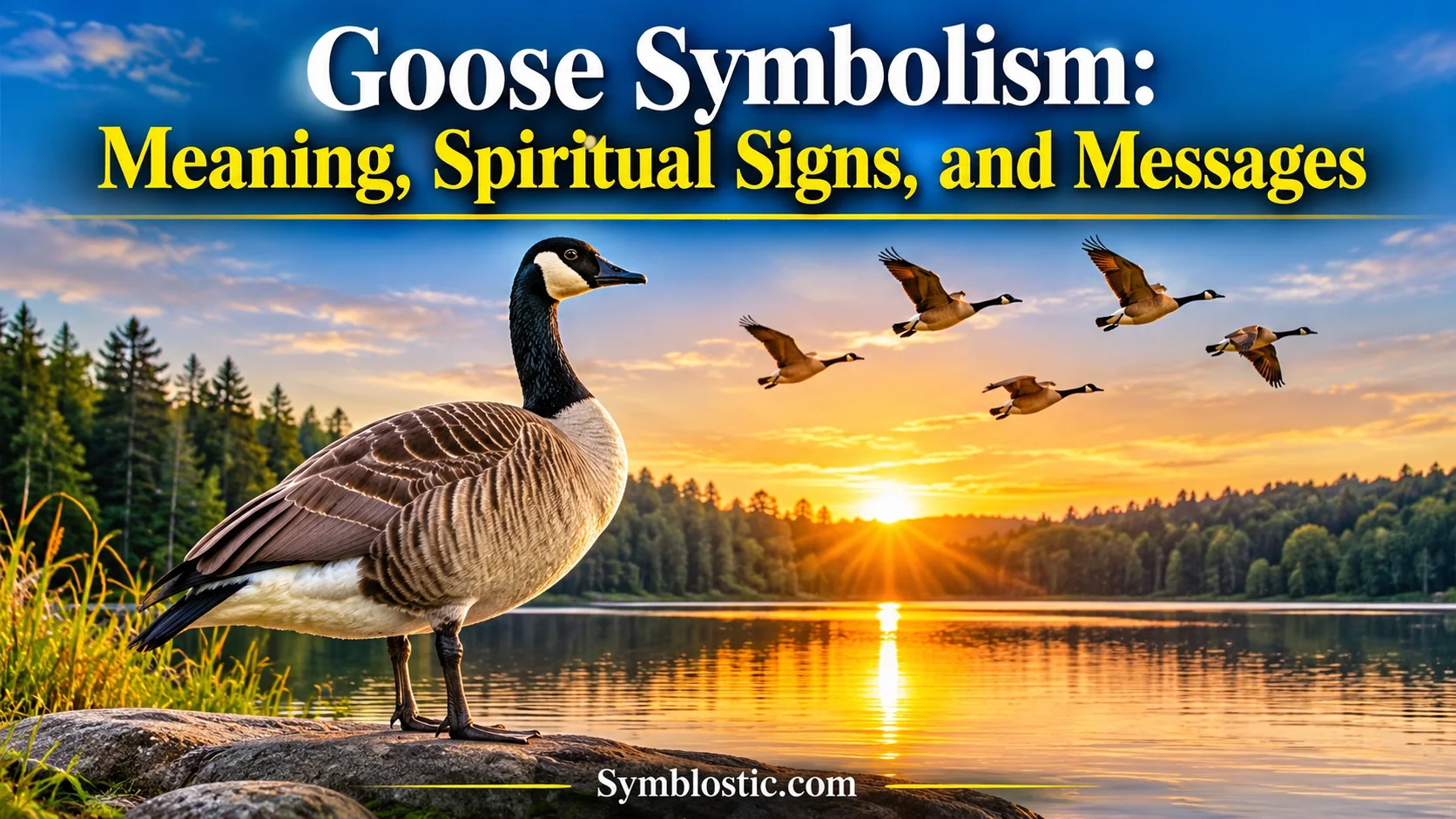
A goose is more than a familiar bird flying across the sky or swimming across a quiet pond. In symbolism, it often represents loyalty, family, protection, communication, and determination. Its strong social bonds and seasonal journeys have inspired meaningful stories across generations.
Goose Symbolism has a special place in American culture. Geese appear in parks, lakes, farms, children’s stories, holiday decorations, and seasonal traditions. Their familiar honking and impressive flying formations make them easy to recognize. However, their behavior also gives people reasons to connect them with deeper ideas.
A flock of geese can remind you of the importance of community. A protective goose may represent courage and devotion. Meanwhile, a migrating goose can suggest freedom, change, and finding your way home.
These meanings aren’t universal rules or predictions. Instead, they reflect human observations, cultural traditions, spiritual beliefs, and emotional connections with nature. Understanding them helps explain why this ordinary bird carries such powerful symbolic meaning.
Quick Answer
Goose symbolism in American culture primarily represents family loyalty, protection, teamwork, communication, and perseverance. Spiritually, geese can also symbolize guidance, personal transformation, freedom, and the importance of trusting your community.
TL;DR
- Geese symbolize loyalty, family bonds, and lifelong companionship.
- Their protective behavior represents courage and responsibility.
- Flying formations symbolize teamwork, cooperation, and shared goals.
- Migration represents freedom, change, and finding your direction.
- Spiritual traditions associate geese with guidance and transformation.
- Modern designs use geese to express belonging and resilience.
What Does a Goose Symbolize?
A goose carries several meanings because of its behavior, appearance, and relationship with other birds. In the United States, people often connect it with dependable relationships and the strength of working together.
Its symbolism can change depending on whether you see one goose, a nesting pair, or an entire flock. However, three central themes appear repeatedly.
Loyalty and Family
Geese are known for forming lasting pair bonds and maintaining close family relationships. Parents protect their young, while young birds often remain with their families during migration.
Therefore, a goose can represent:
- Faithfulness in romantic and family relationships.
- Commitment to loved ones during difficult periods.
- The importance of raising and protecting children.
- Staying connected with people who share your values.
Protection and Courage
A goose may look peaceful while swimming across a pond. However, it can become surprisingly defensive when protecting its nest or young.
This behavior creates associations with bravery, boundaries, and responsibility. A goose can symbolize someone who remains gentle but refuses to ignore threats against loved ones.
Teamwork and Communication
Geese frequently travel in coordinated formations. Their calls help maintain contact, while birds take turns leading during long flights.
Consequently, they represent cooperation, shared leadership, and the value of supporting others. Their symbolism reminds people that meaningful achievements rarely happen entirely alone.
Goose Appearance and Its Symbolic Meaning
A goose’s physical appearance also contributes to its symbolic associations. Different colors, movements, and settings can create different impressions.
In American wildlife imagery, the Canada goose is particularly recognizable. It has a dark head and neck, a distinctive white chinstrap, and a brownish-gray body.
Symbolism of Different Goose Colors
Color symbolism isn’t a scientific rule. However, artists and modern spiritual interpreters often connect particular shades with different qualities.
- White goose: Purity, peace, innocence, and fresh beginnings.
- Gray goose: Balance, patience, wisdom, and emotional stability.
- Brown goose: Groundedness, family life, and connection with nature.
- Black goose: Mystery, strength, independence, and personal transformation.
These interpretations depend on artistic and cultural context. A bird’s natural color doesn’t automatically carry a spiritual message.
Symbolism of Goose Movements
A goose’s posture can influence how people understand its image.
- A flying goose suggests freedom, ambition, and forward movement.
- A swimming goose represents emotional balance and adaptability.
- A standing goose suggests awareness and confidence.
- A nesting goose symbolizes family responsibilities and protection.
- An approaching goose can represent communication or an invitation to pay attention.
Historical Origins of Goose Symbolism
Geese have lived alongside humans for thousands of years. People valued them for their meat, eggs, feathers, and ability to guard domestic spaces.
However, their importance extended beyond practical uses. Ancient communities also included geese in religious imagery, legends, and stories about protection.
Ancient Egyptian Goose Symbolism
In ancient Egypt, the goose appeared in religious art and creation traditions. Some accounts associated the great cosmic goose with the beginning of creation.
A divine goose was connected with Geb, the Egyptian god associated with the earth. In certain versions of the creation story, a goose laid the cosmic egg from which the sun emerged.
This imagery connected the bird with life, beginnings, and the creation of the world. However, ancient Egyptian traditions included different versions of creation myths.
Goose Symbolism in Ancient Rome
One of the most famous historical goose stories comes from ancient Rome.
According to Roman tradition, sacred geese kept near the Temple of Juno warned Roman defenders during a nighttime attack by invading Gauls around 390 BCE.
Their loud calls reportedly alerted the defenders to danger. This story helped establish the goose as a symbol of vigilance and protection.
The historical account became especially memorable because the geese performed a role that human guards had apparently missed.
Geese in European Folklore
European folklore also gave geese a place in household stories and seasonal traditions.
In some communities, geese represented domestic comfort, agricultural abundance, and protection. Their eggs and meat made them important farm animals.
Meanwhile, folk tales sometimes portrayed them as magical birds or messengers. The golden goose became a familiar storybook image of unexpected fortune and extraordinary gifts.
Goose Symbolism in American Culture
In the United States, geese have a strong connection with nature, seasonal change, family life, and everyday outdoor experiences. Their presence around lakes, farms, parks, and residential neighborhoods makes them familiar to millions of Americans.
The Canada goose is especially important to this cultural picture. Its recognizable appearance and seasonal flights have made it a familiar feature of the American landscape.
A Symbol of American Wildlife
For generations, geese have represented the natural beauty of North American wetlands and open landscapes.
Their seasonal movements remind people of changing weather and the connection between wildlife and the environment. In particular, migrating flocks often become recognizable signs of spring and fall.
Family and Thanksgiving Traditions
Geese also have historical connections with American farm life and traditional holiday meals.
Although turkey is now the better-known Thanksgiving centerpiece, goose has appeared in American and European holiday cooking traditions. It remains associated with older family gatherings and seasonal meals.
In Christmas stories, particularly those influenced by European traditions, roasted goose sometimes represents generosity, warmth, and family celebration.
Geese in American Everyday Life
Today, Canada geese frequently appear around:
- Public parks, golf courses, and recreational lakes.
- College campuses and university grounds.
- Farms, wetlands, and protected wildlife areas.
- Children’s books, cartoons, and nature photography.
- Seasonal decorations and outdoor artwork.
Their presence can symbolize the relationship between modern communities and the natural world. However, it can also create practical frustrations when large flocks gather around busy public spaces.
Spiritual Meaning of a Goose
In contemporary spiritual interpretations, a goose often represents guidance, loyalty, protection, and the importance of community. People may interpret its appearance as a reminder to pay attention to their relationships and personal direction.
These meanings belong to spiritual belief and personal interpretation. They aren’t proven messages from the supernatural world.
Goose as a Spiritual Messenger
Some spiritual traditions describe birds as messengers because they travel between the earth and sky.
Within this symbolic view, a goose may represent:
- Receiving guidance during a period of uncertainty.
- Trusting your instincts when making important decisions.
- Maintaining connections with supportive people.
- Recognizing opportunities for personal growth.
- Finding direction after a difficult experience.
Goose as a Symbol of Personal Growth
A migrating goose travels through changing environments while maintaining connections with its flock.
Spiritually, this can represent moving forward without abandoning your values. It may encourage you to accept change while remembering the people and experiences that shaped you.
Goose as a Symbol of Protection
A protective goose can represent the importance of guarding what matters most.
For some people, this symbolism connects with parenting, friendship, personal boundaries, and emotional responsibility.
It also offers a useful reminder: protecting others doesn’t mean controlling their choices. Healthy protection allows people to grow while providing support.
Goose Symbolism in Different Cultures
Goose symbolism varies across cultures, religions, and historical periods. Some traditions emphasize creation and divine power, while others focus on love, communication, or seasonal change.
Understanding these differences prevents people from treating every cultural interpretation as identical.
Celtic and European Traditions
Geese appear in European folklore, seasonal stories, and traditional rural life.
Some modern spiritual interpretations associate wild geese with freedom, communication, and spiritual calling. In certain contemporary Celtic Christian discussions, the wild goose also serves as an image of the Holy Spirit.
This is a particular symbolic interpretation, not a universal belief shared by every Celtic community or Christian tradition.
Hindu Traditions
In Hindu religious symbolism, the hamsa is an important sacred bird. It’s commonly represented as a swan or goose-like water bird, depending on the artistic and textual tradition.
The hamsa is associated with Brahma and Saraswati in different religious contexts. It can represent wisdom, spiritual knowledge, discernment, and purity.
It’s important not to assume that every goose carries the same religious meaning as the hamsa.
Indigenous North American Perspectives
Geese have long been part of Indigenous relationships with North American wildlife.
Different Indigenous nations have their own teachings, stories, and relationships with waterfowl. Geese have also served as important food sources and seasonal indicators.
However, there isn’t one universal Native American interpretation of goose symbolism. Specific meanings should be understood through the traditions of individual communities.
Goose Migration and the Meaning of Freedom
One of the most recognizable images of goose symbolism is a flock traveling across the sky in a V-shaped formation.
This movement creates a powerful connection with freedom, determination, cooperation, and the search for a better destination.
The V-Formation and Teamwork
Geese fly in coordinated formations that help reduce the effort required for long journeys. Birds also communicate and take turns occupying demanding positions.
This behavior creates several symbolic lessons:
- Leadership involves responsibility rather than permanent control.
- Teamwork makes difficult journeys more manageable.
- Supporting others strengthens the entire group.
- Rest and cooperation help maintain long-term progress.
- Shared direction creates a stronger sense of purpose.
Migration as Personal Transformation
Migration can symbolize leaving familiar circumstances and entering a new stage of life.
For example, someone changing careers or moving to another state might connect with the goose’s journey.
The bird becomes a reminder that change doesn’t always mean losing your identity. Sometimes, moving forward is necessary to reach a place where you can grow.
Finding Your Way Home
Geese are strongly associated with returning to familiar breeding and wintering areas.
Symbolically, this behavior represents belonging, homecoming, and remembering your roots. It can also reflect the desire to reconnect with family after spending time away.
Goose Symbolism in Love, Family, and Relationships
Geese are especially meaningful symbols of loyalty because many species form long-lasting pair bonds. Their family behavior makes them natural symbols of commitment and shared responsibility.
For American readers, this symbolism often connects with marriage, parenting, friendship, and the importance of building a stable home.
Goose Symbolism in Romantic Love
A pair of geese can represent:
- Long-term commitment and emotional faithfulness.
- Growing together through changing circumstances.
- Mutual respect and shared responsibilities.
- Choosing companionship instead of isolation.
A goose pair can therefore make a meaningful symbol for couples who value lasting relationships.
However, goose behavior shouldn’t be treated as proof that every bird forms an identical lifelong relationship. Pair bonds and mating patterns vary across species and circumstances.
Goose Symbolism in Parenting
Parent geese are often seen guarding their young and keeping goslings close.
This creates associations with nurturing, patience, responsibility, and family protection.
A goose can represent the desire to provide children with safety while helping them develop independence.
Goose Symbolism in Friendship
A flock also offers a useful picture of friendship.
Friends can support one another through difficult periods, share responsibilities, and take turns providing leadership. The goose symbolizes the strength of relationships built on trust rather than competition.
Emotional and Psychological Meaning of a Goose
People often connect animal symbols with emotions they experience in everyday life. A goose can create feelings of comfort, curiosity, confidence, or even irritation.
Its meaning depends partly on the setting and your personal experiences.
Positive Emotional Associations
Geese can remind people of:
- Belonging to a family or supportive community.
- Feeling protected during uncertain situations.
- Developing confidence through cooperation.
- Finding independence without losing connection.
- Remaining determined when life becomes difficult.
Their familiar calls and seasonal flights may also create nostalgic memories of childhood, outdoor activities, and peaceful landscapes.
Challenging Psychological Associations
A goose doesn’t always represent positive emotions.
Its territorial behavior and loud calls can also suggest defensiveness, stubbornness, or excessive alertness.
For someone who feels responsible for everyone, the protective goose might represent the pressure of constantly watching over others.
This interpretation encourages balance. Being dependable is valuable, but you also need time to care for yourself.
The Meaning of a Goose as an Identity Symbol
Some people identify with the goose because it combines independence with strong social connections.
It can represent someone who:
- Values family without giving up personal freedom.
- Speaks confidently when something matters.
- Prefers cooperation over unnecessary competition.
- Protects personal boundaries and loved ones.
- Keeps moving toward meaningful goals.
Read More: Chicken Symbolism: Meaning, Spiritual Signs, and Cultural History
Goose Symbolism in Dreams and Everyday Encounters
Seeing a goose in a dream or encountering one unexpectedly can feel meaningful. Spiritual interpretations often connect these experiences with relationships, protection, and personal direction.
However, dreams are influenced by memories, emotions, and everyday experiences. A goose appearing in a dream doesn’t guarantee a future event.
Dreaming About a Flying Goose
A flying goose may represent ambition, freedom, or a desire for change.
If the bird flies with a flock, the image might reflect your relationships and the support you receive from others.
Dreaming About an Aggressive Goose
An aggressive goose can symbolize conflict, defensiveness, or a situation requiring stronger boundaries.
It may also reflect a recent experience involving someone who makes you feel uncomfortable or threatened.
Dreaming About a Goose With Goslings
A mother goose with young birds often represents nurturing, family responsibilities, and emotional protection.
For someone starting a family or caring for others, this image may reflect feelings of love and responsibility.
Seeing a Goose in Real Life
The meaning of an unexpected goose encounter depends on your perspective.
| Encounter | Possible Symbolic Meaning | Emotional Association |
| A single goose | Independence and awareness | Confidence |
| A pair of geese | Partnership and loyalty | Companionship |
| A flock flying overhead | Teamwork and change | Inspiration |
| A protective mother goose | Family and responsibility | Security |
| A goose near water | Adaptability and balance | Calmness |
You can use these interpretations for reflection without assuming that ordinary wildlife behavior predicts something supernatural.
Goose Symbolism in Tattoos, Art, and Modern Life
Goose imagery has found a place in modern fashion, artwork, home decorations, and personal expression. Its meaning often combines traditional ideas about family with newer associations involving independence and individuality.
Goose Tattoos and Their Meanings
A goose tattoo can communicate different values depending on its design.
Popular interpretations include:
- A flying goose representing freedom and personal growth.
- Two geese representing romantic commitment and partnership.
- A goose with goslings representing motherhood and family protection.
- A migrating flock representing teamwork and shared experiences.
- A white goose representing peace and new beginnings.
Some people also choose goose tattoos to remember a childhood home, favorite outdoor location, or meaningful family experience.
Goose Imagery in Home Decor
Goose decorations have a long connection with rural and farmhouse-inspired interiors.
Ceramic geese, wooden carvings, painted goose signs, and traditional country artwork can create feelings of warmth and nostalgia.
In modern American homes, these designs may suggest:
- Appreciation for countryside traditions.
- Love of wildlife and outdoor living.
- A welcoming and family-centered environment.
- Connection with traditional farm life.
Geese on Social Media
On social media, geese sometimes appear in humorous videos and memes.
Their confident walking style, loud honking, and willingness to chase people make them popular subjects for comedy.
This creates a playful modern meaning. A goose can represent someone who refuses to back down, acts confidently, or brings unexpected humor into ordinary situations.
Negative Goose Symbolism and Common Misunderstandings
Although geese generally carry positive symbolic meanings, their behavior can create less favorable associations. Understanding these interpretations provides a more balanced picture.
Aggression and Territorial Behavior
Geese sometimes hiss, chase, or defend their nesting areas.
Because of this behavior, people may associate them with:
- Aggressive personalities and unnecessary confrontation.
- Excessive protectiveness in relationships.
- Stubbornness and resistance to change.
- Loud communication without careful listening.
- Defending personal territory too strongly.
These associations describe human interpretations rather than moral qualities of the birds.
When Protection Becomes Control
The protective goose can represent an unhealthy pattern when someone refuses to give others independence.
For example, a person may become so focused on protecting family members that they discourage personal growth.
In this context, the goose reminds us to distinguish healthy responsibility from controlling behavior.
Avoiding Cultural Misinterpretations
Goose symbolism also creates confusion when people apply one tradition’s meaning to every culture.
A goose doesn’t automatically represent the same spiritual idea in Hinduism, European folklore, or Indigenous North American traditions.
Likewise, modern internet interpretations shouldn’t be presented as ancient religious teachings without historical evidence.
Respecting these differences makes animal symbolism more meaningful and accurate.
How Goose Symbolism Has Changed Over Time
The goose has moved through several symbolic roles throughout human history. It has appeared as a sacred bird, farm animal, protective figure, wildlife icon, and humorous internet character.
However, older meanings haven’t completely disappeared. Many continue to influence how people understand geese today.
From Ancient Religious Symbol to Household Animal
In ancient societies, geese sometimes appeared in creation stories and religious imagery.
Later, their practical value became increasingly important in agricultural communities. People raised geese for food, feathers, and household protection.
Consequently, the bird developed associations with abundance, family life, and domestic security.
From Wilderness Symbol to Urban Wildlife
In American culture, Canada geese once strongly represented open landscapes and natural migration.
However, successful conservation and changing landscapes helped some populations become familiar residents of cities and suburbs.
Today, geese can represent both natural beauty and the challenges of sharing public spaces with wildlife.
From Traditional Symbolism to Internet Humor
Modern entertainment has added another layer to goose symbolism.
Memes and short videos often portray geese as fearless, stubborn, and unexpectedly aggressive.
Although this humorous image differs from traditional associations with loyalty and protection, both interpretations come from recognizable goose behavior.
The result is a symbol that can communicate devotion and determination while still making people laugh.
Frequently Asked Questions
What Does a Goose Mean Spiritually?
Spiritually, a goose commonly represents protection, loyalty, guidance, and community. Some interpretations also connect it with personal transformation and finding your direction.
Is Seeing a Goose a Good Omen?
Many spiritual interpretations consider seeing a goose a positive sign of protection, cooperation, and new opportunities. However, there is no universal belief that every goose encounter predicts good fortune.
What Does a Pair of Geese Symbolize?
A pair of geese commonly symbolizes lasting love, partnership, faithfulness, and mutual support. It’s a popular image for couples who value commitment and building a life together.
What Does a Flying Goose Symbolize?
A flying goose often represents freedom, ambition, teamwork, and moving toward new opportunities. A flock flying together can also symbolize shared goals and collective strength.
What Does a Goose Represent in Native American Culture?
Geese have different meanings across Indigenous North American nations and communities. They can be connected with seasonal cycles, food, wildlife relationships, and particular cultural teachings. There isn’t one universal interpretation shared by all Indigenous peoples.
What Does a Goose Tattoo Mean?
A goose tattoo can represent family loyalty, protection, independence, and personal growth. Its meaning depends on the design and the personal experiences of the individual wearing it.
Conclusion:
The goose is a meaningful symbol of loyalty, family, protection, teamwork, and determination. Its behavior offers powerful reminders about supporting loved ones, communicating clearly, and maintaining direction during difficult journeys. Across American culture, geese represent seasonal change, natural beauty, rural traditions, and the importance of community. Their historical and spiritual associations also connect them with creation, guidance, and protection.

1 thought on “Goose Symbolism: Meaning, Spiritual Signs, and Messages”