
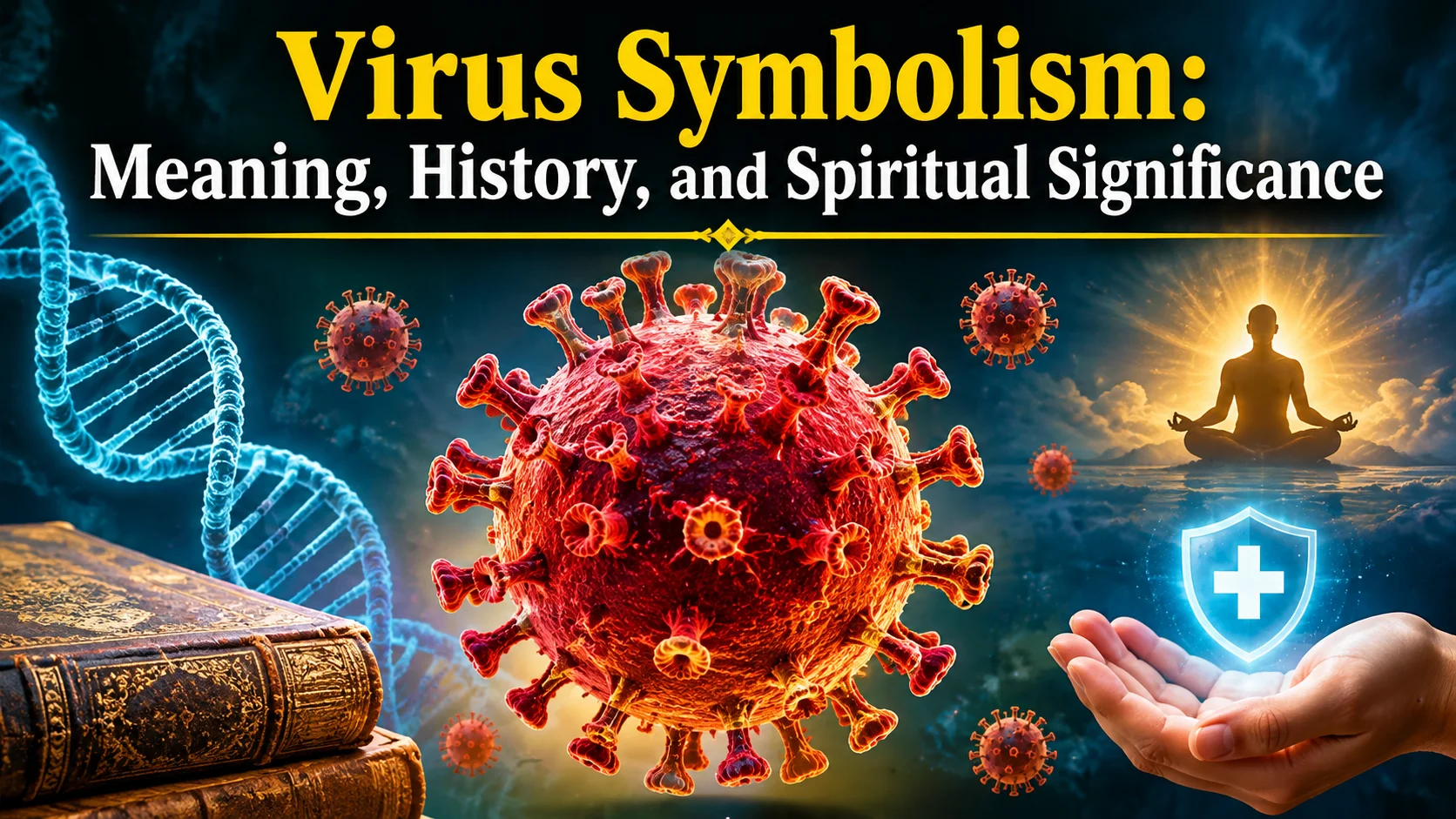
A virus is more than a tiny infectious agent in the modern imagination. It has become a powerful symbol of invisible threats, unexpected change, survival, and influence. Virus symbolism explores how people interpret viruses beyond their biological meaning. It connects scientific discoveries with human emotions, cultural fears, and ideas about transformation.
In the United States, viruses carry strong associations with health, uncertainty, public safety, and collective responsibility. The COVID-19 pandemic made these associations especially visible. Images of spiked virus particles, protective masks, vaccines, and laboratory equipment became familiar parts of American life.
However, viruses also have positive metaphorical meanings. People describe popular videos, songs, and ideas as going viral. This expression connects viruses with rapid communication, widespread influence, and cultural change.
Understanding this symbol requires looking at both its frightening and creative sides. Its meaning changes depending on context, personal experience, and cultural background.
Quick Answer
In American culture, virus symbolism represents invisible threats, vulnerability, survival, transformation, and the power of influence. Spiritually, some people interpret viruses as metaphors for hidden challenges, personal change, and the importance of balance.
TL;DR
- Viruses commonly symbolize invisible dangers and unexpected disruption.
- They represent transformation, adaptation, and the spread of influence.
- American pandemic experiences strengthened their connection with fear and protection.
- Going viral gives the symbol a positive meaning of popularity.
- Spiritually, viruses can represent hidden struggles and personal reflection.
- Their meaning depends heavily on context and personal interpretation.
What Does a Virus Symbolize?
A virus is an infectious agent that requires living cells to reproduce. Unlike bacteria, viruses cannot independently carry out all the processes needed for reproduction. Their biological nature has shaped many symbolic interpretations.
In everyday American culture, the virus often represents something unseen that can produce widespread effects. It can suggest danger, disruption, or an influence that spreads beyond its original location.
Core Symbolic Meanings
Several major ideas appear repeatedly in modern interpretations:
- Invisible danger: Something harmful may exist without being immediately noticeable.
- Rapid influence: One event, idea, or behavior can affect many people.
- Transformation: Change can happen through unexpected and sometimes difficult experiences.
- Adaptation: Survival often involves responding to changing conditions.
- Vulnerability: Even strong individuals and communities face unexpected challenges.
These meanings aren’t fixed rules. A virus illustration in a medical textbook communicates something different from a viral video on social media.
Understanding the Virus as a Visual Symbol
Viruses appear in different shapes and structures. Some have round forms with surface projections, while others resemble geometric structures or long strands.
The coronavirus illustration became particularly recognizable in the United States. Its spherical shape and outward spikes created an instantly identifiable image.
However, scientific illustrations don’t always show viruses exactly as they appear in nature. Many images use artificial colors and enlarged structures to make microscopic details easier to understand.
Historical Background of Virus Symbolism
The symbolic meaning of viruses developed alongside humanity’s understanding of disease. Long before scientists discovered viruses, people struggled to explain invisible illnesses and sudden outbreaks.
For centuries, unexplained diseases inspired fear, religious interpretations, and stories about contamination. Scientific discoveries eventually changed how people understood these invisible agents.
Ancient Roots and Early Beliefs
Ancient civilizations didn’t know about viruses as scientists define them today. However, they recognized that illnesses could spread between people and communities.
Many societies explained disease through spiritual, environmental, or supernatural ideas. Some connected sickness with divine punishment, disturbed balance, or harmful unseen forces.
These beliefs shouldn’t be confused with modern virology. They reveal how people historically responded to threats they couldn’t see or explain.
The Meaning Behind the Word
The English word virus comes from Latin, where it referred to poison or venom. This original association helps explain why viruses became symbols of danger and contamination.
In 1546, Italian physician Girolamo Fracastoro discussed invisible agents associated with contagious diseases. His ideas contributed to the development of later theories about infection.
During the nineteenth century, scientific research gradually established a clearer understanding of infectious agents. Advances in microscopy and laboratory methods eventually helped scientists identify viruses.
By the twentieth century, viruses had become important subjects in genetics, medicine, and molecular biology.
How Scientific Discovery Changed the Symbol
Scientific discoveries transformed the virus from an invisible mystery into a recognizable scientific image.
Researchers began representing viruses through detailed illustrations and microscopic photographs. These images became important symbols of modern medicine and scientific investigation.
Today, virus imagery can communicate both danger and discovery. It reminds people that something incredibly small can have enormous consequences.
Virus Symbolism in American Culture
In the United States, viruses symbolize public health concerns, scientific progress, uncertainty, and collective responsibility. American experiences with infectious diseases have strongly influenced these associations.
From historic outbreaks to the COVID-19 pandemic, viruses have shaped public conversations and everyday behavior.
The American Experience of Disease
American history includes several major infectious disease outbreaks. Smallpox, influenza, polio, and HIV/AIDS influenced communities, healthcare systems, and public attitudes.
Each experience contributed something different to the country’s understanding of disease.
For example, the polio epidemics created widespread concern among American families. Vaccination campaigns later became powerful examples of medical progress and public cooperation.
Similarly, the HIV/AIDS crisis changed conversations about healthcare, discrimination, education, and social responsibility.
COVID-19 and the Modern American Imagination
The COVID-19 pandemic dramatically changed how Americans viewed viruses.
Beginning in 2020, images of coronavirus particles appeared across television broadcasts, newspapers, websites, and public health announcements.
The virus became associated with:
- Uncertainty about the future and personal safety.
- Isolation and changes in everyday social life.
- Scientific research and vaccine development.
- Community cooperation and public responsibility.
- Economic disruption and changes in employment.
For many Americans, the coronavirus image still represents a significant period of personal and national change.
However, experiences differed considerably. Some people associate this period with loss, while others remember community support, scientific achievements, or personal resilience.
Viruses as Symbols of American Strength
American culture also connects difficult experiences with perseverance and recovery.
Vaccination programs, medical research, and public health efforts demonstrate how communities respond to infectious threats.
Consequently, a virus can indirectly symbolize the human ability to overcome challenges. Its meaning isn’t limited to destruction.
Spiritual Meaning of Virus Symbolism
Virus symbolism has no single established spiritual meaning across religions. However, people sometimes interpret viruses through personal reflection, spiritual metaphors, and ideas about life’s hidden challenges.
These interpretations are symbolic rather than scientific explanations of disease.
A Symbol of Hidden Challenges
A virus can represent difficulties that remain unnoticed until they become difficult to ignore.
In a personal or spiritual interpretation, this might refer to:
- Unresolved emotions affecting everyday decisions.
- Negative habits gradually influencing personal behavior.
- Unhealthy relationships creating emotional pressure.
- Small problems requiring attention before they grow.
This interpretation encourages self-awareness. It doesn’t mean that illness results from negative thoughts or spiritual weakness.
Transformation and Personal Growth
Another possible interpretation connects viruses with unexpected transformation.
A difficult experience can change someone’s priorities, relationships, and understanding of life. Although change may feel uncomfortable, it can create opportunities for reflection.
In this symbolic sense, the virus represents disruption that forces people to reconsider familiar patterns.
Protection and Inner Balance
Viruses can also inspire reflections about boundaries and protection.
Just as the body has natural defenses, people may use personal boundaries to protect their emotional well-being.
This is a metaphor, not a claim that spiritual practices prevent viral infections.
Psychological Meaning of Viruses
Psychologically, viruses often represent uncertainty, loss of control, and fear of invisible threats. Their microscopic nature makes them especially interesting symbols of anxiety.
People can see many dangers around them. However, they cannot directly see an individual virus without specialized equipment.
Fear of the Invisible
The invisible nature of viruses creates a particular emotional response.
People may feel uncertain when they cannot easily identify a threat. This can lead to heightened awareness, worry, or a desire for reassurance.
The same symbolic pattern appears in everyday expressions about hidden problems.
For example, someone might describe a harmful workplace habit as a virus spreading through an organization.
Vulnerability and Human Connection
Viruses remind people that humans are connected through shared environments and social interactions.
A person’s actions can sometimes affect others. Therefore, the virus becomes a symbol of shared responsibility.
It can also represent the limits of individual control. Personal strength doesn’t eliminate every outside risk.
Resilience and Adaptation
Not every psychological association is negative.
The process of responding to difficult circumstances can symbolize resilience, patience, and adaptation.
People may connect virus imagery with the importance of learning, preparing, and supporting one another during uncertain periods.
Virus Colors, Shapes, and Visual Symbolism
The appearance of a virus strongly influences its symbolic meaning. Scientific illustrations often use bright colors, geometric forms, and unusual structures.
These design choices help people recognize and understand microscopic subjects.
Red Virus Imagery
Red virus illustrations commonly suggest danger, urgency, and warning.
In American media, red is frequently used to highlight serious health threats. However, the color itself doesn’t indicate that a particular virus is more dangerous.
Green and Blue Virus Imagery
Green and blue illustrations can create different impressions.
Green may suggest biological processes, microscopic life, or scientific exploration. Blue often communicates technology, laboratories, cleanliness, and medical research.
These associations come from design conventions rather than universal symbolic rules.
Common Visual Elements
| Visual Element | Symbolic Meaning | Common Association |
| Spiked sphere | Invisible danger | Coronavirus imagery |
| Red particles | Warning and urgency | Health alerts |
| Blue molecular structure | Knowledge and discovery | Medical research |
| Microscopic illustration | Hidden complexity | Scientific investigation |
| Protective shield | Safety and defense | Public health |
Why Virus Illustrations Look Unusual
Virus images often enlarge microscopic structures to make them recognizable.
Their strange shapes can create feelings of mystery or discomfort. At the same time, they communicate the complexity of the natural world.
Virus Symbolism in Different Cultures and Traditions
Viruses have different cultural associations depending on historical experiences, religious beliefs, and social conditions. However, modern virus symbolism is strongly influenced by scientific knowledge.
It’s important to distinguish traditional disease beliefs from contemporary interpretations of viruses.
Western Cultural Interpretations
In Western societies, viruses are commonly connected with infection, medical research, public safety, and scientific progress.
Christian historical traditions sometimes interpreted epidemics through ideas about suffering, compassion, and divine intervention. These interpretations varied across communities and historical periods.
Modern Christian perspectives are diverse. A virus isn’t universally considered a sign of punishment or spiritual failure.
Eastern Philosophical Perspectives
Some Eastern philosophical traditions emphasize balance, interconnectedness, and the relationship between individuals and their surroundings.
People may use these broader concepts when reflecting on illness and recovery.
However, Buddhism, Hinduism, Taoism, and other traditions have distinct teachings. None should be reduced to a single explanation of viral disease.
Indigenous and Community-Based Perspectives
Different Indigenous communities have their own understandings of health, healing, and relationships with the natural world.
Some traditions emphasize community well-being, relationships with the environment, and collective care.
These ideas can provide meaningful cultural context. However, they shouldn’t be presented as one universal Indigenous interpretation of viruses.
What Does a Virus Represent in Dreams?
Dream interpretations are personal and depend on the dreamer’s experiences. A virus appearing in a dream doesn’t predict illness or establish a supernatural warning.
Instead, some people interpret virus dreams through emotions, relationships, and everyday concerns.
Dreaming About a Spreading Virus
A spreading virus might symbolize a problem that feels increasingly difficult to control.
For example, you might be experiencing workplace tension or worrying about a family disagreement.
The dream could reflect concerns about how one problem affects other parts of your life.
Dreaming About Escaping a Virus
Escaping a virus may represent a desire for safety, distance, or emotional protection.
It could also reflect your efforts to leave a stressful situation behind.
Dreaming About a Virus Disappearing
A disappearing virus might symbolize relief, hope, and the end of a difficult period.
However, dream meanings aren’t universal. Your emotions during the dream often provide more useful context than the image alone.
Virus Symbolism in Social Media and Modern Technology
Modern technology has given virus symbolism an entirely different meaning. Today, the word viral frequently describes content that spreads rapidly across digital platforms.
This meaning can be positive, negative, or neutral.
What Does Going Viral Mean?
When a video, photograph, or post goes viral, it reaches a large audience through sharing and online conversations.
The expression borrows the idea of rapid transmission from biology.
In this context, a virus can symbolize:
- Popularity spreading through online communities.
- Ideas reaching audiences across geographical boundaries.
- Trends influencing conversations and personal identities.
- Information moving rapidly between connected users.
Computer Viruses and Digital Threats
Computer viruses use another familiar symbolic connection.
They represent hidden technological threats that can damage files, disrupt systems, or spread between devices.
The metaphor works because biological viruses and computer viruses share an important feature: replication and transmission.
However, biological viruses and malicious computer programs are fundamentally different things.
Memes and Internet Culture
Internet culture frequently uses viral language to describe trends.
A funny image, popular phrase, or entertaining video might spread across social media within hours.
Consequently, virus symbolism has developed a surprising positive association with creativity, visibility, and cultural influence.
Read More: Roadrunner Symbolism: Speed, Protection, and Resilience
Virus Tattoos and Their Symbolic Meanings
Virus tattoos are less common than traditional nature or animal tattoos. However, their unusual appearance can communicate powerful personal messages.
For some people, a virus tattoo represents survival, transformation, scientific curiosity, or an experience that changed their lives.
Popular Virus Tattoo Interpretations
Different designs can communicate different ideas:
- Coronavirus tattoo: May represent a personal memory of the pandemic.
- Geometric virus tattoo: Can symbolize complexity and the hidden nature of life.
- Colorful virus tattoo: May express scientific curiosity or fascination with biology.
- Broken virus design: Can represent overcoming hardship or reclaiming personal strength.
- Virus and shield tattoo: May symbolize protection, boundaries, and resilience.
Why Someone Might Choose This Design
A person might choose virus imagery because of an interest in medicine, microbiology, or scientific discovery.
Others may use it to remember a difficult experience or express their perspective on human vulnerability.
However, tattoo meanings are personal. You shouldn’t assume someone’s beliefs or experiences based on their design.
Virus Symbolism in Home Decor, Art, and Fashion
Virus imagery has moved beyond laboratories and medical illustrations. Artists and designers sometimes use microscopic shapes to explore ideas about nature, technology, fear, and transformation.
In American contemporary art, scientific imagery can make invisible subjects visually understandable.
Scientific Art and Home Decor
Some people appreciate enlarged microscopic photographs and molecular illustrations as decorative art.
These designs can introduce unusual shapes, textures, and colors into modern interiors.
Common examples include:
- Framed scientific illustrations of microscopic structures.
- Abstract wall art inspired by molecular patterns.
- Educational posters featuring virus structures.
- Decorative designs combining biology and technology.
Fashion and Personal Expression
Virus-inspired patterns can also appear in experimental fashion and graphic design.
Designers may use spiked spheres, repeated particles, and abstract biological patterns.
Depending on the presentation, these images can suggest futuristic technology, scientific curiosity, or social commentary.
However, not everyone finds virus imagery attractive. Some people associate it with unpleasant memories or health-related anxiety.
Negative Virus Symbolism, Misunderstandings, and Controversies
Virus symbolism has a complicated side because it often involves fear, illness, and social responsibility.
The same metaphor can communicate a genuine concern or encourage harmful assumptions. Understanding the difference matters, especially in American public conversations.
Viruses as Symbols of Evil
People sometimes use the word virus to describe corruption, harmful behavior, or destructive ideas.
For example, someone might call dishonesty a virus spreading through an organization.
This expression can communicate concern about a growing problem. However, describing people themselves as viruses can become dehumanizing.
Disease-Related Stigma
Historically, infectious diseases have sometimes been associated with unfair blame and discrimination.
People living with HIV/AIDS experienced significant stigma in the United States. Public misunderstandings often turned a medical condition into an unfair judgment about individuals and communities.
This history demonstrates why disease metaphors require care.
A person isn’t dangerous, immoral, or less valuable because of a medical condition.
Political Misuse of Virus Imagery
During the COVID-19 pandemic, virus-related language became part of political disagreements.
Some public messages used images of invisible enemies to encourage collective action. Others used disease metaphors in ways that unfairly targeted particular communities.
Such comparisons can create fear and strengthen prejudice.
A responsible interpretation separates actual biological threats from stereotypes about people.
Scientific Misunderstandings
Several common misunderstandings also influence virus symbolism:
- Viruses aren’t the same as bacteria.
- Not every virus causes serious disease.
- A scientific virus illustration isn’t necessarily a literal photograph.
- Biological viruses aren’t identical to computer viruses.
- Having an infection doesn’t indicate poor character or personal failure.
Scientific accuracy helps prevent symbolic interpretations from becoming misinformation.
How Virus Symbolism Has Changed Over Time
Virus symbolism has changed dramatically as scientific knowledge and popular culture have developed.
Its older associations focused mainly on poison, contamination, and unexplained illness. Modern interpretations include technology, communication, transformation, and collective responsibility.
From Invisible Poison to Scientific Discovery
Originally, the word virus referred to poisonous or harmful substances.
Later, scientific discoveries gave it a more specific biological meaning.
As researchers learned more about viral structures and reproduction, the virus became an important symbol of scientific investigation.
From Public Fear to Global Awareness
During the twentieth century, major infectious disease outbreaks influenced public attitudes toward viruses.
The HIV/AIDS crisis highlighted medical challenges and social stigma. Meanwhile, vaccination campaigns demonstrated the importance of research and public health cooperation.
COVID-19 introduced another major cultural shift.
Virus imagery became familiar to people who previously had little interest in microbiology.
From Biological Infection to Digital Influence
Today, the word has meanings that extend far beyond medicine.
A popular social media post can go viral. A computer virus can threaten digital information. An idea can spread through communities like an infection.
These meanings demonstrate how language transforms alongside technology and culture.
FAQs:
What Is the Main Symbolic Meaning of a Virus?
A virus primarily symbolizes invisible danger, unexpected change, and the spread of influence. However, it can also represent adaptation, scientific discovery, and resilience.
Is a Virus a Symbol of Transformation?
Yes, viruses can symbolize transformation in metaphorical interpretations. They represent unexpected changes that challenge familiar routines and encourage adaptation.
This doesn’t mean that viral infections are necessary for personal or spiritual growth.
What Does a Virus Mean Spiritually?
Some people interpret viruses as symbols of hidden challenges, emotional reflection, and the importance of personal boundaries. These interpretations are individual beliefs rather than established religious teachings.
Why Is a Virus Associated With Fear?
Viruses are often invisible to the human eye and can spread through different transmission routes. This creates uncertainty and concerns about personal safety.
Historical outbreaks and pandemic experiences have strengthened these emotional associations.
What Does Going Viral Symbolize?
Going viral represents rapid popularity and widespread influence. It describes content, ideas, or trends that reach large audiences through sharing and online communication.
Unlike traditional virus symbolism, this expression often carries a positive meaning.
Are Viruses Symbols of Bad Luck?
There is no established universal tradition that identifies viruses as symbols of bad luck. Some people interpret them as warnings or reminders of vulnerability, but these meanings depend on personal beliefs.
Conclusion:
Virus symbolism represents much more than infection and disease. It connects invisible threats with human vulnerability, transformation, adaptation, and the power of influence. In American culture, historical outbreaks and the COVID-19 pandemic have made these associations especially meaningful. However, viruses also symbolize scientific discovery and rapid communication. Expressions such as going viral demonstrate how a frightening biological concept can develop a completely different meaning in modern life.

1 thought on “Virus Symbolism: Meaning, History, and Spiritual Significance”