
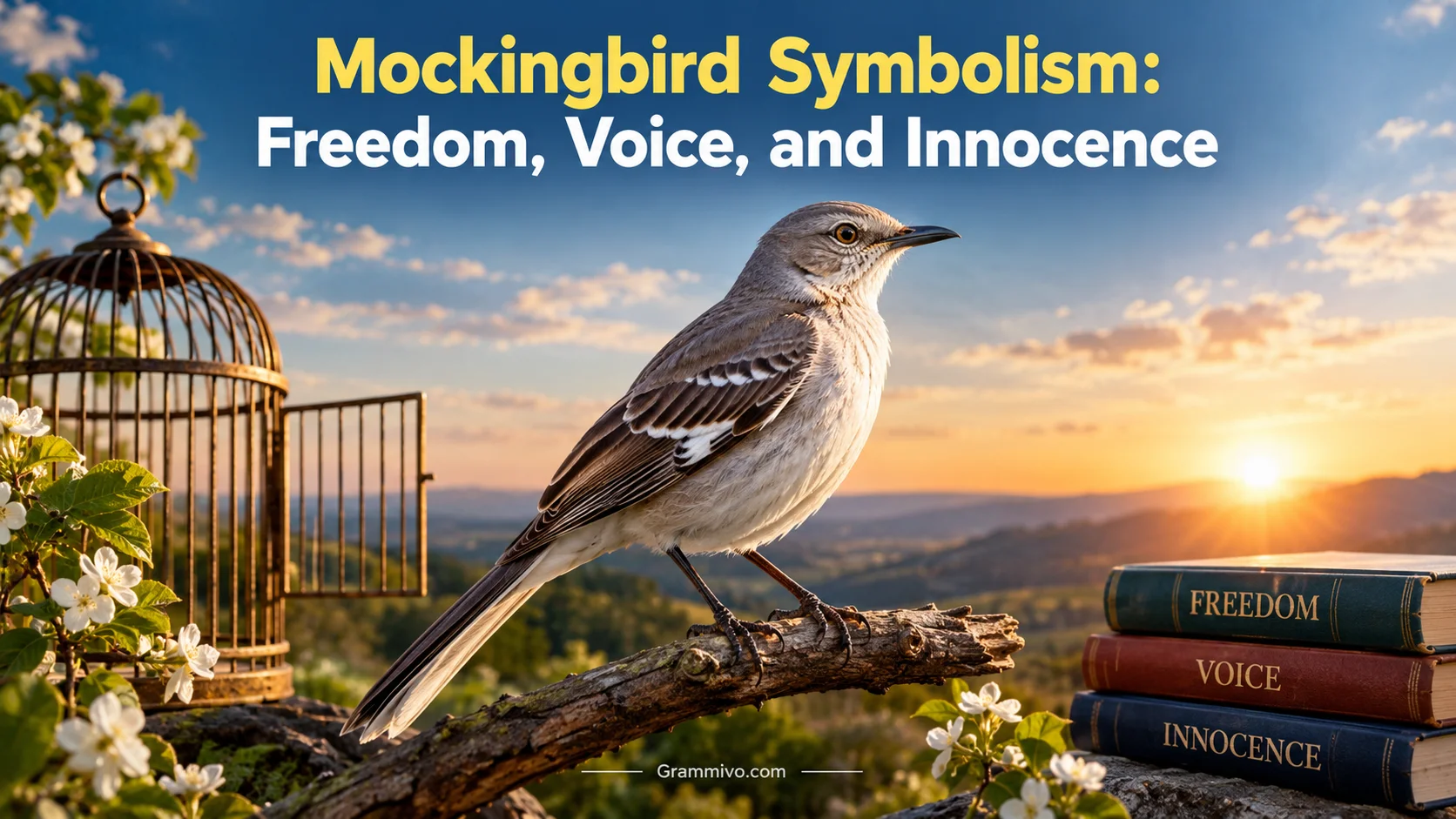
Mockingbirds are more than familiar songbirds in the United States. Their remarkable voices, confident behavior, and ability to imitate other birds have made them powerful symbols of creativity, freedom, and individuality. Across American literature, folklore, and everyday life, the mockingbird often represents something beautiful that deserves protection.
Mockingbird symbolism also carries emotional and spiritual meanings. Some people associate this bird with finding their voice, expressing their true identity, or protecting those who cannot defend themselves. Others connect its songs with hope, communication, and the importance of listening to the world around them.
In the United States, the mockingbird has a particularly strong cultural connection to innocence and compassion. Its famous appearance in American literature has helped turn it into a symbol of harmlessness and the moral responsibility to protect vulnerable lives. Meanwhile, its energetic singing and fearless defense of its territory offer additional meanings related to courage and self-expression.
Whether you encounter a mockingbird in your backyard, dream about one, consider it for a tattoo, or simply wonder why it appears in stories, its symbolism offers several ways to reflect on your own life. Understanding these meanings begins with the bird’s natural behavior and the cultural stories people have built around it.
Quick Answer
Mockingbird symbolism in the United States primarily represents innocence, freedom, creativity, and the protection of vulnerable beings. Its beautiful songs can also symbolize communication, individuality, courage, and spiritual awakening, depending on the personal or cultural context.
TL;DR
- Mockingbirds commonly symbolize innocence, kindness, and the protection of vulnerable life.
- Their songs represent creativity, communication, freedom, and individual expression.
- American literature strongly connects mockingbirds with compassion and moral responsibility.
- Their territorial behavior can symbolize courage, confidence, and healthy boundaries.
- Spiritual interpretations often connect their songs with hope, awareness, and inner truth.
- Modern tattoos and artwork celebrate their beauty, independence, and meaningful voices.
What Does a Mockingbird Symbolize?
The mockingbird’s symbolism comes from its appearance, behavior, and distinctive singing abilities. In American culture, its meanings often center on innocence and compassion. However, its ability to imitate other sounds introduces additional themes of adaptability, learning, and creative expression.
Innocence and Kindness
One of the best-known meanings of the mockingbird is innocence. The bird generally poses little threat to humans, and its pleasant songs contribute to its association with gentleness.
This meaning becomes especially powerful when the mockingbird represents a person who causes no harm. It encourages people to recognize vulnerability and treat others with compassion.
Freedom and Individuality
Mockingbirds sing from fences, rooftops, trees, and telephone wires. Their voices travel through neighborhoods, making them familiar symbols of an expressive natural world.
Their varied songs can represent the freedom to express yourself. They may also remind you that individuality doesn’t require abandoning your connections with others.
Creativity and Communication
A mockingbird can imitate sounds produced by other birds and, in some cases, other animals or environmental sources. This ability makes it a natural symbol of learning and creative expression.
Its symbolism can encourage you to explore new ideas, develop your skills, and communicate with greater confidence. However, imitation isn’t necessarily the same as originality. The bird’s behavior also invites reflection on how we learn from others while developing our own voices.
Historical Background of Mockingbird Symbolism
Mockingbird symbolism developed through a combination of natural observation, oral traditions, literature, and changing cultural attitudes toward wildlife. Although modern interpretations are widespread, there isn’t one universal meaning that has remained unchanged throughout history.
Native American Traditions and Indigenous Perspectives
Indigenous peoples of North America have diverse cultural traditions, stories, and relationships with local wildlife. Birds may hold important roles in particular communities, but their meanings vary by nation, language, and story.
There is no single mockingbird meaning that can accurately represent every Native American tradition. Specific claims about sacred meanings should therefore be connected to documented teachings from the relevant community rather than presented as universal Indigenous beliefs.
European Folklore and Birdsong
In European traditions, birds have often appeared as messengers, signs of changing seasons, and symbols of the human soul. Singing birds could represent joy, love, longing, or communication between the natural and spiritual worlds.
However, these broad bird associations shouldn’t automatically be treated as specific historical beliefs about mockingbirds. The Northern Mockingbird is native to North America, and its cultural importance developed within a different natural and historical setting.
The Rise of American Literary Symbolism
Mockingbirds became especially recognizable symbols in American literature during the twentieth century. Their association with innocence and harmlessness became deeply established through Harper Lee’s 1960 novel, To Kill a Mockingbird.
The novel helped bring the bird into conversations about compassion, injustice, prejudice, and the protection of innocent people. Consequently, many Americans recognize the mockingbird as a moral symbol even if they know relatively little about the bird itself.
Mockingbird Symbolism in American Culture
The mockingbird holds a distinctive place in American culture because its natural behavior intersects with literature, regional identity, and everyday experiences. It is also the official state bird of several southern states, reinforcing its connection to American landscapes and local pride.
A Familiar Bird in Southern Life
The Northern Mockingbird lives across much of the United States, including many Southern communities. Its adaptability allows it to thrive in residential neighborhoods, gardens, parks, and open landscapes.
For many Americans, hearing a mockingbird is simply part of everyday life. Nevertheless, its persistent singing and presence near homes can inspire feelings of familiarity, comfort, and connection to nature.
The Symbol of Innocence in American Literature
In To Kill a Mockingbird, the bird becomes a central metaphor for innocence and the harm caused by cruelty. Atticus Finch teaches his children that harming a mockingbird is wrong because it does no harm and brings beauty into the world through its song.
The idea extends beyond the literal bird. It encourages readers to consider the consequences of mistreating innocent people, particularly those who lack the power to defend themselves.
This literary meaning remains important because it connects an ordinary animal with a larger ethical question: How should society treat those who have done nothing wrong?
State Bird and Regional Identity
The Northern Mockingbird serves as the official state bird of Arkansas, Florida, Mississippi, Tennessee, and Texas. These designations connect the bird with regional pride and the natural character of the American South.
For residents, state birds can represent familiarity, belonging, and appreciation for local wildlife. The mockingbird’s cultural significance, however, reaches beyond state boundaries because of its literary reputation.
Spiritual Meaning of a Mockingbird
In modern spiritual interpretations, mockingbirds often represent awareness, communication, adaptability, and the discovery of one’s authentic voice. These meanings arise largely from the bird’s behavior and the personal significance people attach to encounters with wildlife.
They are reflective interpretations rather than universal spiritual rules or scientifically established messages.
A Reminder to Find Your Voice
A mockingbird’s song can be interpreted as an invitation to express your thoughts honestly. If you’ve been reluctant to share your ideas, the bird may inspire you to speak with greater confidence.
Its varied calls also suggest that communication can take many forms. You might express yourself through writing, music, art, conversation, or quiet acts of kindness.
Awareness and Spiritual Growth
Mockingbirds listen closely to their surroundings and incorporate sounds into their repertoires. Symbolically, this behavior can represent paying attention before responding.
A mockingbird encounter may therefore encourage you to notice patterns in your life, listen to other perspectives, and remain open to learning. The meaning depends on your beliefs and circumstances rather than on a guaranteed supernatural message.
Hope During Difficult Times
The sound of a bird singing can feel especially comforting during periods of stress, loneliness, or uncertainty. A mockingbird’s persistent voice may become a personal reminder that beauty and possibility still exist during difficult seasons.
For some people, this association represents hope and emotional renewal. For others, it simply reflects the calming effect of hearing wildlife outdoors.
Mockingbird Symbolism Across Cultures
Bird symbolism appears in many societies, but interpretations depend on local traditions, religious beliefs, and the species involved. Mockingbirds have a particularly strong identity in North America, while broader bird symbolism offers useful comparisons.
Birds as Messengers and Symbols of Freedom
In different cultural traditions, birds have been associated with the sky, the soul, spiritual communication, and freedom from earthly limitations. These associations reflect their ability to fly between the ground and the open air.
Because mockingbirds sing distinctively, they can also fit broader symbolic themes of communication and expression. Still, these interpretations should not be mistaken for a single shared belief across cultures.
Meaning in Contemporary Spiritual Practice
Some modern spiritual approaches interpret encounters with particular animals as opportunities for reflection. Within these approaches, a mockingbird may represent adaptability, confidence, attentiveness, or the need to express something important.
These meanings are personal rather than universally prescribed. Someone who associates mockingbirds with a childhood home may interpret an encounter very differently from someone who connects them with a favorite book.
Respecting Cultural Differences
It’s important to distinguish documented traditions from contemporary personal interpretations. Not every bird has a sacred meaning in every religion, and no single interpretation should be assigned to all Indigenous or non-Western communities.
When exploring mockingbird symbolism, consider the specific source of an interpretation. This approach preserves cultural respect while leaving room for personal meaning.
The Psychological Meaning of Mockingbirds
Animals often become symbols because their behavior reminds people of familiar emotions, relationships, or challenges. The mockingbird’s voice, adaptability, and defensive behavior offer several useful psychological associations.
Self-Expression and Confidence
A mockingbird can sing loudly despite its relatively small size. Symbolically, this contrast may represent the confidence to make yourself heard without needing to dominate others.
For someone learning to speak up at work, share creative work, or establish personal boundaries, the bird can serve as a reminder that a quiet person can still have a powerful voice.
Adaptability and Learning
Mockingbirds can learn and reproduce many sounds. This behavior makes them fitting symbols of observation, flexibility, and the ability to learn from experience.
Their symbolism may resonate during periods of change, such as starting a new job, entering a new community, or developing a skill. It suggests that adapting doesn’t require losing your identity.
Compassion and Emotional Sensitivity
The mockingbird’s literary association with innocence gives it another psychological meaning: compassion for people who are vulnerable or misunderstood.
Its symbolism may encourage you to consider how your words and actions affect others. However, compassion doesn’t require accepting harmful treatment. Kindness and personal boundaries can exist together.
Mockingbird Symbolism in Dreams
Dream interpretations are subjective, and there is no reliable evidence that a particular bird dream predicts the future. Still, the mockingbird’s recognizable characteristics can provide a starting point for personal reflection.
Hearing a Mockingbird Sing in a Dream
A singing mockingbird might symbolize communication, creativity, or a desire to express something you’ve kept private. If the song feels pleasant, it may connect with feelings of hope or emotional ease.
However, the surrounding dream matters. A loud or repetitive song might reflect distraction, an unresolved conversation, or a need to pay attention.
Seeing a Mockingbird in a Cage
A caged mockingbird can suggest a feeling of restriction or difficulty expressing yourself. You might connect the image with a relationship, workplace, or situation where you feel unable to speak freely.
This interpretation isn’t a fixed rule. Your personal associations with cages, birds, and freedom are more important than any universal dream dictionary.
A Mockingbird Defending Its Nest
A mockingbird protecting its nest may bring attention to family, privacy, or personal boundaries. It can symbolize the desire to protect someone or something you value.
The image can also prompt questions about whether you’re defending yourself appropriately. In real life, Northern Mockingbirds sometimes dive at perceived threats near their nests, especially during breeding season.
Read More: Swallow Symbolism: Hope, Love, and New Beginnings
Mockingbird Symbolism in Tattoos, Art, and Decor
Modern uses of mockingbird imagery combine its natural beauty with its cultural and emotional associations. In the United States, the bird may represent innocence, creativity, personal freedom, or a connection to a meaningful literary work.
Mockingbird Tattoos
A mockingbird tattoo can communicate several different ideas depending on its design and personal significance.
Common interpretations include:
- Freedom: A bird in flight may represent independence and new beginnings.
- Innocence: A simple bird illustration may honor gentleness and vulnerability.
- Creativity: An open beak or musical notes may symbolize artistic expression.
- Memory: The bird may commemorate a loved one, childhood home, or meaningful book.
- Resilience: A bird facing strong winds may represent perseverance through difficult circumstances.
The meaning often becomes more personal when paired with a date, quotation, flower, or other meaningful design.
Home Decor and Nature-Inspired Art
Mockingbird illustrations appear in bird prints, garden decorations, textiles, and nature-inspired artwork. These designs can celebrate the American South or create a peaceful, welcoming atmosphere.
A mockingbird perched on a branch may emphasize tranquility and connection to nature. In contrast, an image of a singing bird may communicate liveliness, expression, and joy.
Social Media and Personal Identity
On social platforms, people may use mockingbird imagery to represent creativity, individuality, or a love of nature. Some also use the bird to express admiration for To Kill a Mockingbird and its themes.
However, there is no universally recognized mockingbird emoji or single online meaning that captures all these interpretations. The surrounding caption, image, and personal context usually determine the intended message.
Mockingbird Symbolism in Literature and Popular Culture
Literature has shaped the mockingbird’s modern American identity more strongly than almost any other cultural influence. The bird’s symbolism often appears when a story explores innocence, injustice, compassion, or the consequences of cruelty.
To Kill a Mockingbird
Harper Lee’s novel remains the central reference point for mockingbird symbolism in the United States. Through the mockingbird metaphor, the story challenges readers to recognize the harm caused by prejudice and unfair judgment.
The image is powerful because it makes an abstract moral principle easy to understand. Hurting an innocent creature becomes a way to think about harming innocent people.
The novel’s themes are especially significant in discussions of racial injustice and the unequal treatment of vulnerable individuals. However, the mockingbird metaphor doesn’t represent every aspect of the book’s social and historical context.
Other Stories, Music, and Creative Works
Beyond Lee’s novel, birdsong and imitation can suggest memory, longing, communication, and the relationship between nature and human experience.
Writers and musicians may use mockingbird imagery to evoke childhood, regional identity, or a voice that carries across distance. These meanings depend on the specific work rather than on a fixed symbolic definition.
Why the Symbol Remains Powerful
The mockingbird connects something familiar with a serious moral idea. Its song is easy to imagine, and its literary associations give that ordinary sound additional emotional weight.
As a result, the bird can communicate compassion without requiring a long explanation. Its symbolism remains accessible to readers who encounter it through books, school discussions, artwork, or personal memories.
Mockingbird Symbolism and Common Misunderstandings
Although mockingbirds generally have positive symbolic associations, not every interpretation is historically grounded or universally accepted. Understanding the difference between natural behavior, literary meaning, and personal belief helps prevent confusion.
Does a Mockingbird Always Represent Innocence?
No. Innocence is especially prominent in American literary symbolism, but mockingbirds can also represent adaptability, communication, individuality, and territorial defense.
A person choosing a mockingbird tattoo may care more about freedom than innocence. Likewise, a spiritual interpretation may focus on awareness rather than moral purity.
Is Mockingbird Symbolism Always Spiritual?
No. Some people view the bird as a spiritual sign, while others appreciate it as a literary symbol, a state bird, or a familiar part of nature.
These approaches can coexist without requiring everyone to share the same beliefs. A personal spiritual interpretation shouldn’t be presented as a scientifically proven message.
Does the Bird’s Name Mean It Is Deceptive?
The name refers to the bird’s ability to imitate sounds, not to a moral judgment about its character. In nature, mimicry is a vocal behavior rather than proof of dishonesty.
Symbolically, imitation can inspire contrasting interpretations. It may suggest learning and creativity, but it can also prompt questions about authenticity and originality.
When the Symbol Is Used Insensitively
The mockingbird’s association with innocence can become oversimplified when people use it to avoid discussing complex social realities. In particular, literary references to To Kill a Mockingbird should not replace careful consideration of the novel’s treatment of racism and injustice.
A thoughtful interpretation recognizes the symbol’s moral message while respecting the historical experiences the story explores.
Mockingbird Symbolism at a Glance
The following table summarizes common interpretations in American life. These meanings are cultural and personal associations, not universal rules.
| Context | Common Meaning | Key Association |
| American literature | Innocence and protection | Compassion and justice |
| Birdsong | Creativity and communication | Self-expression |
| Natural behavior | Adaptability and alertness | Learning and awareness |
| Territorial defense | Courage and protection | Personal boundaries |
| Spiritual reflection | Hope and inner truth | Personal growth |
| Tattoos and artwork | Freedom and individuality | Personal identity |
How Mockingbird Symbolism Has Changed Over Time
The meaning of the mockingbird has expanded as Americans have encountered the bird through changing cultural settings. Its natural qualities remain recognizable, but literature and modern personal expression have added new layers.
From Natural Observation to Cultural Symbol
People have long noticed birdsong, territorial behavior, and the ability of some birds to imitate sounds. These observable qualities provide a natural foundation for symbolic interpretations involving communication, awareness, and adaptability.
However, the mockingbird’s association with innocence gained particular prominence through modern American literature. This development helped transform the bird from a familiar part of the landscape into a widely recognized moral symbol.
From a Literary Lesson to a Personal Emblem
The bird’s literary meaning continues to influence how Americans understand it. At the same time, tattoos, home decor, nature photography, and personal storytelling allow people to choose meanings that fit their own experiences.
Someone might connect the bird with a favorite childhood book, while another person sees it as a reminder to speak confidently. Neither interpretation has to erase the others.
Why Older Meanings Still Matter
Older cultural associations provide context for contemporary uses. Understanding the connection between mockingbirds, innocence, and American literature can help explain why a small bird carries such emotional weight.
Nevertheless, symbolism changes with context. A mockingbird in a novel may serve a moral purpose, while one singing outside your window may simply offer a moment of beauty and connection to nature.
FAQs:
What does a mockingbird symbolize spiritually?
A mockingbird may symbolize communication, adaptability, awareness, and the courage to express yourself. Some people also associate it with hope and personal growth, although these spiritual interpretations vary.
Is seeing a mockingbird a good sign?
Many people interpret a mockingbird encounter positively because of its associations with creativity, freedom, and innocence. However, there is no established evidence that seeing one predicts a particular event or guarantees good fortune.
What does a mockingbird represent in American culture?
In American culture, the mockingbird is strongly associated with innocence and compassion, especially through To Kill a Mockingbird. It also represents regional identity, nature, creativity, and self-expression.
What does a mockingbird tattoo mean?
A mockingbird tattoo can represent freedom, innocence, individuality, resilience, or a meaningful personal memory. Its exact meaning depends on the design and the reasons someone chooses it.
What does hearing a mockingbird at night mean spiritually?
Some people interpret nighttime birdsong as a reminder to listen carefully, express themselves honestly, or remain hopeful. However, a mockingbird singing after dark isn’t necessarily a supernatural sign; artificial lighting and other environmental conditions can influence bird behavior.
Conclusion:
Mockingbird symbolism brings together several meaningful ideas, including innocence, freedom, creativity, communication, and compassion. In the United States, its strongest cultural association comes from To Kill a Mockingbird, which transformed a familiar songbird into a lasting symbol of protecting the vulnerable. Its natural behavior also offers meaningful connections to adaptability, confidence, and individuality.

1 thought on “Mockingbird Symbolism: Freedom, Voice, and Innocence”