
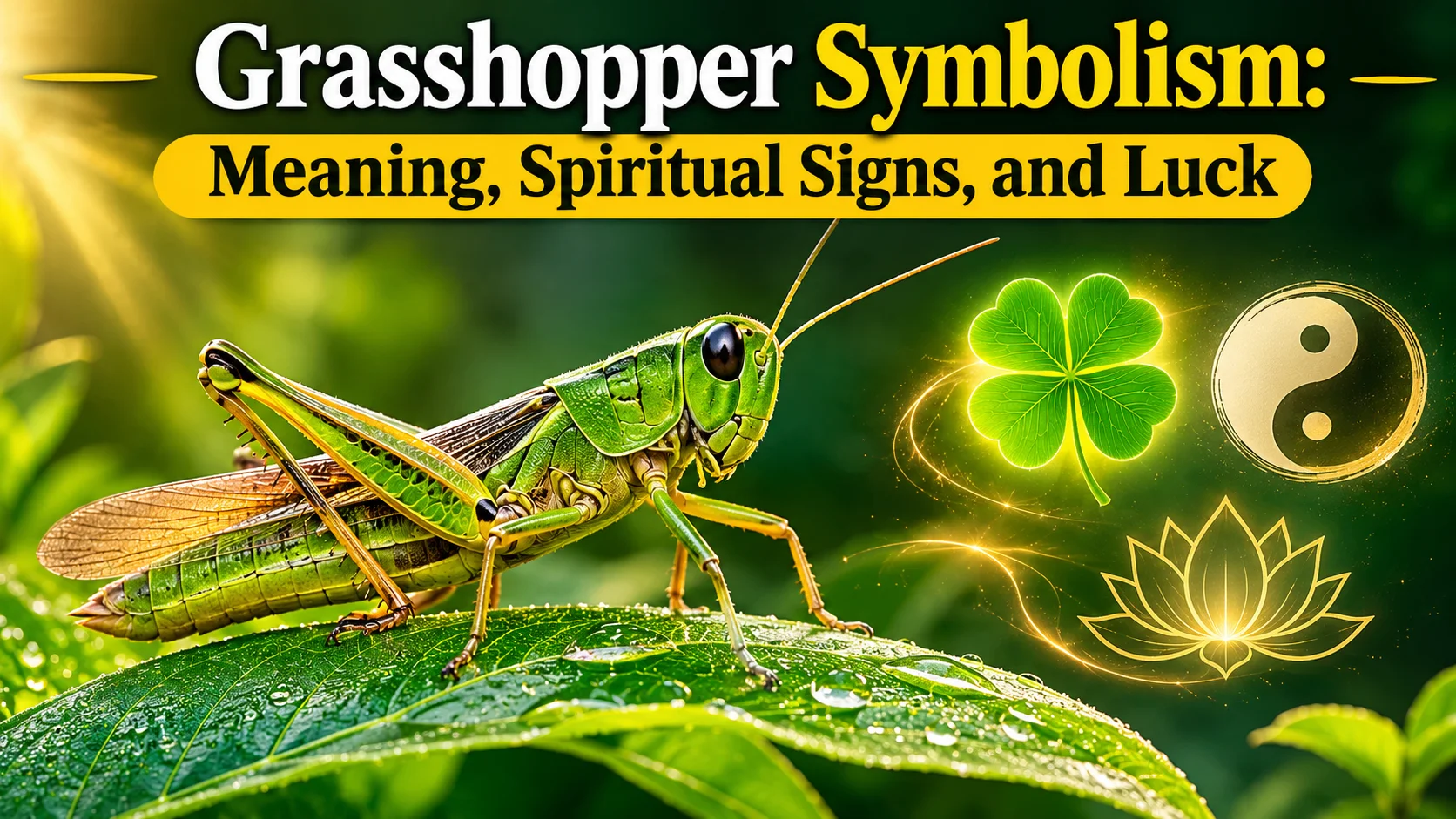
A grasshopper is a small creature with a surprisingly powerful symbolic presence. Its ability to leap great distances, move quickly, and survive in changing environments makes it an interesting symbol. Grasshopper Symbolism commonly connects with freedom, good fortune, opportunity, adaptability, and personal growth. However, its meaning can change depending on where it appears and how people interpret it.
In the United States, grasshoppers often remind people of summer afternoons, open fields, childhood memories, and the natural world. Their sudden movements can also represent taking chances and moving beyond familiar boundaries. For some people, seeing one feels like a gentle reminder to embrace change.
Grasshoppers also carry different meanings across spiritual traditions, folklore, literature, and art. Some cultures associate them with prosperity and abundance. Others connect large groups of grasshoppers with agricultural destruction and uncertainty.
Quick Answer:
Grasshopper Symbolism in the United States primarily represents freedom, opportunity, adaptability, good fortune, and taking a leap toward something new. Spiritually, it can suggest trusting your instincts, welcoming change, and recognizing opportunities for personal growth.
TL;DR
- Freedom: Represents independence and the courage to explore new possibilities.
- Good Luck: Often symbolizes unexpected opportunities and favorable changes.
- Adaptability: Reflects the ability to adjust when circumstances change.
- Personal Growth: Encourages movement beyond familiar surroundings.
- Abundance: Connects with prosperity, fertility, and agricultural traditions.
- Caution: Can represent impulsiveness or the consequences of poor preparation.
What Does a Grasshopper Symbolize?
Grasshoppers have several symbolic meanings rooted in their natural behavior. Their powerful legs allow them to jump impressive distances. This movement makes them natural symbols of progress, freedom, and decisive action.
For American readers, the grasshopper often represents the courage to move forward. Its appearance can inspire thoughts about new beginnings, independence, and opportunities.
The Main Symbolic Meanings
Freedom and independence
A grasshopper doesn’t stay in one place for long. Its movement represents the desire to explore, make independent decisions, and escape unnecessary restrictions.
Good luck and prosperity
Some traditional beliefs associate grasshoppers with favorable circumstances. Their presence can symbolize abundance, agricultural success, and unexpected opportunities.
Adaptability and resilience
Grasshoppers survive in different environments. Their ability to adjust represents flexibility when life becomes unpredictable.
Taking a leap of faith
Their powerful jumps create one of their strongest modern associations. A grasshopper can represent making a courageous decision despite uncertainty.
What Its Natural Behavior Represents
The grasshopper’s physical characteristics help explain its symbolic appeal.
- Powerful hind legs: Confidence, movement, and forward progress.
- Green coloring: Renewal, nature, and fresh opportunities.
- Long antennae: Awareness, sensitivity, and attentiveness.
- Sudden jumping: Unexpected changes and decisive action.
- Seasonal activity: Growth, timing, and life’s changing stages.
These meanings are symbolic interpretations rather than universal spiritual rules. Your personal experiences also influence what the insect represents.
Historical Background of Grasshopper Symbolism
Grasshoppers have appeared in human stories, artwork, religious texts, and traditional beliefs for centuries. Their relationship with agriculture made them especially important to early communities.
However, their historical symbolism wasn’t always positive. A single grasshopper could represent natural abundance, while enormous swarms could threaten entire communities.
Ancient Greek Connections
Ancient Greek culture provides an interesting example of positive grasshopper symbolism.
Grasshoppers appeared in ancient Athenian imagery and were associated with the city’s identity. Some Athenians reportedly wore golden grasshopper ornaments in their hair.
These ornaments expressed their connection to their homeland and ancestry. The insect therefore became associated with belonging and civic identity.
Grasshoppers also appeared in ancient artistic traditions. Their connection with music and natural sounds helped strengthen their association with creativity and the natural world.
The Grasshopper in Ancient Literature
One of the most recognizable historical connections comes from Aesop’s fable, The Ant and the Grasshopper.
The story contrasts two different approaches to life. The ant works during the warmer months and prepares for winter. Meanwhile, the grasshopper spends its time singing and enjoying the present.
When winter arrives, their different choices produce different results.
This story became an influential lesson about preparation, responsibility, and future planning.
However, its meaning isn’t entirely negative. The grasshopper also represents enjoyment, creativity, leisure, and the importance of appreciating the present.
Agricultural History and Changing Interpretations
Grasshoppers and locusts have long influenced farming communities.
In the United States, devastating Rocky Mountain locust outbreaks during the nineteenth century caused serious agricultural losses. The widespread destruction affected farms and communities across parts of the Great Plains.
These events influenced how Americans viewed large grasshopper populations.
A small insect in a garden could seem harmless or fascinating. However, enormous swarms could represent economic hardship, uncertainty, and environmental disruption.
This history explains why grasshopper symbolism includes both positive and negative interpretations.
Grasshopper Symbolism in the United States
In American culture, grasshoppers represent a mixture of childhood memories, agricultural history, natural beauty, and personal freedom.
Their meaning often depends on the setting. Someone seeing a grasshopper in a backyard might associate it with summer. A farmer might remember the challenges caused by agricultural pests.
Connection With American Childhood
For many Americans, grasshoppers bring back memories of outdoor adventures.
Children often encounter them in gardens, playgrounds, parks, and grassy fields. Catching one, watching it jump, or hearing it move through the grass can become a memorable experience.
These associations connect grasshoppers with:
- Childhood curiosity and outdoor exploration.
- Simple pleasures and carefree summer afternoons.
- Learning about wildlife and the natural environment.
- Freedom from everyday responsibilities.
- Appreciation for small moments in nature.
Consequently, grasshoppers can represent innocence and a connection with simpler times.
Agricultural and Rural Associations
Grasshoppers have a complicated place in American agricultural history.
Farmers have sometimes viewed them as destructive pests because certain species can damage crops. However, their presence in natural habitats also reflects the importance of healthy grassland ecosystems.
This contrast gives the insect two different cultural identities.
In one setting, it represents nature’s abundance. In another, it reminds people of environmental challenges and the uncertainty of farming.
Grasshoppers in American Popular Culture
American stories and entertainment have helped shape insect symbolism.
For example, animated grasshoppers sometimes appear as clever, energetic, humorous, or troublesome characters. These portrayals make the insect recognizable to younger audiences.
However, its symbolic meaning isn’t limited to entertainment. Grasshoppers also appear in children’s books, educational illustrations, garden decorations, and nature-inspired artwork.
Spiritual Meaning of a Grasshopper
Spiritually, grasshoppers are commonly associated with movement, intuition, opportunity, and personal transformation.
Their ability to jump from one location to another provides a natural metaphor for leaving familiar situations. Some people interpret an encounter as encouragement to consider a new direction.
However, spiritual interpretations are personal beliefs rather than scientifically established messages.
A Reminder to Take a Leap of Faith
A grasshopper’s most recognizable physical feature is its ability to jump.
Spiritually, this movement can represent taking action when an opportunity appears. It may encourage you to stop allowing fear to control every decision.
For example, you might be considering a career change, a creative project, or a personal goal.
The grasshopper can serve as a reminder to consider the possibilities beyond your current circumstances.
Trusting Your Inner Instincts
Grasshoppers respond quickly to changes in their surroundings.
Some spiritual interpretations connect this behavior with intuition and awareness. The insect becomes a reminder to pay attention to your surroundings and recognize important opportunities.
This interpretation doesn’t mean following every impulse. Instead, it encourages balancing confidence with thoughtful judgment.
Embracing Personal Transformation
A grasshopper develops through several life stages before reaching adulthood.
Its development can symbolize gradual personal growth and the process of becoming more confident.
Its appearance may inspire reflection about:
- Leaving behind outdated habits.
- Becoming comfortable with personal change.
- Exploring unfamiliar opportunities.
- Developing greater independence.
- Accepting that growth takes time.
Balance Between Action and Patience
Grasshoppers move quickly, but meaningful personal progress doesn’t always happen immediately.
This creates an interesting spiritual lesson. Sometimes you need courage to act. At other times, you need patience to prepare.
The grasshopper can represent finding the right balance between these two qualities.
Grasshopper Symbolism Across Different Cultures
Grasshopper symbolism varies across cultures because communities have experienced the insect differently.
Some traditions connect it with prosperity and good fortune. Others emphasize its relationship with harvests, seasonal changes, or agricultural destruction.
Understanding these differences prevents treating one interpretation as universal.
Chinese Cultural Associations
In traditional Chinese symbolism, grasshoppers and related insects have been associated with fertility, abundance, and prosperity.
Their ability to produce many offspring helped connect them with family growth and plentiful harvests.
Grasshoppers also appear in traditional decorative art and cultural imagery. Their connection with agriculture makes them meaningful symbols of natural abundance.
Japanese Cultural Associations
In Japanese art and seasonal traditions, grasshoppers are associated with autumn and the sounds of nature.
Their songs can evoke memories of changing seasons and the temporary beauty of the natural world.
Japanese poetry, particularly haiku, often uses insects to express seasonal experiences. Grasshoppers and other singing insects can help communicate the atmosphere of late summer and autumn.
Ancient Greek Interpretations
Ancient Greeks connected grasshoppers with Athenian identity and ancestry.
Their appearance in ornaments and artistic objects reflected cultural belonging. This association differs from modern interpretations centered on luck and personal transformation.
Religious References
Grasshoppers and locusts appear in several religious traditions, including Jewish, Christian, and Islamic texts.
However, these references often involve locusts rather than ordinary individual grasshoppers.
In biblical narratives, locust swarms sometimes represent destruction, hardship, judgment, or warnings. Their appearance emphasizes the power of nature and the vulnerability of agricultural communities.
The important distinction is that religious references to destructive locust swarms shouldn’t automatically determine the meaning of every grasshopper encounter.
Psychological and Emotional Meaning of Grasshoppers
Grasshoppers can create different emotional reactions depending on someone’s experiences and surroundings.
For some people, they represent childhood freedom and natural beauty. Others associate them with insects, unexpected movements, or damaged gardens.
These emotional connections influence their symbolic interpretations.
Freedom and Independence
A grasshopper’s jumping ability creates a strong connection with freedom.
Psychologically, its image can represent wanting more control over your decisions.
You might associate it with leaving an uncomfortable situation or pursuing something you’ve wanted for years.
Confidence and Courage
Jumping requires movement away from a familiar position.
As a symbol, this behavior can represent confidence and willingness to face uncertainty.
It may remind you that personal growth sometimes requires taking calculated risks.
Happiness and Playfulness
Grasshoppers often appear during warmer months when outdoor activities become more common.
Their presence can remind people of relaxed afternoons, green gardens, and time spent outside.
This makes them symbols of playfulness, optimism, and uncomplicated happiness.
Anxiety and Uncertainty
Not every emotional association is positive.
A grasshopper suddenly jumping onto someone can create surprise or discomfort. Its unpredictable movement may symbolize uncertainty for people who dislike insects.
In symbolic artwork, a grasshopper can also represent the fear of making an unprepared decision.
Grasshopper Color Symbolism and Its Meanings
Color adds another layer to grasshopper symbolism.
Although grasshoppers naturally appear in different shades, people sometimes assign additional meanings to their colors in spiritual interpretations and artwork.
These associations aren’t fixed cultural rules. They’re creative and personal ways of interpreting the insect.
Common Grasshopper Colors and Symbolic Associations
| Color | Symbolic Meaning | Common Association |
| Green | Renewal and growth | Nature and fresh beginnings |
| Brown | Stability and grounding | Earth and practical thinking |
| Yellow | Happiness and optimism | Energy and positive change |
| Black | Mystery and reflection | Unknown possibilities |
| White | Peace and purity | Spiritual reflection |
| Pink | Love and gentleness | Emotional warmth |
Green Grasshopper
Green is one of the most recognizable grasshopper colors.
It naturally connects the insect with plants, grasslands, and healthy environments. Symbolically, it represents growth, renewal, and opportunities.
Brown Grasshopper
Brown grasshoppers can represent stability and a connection with the earth.
Their coloring blends with dry grass, soil, and natural surroundings. In artwork, this shade can emphasize patience and grounded decision-making.
Yellow Grasshopper
Yellow often symbolizes happiness, optimism, and creativity.
A yellow grasshopper can represent a fresh perspective or renewed enthusiasm. However, the meaning depends on the artistic or personal context.
Black or White Grasshopper
Unusual colors often create stronger symbolic impressions.
Black may represent mystery, reflection, or unfamiliar experiences. White can suggest peace, simplicity, and spiritual awareness.
Neither color has one universally accepted meaning.
Grasshopper Meaning in Dreams
Dreaming about a grasshopper can bring attention to personal decisions, changing circumstances, or feelings about freedom.
However, dreams don’t have scientifically established universal meanings. Your experiences, emotions, and recent activities can influence their content.
Dreaming About a Green Grasshopper
A green grasshopper may symbolize growth and fresh opportunities in personal interpretations.
It could reflect your desire to improve something in your life. It might also connect with positive memories of nature.
Dreaming About a Jumping Grasshopper
A jumping grasshopper can represent movement and sudden changes.
You might be thinking about an important decision or considering a new opportunity.
The dream can encourage you to examine whether you’re ready for that change.
Dreaming About a Grasshopper Inside Your House
A grasshopper inside your home may represent something unexpected entering your personal space.
Depending on your feelings during the dream, it could symbolize curiosity, discomfort, or a change in your daily routine.
Dreaming About Many Grasshoppers
A group of grasshoppers can carry different meanings.
A peaceful group might represent abundance or social activity. However, an overwhelming swarm could reflect stress or concerns about losing control.
Dreaming About a Dead Grasshopper
A dead grasshopper might symbolize the end of an opportunity or a period of personal change.
It could also reflect disappointment or the feeling that you’ve lost some freedom.
Consider the emotions surrounding the dream before assigning meaning.
Read More: Beetle Symbolism: Meaning, Spiritual Signs, and Messages
Grasshopper Symbolism in Tattoos, Art, and Modern Life
Grasshopper imagery has found a place in modern American visual culture.
People use the insect in tattoos, jewelry, illustrations, fashion, and nature-inspired decorations. Its recognizable shape makes it suitable for both detailed artwork and simple designs.
Grasshopper Tattoos
A grasshopper tattoo can communicate several personal values.
For some people, it represents freedom and independence. Others choose it because they appreciate nature or connect with its association with good fortune.
Common tattoo interpretations include:
- Freedom: Living independently and following your own direction.
- Courage: Taking meaningful risks and embracing uncertainty.
- Growth: Accepting personal development and change.
- Good Fortune: Welcoming opportunities and positive experiences.
- Nature: Expressing appreciation for wildlife and outdoor environments.
Some designs feature a realistic green grasshopper. Others use minimalist outlines, botanical elements, or decorative patterns.
Grasshopper in Home Decor
Grasshopper imagery can add a natural touch to interior spaces.
It appears in garden decorations, framed illustrations, ceramic ornaments, and nature-inspired textiles.
These designs often communicate appreciation for outdoor environments and simple natural beauty.
Social Media and Digital Expression
Grasshopper imagery also works as a visual expression of personal identity.
People may share grasshopper photographs to celebrate nature, document unusual encounters, or express an interest in insects.
Its jumping ability also makes it a useful metaphor for taking chances and moving forward.
However, a grasshopper doesn’t have one universally recognized digital meaning. Context matters more than the image alone.
Fashion and Jewelry
Grasshopper-shaped accessories can appeal to people who appreciate unusual natural designs.
Small pendants, brooches, earrings, and decorative patterns can communicate individuality and creativity.
Some people choose these designs because they connect with the insect’s historical associations with good fortune.
Negative Meanings and Misunderstandings of Grasshopper Symbolism
Grasshoppers aren’t always positive symbols.
Their historical relationship with crop destruction has created negative associations, particularly in farming communities.
Understanding these interpretations helps explain why the same insect can represent opportunity in one situation and hardship in another.
The Difference Between Grasshoppers and Locusts
One common misunderstanding involves treating every grasshopper as a destructive locust.
Locusts are actually certain grasshopper species capable of changing their behavior under particular environmental conditions.
When populations become concentrated, some locust species form large migrating swarms.
These swarms can destroy crops and threaten agricultural livelihoods.
Therefore, the destructive reputation of locusts shouldn’t automatically be applied to every individual grasshopper.
The Grasshopper as a Symbol of Laziness
Aesop’s The Ant and the Grasshopper helped establish an association between grasshoppers and poor preparation.
The grasshopper enjoys the present while the ant prepares for winter.
However, this interpretation represents a literary lesson rather than a universal judgment about the insect.
Modern readers may also appreciate the story’s reminder to balance productivity with rest and enjoyment.
Impulsiveness and Reckless Decisions
The idea of taking a leap of faith can have a negative side.
Moving too quickly without considering the consequences can create unnecessary problems.
A grasshopper can therefore symbolize the difference between thoughtful courage and reckless behavior.
Cultural Misinterpretations
Some modern spiritual content presents grasshopper meanings as universal traditions.
However, cultural symbolism varies significantly between communities.
For example, an interpretation found in Chinese folklore shouldn’t automatically be attributed to every Asian culture.
Similarly, Native American nations have distinct traditions and histories. Their beliefs shouldn’t be combined into one generalized grasshopper interpretation without reliable evidence.
What Does It Mean When You Keep Seeing Grasshoppers?
Repeated grasshopper encounters can feel meaningful, especially when they happen during an important period in your life.
Some people interpret these experiences spiritually. Others see them as reminders to pay attention to nature and their surroundings.
Both approaches can provide opportunities for personal reflection.
A Reminder to Recognize Opportunities
Repeated encounters might encourage you to consider opportunities you’ve overlooked.
Perhaps you’ve been postponing a decision or avoiding a challenge.
The grasshopper’s symbolism can inspire you to examine what might happen if you move forward.
A Connection With Nature
Seeing grasshoppers regularly may simply reflect your environment.
They commonly appear in grassy areas, gardens, fields, and other suitable habitats.
Their presence can encourage you to spend more time outdoors and appreciate local wildlife.
A Symbol of Change
Some people connect repeated sightings with periods of transition.
The insect’s movement can represent leaving behind familiar circumstances and exploring something different.
Rather than treating these encounters as predictions, you can use them as opportunities to reflect on your goals.
How Grasshopper Symbolism Has Changed Over Time
Grasshopper symbolism has evolved alongside human relationships with nature, agriculture, literature, and popular culture.
Its meaning has never remained completely fixed.
Ancient Cultural Identity
In ancient Athens, grasshoppers could represent ancestry and civic belonging.
Their appearance in ornaments connected them with cultural identity and the natural landscape.
Agricultural Warnings
As agricultural societies developed, grasshoppers and locusts became important symbols of harvest uncertainty.
Large populations could threaten food supplies and economic stability.
This association became particularly significant in nineteenth-century American farming history.
Literary Lessons
Aesop’s fable strengthened the association between grasshoppers and enjoying the present.
Its contrast between preparation and leisure influenced generations of readers.
Modern Spiritual Interpretations
Today, grasshoppers frequently appear in discussions about intuition, opportunity, freedom, and personal growth.
Their ability to jump has become a particularly popular metaphor for taking chances.
Contemporary Personal Expression
Modern tattoos, jewelry, artwork, and decorative objects have expanded their symbolic use.
People increasingly choose grasshopper imagery based on personal experiences rather than traditional cultural meanings alone.
This shift demonstrates how natural symbols develop new meanings as societies change.
FAQs:
Is Seeing a Grasshopper Good Luck?
Many modern spiritual interpretations associate grasshoppers with good fortune, opportunity, and prosperity. However, this belief isn’t universal. Some agricultural traditions associate large grasshopper populations with crop damage and hardship.
What Does a Grasshopper Mean Spiritually?
Spiritually, a grasshopper often represents freedom, intuition, adaptability, and taking a leap of faith. Some people interpret its appearance as encouragement to welcome change and recognize new opportunities.
What Does a Green Grasshopper Symbolize?
A green grasshopper commonly represents growth, renewal, nature, and fresh beginnings. Its natural coloring strengthens its connection with plants and healthy environments.
What Does a Grasshopper Tattoo Represent?
A grasshopper tattoo can represent independence, courage, personal growth, and good fortune. Some people also choose this design to express their appreciation for wildlife and nature.
Are Grasshoppers a Symbol of Abundance?
Yes, some cultural traditions associate grasshoppers with fertility, prosperity, and plentiful harvests. However, their meaning changes when large populations threaten agricultural crops.
What Does a Grasshopper Symbolize in Dreams?
In personal dream interpretations, grasshoppers can represent freedom, opportunity, uncertainty, or personal change. The dream’s setting and your emotional reaction can influence its meaning.
Conclusion:
Grasshopper Symbolism brings together several interesting ideas, including freedom, good fortune, adaptability, courage, and personal growth. Its powerful jumps make it a natural representation of movement and taking chances. Meanwhile, its historical connection with agriculture adds deeper meanings involving abundance and uncertainty.
In the United States, grasshoppers also connect with childhood memories, summer landscapes, rural traditions, and nature appreciation. Across other cultures, they carry additional associations with prosperity, seasonal changes, and cultural identity.

1 thought on “Grasshopper Symbolism: Meaning, Spiritual Signs, and Luck”