
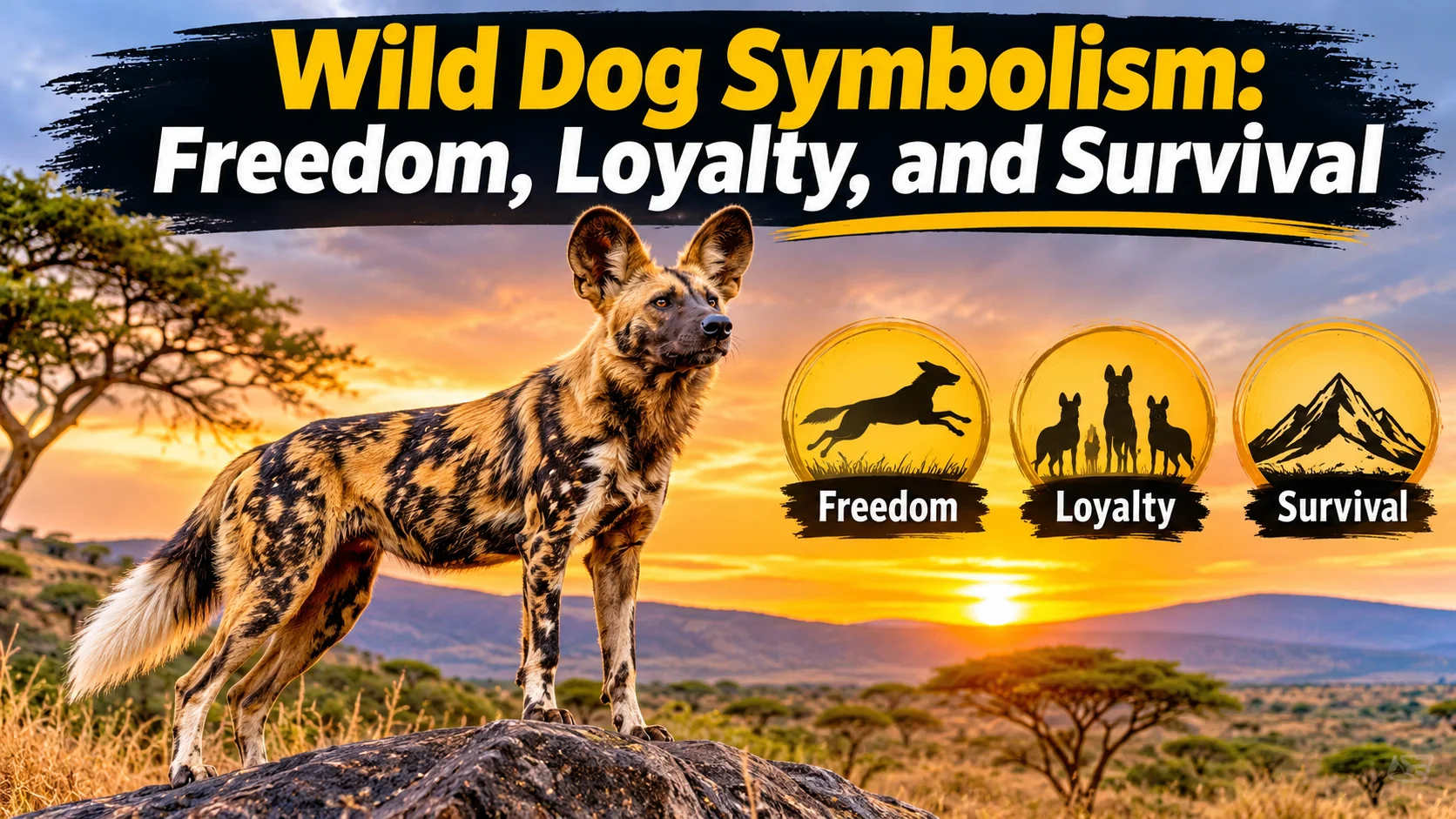
Wild dogs have long captured human attention through their intelligence, close social bonds, and remarkable ability to survive in challenging environments. Wild Dog Symbolism often represents freedom, loyalty, teamwork, adaptability, and the courage to face difficult situations. However, its meaning can change depending on the animal, cultural setting, and personal experience.
In the United States, wild dogs may symbolize independence, untamed instincts, and the strength that comes from working together. Their behavior offers a powerful contrast to the familiar image of domestic dogs as loyal companions. While domestic dogs often represent friendship and protection, wild dogs can suggest a life guided by instinct, cooperation, and the need to adapt.
Wild dogs also appear in stories about wilderness, survival, and the relationship between humans and nature. Their pack behavior raises interesting questions about leadership, trust, and belonging. Meanwhile, their hunting skills and close family relationships make them meaningful symbols of both strength and community.
Quick Answer
Wild dog symbolism in the United States commonly represents freedom, teamwork, loyalty, survival, and adaptability. Spiritually, wild dogs may symbolize trusting your instincts, protecting your community, and finding strength through cooperation.
TL;DR
- Freedom: Wild dogs represent independence and life beyond familiar boundaries.
- Teamwork: Their pack behavior highlights cooperation, trust, and shared responsibility.
- Survival: They symbolize resilience and the ability to adapt to challenges.
- Instinct: Wild dogs encourage awareness of natural feelings and surroundings.
- Spirituality: Some interpretations connect them with guidance, protection, and personal transformation.
- Modern meaning: Wild dog imagery can express strength, wilderness, loyalty, and individuality.
What Does Wild Dog Symbolism Mean?
Wild dogs represent a combination of independence and social connection. Unlike the image of a solitary predator, many wild dog species depend heavily on cooperation to raise their young, find food, and protect their groups. This balance makes them especially meaningful to people exploring identity, relationships, and personal strength.
Freedom and Independence
Wild dogs live outside the familiar structure of human households. Their movements through grasslands, forests, and other natural habitats can symbolize freedom from unnecessary restrictions.
In American culture, this idea connects with wilderness, self-reliance, and the desire to make independent choices. A wild dog can represent someone who values personal freedom while accepting the responsibilities that come with it.
However, independence doesn’t necessarily mean isolation. Wild dogs demonstrate that an individual can maintain a strong identity while remaining connected to others.
Loyalty and Cooperation
Many wild dogs depend on their groups for survival. Members may cooperate when hunting, defending territory, or caring for puppies.
Because of this behavior, the animal can symbolize loyalty that appears through actions rather than promises. It reminds people that strong relationships often require patience, trust, and shared effort.
Adaptability and Survival
Wild dogs must respond to changing environments, competition, and limited resources. Their survival depends on learning, communication, and making the best use of available opportunities.
As a symbol, they represent the ability to adjust without losing your sense of purpose. This meaning can resonate with people navigating career changes, personal setbacks, or unfamiliar circumstances.
Wild Dog Symbolism in American Culture
In the United States, wild dogs fit naturally into broader ideas about wilderness, individual freedom, and the relationship between people and animals. Their symbolism also reflects a familiar American tension: people admire untamed nature while seeking to understand and manage it.
The American Ideal of Independence
American stories frequently celebrate characters who explore unfamiliar places, challenge expectations, and depend on their abilities. Wild dogs can fit this tradition because they appear capable, alert, and independent of human direction.
Their image may appeal to people who value self-reliance or prefer unconventional paths. However, their cooperative behavior offers an important qualification: independence doesn’t eliminate the need for community.
A wild dog can therefore represent someone who thinks freely but still recognizes the value of meaningful relationships.
Wilderness and Conservation
Wild dogs also connect with America’s interest in protecting wildlife and natural habitats. Although African wild dogs aren’t native to the United States, American audiences encounter them through wildlife documentaries, conservation programs, and zoo education.
Their endangered status makes them symbols of ecological vulnerability as well as survival. Their story reminds viewers that even highly adaptable animals can struggle when habitats disappear or human activity disrupts their lives.
In this setting, wild dog symbolism can represent the importance of protecting nature rather than simply admiring its strength.
Wild Dogs in American Media
Wild canines appear in adventure stories, nature films, and fictional depictions of the wilderness. Depending on the story, they may appear as intelligent survivors, dangerous predators, or misunderstood animals.
These portrayals shape public perceptions, sometimes emphasizing dramatic hunting scenes over everyday social behavior. Yet a more balanced understanding recognizes that wild dogs have complex relationships and important roles in their ecosystems.
For American readers, this distinction matters because a symbol can reflect both the real animal and the stories people tell about it.
The Historical Origins of Wild Dog Symbolism
The symbolic history of wild dogs is closely connected to humanity’s long relationship with canines. However, different wild canids have different histories, and their meanings shouldn’t be treated as interchangeable.
Ancient Relationships With Canines
Dogs and other canids have occupied important places in human societies for thousands of years. Wolves, foxes, jackals, and other wild relatives appear in myths, stories, and artistic traditions across many regions.
People observed canine behaviors such as hunting, guarding, scavenging, and caring for offspring. These behaviors provided natural foundations for symbolic associations with alertness, cunning, protection, and survival.
However, the symbolism of a wolf in an ancient story doesn’t automatically apply to an African wild dog. Similar physical features may inspire overlapping interpretations, but each animal has its own biology and cultural history.
Mythology and Folklore
Canines appear in many traditional stories as guardians, guides, tricksters, or creatures associated with the boundary between familiar and unfamiliar worlds.
Some stories portray wild canines as threats to livestock or human safety. Others recognize their intelligence and ability to survive in difficult conditions.
These contrasting portrayals helped create a lasting symbolic tension between admiration and fear. Wild dogs can appear both as impressive survivors and as reminders that nature doesn’t always follow human expectations.
From Fear to Ecological Understanding
Historically, many predators were viewed mainly through their competition with people for food and land. In some regions, this led to persecution and negative portrayals.
Modern wildlife research has expanded understanding of predator behavior and ecosystem relationships. As a result, wild dogs are increasingly discussed through conservation, social behavior, and biodiversity.
Their symbolic meaning has also broadened. They can now represent not only danger or wilderness but also cooperation, ecological balance, and the importance of protecting vulnerable species.
African Wild Dog Symbolism and Its Special Meaning
The African wild dog is one of the most distinctive animals associated with this topic. Scientifically known as Lycaon pictus, it is native to parts of sub-Saharan Africa and is recognized by its large rounded ears, long legs, and irregular coat patterns.
Its appearance and behavior create several strong symbolic associations. For American readers, learning about the actual animal helps separate meaningful observations from invented spiritual claims.
Teamwork and Shared Responsibility
African wild dogs are highly social animals. Pack members cooperate in ways that support hunting, movement, and the care of young animals.
This behavior makes them powerful symbols of shared responsibility. Their example suggests that a group can become more effective when individuals contribute to a common purpose.
The symbolism may resonate with families, sports teams, workplaces, and community groups. It highlights the idea that success doesn’t always come from one exceptional individual.
Communication and Social Bonds
African wild dogs use vocal signals and body language to communicate. Their social behavior reflects the importance of recognizing others’ needs and responding to changing situations.
Symbolically, they can represent honest communication and the ability to coordinate without relying on one person’s decisions alone.
They may also remind people that trust grows through repeated interactions. Strong relationships often depend on noticing small signals, respecting boundaries, and responding with care.
Endurance and Protection
African wild dogs face serious threats, including habitat loss, conflict with humans, disease, and competition with larger predators.
Their continued survival despite these pressures makes them symbols of endurance and vulnerability. However, their story also demonstrates that resilience has limits when environmental conditions become too difficult.
Their symbolism therefore carries two connected lessons: persistence matters, and even strong communities need protection.
Wild Dog Spiritual Meaning
In contemporary spiritual interpretations, wild dogs often represent instinct, protection, personal freedom, and the importance of community. These ideas draw largely from observations of canine behavior and from broader symbolic traditions surrounding wild animals.
There isn’t one universal spiritual meaning for seeing a wild dog. Interpretations depend on personal beliefs, cultural backgrounds, and the circumstances surrounding the encounter.
Trusting Your Instincts
Wild dogs depend on awareness and quick responses to their surroundings. Their behavior can inspire people to pay closer attention to their own feelings and observations.
Spiritually, this may be interpreted as a reminder to listen to your intuition. However, intuition works best alongside careful thinking rather than replacing evidence or sound judgment.
A wild dog may serve as a personal symbol of staying alert while remaining open to new possibilities.
Protection and Community
Because many wild dogs live in cooperative groups, they can symbolize the strength found in supportive relationships.
Someone going through a difficult period might interpret the animal as a reminder to seek help rather than handling every problem alone. Others may connect it with the responsibility to protect family members or friends.
These meanings are personal interpretations, not proof that a supernatural force has sent a message.
Change and Personal Growth
Wild dogs must respond to changing conditions to survive. Their behavior can inspire people facing transitions or learning to live with uncertainty.
In this context, the animal represents growth through experience. It suggests that adapting to change doesn’t require abandoning your values.
Wild Dog Symbolism Across Different Cultures
Wild canine symbolism varies widely across cultures. Wolves, jackals, foxes, and African wild dogs occupy different environments and appear in different traditions, so their meanings shouldn’t be combined without care.
Indigenous Traditions in North America
Indigenous nations in North America have distinct histories, spiritual teachings, and relationships with animals. There is no single Indigenous interpretation of wild dogs or canines that applies to every nation.
In some traditions, particular animals appear in stories involving responsibility, relationships, survival, or connections with the natural world. The meaning depends on the specific community and its teachings.
It’s important not to assign a universal spiritual message to Indigenous cultures without reliable, community-specific information. Modern readers should approach these traditions with respect rather than treating them as interchangeable sources of mystical meanings.
African Cultural Contexts
African cultures are diverse, with different languages, histories, religious traditions, and relationships with wildlife. Wild dogs may have local significance through stories, hunting histories, livestock concerns, or experiences with conservation.
However, it would be inaccurate to claim that all African cultures view the African wild dog as a symbol of loyalty or spiritual guidance. Those meanings may be personal interpretations rather than established traditional beliefs.
The animal’s actual social behavior provides a useful starting point for reflection without requiring unsupported cultural claims.
Broader Spiritual Interpretations
In modern spiritual writing, wild dogs may be associated with instinct, group loyalty, resilience, and independence. These interpretations often draw on general observations of the animal rather than a single historical tradition.
Some people also connect wild animals with life transitions or personal awakening. Such associations can be meaningful as private reflections, but they aren’t universal beliefs shared by every culture.
The Psychological Meaning of Wild Dogs
Wild dogs can evoke powerful emotional reactions. Their appearance may suggest danger, excitement, freedom, or admiration, depending on a person’s experiences and the context in which the animal appears.
Psychological symbolism helps explain these responses without assuming that the animal predicts future events.
Independence Without Isolation
A wild dog can represent the desire to live according to your own values. However, its social nature complicates the idea that freedom means having no obligations.
This makes the animal an interesting symbol for people balancing independence with family, friendship, or teamwork. It suggests that personal freedom and strong relationships can exist together.
Strength During Difficult Times
Wild dogs survive by responding to challenges rather than relying on physical strength alone. Their behavior can symbolize patience, flexibility, and practical problem-solving.
For someone facing uncertainty, the animal may represent the determination to keep moving while adjusting plans when necessary.
However, resilience doesn’t mean ignoring exhaustion or refusing help. Sometimes the strongest response involves recognizing limits and accepting support.
Belonging and Identity
A pack can symbolize a group where individuals contribute to a shared purpose. This association may appeal to people who value loyalty and dependable relationships.
At the same time, wild dog imagery can represent someone who feels different from their surroundings. Its wildness may express a desire to protect individuality rather than conform to expectations.
These interpretations depend on the person’s own associations with the animal.
Read More: Wildebeest Symbolism: Strength, Survival, and Migration
Wild Dog Symbolism in Dreams
Dreams involving wild dogs can feel intense because the animals may evoke both social connection and potential danger. However, dreams don’t have fixed meanings, and there is no reliable universal dictionary that explains every animal dream.
The most useful interpretation usually considers the dream’s emotions, setting, and personal context.
Seeing a Calm Wild Dog
A calm wild dog may represent awareness, independence, or a growing appreciation for cooperation. If the animal appears comfortable and unthreatening, the dream might reflect confidence in your ability to navigate unfamiliar situations.
However, your own feelings matter more than a general interpretation. A calm animal may mean something different to someone who fears dogs than to someone who studies wildlife.
Being Chased by Wild Dogs
A dream about being chased may reflect stress, pressure, or a feeling of being overwhelmed. The wild dogs might represent several demands competing for your attention.
Still, the dream doesn’t prove that danger is approaching. Consider whether recent events have left you feeling cornered, rushed, or unable to make your own choices.
Watching a Pack Cooperate
A dream showing wild dogs working together may bring attention to teamwork and belonging. It might encourage reflection on whether your relationships provide enough support.
Alternatively, it could reflect concerns about group pressure or fitting in. The surrounding details help determine which interpretation feels most relevant.
Wild Dog Symbolism in Tattoos and Modern Design
Wild dog imagery can communicate strength, freedom, and loyalty without relying on words. In contemporary American design, it may appear in tattoos, clothing, artwork, outdoor-themed decorations, and personal emblems.
The animal’s meaning often depends on how it’s portrayed.
Tattoo Meanings
A wild dog tattoo can represent independence, survival, or commitment to a close group. Some designs emphasize the animal’s fierce expression, while others highlight its alert posture or natural movement.
Common interpretations include:
• Independence: Living according to personal values rather than outside expectations.
• Loyalty: Standing beside trusted friends and family members.
• Resilience: Continuing through hardship while learning from experience.
• Wilderness: Maintaining a connection with nature and untamed spaces.
• Teamwork: Recognizing the strength that comes from cooperation.
Before choosing a design, consider whether you want to represent an actual wild dog species or a broader canine image. Specific details can make the intended meaning clearer.
Clothing and Home Decor
Wild dog imagery may appeal to people who enjoy wildlife photography, outdoor activities, or nature-inspired interiors. Photographs and realistic artwork can celebrate the animal’s beauty without turning it into a fantasy creature.
In home decor, a wild dog may suggest adventure, alertness, or appreciation for wildlife. However, the meaning isn’t fixed, and visitors may simply see it as an attractive animal image.
Social Media and Personal Identity
On social media, people sometimes use wild animal imagery to express confidence, independence, or an unconventional personality.
A wild dog can also represent a preference for teamwork over individual attention. Its pack behavior offers an alternative to the idea that strength always means standing alone.
These modern meanings reflect personal identity rather than a formal symbolic system.
Wild Dog Symbolism Compared With Wolves and Domestic Dogs
Wild dogs, wolves, and domestic dogs share certain traits, but their symbolism isn’t identical. Comparing them helps explain why the specific animal matters when interpreting an image or personal experience.
Key Differences in Symbolic Meaning
| Animal or Context | Common Symbolic Meaning | Typical Associations | Important Distinction |
| African wild dog | Cooperation and survival | Pack bonds, endurance, adaptability | Strongly associated with coordinated group behavior |
| Wolf | Wilderness and independence | Instinct, leadership, mystery | Often carries deeper mythological and folkloric associations |
| Domestic dog | Loyalty and companionship | Friendship, protection, trust | Closely connected with human relationships |
| Wild canine in dreams | Personal instincts or stress | Freedom, fear, change | Meaning depends on the dreamer’s emotions and experiences |
| Wild dog in conservation | Ecological resilience | Biodiversity, vulnerability, habitat protection | Highlights the animal’s place in a natural ecosystem |
Why These Differences Matter
Wolves often appear in folklore and popular stories as solitary figures or leaders. Domestic dogs, meanwhile, are commonly associated with affection and dependable companionship.
African wild dogs offer a different emphasis. Their social organization makes them especially useful symbols of cooperation, shared effort, and collective survival.
These are broad cultural associations rather than fixed definitions. A particular story, artwork, or personal experience can give any of these animals a different meaning.
Misunderstandings and Controversies About Wild Dog Symbolism
Wild dogs can inspire admiration, but popular interpretations sometimes confuse symbolic ideas with biological facts. Understanding these differences helps readers appreciate the animal without repeating misleading claims.
The Myth of the Naturally Cruel Predator
Wild dogs hunt to obtain food and survive. Describing them as evil or cruel assigns human moral judgments to natural behavior.
Their hunting strategies can appear frightening, particularly in dramatic wildlife footage. However, predation is part of how ecosystems function, and it doesn’t establish that an animal has malicious intentions.
Confusing Different Species
The phrase wild dog can refer to different animals depending on the region and context. African wild dogs, dingoes, feral domestic dogs, and other wild-living canines are not interchangeable.
Their behavior, conservation status, and relationships with people differ. Symbolic interpretations should identify the actual animal whenever possible.
Unsupported Spiritual Claims
Some online interpretations present wild dog sightings as guaranteed warnings, predictions, or supernatural instructions. There is no reliable evidence that seeing a wild dog universally predicts betrayal, danger, wealth, or personal transformation.
People can still find personal meaning in wildlife encounters. The important distinction is between an interpretation that encourages reflection and a claim presented as an established fact.
Respectful Cultural Representation
Wild dog imagery can be used creatively in art, storytelling, and personal expression. However, assigning one spiritual meaning to an entire culture may misrepresent its beliefs.
When discussing cultural traditions, it helps to identify the specific community and distinguish documented teachings from modern personal interpretations.
How Wild Dog Symbolism Has Changed Over Time
Wild dog symbolism has developed alongside changing human attitudes toward predators and wilderness. Earlier views often emphasized competition and danger, while modern interpretations increasingly include ecology, animal behavior, and conservation.
From Threat to Symbol of Cooperation
Predators have sometimes been treated as threats to livestock, food supplies, and human safety. Under these conditions, their symbolic associations often focused on danger or conflict.
As knowledge of wildlife behavior expanded, people gained a clearer picture of how predators interact with their environments. Wild dogs became easier to understand as social animals rather than simply frightening hunters.
Their cooperation now provides a foundation for positive interpretations involving community and shared responsibility.
The Influence of Wildlife Media
Nature documentaries and wildlife photography have introduced American audiences to animals they may never encounter in person.
Images of African wild dogs hunting, resting, and caring for puppies reveal different sides of their behavior. These portrayals can challenge the idea that predators are defined only by aggression.
However, dramatic footage can still create misleading impressions when it leaves out ordinary behavior or ecological context.
Conservation and Modern Identity
Today, wild dog imagery can communicate environmental awareness alongside personal strength. For some people, it represents a commitment to protecting wildlife and preserving natural habitats.
For others, it remains a personal emblem of independence, loyalty, and adaptability.
This range of meanings shows how symbolism evolves. The animal’s biological characteristics remain important, but cultural stories and individual experiences continue to shape its significance.
FAQs:
What Does a Wild Dog Symbolize Spiritually?
A wild dog may symbolize instinct, protection, resilience, and cooperation in contemporary spiritual interpretations. Its meaning depends on your beliefs and circumstances rather than a universal spiritual rule.
Is Seeing a Wild Dog a Good Sign?
Some people interpret a wild dog sighting positively, connecting it with awareness, independence, or community. However, a sighting doesn’t reliably predict good or bad events.
What Does an African Wild Dog Symbolize?
The African wild dog commonly represents teamwork, adaptability, and collective survival in modern symbolic interpretations. Its cooperative social behavior provides a natural basis for these associations.
What Does a Wild Dog Mean in a Dream?
A wild dog in a dream may reflect independence, social relationships, stress, or a need to adapt. Consider the animal’s behavior and your emotional response before deciding what the dream means personally.
What Does a Wild Dog Tattoo Represent?
A wild dog tattoo can represent freedom, resilience, loyalty, or commitment to a community. The design’s posture, setting, and style can help communicate your intended meaning.
How Is Wild Dog Symbolism Different From Wolf Symbolism?
Wild dogs are often associated with cooperation and group survival, while wolves commonly represent wilderness, instinct, and independence. These are broad associations, and individual cultures or artworks may interpret the animals differently.
Conclusion:
Wild dog symbolism brings together several powerful ideas: freedom, teamwork, loyalty, adaptability, and survival. In the United States, these meanings connect with familiar values such as independence, self-reliance, and respect for the natural world. The African wild dog’s cooperative behavior adds an especially important reminder that strength can emerge from a supportive community.
Across spiritual interpretations, personal reflection, tattoos, dreams, and wildlife art, wild dogs can represent the balance between individuality and belonging. Their symbolism also encourages a more thoughtful understanding of predators and the ecosystems they inhabit.

1 thought on “Wild Dog Symbolism: Freedom, Loyalty, and Survival”