
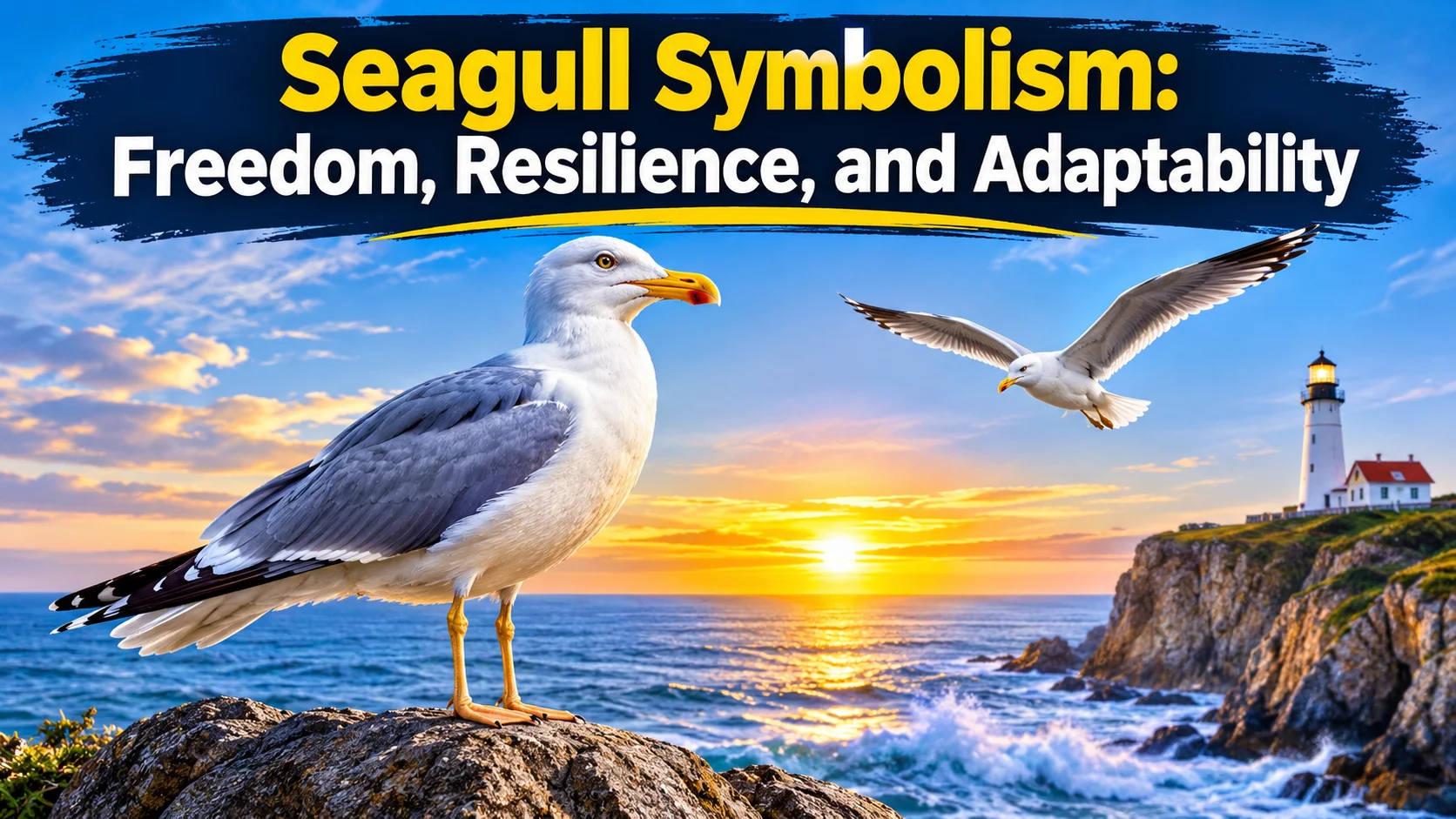
Seagulls are familiar sights along American beaches, harbors, lakes, and coastal towns. They glide over the ocean, gather near fishing boats, and search for food along busy shorelines. However, these adaptable birds represent much more than coastal wildlife. Seagull symbolism connects with freedom, independence, survival, intelligence, and the ability to adapt to changing circumstances.
In the United States, seagulls often bring back memories of summer vacations, peaceful beaches, fishing trips, and ocean adventures. Their ability to travel across long distances also makes them powerful symbols of exploration and personal independence. Meanwhile, their survival skills remind people to stay resourceful when life becomes difficult.
Seagulls also carry spiritual and emotional meanings in different traditions. Some people associate their appearance with new opportunities, inner strength, and messages of hope. Others see them as reminders to release unnecessary worries and trust life’s natural direction.
Understanding this bird’s symbolism requires looking beyond its familiar appearance. Its history, behavior, cultural associations, and modern representations all contribute to its meaning.
Quick Answer
Seagull symbolism in American culture primarily represents freedom, resilience, independence, and adaptability. Spiritually, seagulls can symbolize new beginnings, emotional balance, opportunity, and the courage to follow your own path.
TL;DR
- Seagulls symbolize freedom, independence, and exploration.
- Their survival skills represent resilience and resourcefulness.
- Coastal American culture connects them with summer and ocean adventures.
- Spiritually, they can represent change, intuition, and emotional freedom.
- Seagull tattoos often express independence and a love of nature.
- Their adaptability reminds people to remain flexible during difficult times.
What Does a Seagull Symbolize?
A seagull is more than a common coastal bird. Its ability to fly, swim, travel, and find food in different environments gives it several symbolic meanings. In particular, its behavior offers useful connections to everyday human experiences.
For American readers, these meanings often connect with personal freedom, outdoor adventures, and the changing rhythms of coastal life.
Freedom and Independence
Seagulls spend much of their time flying over open water and exploring wide landscapes. Their flight represents the desire to live freely without unnecessary restrictions.
They can also symbolize independence and confidence. A person who identifies with this bird may value personal choices and the courage to follow an individual path.
Resilience and Adaptability
Seagulls survive in many environments, including beaches, cities, lakes, and fishing communities. Their flexibility represents the ability to handle unexpected situations.
However, resilience doesn’t mean avoiding every difficulty. It means finding practical ways forward when circumstances change.
Opportunity and Exploration
A seagull constantly searches its surroundings for food and suitable places to rest. This behavior can represent curiosity, awareness, and readiness for new opportunities.
Its symbolism encourages people to explore unfamiliar possibilities rather than remain comfortable with the familiar.
Historical Background of Seagull Symbolism
Seagulls have lived alongside human communities for centuries. Coastal people have observed their movements, feeding habits, and relationship with the sea.
Unlike some animals with established religious or mythological identities, seagulls don’t have one universal ancient symbolic meaning. Their interpretations developed largely through maritime life, storytelling, folklore, and artistic representation.
Seagulls in Ancient Maritime Life
Ancient sailors paid attention to birds because their movements sometimes provided useful information about nearby land and fishing areas.
Seabirds could indicate productive waters or suggest that land wasn’t far away. However, different species and local conditions mattered. Not every bird sighting offered reliable guidance.
Over time, birds became associated with navigation, survival, and the mysteries of the ocean.
Seagulls in European Coastal Traditions
European fishing communities developed stories and beliefs around seabirds. Some traditions treated their appearance as a sign of changing weather or an important connection with the sea.
In certain maritime folklore, seabirds were associated with sailors who had died at sea. However, these beliefs varied considerably between communities.
As European settlers established coastal communities in North America, maritime customs and stories influenced local relationships with seabirds.
From Survival Symbol to Cultural Icon
During later centuries, seagulls became increasingly familiar in paintings, travel writing, poetry, and coastal photography.
Their connection with beaches and harbors strengthened their association with freedom and ocean life. Today, they remain recognizable symbols of seaside experiences.
Seagull Symbolism in American Culture
In the United States, seagulls have a strong connection with coastal identity. People encounter them along the Atlantic and Pacific coasts, the Gulf Coast, and the Great Lakes.
Their presence reminds Americans of vacations, fishing communities, ocean conservation, and outdoor recreation. However, their meanings can differ depending on location and personal experience.
American Beaches and Summer Memories
For many Americans, seagulls are part of the traditional beach experience. They appear near boardwalks, seafood restaurants, piers, and sandy shorelines.
Their calls often remind people of childhood vacations and relaxing afternoons beside the water.
They can represent:
- Summer vacations and family beach traditions.
- Peaceful mornings beside the ocean.
- Relaxation, recreation, and outdoor adventures.
- Nostalgia for childhood coastal experiences.
- A personal connection with nature.
Fishing Communities and Maritime Identity
Seagulls frequently gather around fishing boats, docks, and harbors. Their presence reflects the close relationship between wildlife and coastal livelihoods.
For fishing communities, these birds can represent the daily rhythms of maritime life. They also remind people that humans and wildlife share the same coastal environments.
Seagulls in American Popular Culture
Seagulls appear in beach-themed decorations, travel advertisements, children’s stories, and coastal artwork.
Their familiar appearance makes them useful symbols of seaside relaxation. However, popular culture also portrays them as noisy birds that steal unattended food.
Both representations contribute to their modern identity. They can represent carefree coastal living while also reminding people that nature doesn’t always behave conveniently.
Spiritual Meaning of Seagulls
Seagulls have several spiritual interpretations connected with freedom, awareness, and transformation. Their ability to move between land, water, and sky makes them meaningful symbols of different life experiences.
For people exploring spirituality in the United States, these birds can represent emotional growth and a willingness to embrace change. However, spiritual interpretations are personal rather than universal beliefs.
Freedom of the Spirit
A seagull flying over the ocean can represent a desire for spiritual independence. It reminds people to explore their beliefs and develop their own understanding of life.
Its open flight may also symbolize releasing emotional restrictions. This interpretation encourages people to move beyond fear and unnecessary limitations.
Trusting Your Intuition
Seagulls observe their surroundings carefully while searching for food and shelter. Spiritually, this behavior can represent awareness and trusting your instincts.
Seeing one may inspire you to pay attention to your surroundings. It can also encourage thoughtful decisions during uncertain periods.
Transformation and New Beginnings
Because seagulls move between different environments, they can symbolize personal transformation.
Their appearance may serve as a reminder that change doesn’t always represent loss. Sometimes, it creates opportunities for growth, discovery, and a fresh beginning.
Seagull Symbolism in Different Cultures and Traditions
Bird symbolism varies across cultures, religions, and historical communities. Seagulls don’t have one fixed meaning worldwide, but their connection with water and the sky creates several recurring interpretations.
European Maritime Folklore
Some European coastal communities traditionally associated gulls with sailors and fishermen lost at sea. In certain stories, these birds carried the souls of people who never returned home.
This belief encouraged respect for seabirds. However, it belongs to regional folklore rather than an established religious teaching.
Native American Perspectives
Native American nations have distinct cultural histories, spiritual practices, and animal traditions. There isn’t one universal Native American interpretation of seagulls.
Coastal and fishing communities have developed different relationships with seabirds. Therefore, assigning one spiritual meaning to every Indigenous nation would be misleading.
Broader Spiritual Interpretations
Across modern spiritual discussions, birds often represent freedom, perspective, and communication.
Seagulls may carry similar personal associations because of their connection with open skies and water. These interpretations shouldn’t be confused with specific teachings from established religious traditions.
Psychological and Emotional Meaning of Seagulls
Animals can become powerful personal symbols because people connect their behavior with human emotions. Seagulls often create feelings associated with open spaces, peaceful environments, and independence.
Their symbolism can also reflect emotional challenges and the need for flexibility.
Emotional Freedom
A seagull soaring above the ocean can represent emotional release. It may remind someone to stop carrying unnecessary worries.
For example, someone recovering from a difficult relationship might associate a flying gull with moving forward.
Confidence and Self-Reliance
Seagulls find food in different environments and respond quickly to changing conditions. Psychologically, this behavior connects with confidence and practical thinking.
The bird can represent someone who trusts their abilities. It may also encourage people to become more comfortable with independent decisions.
Adaptability During Difficult Times
Life rarely follows a perfectly predictable path. Seagulls demonstrate how living things adjust when their surroundings change.
Their symbolism can encourage:
- Staying calm when unexpected problems appear.
- Finding practical solutions instead of giving up.
- Accepting changes that cannot be controlled.
- Exploring new opportunities after disappointment.
- Maintaining confidence during uncertain situations.
What Does Seeing a Seagull Mean Spiritually?
Seeing a seagull can carry different personal meanings depending on its behavior, location, and your circumstances. Some people interpret these encounters as reminders of freedom, awareness, and new opportunities.
However, an ordinary wildlife encounter doesn’t prove that a supernatural message has occurred.
Seeing a Seagull Flying
A flying seagull often represents independence and personal freedom. It may encourage you to explore new possibilities.
If you’re feeling restricted, its flight can become a meaningful reminder to reconsider your direction.
Seeing a Seagull Near Water
A seagull beside the ocean may symbolize emotional balance and reflection.
Water often represents emotions in modern symbolic interpretations. Therefore, this combination can suggest the importance of understanding your feelings.
Seeing a Seagull Alone
A solitary seagull can represent independence and self-discovery. It may remind you that personal growth sometimes requires spending time alone.
However, being independent doesn’t mean rejecting meaningful relationships.
Seeing a Group of Seagulls
Several seagulls together can symbolize community, communication, and cooperation.
Their presence may encourage you to appreciate supportive relationships. It can also represent the importance of finding your place within a community.
Seagull Symbolism in Dreams
Dreams about seagulls can reflect memories, emotions, and personal experiences. Their meaning often depends on what the bird does and how you feel during the dream.
A peaceful scene may create different associations from an aggressive or frightening encounter.
Dreaming of a Flying Seagull
A flying seagull may represent freedom, ambition, and the desire for change.
Perhaps you’re considering a new opportunity or hoping to leave an uncomfortable situation. The dream may reflect your wish for greater independence.
Dreaming of a Seagull Near the Ocean
This dream may connect with emotional reflection and personal balance.
Calm water can create associations with peace and clarity. Rough water may reflect uncertainty or emotional tension.
Dreaming of an Injured Seagull
An injured bird may symbolize vulnerability or restricted freedom.
It could reflect feelings of disappointment or difficulty moving forward. Consider whether something currently prevents you from expressing yourself.
Dreaming of Feeding Seagulls
Feeding seagulls may represent generosity, connection, and your relationship with others.
However, the dream might also encourage you to consider personal boundaries. Helping others shouldn’t require neglecting your own needs.
Read More: Opossum Symbolism: Resilience, Survival, and Renewal
Seagull Tattoo Meaning and Symbolism
Seagull tattoos appeal to people who appreciate the ocean, coastal living, and personal freedom. Their simple silhouettes also work well in traditional and modern tattoo styles.
In American tattoo culture, these designs can express individual experiences rather than one fixed meaning.
Freedom and Independence Tattoos
A flying seagull often represents personal freedom. People may choose this design after overcoming difficult experiences or making important life changes.
It can also express a desire to live independently.
Travel and Safe Journeys
Seagulls have a natural connection with harbors, ships, and coastal navigation. Consequently, they can represent travel and the hope of returning home safely.
This interpretation fits people with strong maritime connections.
Popular Seagull Tattoo Designs
- A single flying gull representing independence.
- A seagull above ocean waves representing emotional freedom.
- Two gulls symbolizing companionship and lasting relationships.
- A small silhouette representing simplicity and peaceful memories.
- A traditional nautical design expressing love for maritime life.
Some people also choose seagulls to remember a favorite beach, hometown, or meaningful vacation.
Seagull Symbolism in Art, Home Decor, and Modern Media
Seagulls remain popular decorative subjects because their appearance immediately suggests coastal environments. Their recognizable silhouettes make them easy to incorporate into artwork and everyday designs.
In the United States, they frequently appear in beach houses, vacation properties, and seaside businesses.
Coastal Home Decorations
Seagull artwork often creates a relaxed atmosphere. Designers combine these birds with ocean waves, driftwood, boats, and sandy landscapes.
Common decorative associations include:
- Relaxation and peaceful coastal living.
- Summer vacations and ocean adventures.
- Simplicity and appreciation of nature.
- Nostalgia for seaside destinations.
Social Media and Digital Culture
Seagulls appear in beach photographs, travel videos, and humorous wildlife content.
Their noisy behavior and habit of taking unattended food have also made them popular subjects for comedy.
However, their online identity isn’t limited to humor. A photograph of a gull flying across a sunset can communicate freedom and peaceful reflection.
Literature and Popular Storytelling
Richard Bach’s Jonathan Livingston Seagull, published in 1970, helped establish a modern literary association between seagulls and personal growth.
The story follows a gull whose desire to improve its flying abilities separates him from ordinary expectations.
Its broader themes include individuality, learning, determination, and self-discovery. These ideas continue to influence how some readers interpret seagull imagery.
Different Seagull Behaviors and Their Symbolic Meanings
A seagull’s behavior can add another layer to its symbolic interpretation. Flying, calling, gathering, and searching for food each create different associations.
Understanding these behaviors also helps distinguish real bird activity from personal spiritual interpretations.
A Seagull Flying Over the Ocean
This image strongly represents freedom and exploration. Its movement across open water can suggest confidence and the willingness to discover unfamiliar paths.
A Seagull Calling Loudly
Seagull calls are an important part of their communication. Symbolically, people may associate their voices with expression, awareness, and speaking openly.
The sound can also remind someone to pay attention to their surroundings.
A Seagull Searching for Food
Gulls are resourceful feeders. Some follow fishing boats, search beaches, and use different techniques to obtain food.
Symbolically, this behavior represents determination, intelligence, and making the most of available resources.
A Seagull Resting Near the Shore
A resting gull may inspire thoughts about patience and recovery. Its presence can represent the importance of taking breaks before beginning another journey.
Seagull Behavior and Common Interpretations
| Seagull Behavior | Symbolic Meaning | Common Association |
| Flying high | Freedom and ambition | Personal independence |
| Resting near water | Peace and reflection | Emotional balance |
| Calling loudly | Communication | Self-expression |
| Searching for food | Resourcefulness | Survival and determination |
| Flying in groups | Community | Friendship and belonging |
These interpretations are symbolic, not scientifically established messages. Actual behavior depends on the bird’s environment and natural needs.
Seagull Colors and Their Symbolic Associations
Most familiar gulls have white, gray, and black feathers. These colors contribute to their visual identity and can influence artistic interpretations.
Different species also have distinctive appearances. Therefore, color symbolism should be understood as an artistic or personal interpretation rather than a universal tradition.
White Seagull
White often represents purity, peace, clarity, and new beginnings.
A white gull against a blue sky can create an especially strong image of hope and freedom.
Gray Seagull
Gray can symbolize balance, patience, and adaptability.
Its neutral appearance may also suggest the ability to remain steady during uncertain situations.
Black-Tipped Wings
Many gulls have dark markings on their wings. In symbolic artwork, these markings can represent strength, contrast, and the balance between different experiences.
Seagull Colors at a Glance
- White: Peace, clarity, and fresh opportunities.
- Gray: Balance, flexibility, and emotional maturity.
- Black markings: Strength, protection, and contrast.
- Blue surroundings: Calmness, openness, and emotional depth.
Misunderstandings, Negative Meanings, and Controversies
Seagulls are usually associated with positive ideas such as freedom and exploration. However, their reputation isn’t always favorable.
Their behavior around people can create frustration, especially in crowded American beach communities.
Why Some People View Seagulls Negatively
Gulls sometimes take unattended food, make loud calls, and gather around garbage. These behaviors can make them seem troublesome.
Consequently, some modern interpretations connect them with opportunism, persistence, or taking advantage of available resources.
However, these descriptions reflect human reactions rather than moral qualities of the birds.
Are Seagulls Bad Omens?
There is no universal tradition establishing seagulls as bad omens.
Some maritime folklore connected seabirds with storms, death, or lost sailors. Other interpretations associated their appearance with guidance and safe journeys.
These beliefs developed in particular communities and shouldn’t be treated as universal facts.
Why Calling Every Gull a Seagull Can Be Misleading
The word seagull is a familiar everyday term rather than the name of one particular species.
North America has many different gull species. Some live near oceans, while others regularly visit inland lakes, rivers, agricultural areas, and cities.
This distinction matters because different species have different appearances, habitats, and behaviors.
Wildlife Respect and Human Responsibility
Gulls are wild animals, not spiritual messengers that exist for human entertainment.
Feeding them can encourage dependence on human food and create conflicts around public spaces. It is generally better to observe them without disturbing their natural behavior.
Respecting wildlife also means avoiding unnecessary harm and protecting important coastal habitats.
How Seagull Symbolism Has Changed Over Time
Seagull symbolism has developed alongside human relationships with oceans and coastal environments. Earlier interpretations often reflected survival, fishing, navigation, and maritime folklore.
Today, personal freedom, travel, and emotional independence are more familiar symbolic associations.
Earlier Maritime Associations
Historically, sailors and fishing communities paid attention to seabirds because they could provide clues about their surroundings.
Some communities also developed stories connecting gulls with lost sailors. These interpretations gave the birds emotional and sometimes supernatural significance.
Modern American Associations
During the twentieth century, beaches became increasingly popular destinations for recreation and family vacations.
Seagulls consequently became familiar symbols of summer, relaxation, and coastal tourism.
Literature and popular photography also strengthened their association with personal freedom and exploration.
Contemporary Symbolism
Today, seagulls can represent different things to different generations.
For some people, they symbolize a peaceful connection with nature. For others, they represent independence, determination, or humorous beach experiences.
Their meaning continues to evolve because people bring their own memories and values to familiar wildlife.
Frequently Asked Questions
What Does a Seagull Symbolize Spiritually?
A seagull can symbolize freedom, adaptability, intuition, and personal transformation. Some people also associate its appearance with new opportunities and emotional growth.
Is Seeing a Seagull a Sign of Good Luck?
Some maritime traditions associate seabirds with safe journeys and guidance. Today, people may interpret seeing a seagull as an encouraging reminder to remain hopeful and open to opportunities.
What Does a Seagull Represent in Native American Symbolism?
There isn’t one universal Native American meaning for seagulls. Interpretations depend on individual nations, regional traditions, and relationships with coastal wildlife.
What Does a Seagull Tattoo Mean?
A seagull tattoo commonly represents freedom, independence, travel, and a connection with the ocean. Some people also use it to remember meaningful coastal experiences or personal achievements.
What Does It Mean When a Seagull Flies Over You?
Symbolically, a seagull flying overhead can represent freedom, perspective, and new possibilities. However, its flight is usually ordinary wildlife behavior rather than proof of a spiritual message.
Are Seagulls Symbols of Peace?
Seagulls can represent peace, particularly when depicted resting beside calm water or flying across an open sky. Their connection with coastal landscapes often creates feelings of relaxation and emotional balance.
Conclusion:
Seagull symbolism brings together freedom, independence, resilience, and adaptability. These birds remind people of the value of exploring new possibilities while remaining resourceful during difficult times.
In American culture, seagulls represent much more than beach vacations. They connect people with maritime history, coastal communities, outdoor adventures, and meaningful personal memories. Their spiritual interpretations also offer themes of transformation, intuition, and emotional freedom.

1 thought on “Seagull Symbolism: Freedom, Resilience, and Adaptability”