
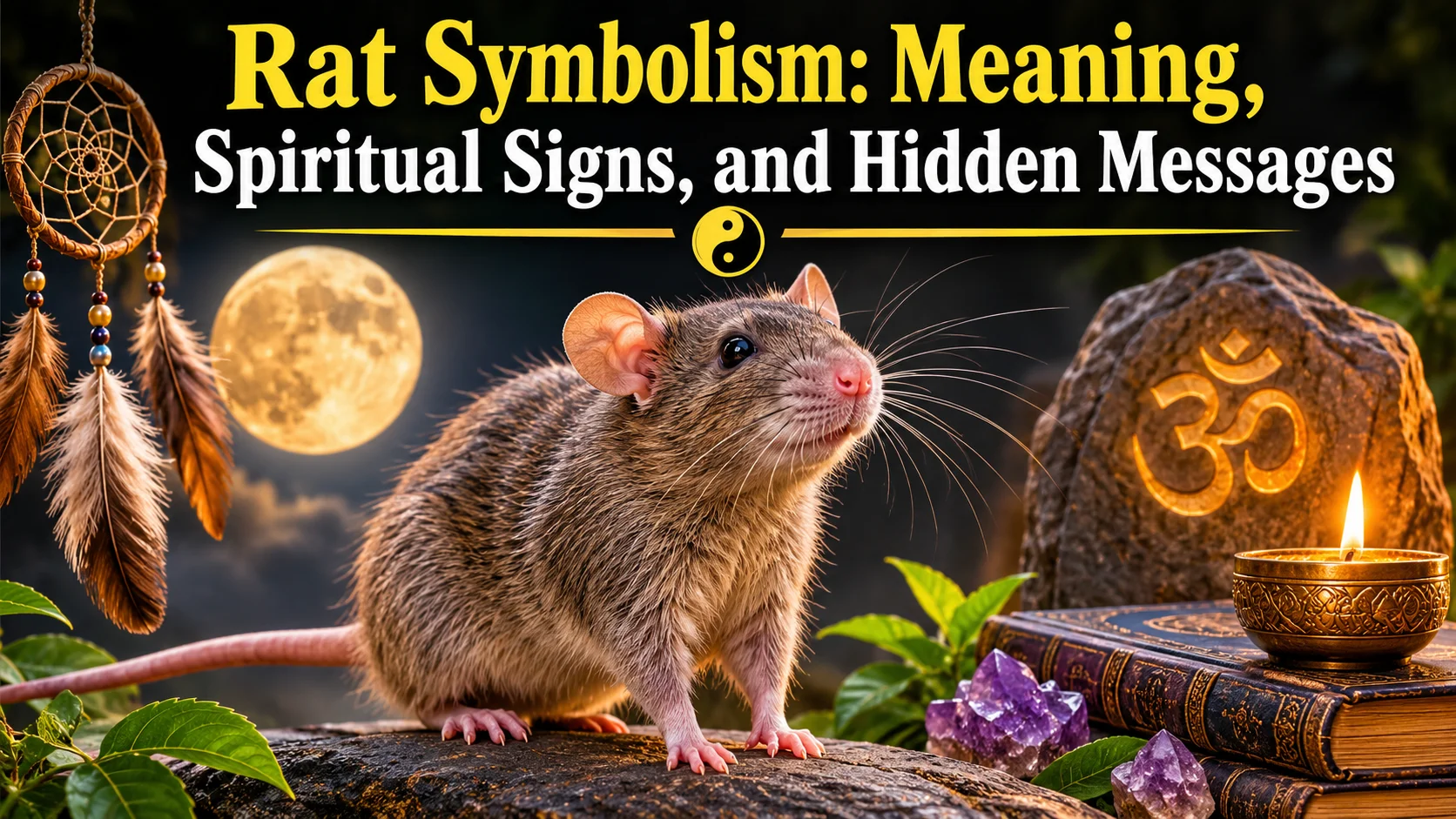
Rats are often misunderstood animals. Some people associate them with dirt, disease, and destruction. However, these intelligent creatures also represent survival, adaptability, resourcefulness, and determination. Rat symbolism carries several meanings in American culture, folklore, spirituality, and everyday life.
A rat can survive in crowded cities, find food in difficult conditions, and adapt to changing environments. These abilities make it a powerful symbol of resilience and cleverness. At the same time, its connection with disease and urban environments creates a darker reputation.
In the United States, rats often appear in stories about city life, survival, poverty, intelligence, and unexpected strength. However, their meanings aren’t entirely negative. Other cultures have celebrated rats as symbols of prosperity, good fortune, and clever thinking.
Understanding rat symbolism means looking beyond the animal’s reputation. Its meaning changes with the situation, cultural background, and personal experience. Whether you see a rat in a dream, encounter one unexpectedly, or consider it as a tattoo, its symbolism can offer several interesting interpretations.
Quick Answer
Rat symbolism in the United States primarily represents survival, intelligence, adaptability, and resourcefulness. Spiritually, rats can also symbolize prosperity, hidden opportunities, transformation, and the ability to overcome difficult circumstances.
TL;DR
- Rats symbolize intelligence, survival, and practical problem-solving.
- Their adaptability represents resilience during difficult changes.
- American culture often connects rats with urban life and hardship.
- Chinese traditions associate rats with wealth and cleverness.
- Spiritual interpretations include resourcefulness, abundance, and awareness.
- Negative meanings include betrayal, disease, fear, and hidden problems.
What Does a Rat Symbolize?
A rat represents different qualities depending on how people view it. In some situations, it symbolizes intelligence and survival. In others, it represents fear, dishonesty, or unwanted changes.
However, its ability to survive in challenging environments gives it a surprisingly powerful symbolic identity.
Core Symbolic Meanings
Here are the most common meanings associated with rats:
- Survival: Finding ways to continue despite difficult circumstances.
- Intelligence: Using observation, memory, and clever thinking to solve problems.
- Adaptability: Adjusting to unfamiliar surroundings and changing conditions.
- Resourcefulness: Making the most of limited opportunities and available resources.
- Abundance: Representing fertility, prosperity, and the ability to gather resources.
- Secrecy: Symbolizing hidden activities, private information, or unnoticed behavior.
- Fear: Reflecting anxiety, discomfort, contamination, or uncertainty.
What Makes Rats Powerful Symbols?
Rats are highly adaptable animals. They can live in different environments and learn to navigate complicated surroundings.
Their behavior creates a connection with people who have experienced difficult circumstances. A rat doesn’t necessarily need perfect conditions to survive.
Instead, it uses whatever opportunities are available. Symbolically, this represents making progress even when life doesn’t provide everything you need.
Historical Origins of Rat Symbolism
Rats have lived alongside humans for thousands of years. Their relationship with people has influenced mythology, religion, folklore, literature, and historical storytelling.
However, their symbolic reputation hasn’t remained consistent. Different societies have viewed them as valuable creatures, troublesome pests, or supernatural messengers.
Ancient Associations
In ancient societies, rodents were connected with food storage, agriculture, household life, and seasonal changes.
Because rats could enter grain stores and damage supplies, people sometimes viewed them as threats to prosperity. Their ability to multiply also made them symbols of fertility and abundance in certain traditions.
In ancient Chinese writing, the character associated with rats appeared on oracle bones during the Shang period. This demonstrates how deeply the animal was connected with early Chinese culture.
Medieval European Symbolism
During the Middle Ages, rats became increasingly associated with death, disease, and fear.
The Black Death, which devastated Europe during the fourteenth century, contributed to this frightening image. Later historical storytelling strengthened the connection between rats and plague.
However, the history is more complicated than the popular image suggests. Fleas and their animal hosts played important roles in plague transmission. Historical accounts also don’t support every modern assumption about rats and medieval epidemics.
Over time, the rat became a powerful image of danger, contamination, and uncontrolled destruction.
From Folklore to Modern Culture
By the nineteenth century, growing industrial cities created new concerns about rats.
Crowded housing, food storage, poor sanitation, and expanding transportation networks shaped public attitudes. Rats became common figures in newspapers, political cartoons, horror stories, and urban folklore.
Nevertheless, their intelligence and ability to survive also inspired admiration. This contrast continues to shape their meaning today.
Rat Symbolism in American Culture
In the United States, rats have a complicated cultural identity. They’re associated with city streets, crowded neighborhoods, sanitation concerns, and survival.
However, American storytelling also recognizes their intelligence and determination.
The Rat as an Urban Survivor
New York City is particularly associated with rats in American popular culture. The animals have become familiar figures in conversations about urban infrastructure and everyday city life.
They represent an ability to survive in environments created by human activity.
For some Americans, this creates an interesting symbolic connection with people who work hard under challenging circumstances.
American Media and Entertainment
Movies, cartoons, books, and animated stories have helped reshape the rat’s reputation.
For example, the animated film Ratatouille introduced audiences to a rat whose intelligence and passion for cooking challenged common assumptions.
The character demonstrates that appearance doesn’t determine someone’s abilities.
Similarly, rats in horror stories often represent hidden dangers, neglected spaces, and fears that people would rather ignore.
What Rats Represent in Everyday American Life
Depending on the context, rats can symbolize:
- City survival and the ability to overcome obstacles.
- Resourcefulness during economic or personal difficulties.
- Unwanted problems hidden beneath everyday routines.
- Intelligence that people sometimes overlook.
- The contrast between social expectations and individual potential.
This makes the rat an especially interesting American cultural symbol. It can represent both society’s problems and the determination required to navigate them.
Rat Symbolism in Cities and Urban Environments
Urban environments have played a major role in shaping how Americans understand rats.
Unlike animals associated with forests, mountains, or open landscapes, rats are frequently connected with human-built environments.
Survival Beneath the Surface
Rats often live around underground spaces, drainage systems, abandoned buildings, and hidden corners.
Symbolically, these locations can represent things happening outside public attention.
A rat moving through an underground passage might suggest:
- Hidden opportunities waiting to be discovered.
- Problems that people have ignored.
- The ability to navigate complicated situations.
- Life continuing outside the public spotlight.
- Finding solutions when visible paths seem blocked.
The Symbol of the Underdog
Rats can also represent underestimated individuals.
Their small size doesn’t prevent them from surviving in difficult environments. This creates an association with people who succeed despite limited resources or social disadvantages.
In this interpretation, the rat represents determination rather than weakness.
However, this meaning depends on personal interpretation. A rat doesn’t automatically represent a particular social group or human experience.
Spiritual Meaning of Rats
In modern spiritual interpretations, rats can represent awareness, adaptability, survival, and hidden opportunities.
People sometimes interpret unexpected animal encounters as reminders to examine their surroundings or reconsider their choices.
However, these interpretations are personal and symbolic. They aren’t established supernatural facts or universal religious teachings.
Rat as a Symbol of Survival
A rat’s ability to adapt can represent the importance of staying flexible.
Perhaps you’re experiencing a difficult transition, starting something unfamiliar, or trying to rebuild your confidence.
In this symbolic interpretation, the rat encourages you to use your available resources rather than waiting for perfect circumstances.
Rat as a Sign of Hidden Opportunities
Rats often explore places that other animals avoid.
Spiritually, this behavior can represent looking beyond obvious opportunities.
It may encourage you to pay attention to overlooked possibilities, unfamiliar ideas, or situations that deserve closer examination.
Rat as a Reminder to Stay Alert
Rats depend heavily on their senses and awareness of their surroundings.
Their symbolism can therefore encourage greater attention to your environment.
You might interpret a rat encounter as an invitation to notice details, reconsider your decisions, and recognize situations that require caution.
Rat Symbolism Across Different Cultures and Religions
Rat symbolism differs significantly across cultures. Some traditions associate rats with prosperity and intelligence, while others emphasize their destructive behavior.
Understanding these differences helps prevent the assumption that every society views the animal negatively.
Chinese Culture
In Chinese tradition, the rat occupies the first position in the twelve-animal zodiac cycle.
It is commonly associated with intelligence, quick thinking, ambition, and resourcefulness.
One popular zodiac story explains that the rat secured first place by riding on the ox and jumping ahead near the finish line.
This story emphasizes cleverness and strategy.
The rat can also represent wealth and abundance because of its ability to locate and gather food.
Japanese Culture
In Japanese folklore, rats and mice have sometimes carried positive associations.
The rat is connected with Daikokuten, a deity associated with wealth and prosperity. In this tradition, the animal can serve as a messenger or companion.
Rats have also appeared in Japanese art and seasonal celebrations.
However, Japanese folklore includes negative rat stories as well. Their meaning depends on the particular legend or artistic setting.
Hindu Traditions
One important rat-related symbol appears in Hindu iconography through the mouse or rat associated with Lord Ganesha.
Ganesha is widely recognized as a deity connected with wisdom, learning, and overcoming obstacles.
His small animal companion is commonly interpreted as representing the mind, desire, or the ability to reach difficult places.
The animal’s presence also demonstrates how a creature viewed negatively in one setting can carry a meaningful spiritual role elsewhere.
Buddhist Traditions
Rats and mice appear in some Buddhist historical and artistic contexts.
Certain stories connect rodents with material resources, protection, or practical concerns. However, there isn’t one universal Buddhist interpretation of the rat.
Its meaning depends on the specific text, region, and religious tradition.
Psychological and Emotional Meaning of Rats
Animals can become powerful symbols because people connect their physical characteristics with personal emotions.
Rats often trigger strong reactions. Some people feel disgust or fear, while others appreciate their intelligence and social behavior.
These emotional responses influence how the animal is interpreted.
Positive Psychological Associations
A rat may represent qualities that people want to develop in themselves.
- Confidence in unfamiliar situations.
- Persistence when facing repeated setbacks.
- Intelligence and creative problem-solving.
- Independence and practical thinking.
- Flexibility during unexpected changes.
For someone rebuilding their life, the rat can become a symbol of determination.
Negative Emotional Associations
Rats can also represent uncomfortable feelings.
For example, someone who fears betrayal might associate a rat with dishonesty or disloyalty.
Other possible associations include:
- Anxiety about losing control.
- Fear of hidden problems.
- Discomfort with unfamiliar environments.
- Suspicion about someone’s intentions.
- Feeling overlooked or undervalued.
These interpretations often reveal more about someone’s experiences than the animal itself.
The Underdog Mindset
One interesting psychological interpretation connects rats with the underdog.
An underdog is someone who faces disadvantages but continues trying to succeed.
Because rats survive in environments where they aren’t always welcome, they can represent persistence without recognition.
This interpretation makes the rat a surprisingly meaningful symbol of determination.
Rat Symbolism in Dreams
Dreams about rats can have different meanings depending on the situation, emotions, and personal experiences involved.
There isn’t a scientifically established dictionary that assigns one universal meaning to every animal dream. Nevertheless, symbolic interpretations can help people explore their feelings.
Dreaming About a Single Rat
A single rat might represent a situation that needs your attention.
It could reflect an overlooked concern, a difficult decision, or something you haven’t fully addressed.
However, the dream’s emotional atmosphere matters.
Dreaming About Many Rats
A group of rats may symbolize feeling overwhelmed.
You might be dealing with several responsibilities, complicated relationships, or concerns that seem difficult to manage.
Alternatively, the dream could reflect resourcefulness and cooperation.
Dreaming About a White Rat
White rats sometimes symbolize innocence, curiosity, experimentation, or new beginnings.
They can also represent vulnerability.
The meaning depends on whether the animal appears friendly, frightened, calm, or threatening.
Dreaming About a Black Rat
A black rat might represent uncertainty, hidden concerns, or something you haven’t fully understood.
However, darkness doesn’t automatically make an animal spiritually negative.
The dream could simply reflect unfamiliar experiences or unresolved emotions.
Dreaming About a Rat Biting You
A biting rat might symbolize feeling threatened, criticized, or betrayed.
It could encourage you to examine a situation that makes you uncomfortable.
Still, a dream isn’t proof that someone intends to hurt you.
Read More: Seagull Symbolism: Freedom, Resilience, and Adaptability
Rat Symbolism in Tattoos, Art, and Home Decor
Rat imagery has become an interesting choice in modern creative expression.
Although some people use it to communicate darker themes, others choose it to represent intelligence, resilience, and individuality.
Rat Tattoos
A rat tattoo can communicate several personal meanings.
- Survival: Celebrating the ability to overcome difficult experiences.
- Intelligence: Expressing cleverness and independent thinking.
- Rebellion: Challenging traditional expectations and social judgments.
- Transformation: Representing personal growth after hardship.
- Individuality: Embracing qualities that others might misunderstand.
Some people choose realistic rat portraits, while others prefer traditional tattoo styles or minimalist outlines.
Rat Imagery in Art
Artists sometimes use rats to explore the relationship between humans and their surroundings.
A rat in an abandoned building might represent neglect or forgotten history.
In contrast, a rat surrounded by food could communicate abundance, opportunity, or excess.
Home Decor and Personal Expression
Rat decorations are less common than images of popular symbolic animals. Nevertheless, they appear in alternative art, gothic interiors, illustrations, and animal-themed collections.
A rat image can express unconventional taste, curiosity, or appreciation for overlooked creatures.
Its meaning depends on the artwork and the person displaying it.
What Different Rat Colors Symbolize
Color can influence the interpretation of rat imagery in art, dreams, tattoos, and spiritual discussions.
These meanings are modern symbolic associations rather than fixed cultural rules.
| Rat Color | Common Symbolic Meaning | Emotional Association |
| White | New beginnings and innocence | Hope and curiosity |
| Black | Mystery and hidden concerns | Caution and uncertainty |
| Brown | Groundedness and survival | Stability and practicality |
| Gray | Adaptability and balance | Patience and flexibility |
White Rat Symbolism
White rats can represent purity, curiosity, and new experiences.
They’re also commonly associated with scientific research and laboratory environments.
Black Rat Symbolism
Black rats may symbolize mystery, secrecy, or overlooked problems.
However, they can also represent independence and strength.
Brown Rat Symbolism
Brown rats often suggest practical survival and a connection with everyday life.
Their natural appearance can reinforce associations with resourcefulness and grounded thinking.
Gray Rat Symbolism
Gray rats can symbolize balance, adjustment, and flexibility.
Gray itself is often associated with neutrality and situations that aren’t entirely positive or negative.
Negative Rat Symbolism: Betrayal, Disease, and Fear
Not every rat interpretation is positive. Its negative reputation has deep historical and cultural roots.
In American English, calling someone a rat can suggest dishonesty, betrayal, or informing on another person.
This expression has influenced the animal’s broader symbolic meaning.
The Rat as a Symbol of Betrayal
A rat is sometimes used as an insult for someone considered disloyal.
For example, a person who secretly exposes another person’s actions might be called a rat.
This meaning appears in crime stories, movies, and everyday conversations.
However, it doesn’t reflect the animal’s actual behavior as a moral judgment.
The Connection With Disease
Rats became strongly associated with plague in European and American historical imagination.
Scientific research later established important relationships between rodents, fleas, and plague transmission.
However, it would be inaccurate to claim that every rat carries plague or that rats alone explain historical epidemics.
Modern public health concerns about rodents also involve sanitation, food contamination, and other disease risks.
Misuse and Social Stereotypes
Rat imagery has sometimes been used to dehumanize people or describe unwanted populations.
Such comparisons can reinforce harmful stereotypes, particularly when directed toward vulnerable communities.
It’s important to distinguish ordinary animal symbolism from language intended to insult or dehumanize people.
How Rat Symbolism Has Changed Over Time
The rat’s reputation has shifted considerably throughout history.
In some societies, it represented wealth and intelligence. In others, it became an image of disease and social disorder.
Today, both interpretations remain visible.
From Household Threat to Cultural Symbol
Historically, rats threatened food supplies and household property.
Their presence could create serious problems for communities that depended on stored grain and other resources.
Later, industrialization and urban growth strengthened their association with crowded cities.
The Influence of Modern Entertainment
Modern entertainment has helped introduce more sympathetic interpretations.
Animated characters, children’s stories, and animal documentaries sometimes highlight rats’ intelligence, curiosity, and social behavior.
As a result, some people now see rats as misunderstood animals rather than symbols of destruction.
The Meaning in 2025–2026
During 2025 and 2026, the traditional meanings remain relevant in modern discussions of animal symbolism.
Rats continue to represent survival, intelligence, urban challenges, and unconventional strength.
Their appearance in popular culture also reflects a broader interest in animals that challenge familiar ideas about beauty and value.
Ultimately, the rat’s symbolism continues to depend on context rather than one permanent definition.
FAQs:
What Does a Rat Symbolize Spiritually?
Spiritually, a rat can represent adaptability, survival, intelligence, and resourcefulness. Some interpretations also connect it with prosperity, hidden opportunities, and personal transformation.
Is Seeing a Rat a Good or Bad Sign?
Seeing a rat isn’t automatically a good or bad sign. Symbolically, it might represent resilience, caution, or an opportunity to examine something you’ve overlooked.
What Does a Rat Symbolize in Chinese Culture?
In Chinese culture, the rat represents intelligence, cleverness, ambition, and prosperity. It’s also the first animal in the Chinese zodiac cycle.
What Does a Rat Represent in a Dream?
A rat in a dream might represent hidden concerns, survival instincts, or difficult situations. Its behavior and your emotional reaction can influence the interpretation.
What Does a White Rat Symbolize?
A white rat commonly represents innocence, curiosity, hope, and new beginnings. In some settings, it can also symbolize vulnerability and experimentation.
Why Are Rats Associated With Betrayal?
In American English, calling someone a rat often means accusing them of disloyalty or informing on others. This negative expression has influenced the animal’s cultural reputation.
Conclusion:
Rat symbolism carries a fascinating combination of positive and negative meanings. It represents intelligence, adaptability, survival, resourcefulness, and determination. However, it can also symbolize betrayal, disease, fear, and hidden problems. In American culture, the rat often reflects the challenges of urban life and the ability to survive difficult circumstances. Meanwhile, traditions in China and Japan offer more positive connections with prosperity, cleverness, and good fortune.

1 thought on “Rat Symbolism: Meaning, Spiritual Signs, and Hidden Messages”