
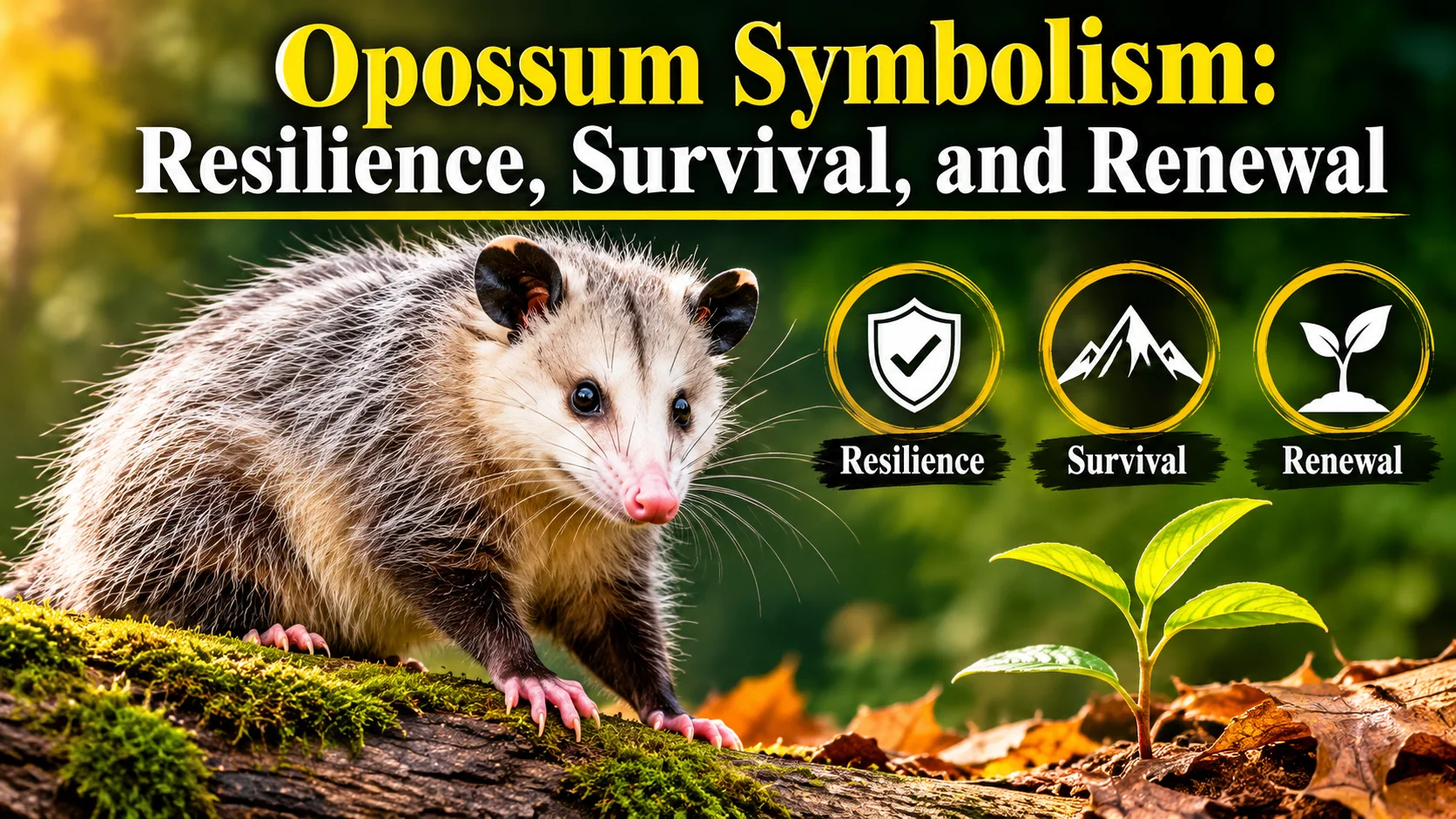
An opossum might look unusual, but this small nighttime visitor carries surprisingly powerful symbolism. Opossum symbolism is commonly associated with survival, adaptability, protection, patience, and the ability to overcome difficult situations. Its unusual habit of playing dead has also made it a symbol of cleverness and knowing when to avoid confrontation.
Across the United States, opossums are familiar animals in backyards, forests, neighborhoods, and rural communities. Some people see them as misunderstood creatures, while others associate them with resourcefulness and quiet strength. Their ability to survive in changing environments makes them especially interesting symbols.
However, an opossum’s meaning goes beyond its physical behavior. Its nighttime activity, protective motherhood, and unusual defense strategies offer several ways to understand its symbolic importance. In spiritual interpretations, encountering one may represent a need for patience, emotional protection, or a different approach to life’s challenges.
Whether you recently spotted an opossum, dreamed about one, or simply feel connected to this animal, understanding its symbolism can offer an interesting perspective. Let’s explore its historical roots, American cultural associations, spiritual meanings, and modern significance.
Quick Answer:
In American symbolism, the opossum represents resilience, adaptability, clever survival, and protection. Spiritually, people sometimes associate it with patience, hidden strength, emotional boundaries, and knowing when to retreat instead of fighting.
TL;DR: Opossum Symbolism at a Glance
- Resilience: Surviving difficult situations through patience and flexibility.
- Adaptability: Finding opportunities in changing environments.
- Protection: Defending yourself and caring for loved ones.
- Cleverness: Using intelligence instead of unnecessary confrontation.
- Patience: Recognizing when waiting is better than acting.
- Renewal: Moving forward after difficult experiences.
Overview of Opossum Symbolism
The opossum has a distinctive appearance that makes it easy to recognize. It has grayish-white fur, a pointed face, small hairless ears, dark eyes, and a long, nearly hairless tail.
Its appearance contributes to several symbolic interpretations. The animal looks vulnerable at first, yet it possesses remarkable survival abilities. This contrast makes it an interesting representation of hidden strength.
What Makes the Opossum Symbolic?
Different physical characteristics and behaviors inspire different meanings.
- Long tail: Balance, stability, and finding support during uncertain situations.
- Gray and white fur: Neutrality, flexibility, and adapting to different circumstances.
- Nighttime activity: Intuition, awareness, and exploring the unknown.
- Protective pouch: Motherhood, nurturing, and family protection.
- Playing dead: Strategic thinking, patience, and avoiding unnecessary conflict.
The opossum doesn’t always confront danger directly. Instead, it uses whatever strategy gives it the best chance of survival.
Core Symbolic Meanings
Three important ideas appear repeatedly in modern interpretations.
Survival: The opossum reminds people that difficult circumstances don’t always require dramatic action. Sometimes, survival means staying flexible and making careful decisions.
Protection: Its relationship with its young represents nurturing, responsibility, and protecting vulnerable family members.
Adaptability: Its ability to live in forests, farmland, and urban neighborhoods symbolizes flexibility and resourcefulness.
Together, these meanings make the opossum a symbol of strength that doesn’t need to attract attention.
Historical Background of Opossum Symbolism
Opossums have lived in the Americas for millions of years. However, their symbolic history developed through human encounters, Indigenous languages, folklore, and changing attitudes toward wildlife.
Unlike lions or eagles, opossums rarely became major symbols of royal power or national authority. Instead, their cultural identity developed around their unusual behavior and everyday presence.
Indigenous Origins of the Name
The word opossum comes from an Algonquian language associated with the Powhatan people of the Chesapeake region.
The early English colonial record connects the animal’s name with the Powhatan word commonly written as aposoun or apasum. Captain John Smith recorded the term in the early 1600s.
This linguistic history reflects the importance of Indigenous knowledge in shaping American descriptions of native wildlife.
However, it doesn’t establish one universal Indigenous spiritual meaning. Different Native communities have distinct traditions, languages, and relationships with animals.
Opossums in Early American Life
European settlers encountered opossums in unfamiliar landscapes. Their unusual appearance and pouch-bearing reproduction attracted attention.
People also noticed their nighttime habits and ability to survive encounters with predators.
Over time, the animal became associated with rural life, hunting, food, fur, and household encounters. Its behavior also helped establish the familiar expression playing possum.
The phrase eventually developed a broader meaning. Today, it describes pretending not to notice something or avoiding involvement in an uncomfortable situation.
From Practical Animal to Cultural Symbol
For many years, opossums were viewed mainly through practical concerns. Some people considered them useful scavengers, while others regarded them as troublesome backyard visitors.
Today, their cultural image is changing. Wildlife education, nature photography, and online humor have helped people appreciate their unusual qualities.
Opossum Symbolism in American Culture
In the United States, opossums have a special place in everyday wildlife culture. They’re familiar to people living in rural communities and increasingly common in suburban neighborhoods.
Their symbolism often reflects American ideas about independence, persistence, and making the best of difficult circumstances.
The Symbol of American Resourcefulness
The opossum survives in different environments by using available resources.
It can find shelter in wooded areas, abandoned burrows, brush piles, and spaces around buildings. Its flexible diet also helps it adapt to changing conditions.
For American readers, these qualities can represent:
- Making opportunities from limited resources.
- Finding solutions when circumstances change.
- Staying independent without rejecting support.
- Surviving difficult periods through practical decisions.
- Remaining calm when facing unexpected challenges.
The opossum’s survival strategy reflects a familiar American value: resourcefulness.
Appalachian Culture and the Misunderstood Opossum
Opossums have a particularly interesting connection with Appalachian communities.
Historically, some popular descriptions associated them with dirt, poverty, property damage, and unwanted wildlife. These negative images sometimes reinforced unfair stereotypes about rural Appalachian life.
However, contemporary Appalachian artists and cultural advocates have increasingly reclaimed the opossum as a positive regional symbol.
Its misunderstood reputation creates an interesting comparison with communities that have also experienced negative outside portrayals.
Today, the animal can represent regional pride, independence, and the strength to remain authentic despite criticism.
Opossums in American Folklore and Everyday Language
The expression playing possum remains one of the animal’s strongest cultural associations.
It describes someone who avoids attention, pretends to be unaware, or waits for a difficult situation to pass.
This expression has expanded the animal’s symbolic meaning beyond wildlife.
In everyday American conversation, an opossum can represent someone who knows when to step back instead of wasting energy on an unnecessary argument.
Spiritual Meaning of the Opossum
In contemporary spiritual interpretations, the opossum is often associated with hidden strength, patience, protection, and personal transformation.
People who connect with animal symbolism may view an encounter as an opportunity to examine their choices. However, these interpretations are personal beliefs rather than established facts or universal spiritual rules.
A Message About Strategic Patience
The opossum doesn’t always respond to danger with aggression.
Its famous defensive behavior offers a symbolic reminder that not every challenge deserves an immediate reaction.
If you connect with this meaning, consider whether you’re reacting too quickly to situations around you.
Sometimes, waiting allows you to understand a problem more clearly.
Protection and Emotional Boundaries
The opossum’s defensive instincts can represent emotional protection.
You might interpret its appearance as a reminder to protect your personal space, recognize unhealthy situations, and avoid people who repeatedly disrespect your boundaries.
However, protection doesn’t always mean shutting everyone out. It means understanding where your responsibilities end and another person’s begin.
Hidden Strength and Personal Growth
Opossums don’t look particularly powerful. Nevertheless, their survival abilities demonstrate that strength comes in different forms.
Spiritually, this can represent people who overcome difficult experiences without seeking recognition.
It also suggests that personal growth doesn’t always happen through dramatic changes. Sometimes, quiet progress creates the strongest foundation.
Opossum as a Symbol of Resilience and Adaptability
Resilience is one of the strongest meanings associated with the opossum.
The animal has survived through changing environments and continues to find opportunities in places where other wildlife might struggle.
Its adaptability makes it a useful symbol for people navigating uncertain periods.
Surviving Difficult Situations
The opossum demonstrates that survival can require several different strategies.
It can climb, retreat, hide, search for food, or defend itself when necessary.
Symbolically, these behaviors suggest:
- Changing your approach when something stops working.
- Learning from mistakes instead of repeating them.
- Staying flexible during unexpected changes.
- Recognizing opportunities in unfamiliar environments.
- Continuing forward without demanding perfect conditions.
The central message is simple: flexibility can become a powerful form of strength.
Embracing Change Without Losing Yourself
Adaptability doesn’t mean abandoning your identity.
An opossum can live in different environments while remaining the same animal. Similarly, people can adjust to new responsibilities, relationships, and surroundings without losing their values.
This symbolism can be especially meaningful during major life transitions.
For example, starting a new career or moving to another city may feel uncomfortable. However, these experiences can also reveal abilities you didn’t realize you possessed.
Opossum Symbolism in Dreams
Dreaming about an opossum can have several possible symbolic interpretations. The meaning often depends on the animal’s behavior, your emotions, and the circumstances within the dream.
There isn’t one scientifically established meaning for an opossum dream. Instead, consider the images as possible reflections of your thoughts and experiences.
Seeing an Opossum in a Dream
An opossum appearing in a dream may represent a situation that requires patience or careful observation.
Perhaps you’re dealing with uncertainty and need more information before making an important decision.
It may also reflect your desire to remain unnoticed while working through a personal challenge.
Dreaming About an Opossum Playing Dead
This image connects strongly with avoidance and self-protection.
It might reflect:
- Avoiding an uncomfortable conversation.
- Feeling overwhelmed by other people’s expectations.
- Choosing silence instead of unnecessary conflict.
- Waiting for a stressful situation to improve.
- Hiding your feelings because you fear judgment.
However, the dream doesn’t automatically mean avoidance is wrong. Sometimes, taking a temporary step back can be healthy.
Dreaming About a Baby Opossum
A baby opossum may symbolize vulnerability, new beginnings, or the need for care.
It could also reflect your protective feelings toward someone close to you.
Consider whether a new responsibility or relationship requires additional attention.
Seeing an Aggressive Opossum
An aggressive opossum in a dream might represent tension, defensiveness, or a situation where you feel threatened.
It can encourage reflection about how you respond when someone challenges your boundaries.
Emotional and Psychological Meaning of the Opossum
The opossum’s unusual behavior creates interesting psychological associations.
People often interpret animals through their own experiences, emotions, and personal values. Therefore, an opossum may represent different things to different individuals.
Feeling Misunderstood
Opossums are frequently misunderstood because of their appearance.
Some people see them as frightening or unpleasant, while others appreciate their ecological importance.
This contrast can make the animal meaningful to anyone who has felt judged unfairly.
Its symbolism may encourage you to recognize your worth without depending entirely on other people’s opinions.
Quiet Confidence
The opossum doesn’t need to appear intimidating to survive.
Its strength comes from practical abilities rather than an impressive appearance.
Psychologically, this can represent quiet confidence, independence, and self-acceptance.
It reminds people that confidence doesn’t always require attention or approval.
Knowing When to Walk Away
One of the most interesting psychological associations involves conflict avoidance.
The opossum’s defensive behavior can symbolize recognizing when an argument isn’t worth continuing.
However, healthy boundaries differ from constant avoidance.
The deeper lesson is learning when to stand your ground and when protecting your peace matters more.
Opossum Symbolism in Different Cultures and Spiritual Traditions
Opossums belong to the Americas, so their cultural history differs from animals found across several continents.
Their meanings shouldn’t be treated as universal. However, different cultural perspectives provide useful context for understanding how people interpret wildlife.
Indigenous American Perspectives
The opossum’s name has documented roots in a Powhatan language.
Beyond this linguistic connection, Indigenous perspectives on animals vary considerably between nations and communities.
Some traditions understand animals through relationships involving land, responsibility, stories, and the natural world.
However, it’s important not to assign one specific spiritual message to every Native American community without reliable evidence.
Central and South American Connections
Opossums belong to a larger family of American marsupials.
Their relatives appear across Central and South America, where marsupials occupy different ecological and cultural settings.
Some regional stories feature opossums in roles involving cleverness, survival, or the movement of important gifts between the natural and human worlds.
However, these stories belong to particular traditions. They shouldn’t be combined into one universal interpretation.
Modern Spiritual Interpretations
Today, animal symbolism communities often associate opossums with:
- Patience during difficult periods.
- Protection from emotional pressure.
- Cleverness and unexpected solutions.
- Independence and personal boundaries.
- Strength hidden beneath an ordinary appearance.
These interpretations are modern spiritual perspectives, not rules shared by every religion or culture.
Opossum as a Spirit Animal, Totem, and Power Animal
Some modern spiritual communities use animal categories to explore personal qualities and identity.
The opossum can represent someone who values independence, observation, and practical survival.
However, these terms don’t have identical meanings across cultures. In particular, totem has specific cultural and spiritual significance in some Indigenous traditions.
Opossum Spirit Animal Meaning
In modern spiritual language, an opossum spirit animal may symbolize:
- Remaining calm when situations become unpredictable.
- Trusting your instincts before making decisions.
- Protecting your emotional energy.
- Finding solutions through creativity.
- Recognizing strength in unexpected places.
People who identify with these qualities may feel connected to the opossum’s unusual survival strategies.
Opossum Power Animal Meaning
A power animal interpretation emphasizes personal strength.
The opossum may represent the ability to adapt without losing your identity.
It can also symbolize knowing how to protect yourself when circumstances become uncomfortable.
Opossum Totem Meaning
Some contemporary spiritual discussions use the word totem to describe a meaningful animal connection.
However, this term shouldn’t be treated as a generic label for all Indigenous spiritual practices.
For personal reflection, the opossum’s qualities of protection, flexibility, and patience can provide meaningful themes without claiming a cultural tradition that isn’t yours.
Read More: Boston Terrier Symbolism: Loyalty, Friendship, and American Pride
Opossum Symbolism in Tattoos, Art, and Home Decor
Opossums have become recognizable subjects in contemporary wildlife art and internet culture.
Their unusual expressions and distinctive appearance make them appealing subjects for creative designs.
Opossum Tattoo Meaning
An opossum tattoo can represent several personal qualities.
Common interpretations include:
- Resilience: Surviving difficult experiences.
- Independence: Following your own direction.
- Protection: Caring for yourself and loved ones.
- Humor: Finding happiness in unusual things.
- Adaptability: Accepting change without losing your identity.
Some people choose opossum tattoos because they identify with misunderstood animals.
Others simply appreciate their unusual appearance and playful personality.
Opossums in Art and Home Decor
Opossum illustrations can bring a humorous or nature-inspired feeling to personal spaces.
You might encounter them in:
- Wildlife paintings and nature photography.
- Decorative pillows and wall art.
- Handmade ornaments and figurines.
- Clothing featuring woodland animals.
- Rustic and nature-inspired interior designs.
Their growing popularity also reflects an appreciation for animals that don’t fit traditional ideas of beauty.
Opossums on Social Media
Online communities often present opossums as funny, chaotic, dramatic, or surprisingly adorable.
Their wide eyes, exposed teeth, and unusual defensive behavior make them popular subjects for memes.
However, this humorous portrayal also creates a more positive public image.
Instead of seeing opossums only as unwanted backyard animals, many people now appreciate their unusual personalities and ecological importance.
Negative Opossum Symbolism and Common Misunderstandings
Not every interpretation of the opossum is positive.
Some people associate it with fear, dirt, deception, or cowardice. These negative meanings often come from misunderstandings about its appearance and behavior.
Does an Opossum Symbolize Fear?
Sometimes, people interpret playing dead as a sign of weakness.
However, this behavior is a defensive response that may help the animal survive dangerous encounters.
Symbolically, it can represent knowing when to avoid confrontation.
Avoiding unnecessary conflict isn’t always an expression of fear. It can also demonstrate awareness and self-control.
Does an Opossum Represent Deception?
The expression playing possum sometimes creates associations with dishonesty.
People may use the animal as a symbol for pretending, hiding information, or avoiding responsibility.
However, this is a human interpretation of a natural defense behavior.
An opossum isn’t making a moral decision to deceive someone. Its response is an instinctive survival mechanism.
Common Wildlife Misconceptions
Several popular beliefs about opossums are inaccurate.
- Opossums aren’t rodents; they’re marsupial mammals.
- They’re generally shy and prefer avoiding confrontation.
- They don’t normally hang upside down by their tails while sleeping.
- Seeing one during daylight doesn’t automatically indicate illness.
- Their appearance doesn’t mean they’re dangerous or aggressive.
They also have naturally low body temperatures, which makes rabies relatively uncommon compared with many other mammals. However, this doesn’t mean they’re completely immune.
Understanding these facts helps separate genuine wildlife behavior from exaggerated cultural beliefs.
How Opossum Symbolism Has Changed Over Time
The cultural image of the opossum has changed considerably.
Earlier American attitudes often focused on practical concerns, including hunting, fur, and conflicts around homes and farms.
Today, people increasingly recognize the animal’s ecological role and unusual survival abilities.
From Unwanted Wildlife to Misunderstood Survivor
For generations, opossums received little appreciation compared with more popular American wildlife.
Their nighttime activity and unusual appearance sometimes made them seem unpleasant.
However, wildlife education has helped change this perception.
People increasingly recognize opossums as adaptable animals that contribute to local ecosystems.
The Rise of Positive Opossum Identity
Modern internet culture has played an interesting role in changing the animal’s image.
Memes and artwork often celebrate its awkward appearance and dramatic defensive behavior.
This has created a new symbolic identity built around humor, individuality, and resilience.
In some Appalachian cultural spaces, the opossum has also become a symbol of reclaiming an unfairly criticized regional identity.
What the Opossum Represents Today
| Context | Symbolic Meaning | Common Association |
| American wildlife | Adaptability | Urban and rural survival |
| Spiritual interpretation | Patience | Knowing when to retreat |
| Personal identity | Resilience | Being misunderstood |
| Family symbolism | Protection | Motherhood and nurturing |
| Modern internet culture | Humor | Embracing unusual qualities |
The opossum’s changing image shows how cultural symbols develop through human experiences.
An animal once dismissed as unattractive can eventually become a beloved representation of individuality.
What Can We Learn From Opossum Symbolism?
The opossum offers several interesting lessons about handling life’s challenges.
Its behavior reminds us that survival doesn’t always require strength in its most obvious form.
Sometimes, intelligence, patience, and flexibility matter more than confrontation.
Choose Your Battles Carefully
Not every disagreement deserves your attention.
The opossum’s defensive behavior offers a reminder to recognize situations that aren’t worth your emotional energy.
You can protect your values without responding to every challenge.
Adapt Without Losing Your Identity
Life rarely follows one predictable path.
Like the opossum, people must sometimes adjust to unfamiliar surroundings and unexpected responsibilities.
However, changing your approach doesn’t mean changing who you are.
Appreciate Your Unusual Qualities
The opossum doesn’t fit traditional ideas of an attractive or impressive animal.
Yet, its unique characteristics make it remarkably interesting.
This can encourage self-acceptance, especially when you feel different from the people around you.
Protect What Matters
The opossum’s relationship with its young represents nurturing and protection.
It reminds us that caring for loved ones requires attention, patience, and responsibility.
Strength isn’t only about protecting yourself. It can also mean creating safety for others.
FAQs:
What Does Seeing an Opossum Mean Spiritually?
Some modern spiritual interpretations associate seeing an opossum with patience, protection, and adaptability. You might use the encounter as an opportunity to reflect on your boundaries and current challenges.
Is an Opossum a Good or Bad Spiritual Sign?
An opossum isn’t universally considered either a good or bad sign. Its symbolism generally focuses on survival, resourcefulness, and protection rather than predicting specific events.
What Does an Opossum Symbolize in Dreams?
An opossum in a dream may represent avoidance, hidden strength, or the need for careful decisions. Its behavior and your feelings during the dream can influence your personal interpretation.
What Does an Opossum Represent in Native American Culture?
The opossum has a documented linguistic connection to the Powhatan people. However, Native American cultures are diverse, and there isn’t one universal spiritual meaning associated with this animal.
What Does an Opossum Tattoo Symbolize?
An opossum tattoo can represent resilience, independence, humor, protection, and individuality. Some people also choose it as a reminder that being different doesn’t make someone less valuable.
Why Is the Opossum Associated With Playing Dead?
Playing dead is a defensive response that may discourage predators from continuing an attack. Symbolically, people connect this behavior with patience, strategic retreat, and avoiding unnecessary conflict.
Conclusion:
Opossum symbolism represents resilience, adaptability, protection, cleverness, and quiet strength. Its unusual appearance and remarkable survival abilities make it an interesting symbol in American wildlife culture. From Appalachian folklore to modern internet communities, the opossum has developed a reputation as a misunderstood survivor.
Its deeper message is about understanding your strengths and choosing your responses wisely. You don’t always need to fight every battle or prove your abilities to others. Sometimes, patience and flexibility create better opportunities for growth.

1 thought on “Opossum Symbolism: Resilience, Survival, and Renewal”