
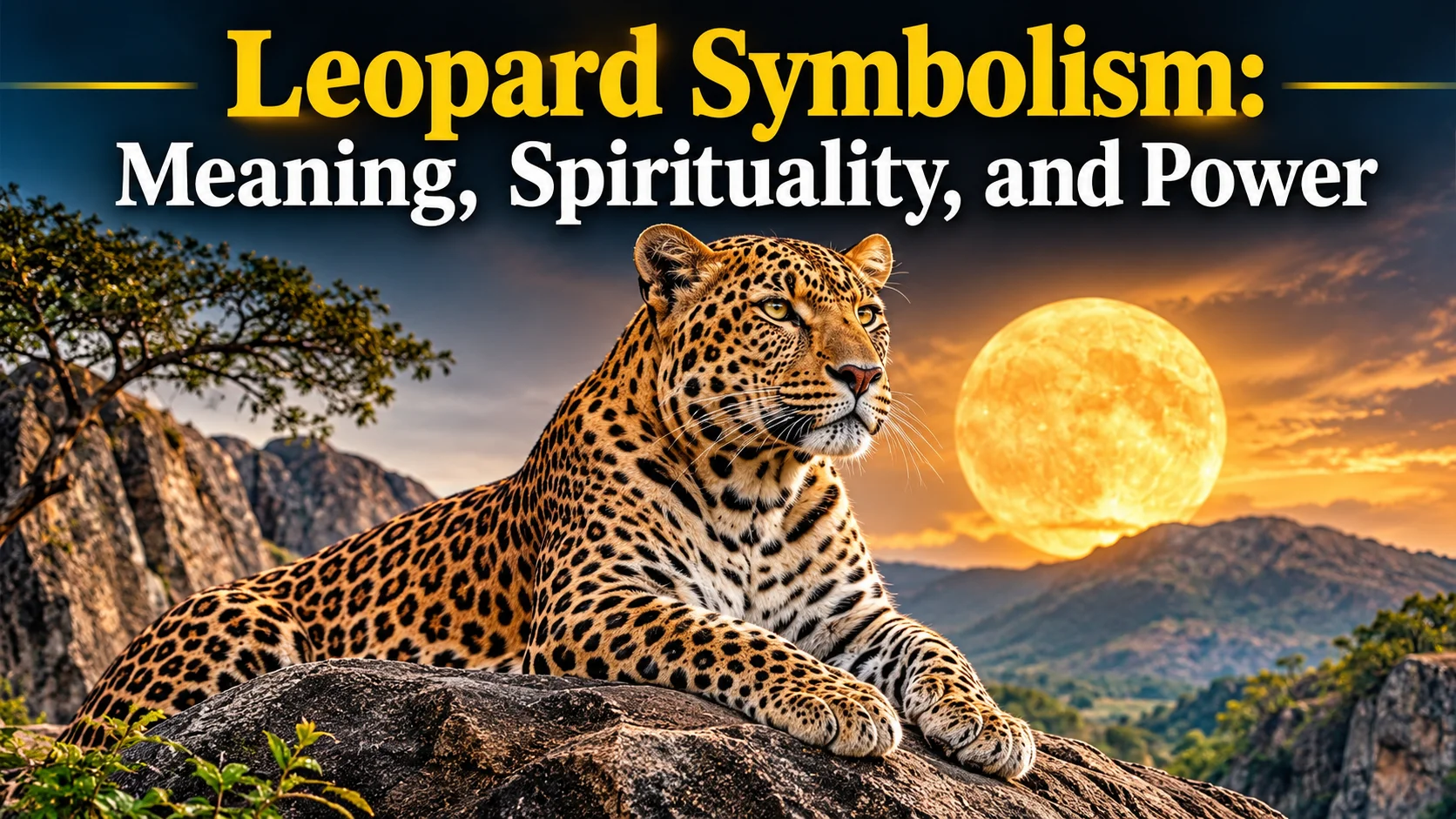
The leopard has fascinated people for centuries because of its strength, beauty, intelligence, and mysterious nature. Its spotted coat and silent movements make it one of the most recognizable wild cats. However, its symbolism goes far beyond its physical appearance. Leopard Symbolism often represents courage, independence, confidence, protection, and the ability to overcome difficult situations.
In the United States, the leopard is commonly associated with power, individuality, and fearless self-expression. Although this animal doesn’t naturally live in American wilderness, its image appears in fashion, tattoos, wildlife documentaries, art, and popular culture. Its distinctive spots have also become a familiar pattern associated with bold personalities.
Spiritually, the leopard can represent intuition, patience, transformation, and hidden strength. Its solitary lifestyle reminds people that independence can be a valuable quality. Meanwhile, its hunting abilities highlight the importance of timing, focus, and determination.
Quick Answer:
In American culture, leopard symbolism represents strength, independence, courage, confidence, and personal freedom. In spiritual interpretations, it can symbolize protection, intuition, patience, and transformation.
TL;DR: Leopard Symbolism at a Glance
- Strength: Represents physical power and inner resilience.
- Independence: Reflects self-reliance and confidence in personal decisions.
- Courage: Symbolizes facing challenges without unnecessary fear.
- Protection: Represents awareness, personal boundaries, and defensive strength.
- Spirituality: Connects with intuition, transformation, and inner wisdom.
- Modern Culture: Represents bold fashion, individuality, and fearless self-expression.
What Does a Leopard Symbolize?
The leopard carries several meanings because of its behavior, appearance, and ability to survive in challenging environments. Unlike animals that depend on large groups, leopards usually hunt and travel alone. This behavior makes them powerful symbols of independence and self-reliance.
Their remarkable strength also contributes to their symbolic importance. Leopards can climb trees while carrying heavy prey. They move quietly, observe their surroundings, and wait for suitable opportunities.
Core Symbolic Meanings
The most common meanings associated with leopards include:
- Power and authority: Represents strength, control, and personal confidence.
- Independence: Encourages people to trust their abilities and judgment.
- Patience: Highlights the importance of waiting for the right moment.
- Adaptability: Represents surviving changes without losing personal identity.
- Mystery: Reflects hidden abilities, intuition, and the unknown.
- Fearlessness: Symbolizes confronting obstacles with determination.
However, leopard symbolism doesn’t always represent aggression or dominance. Its quiet nature also suggests emotional control and thoughtful action.
What Makes the Leopard Symbolic?
Three physical characteristics contribute especially strongly to its meaning.
First, its spotted coat represents individuality and uniqueness. No two leopards have exactly identical spot patterns.
Second, its powerful body represents strength and physical capability. Its muscles allow it to climb, jump, and carry substantial weight.
Finally, its quiet movements represent patience and awareness. It doesn’t waste energy when careful observation can produce better results.
Leopard Symbolism in History and Ancient Civilizations
Leopards have appeared in ancient artwork, mythology, royal imagery, and religious traditions. Their impressive appearance made them natural symbols of authority and prestige.
However, different civilizations developed their own interpretations. Some connected leopards with divine power, while others associated them with kingship, protection, and wilderness.
Ancient Egyptian Symbolism
In ancient Egypt, leopard skins appeared in religious and ceremonial settings. Priests sometimes wore leopard-skin garments during important rituals.
The leopard’s appearance became associated with religious authority and ceremonial importance. Its distinctive skin also represented a connection with powerful natural forces.
Ancient Egyptian imagery sometimes showed the leopard or its skin in contexts involving protection and sacred responsibilities.
Greek and Roman Traditions
In ancient Greek mythology, leopards were closely associated with Dionysus, the god connected with wine, celebration, fertility, and theatrical performance.
Dionysus was sometimes depicted wearing leopard skins or riding a leopard-drawn chariot. These images connected the animal with freedom, wildness, and untamed natural energy.
Roman art also adopted imagery associated with Dionysus, known to the Romans as Bacchus.
African Historical Traditions
Across different African societies, leopards became important symbols of royal authority, bravery, and prestige.
Their strength and solitary hunting behavior contributed to associations with leadership and power. Leopard imagery appeared in ceremonial objects, clothing, sculpture, and royal traditions.
However, African cultures are diverse. Leopard symbolism doesn’t have one universal meaning across the continent.
Leopard Symbolism in American Culture
Although leopards aren’t native to the United States, their image has become familiar throughout American society.
Wildlife documentaries, zoos, fashion, sports imagery, and entertainment have helped shape their cultural significance. Today, Americans often associate leopards with confidence, independence, luxury, and bold personal style.
Leopard Print and American Fashion
Leopard print has become one of the most recognizable animal patterns in American fashion.
Its popularity has changed over time. During different decades, designers and celebrities helped make the pattern a statement of confidence and individuality.
Today, leopard print appears in:
- Clothing, including coats, dresses, skirts, and jackets.
- Accessories such as handbags, shoes, and scarves.
- Home decorations, including rugs, cushions, and upholstery.
- Fashion collections that celebrate bold personal expression.
- Costumes and themed outfits for parties and entertainment.
However, leopard print doesn’t necessarily communicate the same personality or attitude for everyone. Some people enjoy its appearance without attaching deeper symbolism.
Strength and Individuality in American Culture
American culture often celebrates independence, determination, and personal freedom. These values connect naturally with the leopard’s solitary lifestyle.
The animal can represent someone who trusts personal abilities rather than constantly seeking approval. It also reflects confidence without needing constant attention.
In this context, the leopard becomes a symbol of individuality and self-respect.
Leopard Spiritual Meaning and Symbolism
Spiritually, the leopard is often interpreted as a symbol of awareness, protection, transformation, and inner strength.
These interpretations generally come from observing the animal’s natural behavior. Its patience suggests thoughtful decisions, while its adaptability represents the ability to handle unexpected changes.
Spiritual interpretations differ between individuals and traditions. They aren’t established facts or universal religious teachings.
Leopard as a Symbol of Spiritual Protection
Some spiritual interpretations connect leopards with protection and personal boundaries.
The animal’s ability to defend itself and remain alert inspires associations with emotional strength. Its symbolism can remind people to recognize unhealthy situations and protect their peace.
Common interpretations include:
- Protecting personal energy and emotional well-being.
- Recognizing situations that require caution.
- Developing confidence during uncertain circumstances.
- Maintaining strong personal boundaries.
- Trusting your instincts when making difficult decisions.
Leopard as a Symbol of Transformation
A leopard’s ability to survive in different habitats offers a meaningful connection with transformation.
It can represent moving beyond old habits and developing new strengths. Its symbolism also suggests that change doesn’t require abandoning your identity.
For someone experiencing a major life transition, the leopard may represent courage and adaptability.
Leopard and Inner Wisdom
Leopards don’t constantly move or make unnecessary noise. They observe their surroundings before acting.
Spiritually, this behavior can represent listening to your intuition and thinking carefully before making important decisions.
The message isn’t to remain silent forever. Instead, it encourages knowing when to observe and when to act.
Leopard Symbolism in Different Cultures and Religions
Different cultures have interpreted the leopard through their own histories, beliefs, and artistic traditions.
Although these interpretations sometimes overlap, they shouldn’t be treated as identical.
African Cultural Interpretations
In several African traditions, leopards represent authority, courage, prestige, and leadership.
Their powerful appearance has made them important in royal imagery and traditional art. In some communities, leopard imagery also carries ceremonial or spiritual importance.
However, meanings vary significantly between ethnic groups and historical periods.
Hindu Traditions
Big cats appear in several Hindu religious stories and artistic traditions.
The goddess Durga is commonly depicted riding a lion or tiger, depending on the artistic tradition. These animals represent strength, courage, and the defeat of destructive forces.
Leopards shouldn’t automatically be substituted for these sacred animals. Their meanings are related through broader associations with feline power, not necessarily through direct religious identification.
Chinese Cultural Associations
Leopards appear in some traditional Chinese artistic and symbolic contexts.
Their imagery has sometimes been connected with bravery, military strength, and authority. However, the meaning depends on the specific artwork and historical setting.
Broader Spiritual Interpretations
Outside specific religious traditions, modern spiritual interpretations sometimes connect leopards with:
- Courage during personal challenges.
- Awareness of hidden opportunities.
- Confidence and independent thinking.
- Protection from negative influences.
- Personal growth and transformation.
These are contemporary symbolic interpretations rather than universal cultural beliefs.
Leopard Symbolism in Dreams
Dreams involving leopards can feel intense because the animal represents strength, danger, mystery, and independence.
However, dream meanings aren’t scientifically established predictions. Your emotions, experiences, and personal associations matter more than any fixed interpretation.
Seeing a Leopard in a Dream
Seeing a leopard may reflect confidence, personal power, or an unresolved challenge.
If the animal appears calm, you might associate the dream with emotional control. If it appears threatening, it could reflect feelings of pressure or vulnerability.
Being Chased by a Leopard
A leopard chasing you might represent something you’re avoiding.
For example, you may feel uncomfortable confronting a difficult decision or personal responsibility. The dream could encourage you to examine what makes you feel threatened.
A Friendly Leopard
A friendly leopard may represent accepting your strength and developing confidence.
It could also reflect a desire for independence without losing meaningful relationships.
A Leopard Attacking You
An attacking leopard may reflect conflict, fear, or a situation that feels beyond your control.
However, it doesn’t necessarily predict danger. Consider whether something in your waking life has recently made you feel defensive.
A Leopard Protecting You
A protective leopard can represent confidence, security, and personal boundaries.
It may reflect your desire to become stronger during an uncertain period.
Read More: Great Dane Symbolism: Meaning, Strength, and Loyalty
Emotional and Psychological Meaning of the Leopard
The leopard’s symbolism has strong emotional connections because people often associate powerful animals with personal qualities.
Its behavior provides several useful metaphors for confidence, independence, and emotional control.
Confidence Without Constant Approval
Leopards generally live independently outside their mating and parental relationships.
This behavior creates a connection with self-confidence and personal freedom.
Psychologically, the leopard can represent someone who values personal judgment and doesn’t depend entirely on other people’s opinions.
Patience and Emotional Control
A leopard often waits quietly before making a move.
This behavior offers a powerful metaphor for emotional regulation. Instead of reacting immediately, people can benefit from observing situations and considering their options.
Resilience During Difficult Times
Leopards survive in different environments, including forests, grasslands, and mountainous regions.
Their adaptability can represent emotional resilience. It reminds people that difficult circumstances don’t necessarily prevent personal growth.
Mystery and Personal Identity
The leopard’s distinctive appearance and elusive behavior contribute to its mysterious reputation.
Some people identify with this symbolism because they prefer privacy and don’t reveal everything about themselves.
However, privacy shouldn’t be confused with emotional distance or an inability to trust others.
Leopard Tattoo Meaning and Symbolism
Leopard tattoos appeal to people who appreciate powerful animals and distinctive designs.
Their meanings depend on the artwork, placement, and personal experiences behind the tattoo.
In American tattoo culture, leopard imagery often represents strength, independence, confidence, and individuality.
Popular Leopard Tattoo Designs
Different designs communicate different symbolic ideas.
- Leopard head: Represents courage, determination, and personal authority.
- Leopard eyes: Suggest awareness, observation, and intuition.
- Leopard walking: Represents independence and moving forward.
- Leopard with flowers: Combines strength with beauty and personal growth.
- Leopard print: Expresses individuality, confidence, and bold fashion.
- Leaping leopard: Represents ambition, movement, and taking action.
What Does a Leopard Tattoo Say About Personality?
Someone choosing a leopard tattoo may admire independence, strength, or confidence.
Others simply appreciate the animal’s beautiful coat and athletic appearance.
The meaning ultimately belongs to the person wearing it. A tattoo doesn’t provide reliable evidence of someone’s personality.
Leopard Symbolism in Fashion, Art, and Modern Media
Leopards remain popular in modern visual culture because their appearance is instantly recognizable.
Their spotted coats create striking patterns, while their athletic bodies make them visually interesting subjects for artists and photographers.
Leopard Print in Modern Fashion
Leopard print has become a familiar part of American clothing and interior design.
It can communicate confidence, glamour, rebellion, or playful individuality.
However, its meaning changes depending on styling and cultural context.
Leopards in Movies and Entertainment
Leopards frequently appear in wildlife documentaries, animated entertainment, children’s stories, and nature photography.
These portrayals often emphasize their intelligence, hunting abilities, beauty, and adaptability.
As a result, many Americans recognize the leopard as a symbol of wilderness and natural power.
Leopard Imagery in Home Decor
Leopard patterns appear in different interior styles.
Some people use them to create dramatic spaces, while others prefer subtle accents.
Common examples include:
- Decorative cushions and blankets.
- Area rugs and patterned furniture.
- Wall artwork and animal photography.
- Fashion-inspired bedroom accessories.
- Decorative fabrics and statement pieces.
Leopard Symbolism Compared With Other Big Cats
Leopards share several qualities with other large wild cats. However, each animal carries different cultural and symbolic associations.
Understanding these differences helps explain why leopard symbolism isn’t identical to tiger or lion symbolism.
| Animal | Common Symbolic Meaning | Main Association |
| Leopard | Independence and adaptability | Quiet strength |
| Lion | Leadership and authority | Royal power |
| Tiger | Courage and determination | Fearless energy |
| Jaguar | Mystery and spiritual power | Ancient traditions |
| Cheetah | Speed and ambition | Quick action |
| Snow leopard | Resilience and solitude | Mountain wilderness |
Leopard vs. Lion Symbolism
The lion is widely associated with kingship, leadership, and public authority.
In contrast, the leopard more commonly represents independence, patience, and personal strength.
Both animals can symbolize courage, but their symbolic personalities differ.
Leopard vs. Tiger Symbolism
The tiger often represents boldness, determination, and powerful energy.
The leopard suggests a quieter approach. Its symbolism emphasizes observation, adaptability, and carefully chosen action.
Negative Leopard Symbolism and Common Misunderstandings
Not every interpretation of the leopard is positive.
Its hunting behavior, sharp claws, and reputation as a powerful predator can also connect it with danger, aggression, and unpredictability.
However, negative interpretations shouldn’t automatically define the animal’s symbolism.
Aggression and Hidden Danger
Some people associate leopards with hidden threats because they move quietly and hunt through surprise.
In literature and storytelling, this behavior can represent concealed intentions or unexpected challenges.
However, the animal itself isn’t morally good or evil. These interpretations come from human storytelling.
Leopard Print and Cultural Stereotypes
Leopard print has sometimes been associated with exaggerated stereotypes about femininity, sexuality, wealth, or social status.
These associations reflect changing fashion attitudes rather than universal meanings.
Today, people wear leopard print for many reasons, including creativity, confidence, nostalgia, and personal taste.
Confusing Leopards With Other Big Cats
Leopards are sometimes confused with jaguars, cheetahs, and other spotted cats.
However, these animals have different physical characteristics and symbolic histories.
For example, jaguars have stockier bodies and distinctive rosette patterns, often containing central spots. Cheetahs have solid black spots and characteristic facial markings.
Understanding these differences helps avoid inaccurate symbolic comparisons.
How Leopard Symbolism Has Changed Over Time
The leopard’s symbolic meaning has evolved alongside human societies.
Ancient communities often connected it with authority, ceremonial importance, and powerful natural forces. Later artistic traditions emphasized its beauty, strength, and exotic appearance.
In modern American culture, leopard imagery has developed additional associations with fashion, individuality, and personal confidence.
From Royal Prestige to Popular Fashion
Historically, leopard skins appeared in ceremonial clothing and artistic representations of power.
However, modern manufacturing made animal-inspired patterns more accessible to everyday consumers.
As a result, leopard print gradually became a familiar fashion statement rather than an exclusive symbol of status.
From Wilderness to Personal Identity
Wildlife photography and documentaries introduced more people to the leopard’s natural behavior.
Instead of viewing it only as an exotic or dangerous animal, modern audiences increasingly recognize its intelligence and ecological importance.
Today, people may use leopard imagery to express independence, resilience, or admiration for wildlife.
Modern Conservation Awareness
Leopards face serious conservation challenges in several parts of their natural range.
Habitat loss, illegal hunting, and conflicts with people threaten some populations.
Consequently, leopard imagery can also represent wildlife protection and respect for biodiversity.
This modern association adds an environmental dimension to the animal’s symbolic importance.
FAQs:
1. What Does a Leopard Symbolize Spiritually?
Spiritually, a leopard commonly represents strength, intuition, protection, independence, and transformation. Some modern interpretations also connect it with patience and personal awareness.
2. Is a Leopard a Symbol of Good Luck?
Some people interpret leopard encounters and imagery as positive signs of strength, opportunity, or personal growth. However, there’s no universal cultural belief that leopards guarantee good luck.
3. What Does Seeing a Leopard Mean?
Seeing a leopard may symbolize independence, courage, and awareness. Your interpretation can depend on the circumstances, your emotions, and your personal connection with the animal.
4. What Does a Leopard Represent in Dreams?
A leopard in a dream may represent confidence, hidden fears, personal strength, or an unresolved challenge. The animal’s behavior and your feelings during the dream can provide useful context.
5. What Does a Leopard Tattoo Symbolize?
A leopard tattoo commonly represents independence, courage, strength, and individuality. However, its meaning depends on the design and the personal story behind it.
Conclusion:
The leopard is a powerful symbol of independence, courage, patience, and adaptability. Its natural behavior offers meaningful lessons about confidence, emotional control, and knowing when to act. Across history, different cultures have connected this remarkable animal with authority, protection, and spiritual strength.
In the United States, Leopard Symbolism has developed additional meanings through fashion, entertainment, tattoos, and popular culture. Its spotted coat represents individuality, while its quiet movements suggest confidence without unnecessary attention. Modern conservation awareness also connects the leopard with respect for wildlife and the natural world.

1 thought on “Leopard Symbolism: Meaning, Spirituality, and Power”