
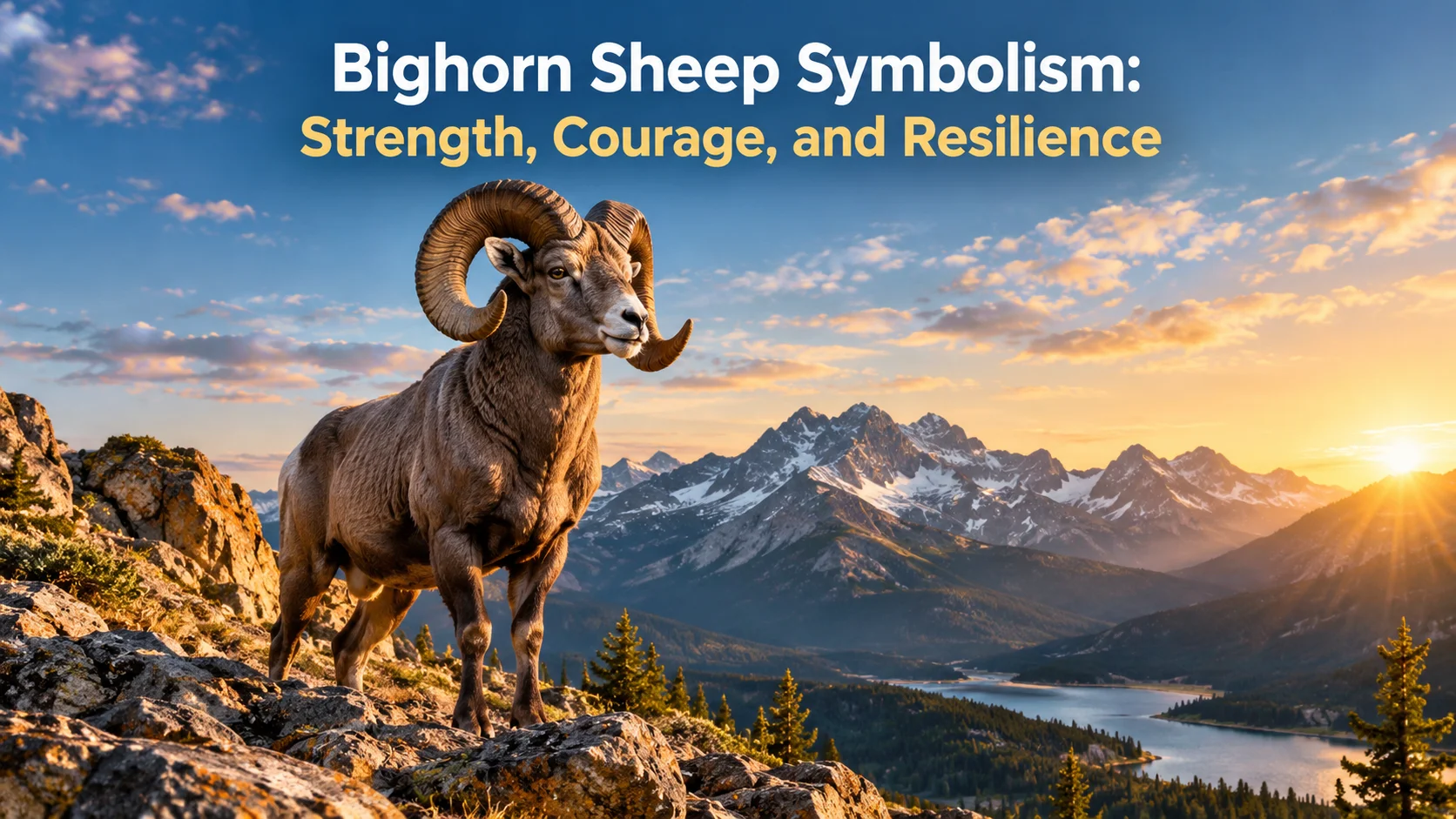
Bighorn sheep symbolism reflects strength, courage, resilience, and the determination to overcome difficult challenges. In the United States, these powerful wild animals are closely associated with rugged mountains, untamed wilderness, and the spirit of survival. Their ability to climb steep cliffs makes them compelling symbols of confidence and persistence.
However, the meaning of a bighorn sheep goes beyond physical strength. Its sure footing represents balance, while its powerful horns suggest protection, authority, and the ability to stand your ground. For many people, encountering this animal can inspire thoughts about personal growth, independence, and facing obstacles without giving up.
Today, bighorn sheep appear in wildlife photography, outdoor art, tattoos, and nature-inspired designs. Their image also connects people with the American West and its long tradition of celebrating wild landscapes. Although interpretations vary, the animal offers a meaningful reminder that progress often requires patience, courage, and steady effort.
Understanding bighorn sheep symbolism helps explain why this mountain animal holds such a powerful place in American imagination. It also offers a way to explore the relationship between nature, human emotions, cultural identity, and spiritual reflection.
Quick Answer
Bighorn sheep symbolism in the United States represents courage, resilience, independence, and the ability to overcome difficult obstacles. Spiritually, the animal may symbolize determination, inner strength, confidence, and staying balanced during challenging times.
TL;DR
- Strength: Powerful horns represent protection, confidence, and personal boundaries.
- Courage: Steep mountain climbs symbolize facing life’s challenges directly.
- Resilience: Survival in rugged habitats reflects endurance and adaptability.
- Independence: The bighorn sheep represents self-reliance and freedom.
- Spirituality: Some interpret its appearance as encouragement to trust their abilities.
- American identity: It evokes wilderness, rugged landscapes, and respect for wildlife.
What Does a Bighorn Sheep Symbolize?
Bighorn sheep symbolize the ability to remain strong while navigating demanding circumstances. Their natural behavior offers several useful connections to human experiences, especially when life feels uncertain or difficult.
In American culture, they often represent the rugged beauty of the West. Their presence in rocky mountain environments also makes them symbols of confidence, careful movement, and survival.
Strength and Protection
The bighorn sheep’s curved horns are its most recognizable feature. Males use these horns during contests for dominance, making them natural symbols of strength and competition.
Symbolically, the horns can represent standing firm without allowing others to cross important boundaries. They may also suggest protecting loved ones and defending personal values.
However, strength doesn’t always mean aggression. The animal’s ability to survive through physical skill and awareness suggests that genuine power includes knowing when to act and when to remain patient.
Balance and Determination
Bighorn sheep move across rocky slopes where a single misstep can be dangerous. Their specialized hooves help them grip uneven surfaces and navigate challenging terrain.
This ability creates a powerful metaphor for maintaining balance during stressful periods. It reminds people that confidence works best when combined with awareness and preparation.
Freedom and Independence
Wild bighorn sheep inhabit mountain ranges and other rugged landscapes across western North America. They aren’t domesticated animals, so their image naturally evokes independence and untamed nature.
For American audiences, this association connects with the cultural ideal of self-reliance. The animal suggests that independence requires more than freedom; it also demands responsibility, adaptability, and respect for one’s surroundings.
Historical Background of Bighorn Sheep Symbolism
Bighorn sheep have lived in North America for thousands of years. Their history includes relationships with Indigenous communities, wildlife traditions, and the changing American understanding of wilderness.
However, their symbolism doesn’t come from one universal belief system. Different communities have understood the animal through their own experiences, environments, and cultural traditions.
Indigenous Connections to the Animal
Bighorn sheep have long been part of the natural and cultural landscapes of western North America. For some Indigenous communities, sheep provided food, hides, and materials for practical purposes.
Their importance could also extend into artistic, ceremonial, or spiritual contexts. However, specific meanings vary among nations and communities, so it’s inaccurate to assign one spiritual interpretation to all Indigenous peoples.
Rock art and other archaeological evidence from parts of the American West include depictions of bighorn sheep. Such images demonstrate the animal’s historical significance, although the exact meaning of individual figures may remain uncertain.
The American West and Wilderness
During the nineteenth century, westward expansion transformed how many Americans viewed mountain landscapes and their wildlife. Bighorn sheep became part of the larger story of exploration, hunting, settlement, and conservation.
Over time, wildlife photography, natural history writing, and national park tourism helped establish the animal as an emblem of western wilderness.
Today, the bighorn sheep can represent a connection to landscapes that remain wild despite modern development. Its image encourages people to appreciate the natural heritage of the American West.
Bighorn Sheep Symbolism in American Culture
In the United States, bighorn sheep symbolism is closely connected to rugged landscapes, outdoor recreation, and conservation. The animal embodies qualities that Americans often admire, including persistence, independence, and the willingness to face difficult conditions.
Its meaning also depends on where and how people encounter it. A sheep seen on a mountain trail may inspire awe, while one pictured in a conservation campaign may represent environmental responsibility.
The Spirit of the American West
Bighorn sheep inhabit landscapes associated with western American identity. Their silhouettes against rocky peaks often appear in nature photography, wildlife illustrations, and regional artwork.
These images suggest freedom, adventure, and a connection to the outdoors. They can also represent a desire to escape busy routines and reconnect with nature.
National Parks and Wildlife Conservation
Bighorn sheep live in several protected areas and mountain regions across the western United States. Their presence helps visitors appreciate the complexity of mountain ecosystems.
However, their populations can face challenges from habitat fragmentation, disease, and competition with domestic livestock in some areas. Conservation efforts therefore add another layer to the animal’s symbolism.
A bighorn sheep can represent not only strength but also vulnerability. Protecting a powerful wild animal requires recognizing that even well-adapted species depend on healthy habitats.
Everyday American Associations
People may connect the animal with different values depending on their interests and experiences.
- Outdoor enthusiasts may associate it with adventure and mountain exploration.
- Conservation supporters may view it as a symbol of wildlife protection.
- Artists may use its horns to express strength and visual power.
- Hikers may associate sightings with patience, awareness, and respect for nature.
- Residents of western communities may see it as part of their regional identity.
These associations aren’t fixed rules. Instead, they reflect the different ways Americans connect wildlife with personal values and local landscapes.
Spiritual Meaning of Bighorn Sheep
The spiritual meaning of a bighorn sheep often centers on courage, persistence, self-trust, and inner balance. Some people interpret encounters with wildlife as opportunities for reflection, although these interpretations are personal rather than established facts.
In a spiritual context, the animal may encourage you to consider how you respond to obstacles. It can represent the strength to move forward while remaining grounded in your values.
A Symbol of Personal Strength
A bighorn sheep may represent the strength needed to face an uncomfortable situation. Its image can encourage someone to approach a difficult conversation, pursue a meaningful goal, or rebuild confidence after a setback.
Rather than suggesting that every challenge must be confronted aggressively, the animal offers a more balanced message. Strength can involve patience, preparation, and choosing the right moment to act.
Trusting Your Own Path
Mountain sheep navigate terrain that other animals might find difficult. Spiritually, this behavior can symbolize following your own path instead of comparing your progress with someone else’s.
For example, you might be starting a new career, changing personal habits, or working toward a long-term goal. The bighorn sheep can serve as a reminder that steady progress matters more than matching another person’s pace.
Staying Grounded During Change
The animal’s sure-footed movement also provides a useful image of emotional stability. Even when the path becomes steep, it continues by placing its feet carefully.
This can inspire a reflective question: Are you moving forward thoughtfully, or reacting to every difficulty with fear?
For some people, that question is the most meaningful spiritual lesson the bighorn sheep offers.
Bighorn Sheep as a Spirit Animal
In modern spiritual language, a spirit animal is often described as an animal whose qualities reflect a person’s character, challenges, or aspirations. Some people use this language metaphorically, while others understand it through specific spiritual traditions.
The bighorn sheep may appeal to people who value courage, independence, and practical wisdom. However, it shouldn’t be treated as a universal spiritual designation or attributed to Indigenous traditions without proper cultural context.
Traits Associated With the Bighorn Sheep
People who identify with the bighorn sheep’s symbolism may connect with these qualities:
- Determination: Continuing toward meaningful goals despite setbacks.
- Self-confidence: Trusting your judgment without dismissing helpful advice.
- Protection: Maintaining healthy boundaries and caring for important relationships.
- Adaptability: Finding workable solutions when circumstances become difficult.
- Patience: Understanding that important achievements often take time.
These are symbolic associations, not scientific personality traits. You can appreciate them without believing that an animal determines your character or future.
What It May Encourage You to Reflect On
If the bighorn sheep feels meaningful to you, consider where its qualities might apply in daily life.
Perhaps you’re facing a difficult decision or learning to become more independent. Its symbolism may encourage you to examine your strengths while remaining honest about your limitations.
The goal isn’t to predict what will happen next. Instead, use the image as a prompt for thoughtful choices and personal growth.
Psychological Meaning of Bighorn Sheep
From a psychological perspective, animals often become symbols because their visible traits remind us of human qualities. The bighorn sheep’s horns, climbing ability, and mountain habitat create strong associations with confidence and resilience.
These associations can influence how people respond to artwork, wildlife encounters, or personal symbols. However, they don’t establish a universal psychological meaning.
Courage and Self-Efficacy
Self-efficacy means believing that you can take useful action toward a goal. The bighorn sheep can serve as a visual reminder of this quality because it navigates demanding environments through specialized physical abilities.
For example, someone preparing for a major life change might use the animal’s image as a reminder to focus on manageable steps. Instead of worrying about the entire journey, they can concentrate on the next practical action.
Boundaries and Emotional Strength
The animal’s horns may also suggest the importance of personal boundaries. In everyday life, boundaries help people communicate their needs and decide what behavior they will accept.
However, the symbolism works best when strength doesn’t become an excuse for hostility. A healthy boundary can be firm without being cruel.
Resilience Without Perfection
Bighorn sheep don’t make difficult terrain disappear. Their abilities help them navigate it.
That distinction matters because resilience doesn’t require a person to feel fearless all the time. It means finding ways to respond, recover, and continue despite uncertainty.
Bighorn Sheep Horns and Their Symbolic Meaning
The horns are central to the animal’s identity. In males, they can grow into large, curved shapes that become especially prominent as the animal matures.
Because horns are visually powerful, artists and observers often associate them with authority, defense, maturity, and determination. Their meaning can shift depending on the design and context.
Curved Horns: Experience and Strength
The sweeping shape of a mature ram’s horns can symbolize accumulated experience. Their growth takes time, making them a possible metaphor for learning through repeated challenges.
This interpretation can be especially meaningful in designs celebrating personal development. The horns become a reminder that strength often develops gradually.
Horns as Protection
Horns serve biological functions, including use in competition and defense. Symbolically, they can represent the ability to protect one’s space, values, and relationships.
However, horns don’t automatically represent aggression. In artwork, they may communicate confidence, dignity, or a connection to the natural world.
A Note About Male and Female Sheep
Male bighorn sheep generally have much larger horns than females. Ewes also have horns, but theirs are typically shorter and less curved.
This distinction matters when interpreting wildlife images. A large, curled set of horns usually depicts a mature ram, while a smaller set may depict a female or a younger animal.
Read More: Lionfish Symbolism: Beauty, Danger, and Independence
Cross-Cultural and Broader Spiritual Interpretations
Bighorn sheep symbolism is most directly rooted in the animal’s North American habitat and the experiences of people who have lived alongside it. Broader spiritual interpretations often develop from its physical characteristics rather than one shared ancient doctrine.
Therefore, it’s important to distinguish documented cultural traditions from modern personal interpretations.
Indigenous Traditions of North America
The bighorn sheep has ecological and cultural importance for some Indigenous peoples of western North America. Its role may involve food, material culture, artistic representation, and community-specific spiritual understandings.
However, there is no single Indigenous interpretation of the animal. Traditions differ across nations, and some cultural knowledge isn’t intended for public explanation.
A respectful approach recognizes this diversity rather than claiming the bighorn sheep means the same thing to every Indigenous community.
Broader Animal Symbolism
Across different societies, people have interpreted animals through their behavior, appearance, and relationship with the environment. Horns, for example, may be associated with power or protection in various artistic settings.
Yet similar visual features don’t prove that cultures share the same beliefs. The bighorn sheep’s modern symbolism of persistence and courage can also arise independently from observing its remarkable climbing ability.
Personal Spiritual Reflection
Some people interpret seeing a bighorn sheep as a meaningful reminder during a period of change. Others simply appreciate the animal as a rare or memorable wildlife encounter.
Both responses can be meaningful to the observer. A personal interpretation doesn’t need to be presented as a universal spiritual rule.
Bighorn Sheep in Dreams and Wildlife Encounters
Dreams involving bighorn sheep can invite reflection on ambition, personal strength, and the challenges you’re currently facing. However, there is no scientifically established interpretation that applies to every dream.
The setting, the animal’s behavior, and your emotional response may influence what the dream means to you personally.
Dreaming of a Bighorn Sheep on a Mountain
A sheep climbing a mountain might remind you of a goal that requires patience and effort. If you felt inspired in the dream, you may associate the image with confidence.
If you felt anxious, the same scene might reflect uncertainty about a difficult responsibility. Your personal circumstances matter more than a fixed dream dictionary.
Seeing a Bighorn Sheep Standing Firm
A ram standing confidently might symbolize determination or the need to protect your boundaries. It could also reflect admiration for someone who remains calm under pressure.
Rather than assuming the dream predicts an event, consider what the image brings to mind. Ask yourself which situation in your life feels similar.
Encountering a Bighorn Sheep in Nature
Seeing a bighorn sheep in the wild can feel significant because these animals inhabit challenging landscapes and may be difficult to spot.
Some people attach spiritual meaning to such encounters. Others experience wonder, excitement, or a renewed appreciation for wildlife.
Either way, the encounter can encourage you to slow down and notice the natural world around you.
Bighorn Sheep Tattoos, Art, and Modern Design
Bighorn sheep imagery works well in modern art because its silhouette is recognizable and its horns create a strong visual shape. In the United States, it can communicate personal values without relying on words.
The meaning depends on the style, setting, and reason someone chooses the design.
Bighorn Sheep Tattoo Meaning
A bighorn sheep tattoo may represent personal resilience, courage, independence, or a connection to mountain landscapes.
Common design choices include:
- A realistic ram portrait representing admiration for wildlife.
- Curved horns emphasizing confidence, maturity, or personal strength.
- A mountain scene connecting the animal with adventure and freedom.
- A minimalist silhouette expressing a quiet appreciation for nature.
- A detailed wildlife composition celebrating conservation and the outdoors.
These interpretations are possibilities, not universal meanings. A tattoo may also commemorate a memorable trip, a loved one, or a personal achievement.
Home Decor and Outdoor Art
Bighorn sheep appear in mountain-themed paintings, carved wood, metal sculptures, and wildlife photography. Such pieces often suit cabins, lodges, offices, or homes inspired by the American West.
Their image can create a feeling of ruggedness without requiring an elaborate design. However, the artwork’s meaning may depend more on the owner’s experiences than on established symbolism.
Social Media and Personal Identity
On social media, a bighorn sheep photograph may accompany stories about hiking, wildlife watching, or outdoor travel. It can also serve as a visual expression of perseverance or independence.
Unlike a conventional emoji, the animal doesn’t have one universally recognized digital meaning. The caption and surrounding content help explain the intended message.
Bighorn Sheep Symbolism in Nature, Conservation, and Outdoor Life
The bighorn sheep represents more than individual strength. It also highlights the connection between wildlife, habitat, and human responsibility.
For American readers, this broader meaning is especially relevant because the animal has become part of the identity of many western mountain landscapes.
Survival in Rugged Environments
Bighorn sheep are adapted to rocky terrain, where agility and careful movement can improve their chances of survival. Their specialized hooves help them navigate steep slopes.
This adaptation makes the animal an appealing symbol of resourcefulness. It suggests that success often comes from understanding your environment rather than trying to control everything around you.
Conservation and Environmental Awareness
Wild bighorn sheep populations face different pressures depending on their location. Disease, habitat changes, and human disturbance can affect some populations.
Their symbolism therefore includes vulnerability as well as strength. Even a highly adapted animal needs suitable habitat and healthy conditions to thrive.
Respecting Wildlife
A bighorn sheep sighting can inspire excitement, but visitors should observe animals from a safe distance. Approaching or feeding wild sheep can disturb them and create risks for both animals and people.
Respectful observation reflects another lesson associated with the animal: appreciation doesn’t require possession. Sometimes the best way to value wildlife is to leave it undisturbed.
Common Misunderstandings About Bighorn Sheep Symbolism
Symbolism can be useful, but it becomes misleading when personal interpretations are treated as proven facts. The bighorn sheep’s meaning is shaped by biology, cultural history, and individual experience.
Keeping these distinctions clear makes the subject more accurate and respectful.
Every Encounter Is Not a Spiritual Sign
Some people believe wildlife encounters carry personal messages. Others see them as ordinary events shaped by habitat, season, and animal behavior.
There is no reliable evidence that seeing a bighorn sheep predicts success, danger, or a specific future event. A meaningful personal reflection doesn’t require a supernatural claim.
Strength Doesn’t Always Mean Aggression
Because male bighorn sheep use their horns during competition, people may associate the animal exclusively with fighting.
However, this overlooks its agility, social behavior, and ability to navigate difficult terrain. Its symbolism can just as easily emphasize patience, balance, and adaptability.
Cultural Meanings Shouldn’t Be Generalized
It’s inaccurate to assume that all Indigenous communities or spiritual traditions interpret the bighorn sheep identically.
Specific meanings require specific cultural evidence. When that evidence is unavailable, it’s better to acknowledge uncertainty than invent a traditional belief.
Symbolism Isn’t Scientific Prediction
Animal symbolism helps people express ideas and reflect on experiences. It doesn’t establish that an animal can determine personality, guarantee an outcome, or predict future events.
Understanding this difference allows readers to appreciate the symbol without confusing interpretation with scientific fact.
How Bighorn Sheep Symbolism Has Changed Over Time
The meaning of the bighorn sheep has developed alongside changing relationships between people and the American wilderness. Its practical importance, regional identity, and modern spiritual associations represent different parts of that history.
Although these meanings overlap, they shouldn’t be treated as one continuous tradition.
From Practical Importance to Cultural Symbol
For generations, bighorn sheep were part of the ecological and cultural landscapes of western North America. Their importance included practical uses and, in some communities, cultural significance.
As American settlement expanded, the animal also became associated with western exploration and wildlife hunting. Later, growing interest in conservation helped strengthen its image as a species worth protecting.
Modern Ideas About Resilience
Today, the bighorn sheep frequently serves as a metaphor for determination and self-reliance. These meanings reflect broader American admiration for perseverance and independence.
At the same time, conservation awareness adds a more complex interpretation. The animal can represent the limits of individual strength and the importance of protecting shared natural resources.
A Symbol With Multiple Meanings
No single interpretation needs to replace the others. A bighorn sheep can symbolize personal courage, western heritage, wildlife conservation, or spiritual reflection.
Its meaning depends on the person, the setting, and the purpose of the image. This flexibility helps explain why the animal continues to inspire modern audiences.
FAQs:
What does a bighorn sheep symbolize spiritually?
A bighorn sheep may symbolize courage, resilience, independence, and inner strength. Some people use its image as a reminder to trust themselves and approach challenges with patience.
These interpretations are personal and aren’t universal spiritual teachings.
Is seeing a bighorn sheep considered good luck?
Some people may interpret a rare wildlife encounter as a positive sign or a memorable moment. However, no established rule says that seeing a bighorn sheep brings good luck.
You can appreciate the encounter without assuming it predicts future events.
What does a bighorn sheep represent in Native American culture?
The animal has cultural and practical importance for some Indigenous communities in western North America. Its specific meaning varies by nation, tradition, and context.
It’s important not to assign one spiritual interpretation to all Indigenous peoples.
What does a bighorn sheep tattoo mean?
A bighorn sheep tattoo can represent strength, courage, persistence, independence, or a love of mountain landscapes. Some people choose it to mark a personal achievement or meaningful outdoor experience.
The design’s details and the wearer’s intentions help determine its individual meaning.
What does it mean to dream about a bighorn sheep?
A bighorn sheep in a dream may remind you of a difficult goal, a need for confidence, or a desire for independence. Your feelings during the dream can help you explore its personal significance.
Dream symbolism isn’t a reliable method for predicting the future.
Conclusion:
Bighorn sheep symbolism brings together courage, strength, resilience, independence, and balance. In the United States, the animal also represents the rugged beauty of the American West and the importance of preserving wild landscapes. Its horns suggest protection and confidence, while its sure-footed movement offers a reminder to approach challenges carefully.
Spiritually and psychologically, the bighorn sheep can inspire reflection on personal growth and determination. Its cultural meanings vary, so no single interpretation explains every encounter or tradition. Instead, its symbolism offers several ways to think about strength and the relationship between people and nature.

1 thought on “Bighorn Sheep Symbolism: Strength, Courage, and Resilience”