
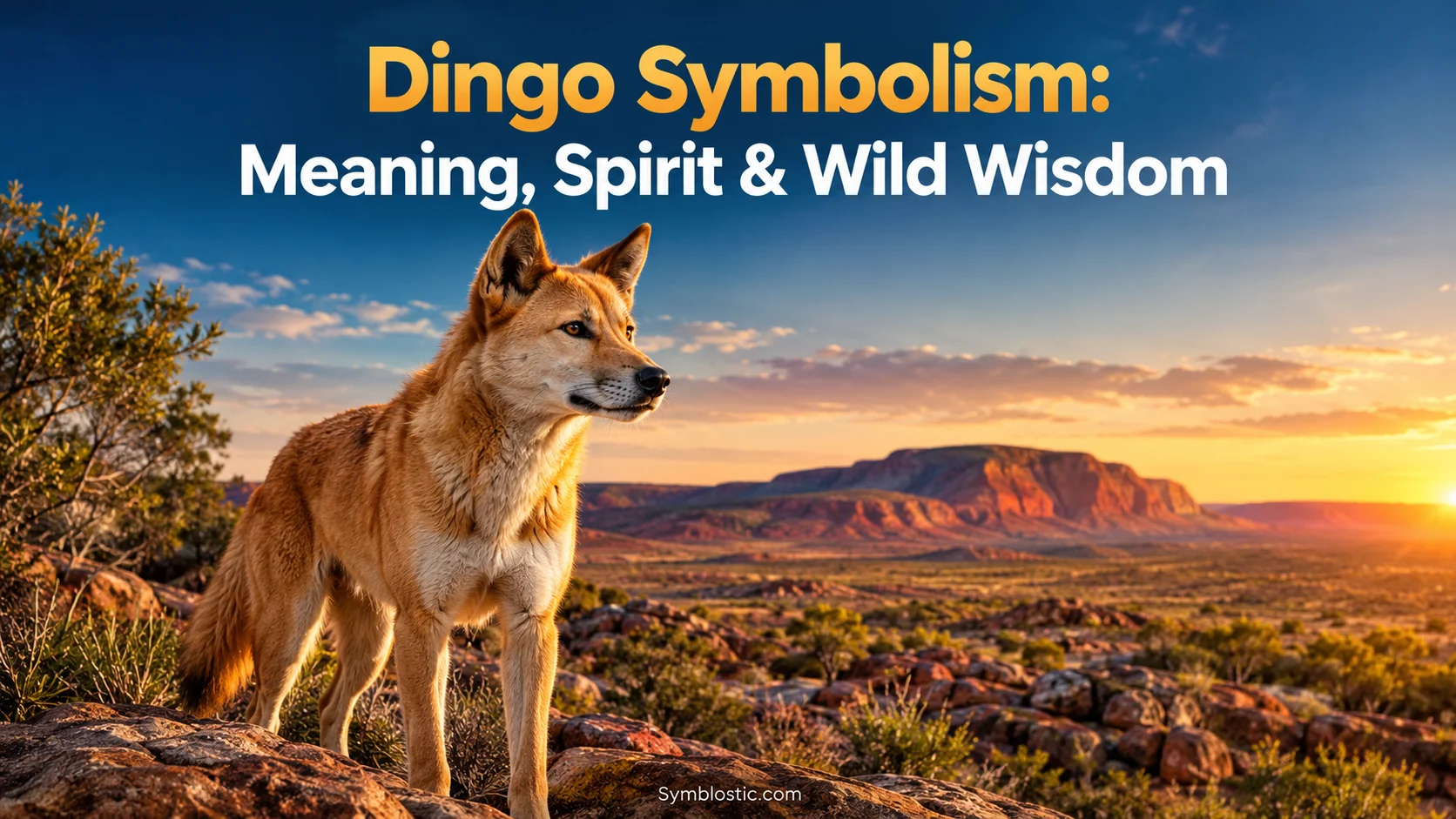
The Dingo Symbolism is closely connected with independence, survival, instinct, loyalty, and the untamed side of nature. Although dingoes are strongly associated with Australia, their meaning can also speak to modern American ideas about freedom, wilderness, family, and self-reliance.
For many people, the dingo represents an animal that lives between worlds. It can be connected with humans without becoming completely domesticated. That tension gives the dingo a distinctive symbolic character.
In Australian First Nations traditions, however, dingo meanings can be much deeper than modern “spirit animal” interpretations suggest. Different communities have their own stories, relationships, and cultural systems involving dingoes. Therefore, no single meaning should be treated as universal.
Quick Answer
Dingo symbolism often represents independence, survival, instinct, adaptability, loyalty, and wild freedom. In the United States, it can symbolize self-reliance and a strong connection with nature, while its deeper cultural meanings come from Indigenous Australian traditions.
TL;DR
- Dingoes symbolize independence, instinct, resilience, and adaptability.
- They represent a powerful connection between humans and the wild.
- Australian First Nations relationships with dingoes are culturally diverse and ancient.
- In America, dingoes often symbolize wilderness, mystery, and Australian identity.
- A dingo tattoo can express freedom, survival, loyalty, or individuality.
- Modern interpretations should avoid reducing Indigenous traditions to simple spiritual labels.
What Does a Dingo Symbolize?
The dingo carries several related meanings. Most come from its behavior, environment, history, and relationship with people.
Independence and Freedom
The dingo is often associated with independence because it can survive without relying completely on humans. Its ability to move between human and wild environments reinforces this idea.
For an American audience, that quality can resemble the cultural value of self-reliance. The dingo becomes a symbol of someone who values freedom but still understands the importance of connection.
Survival and Adaptability
Dingoes have survived across diverse Australian environments. They can live in deserts, forests, grasslands, and coastal areas.
Because of this, the animal naturally represents adaptability. Symbolically, it can suggest learning how to survive when circumstances change.
Instinct and Awareness
A dingo also represents instinct. Its survival depends on observation, communication, movement, and awareness of its surroundings.
Symbolically, seeing a dingo can therefore suggest paying closer attention to your instincts. It can represent the quiet knowledge that comes from experience.
Dingo Symbolism in the United States
The dingo isn’t a native American animal, so its symbolism in the United States is largely borrowed from Australian nature and culture.
A Symbol of the Australian Wild
For many Americans, the dingo immediately evokes the Australian outback. Images of dry landscapes, open wilderness, and distant horizons strengthen that association.
As a result, the dingo can represent adventure and unexplored places. It often feels more mysterious to Americans than familiar animals such as wolves, coyotes, or domestic dogs.
Freedom and Self-Reliance
American culture has long placed value on independence and personal freedom. The dingo can fit that theme surprisingly well.
However, its symbolism differs from that of the classic American frontier wolf or coyote. The dingo carries a distinctly Australian identity.
Wilderness and Environmental Balance
Dingoes are also important predators within Australian ecosystems. Their presence can influence populations and relationships among other animals.
This gives the dingo another modern meaning: balance in nature. Instead of representing wilderness as something separate from civilization, it can symbolize nature’s role in maintaining healthy ecosystems.
| Context | Meaning in the USA | Common Association | Symbolic Focus |
| Australian landscape | Wilderness and adventure | Outback | Freedom |
| Wildlife imagery | Natural power | Predator | Instinct |
| Personal identity | Independence | Self-reliance | Individuality |
| Family imagery | Loyalty and protection | Pack behavior | Connection |
| Environmental themes | Ecological balance | Native predator | Nature |
| Tattoos and art | Resilience | Wild dog | Survival |
Dingo History and Ancient Roots
The dingo’s symbolic history is inseparable from its long relationship with people in Australia.
Arrival in Australia
Scientific research indicates that dingoes arrived in Australia thousands of years ago, probably through human-assisted movement from Asia. Their exact history and classification remain subjects of scientific discussion.
Over time, dingoes became deeply connected with many Aboriginal and Torres Strait Islander communities. They were not simply viewed as wild animals.
Companions and Working Animals
Historical evidence shows that people sometimes raised young dingoes around camps. They could become hunting companions, camp animals, and protective animals.
Yet they were not simply transformed into modern domestic dogs. Many dingoes retained strong independence and eventually returned to the wild.
This unusual relationship helped create a powerful symbolic image: the animal that can live beside humans without completely belonging to them.
Burial and Ritual Significance
Archaeological discoveries provide evidence of careful dingo burials. These findings show that relationships between people and dingoes could extend beyond everyday practical use.
A 2026 discovery in New South Wales provided additional evidence of a carefully maintained dingo burial dating back roughly a millennium. Such discoveries highlight how deep and varied human-dingo relationships have been.
Dingo Symbolism in Aboriginal Australian Traditions
Dingo symbolism becomes more complex when viewed through Indigenous Australian cultures.
Dreaming and Ancestral Stories
Dingoes appear in stories, ceremonies, art, songlines, and cultural systems across different Australian communities. Some traditions connect ancestral dingoes with landscapes, water sources, creation stories, or important cultural laws.
However, there isn’t one universal “Aboriginal dingo meaning.” Australia contains many distinct First Nations peoples, languages, and traditions.
Therefore, broad statements should be treated carefully. One community’s dingo story shouldn’t automatically be presented as the belief of every Indigenous Australian group.
Protector and Companion
In some traditions, dingoes are associated with protection and companionship. Historical accounts also describe their role around camps at night.
This can give the dingo a symbolic connection with watchfulness. The animal may represent something that observes the surroundings while others rest.
Wildness and Danger
Dingo stories aren’t always positive. Some traditions also portray dingoes as dangerous, powerful, or threatening figures.
This is important because symbolism isn’t always about assigning an animal one positive personality trait. A powerful symbol can contain opposing qualities.
Dingo Spiritual Meaning
Modern spiritual interpretations often connect the dingo with instinct and personal independence.
Trusting Your Instincts
The dingo can symbolize listening to your inner warning system. It encourages awareness rather than impulsiveness.
In this sense, its message isn’t simply “do whatever you want.” Instead, it suggests knowing when to move independently and when to stay connected with others.
Finding Your Own Path
The dingo’s ability to move between human spaces and wilderness creates a strong metaphor for individuality.
It can represent someone who doesn’t fit neatly into one category. The symbol may appeal to people who value freedom while still maintaining close relationships.
Protection and Awareness
A dingo may also symbolize vigilance. Its alert nature can represent noticing what others overlook.
For some people, this makes the dingo a fitting symbol during periods of transition, uncertainty, or personal growth.
Dingo Symbolism and Pack Loyalty
Independence doesn’t mean isolation. Dingoes also have social lives and form family groups.
Family Connection
The dingo can therefore represent loyalty to family and community. Its symbolism contains an interesting contrast between independence and belonging.
That contrast is especially meaningful for modern readers. You can value your independence without rejecting your relationships.
Communication and Cooperation
Dingo groups rely on communication and coordinated behavior. Symbolically, this can represent cooperation without surrendering individuality.
The message becomes simple: strength can come from knowing when to stand alone and when to work together.
The Balance Between Solitude and Belonging
A dingo image may appeal to people who need personal space but still care deeply about their community.
In that sense, the animal represents healthy boundaries rather than complete isolation.
What Does a Dingo Mean Spiritually?
Spiritual interpretations of the dingo often focus on instinct, resilience, freedom, and awareness.
When the Dingo Represents Change
A dingo may symbolize adaptation during a major life transition. Its survival across different environments makes it a natural metaphor for adjustment.
For example, someone starting a new career or moving to a new place might identify with the dingo’s flexibility.
When the Dingo Represents Courage
The dingo can also symbolize quiet courage. It doesn’t need to represent loud strength or dominance.
Instead, its strength can mean continuing forward when conditions aren’t easy.
When the Dingo Represents Inner Wisdom
Modern spiritual language often uses animals as metaphors for qualities people want to develop. The dingo can represent trusting experience and paying attention to subtle signals.
This is a modern interpretive framework, rather than a single traditional doctrine shared by all cultures.
Read More: Serval Symbolism: Meaning, Spirit, and Strength
Emotional and Psychological Meaning of the Dingo
Animals often become symbols because they help people describe feelings that are difficult to express directly.
Independence
A person drawn to dingo imagery may value autonomy. They might see themselves as someone who prefers making personal decisions.
Resilience
The dingo can also represent recovering after difficult experiences. Its connection with harsh landscapes strengthens this association.
The symbolism doesn’t mean hardship is desirable. Instead, it reflects the human ability to adapt after hardship occurs.
Instinct
The dingo may appeal to people who trust observation and experience. It can represent awareness before action.
Emotional Distance
There is also a less flattering interpretation. Because dingoes are wild rather than fully domesticated, they can symbolize emotional distance or guardedness.
That interpretation isn’t necessarily negative. Sometimes being cautious is a form of self-protection.
Dingo Tattoo Meaning and Modern Body Art
A dingo tattoo can carry several personal meanings depending on its design.
Common Dingo Tattoo Meanings
A tattoo featuring a dingo may represent:
• Independence after overcoming a difficult period
• Loyalty to family or close relationships
• Connection with wilderness and adventure
• Trust in personal instincts and intuition
• Resilience through major life changes
• Respect for Australian landscapes and wildlife
Tattoo Design Details
The surrounding imagery can change the symbolism.
A dingo beneath a desert moon may emphasize solitude and mystery. A dingo with mountains can suggest exploration, while a family group can emphasize loyalty.
However, using Indigenous-inspired designs requires care. Generic Aboriginal imagery shouldn’t be added simply to make a tattoo appear more “authentic.”
Dingo Symbolism in Art, Decor, and Social Media
Today, animal symbolism often spreads through visual culture.
Home Decor
Dingo artwork can create an atmosphere associated with wilderness, travel, and Australia. Natural landscapes often reinforce those themes.
A realistic dingo portrait can feel adventurous and rugged. A minimalist silhouette can suggest independence without appearing overly literal.
Social Media
The dingo can work as a visual shorthand for being independent or unconventional. It may also represent travel, outdoor exploration, or an interest in Australian wildlife.
However, social media often simplifies symbols. A complicated cultural history can become a single word such as “freedom.”
Fashion and Personal Identity
Dingo imagery can appeal to people who want an animal symbol that feels less common than wolves or eagles.
Its relative rarity can itself communicate individuality. The symbol suggests someone interested in a less familiar form of wilderness.
Why Dingoes Symbolize Freedom and Survival
The strongest modern interpretation of the dingo comes from its ability to survive without becoming completely dependent on people.
Freedom Without Isolation
The dingo shows that independence and social connection can exist together.
This makes it especially useful as a personal metaphor. You don’t have to choose between freedom and belonging.
Survival Through Adaptation
The dingo’s long history in different Australian environments reinforces resilience.
For modern readers, this can represent flexibility during uncertain periods. Instead of resisting every change, the symbolic lesson is to learn how to move through it.
Wildness Without Chaos
The dingo is wild, but wildness doesn’t automatically mean disorder.
Its behavior reflects cooperation, territory, family relationships, and environmental awareness. Symbolically, this can mean living freely while respecting boundaries.
Dingo Misunderstandings and Controversies
The dingo carries some complicated modern associations that are worth understanding.
The “Dingo Ate My Baby” Phrase
In the United States, many people first encounter the word “dingo” through the famous phrase connected with the death of Azaria Chamberlain in Australia in 1980.
Azaria disappeared from her family’s campsite near Uluru. Her mother, Lindy Chamberlain, said a dingo had taken her baby. The parents were initially convicted, but the convictions were later overturned.
In 2012, a coroner formally found that Azaria had died after being taken by a dingo.
From Tragedy to Comedy
American television later turned the phrase into a recurring joke. Shows such as Seinfeld and The Simpsons helped make it familiar to American audiences.
That history matters when discussing dingo symbolism. A phrase that sounds humorous today came from a real family’s devastating experience.
Avoiding Oversimplification
Dingoes should not be reduced to either harmless pets or dangerous monsters.
They can be culturally important, ecologically important, and capable of posing risks in certain situations. Their meaning changes depending on context.
How Dingo Symbolism Has Changed Over Time
Dingo meanings have never been completely fixed.
Before European Colonization
For many Indigenous communities, dingoes were incorporated into complex cultural relationships involving kinship, stories, ceremony, landscape, and practical life.
These traditions were diverse rather than identical.
During Colonial Expansion
European settlers often viewed dingoes as threats to livestock. This led to widespread persecution and efforts to control or kill them.
Consequently, the dingo became associated with conflict, danger, and competition in colonial culture.
Modern Interpretation
Today, the dingo can represent both wilderness and conservation. Scientists and conservationists increasingly discuss its ecological role alongside concerns about livestock and human safety.
For modern audiences, the animal therefore carries a more balanced meaning. It can symbolize freedom while also reminding us that wild animals aren’t domesticated companions.
Dingo Symbolism vs. Wolf and Coyote Symbolism
American readers may naturally compare the dingo with familiar wild canids.
Dingo vs. Wolf
Wolves often symbolize strength, leadership, wilderness, and pack identity. The dingo shares some of those meanings but has a stronger connection with Australian landscapes and Indigenous Australian cultural history.
Dingo vs. Coyote
Coyotes are often connected with adaptability, cleverness, survival, and trickster traditions in North American storytelling.
The dingo can also suggest adaptability. However, its cultural background is fundamentally different.
Dingo vs. Domestic Dog
Domestic dogs often symbolize companionship, loyalty, and unconditional affection. The dingo adds another layer because of its continued connection with wild behavior.
That difference makes the dingo a useful symbol for freedom within connection.
What Does a Dingo Mean in Dreams?
Dream interpretations are personal, but the dingo can provide several useful symbolic themes.
Seeing a Dingo
Seeing one in a dream may represent independence or a need to trust your instincts.
The surrounding dream matters. A calm dingo creates a different emotional message from an aggressive one.
Being Followed by a Dingo
A dingo following you could symbolize something you haven’t fully confronted. It might represent instinct, responsibility, fear, or an unresolved decision.
However, dream symbolism isn’t a fixed code. Your own feelings toward the animal are usually more important than a universal interpretation.
A Friendly Dingo
A friendly dingo may symbolize trust between independence and connection.
It can suggest that something once viewed as unfamiliar or intimidating is becoming easier to understand.
FAQs:
What does a dingo symbolize spiritually?
A dingo can symbolize instinct, independence, resilience, adaptability, and awareness. Modern spiritual interpretations often use these traits as personal metaphors rather than universal religious teachings.
Is the dingo a symbol of Australia?
Yes, the dingo is widely recognized as an iconic Australian animal. It also has deep cultural significance for many First Nations communities, making its meaning much richer than a simple national symbol.
What does a dingo tattoo symbolize?
A dingo tattoo can represent freedom, survival, independence, loyalty, or connection with Australian wilderness. The surrounding imagery can make the personal meaning more specific.
What does seeing a dingo mean?
Symbolically, seeing a dingo can suggest paying attention to instincts or embracing independence. In a dream, the meaning depends heavily on the animal’s behavior and your emotional reaction.
Are dingoes considered spiritual animals?
Dingoes have important spiritual and cultural roles in some Indigenous Australian traditions. However, it isn’t accurate to treat every Indigenous Australian community as having one identical belief about dingoes.
Why is the dingo associated with “a dingo ate my baby”?
The phrase comes from the 1980 disappearance and death of Azaria Chamberlain in Australia. It later became a popular American comedy reference, although the original event was a serious tragedy and the phrase has been criticized for trivializing it.
Conclusion:
Dingo symbolism centers on independence, survival, instinct, adaptability, loyalty, and wild freedom. In the United States, the dingo often represents the mysterious Australian wilderness, but its deeper story comes from thousands of years of human relationships with dingoes in Australia.
The most meaningful interpretation may be the balance the animal represents. The dingo can stand alone without being disconnected, remain wild without being chaotic, and adapt without losing its essential nature. Whether you encounter the symbol through art, a tattoo, wildlife imagery, or personal reflection, it can invite you to consider where you need more freedom, awareness, or resilience in your own life.

1 thought on “Dingo Symbolism: Meaning, Spirit & Wild Wisdom”