
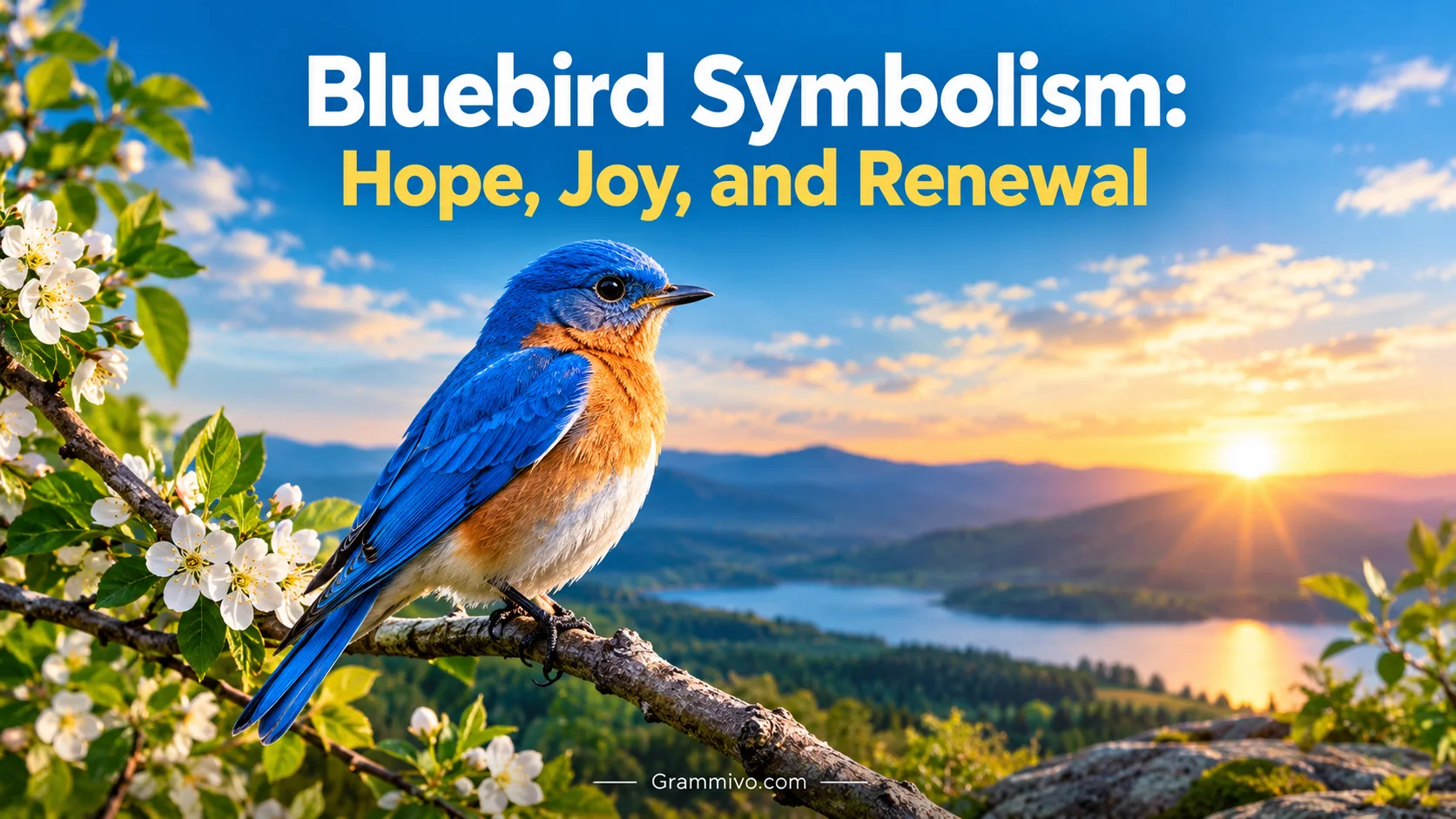
A bluebird is often seen as a symbol of happiness, hope, and fresh beginnings. In the United States, its bright blue feathers and cheerful appearance make it a familiar image of optimism and emotional renewal. Bluebird symbolism reflects the human desire for brighter days, peaceful relationships, and the courage to begin again after difficult times.
People encounter bluebirds in gardens, forests, paintings, poems, jewelry, and spiritual discussions. Sometimes, seeing one feels like a small reminder to appreciate the present moment. Other times, it brings memories of childhood, loved ones, or a period of life when everything seemed possible.
However, the meaning of a bluebird isn’t exactly the same for everyone. Its symbolism depends on personal experiences, cultural traditions, religious beliefs, and the situation in which someone encounters it. A bluebird appearing near a home might represent comfort to one person and a new beginning to another.
In American culture, the bird has a particularly strong connection with happiness. Yet its meaning goes beyond simple cheerfulness. It can also represent resilience, freedom, love, spiritual awareness, and the promise of better days ahead.
Quick Answer
In the United States, bluebird symbolism primarily represents happiness, hope, renewal, and emotional peace. Spiritually, some people interpret bluebirds as reminders to trust life’s journey, welcome change, and remain open to positive possibilities.
TL;DR
- Bluebirds commonly symbolize happiness, hope, and emotional renewal.
- Their bright feathers suggest peace, freedom, and natural beauty.
- In American culture, bluebirds have long represented good fortune.
- Spiritually, some people associate bluebirds with encouragement and personal growth.
- Bluebird tattoos often express optimism, love, freedom, or remembrance.
- Their appearance can inspire reflection without predicting future events.
What Does a Bluebird Represent?
Bluebirds have a distinctive appearance that helps explain their symbolic appeal. Their blue feathers contrast beautifully with green landscapes, wooden fences, and open skies. Eastern bluebirds often have warm reddish-orange breasts, while mountain bluebirds display a more extensive blue coloration.
These features contribute to associations with warmth, vitality, openness, and natural beauty. However, the meaning comes from human interpretation rather than any universal message carried by the bird.
The Main Symbolic Meanings
Three meanings appear especially often in modern bluebird symbolism.
Happiness: Bluebirds are widely associated with cheerfulness and contentment. Their colorful appearance and familiar presence in gardens help create this connection.
Hope: A bluebird can represent the belief that difficult circumstances won’t last forever. Its appearance may encourage someone to look beyond present challenges.
Renewal: Because birds move freely through changing landscapes, people often connect them with fresh starts, personal transformation, and new opportunities.
Other interpretations include loyalty, spiritual connection, freedom, and love. These meanings aren’t fixed rules. Instead, they reflect the qualities people associate with bluebirds and the experiences they bring to the symbol.
Why the Blue Color Matters
Blue has several familiar associations in American life. People connect it with the sky, water, calmness, trust, and openness.
Consequently, a bluebird can combine the emotional associations of its color with the natural symbolism of flight. The result is an image that feels both peaceful and full of possibility.
Its warm-colored breast adds another layer. In the eastern bluebird, the reddish-orange chest can suggest warmth, vitality, and affection.
Together, these colors make the bird a compelling symbol of hope balanced with emotional warmth.
Historical Origins of Bluebird Symbolism
Bluebird symbolism developed through a mixture of folklore, poetry, observation, and changing cultural attitudes toward nature. Although bluebirds have existed in North America for far longer than recorded American history, their familiar association with happiness became especially prominent through modern literature and popular culture.
Bluebirds in American Nature and Folklore
Eastern bluebirds are native to eastern North America, while mountain bluebirds inhabit much of western North America. Western bluebirds also occur across parts of the western United States.
Their presence in open fields, orchards, and rural landscapes made them familiar to generations of Americans. Their striking color and visible nesting behavior helped establish them as recognizable symbols of the natural world.
In traditional rural settings, bluebirds could represent the return of warmer weather and the renewal of outdoor life. However, specific folk beliefs varied by region and family.
It’s important not to assume that every early American community attached the same meaning to these birds. Some associations developed through local experience rather than a single shared tradition.
The Influence of Poetry and Popular Culture
During the nineteenth and twentieth centuries, birds became prominent subjects in American poetry, songs, illustrations, and sentimental art.
The bluebird’s cheerful appearance made it especially suitable for expressions of happiness and longing. Writers could use the bird to represent an ideal emotional state, a distant hope, or a peaceful life.
Over time, the image became familiar beyond its natural habitat. People could recognize the bluebird as a symbol even without knowing much about the actual species.
This distinction matters today. The cultural bluebird is often an idealized image of happiness, while the real bird remains a wild animal with ordinary survival needs.
Bluebird Symbolism in American Culture
In the United States, bluebirds occupy a special place among familiar birds associated with positive emotions. Their appearance in gardens and rural landscapes reinforces their connection with home, nature, and a simpler pace of life.
Unlike symbols that carry strong political or religious associations, bluebirds generally communicate a welcoming and accessible message.
The Bluebird as an American Symbol of Happiness
The phrase “bluebird of happiness” is widely recognized in American English. It describes a sense of joy, good fortune, or emotional fulfillment.
The phrase also appears in entertainment, decorative art, greeting cards, and everyday conversation. Someone might describe a happier period as finding their bluebird of happiness.
This association doesn’t mean that bluebirds traditionally guarantee good fortune. Instead, the phrase reflects a cultural habit of using the bird as an image of happiness that people hope to find.
Rural Life, Gardens, and American Identity
Bluebirds have strong connections with rural America, where open spaces, farms, orchards, and fence posts provide familiar places to encounter them.
For many people, seeing a bluebird recalls childhood memories, visits to grandparents, or peaceful mornings outdoors. These personal connections can make the bird feel like a symbol of belonging.
Bluebird nest boxes also play a role in American conservation culture. People install them to provide suitable nesting places and support local bird populations.
As a result, bluebirds can represent more than happiness. They can also symbolize stewardship, patience, and a desire to protect the natural world.
Bluebirds in American Music and Entertainment
The bluebird’s association with happiness has made it a recurring image in songs, stories, and entertainment.
One notable example is the song “Over the Rainbow,” introduced in the 1939 film The Wizard of Oz. Its lyrics include a reference to bluebirds flying beyond the rainbow, linking the bird with dreams and possibilities beyond ordinary life.
This example illustrates how popular culture helped strengthen the bluebird’s symbolic meaning. The bird became an image of a world where happiness might exist beyond present difficulties.
Today, similar imagery appears in illustrations, inspirational messages, and personal artwork. The bluebird remains an easy-to-understand symbol of hope without requiring a specific religious or cultural background.
Spiritual Meaning of a Bluebird
For people interested in spirituality, a bluebird can represent encouragement, inner peace, renewal, or a reminder to remain hopeful.
These interpretations are personal or tradition-dependent rather than universally established spiritual facts. Different people may understand the same encounter in very different ways.
Bluebirds as Signs of Hope
Some people interpret a bluebird sighting as a meaningful reminder during a difficult period.
For example, someone grieving a loss might see a bluebird outside a window and experience a moment of comfort. Another person might encounter one while considering a major life change and take it as an invitation to remain optimistic.
The emotional meaning can be real and important without proving that the encounter predicts anything.
Instead, the bird may help someone focus on a value they want to carry forward, such as patience, courage, or gratitude.
Bluebirds and Spiritual Awareness
Bluebirds may also symbolize awareness of the present moment. Watching a bird move through a garden can encourage someone to pause and notice the world around them.
For people who practice meditation, prayer, or quiet reflection, such encounters can become opportunities to reconnect with personal beliefs.
However, there’s no universal spiritual rule stating that a bluebird carries a particular message. A respectful interpretation leaves room for personal meaning rather than insisting that everyone must understand the experience identically.
Bluebirds as Symbols of Personal Transformation
Because bluebirds are associated with hope and renewal, some people use them to represent a change in their lives.
This might include recovering confidence after a setback, starting a new relationship, moving to a different place, or learning to appreciate ordinary moments again.
The bird’s symbolism works especially well here because transformation doesn’t always involve dramatic change. Sometimes, it means gradually developing a healthier outlook or recognizing possibilities that once seemed distant.
Bluebird Symbolism in Different Cultures
Bluebird symbolism is particularly recognizable in American culture, but birds and the color blue carry different meanings around the world.
It’s important to distinguish documented cultural traditions from modern spiritual interpretations. Similar symbols can develop independently in different places without sharing the same historical origin.
European Folklore and Literary Traditions
In European literature, bluebirds have sometimes represented happiness, longing, and the search for an ideal life.
A particularly influential example is The Blue Bird, a play written by Belgian author Maurice Maeterlinck and first performed in 1908. The story follows children searching for a mysterious blue bird associated with happiness.
Its central idea helped popularize the bluebird as an image of happiness that people may overlook while searching far away.
The play’s influence extended beyond its original setting. Its themes became part of a broader cultural understanding of the bluebird as a symbol of hope and fulfillment.
Blue Birds in Broader Spiritual Interpretations
In contemporary spiritual discussions, bluebirds are sometimes associated with communication, intuition, peace, or spiritual encouragement.
These interpretations often combine the bird’s natural qualities with broader symbolic associations of blue.
However, they shouldn’t automatically be attributed to every Indigenous, Asian, African, or European tradition. Cultures differ in their stories, religious practices, and relationships with local wildlife.
A blue bird may also appear in folklore without referring to the North American bluebird species. Similar coloration doesn’t establish that two traditions share the same symbolism.
A Respectful Approach to Cross-Cultural Meaning
When exploring bluebird symbolism across cultures, it’s helpful to ask three questions:
- Is the interpretation supported by a specific cultural story or historical source?
- Does it refer to an actual bluebird species or simply a blue-colored bird?
- Is the meaning traditional, or is it a newer personal or spiritual interpretation?
These questions help prevent modern interpretations from being presented as ancient facts.
They also make the symbolism more interesting. Rather than searching for one universal meaning, readers can explore how different communities use birds to express hope, beauty, belonging, and change.
Read More: Firefly Symbolism: Hope, Light, and Transformation
What Does Seeing a Bluebird Mean?
Seeing a bluebird can feel meaningful, especially when the encounter happens during an emotional or important moment.
In everyday life, however, the bird’s appearance usually has a natural explanation. Bluebirds seek food, nesting places, shelter, and suitable habitat.
A meaningful interpretation doesn’t need to conflict with those facts. Someone can appreciate the bird’s natural behavior while reflecting on what the encounter brings to mind.
Seeing a Bluebird Near Your Home
A bluebird near your home may symbolize comfort, happiness, or a stronger connection with nature.
If you maintain a garden or nest box, the sighting may also reflect suitable habitat and the availability of food.
For someone who associates home with safety and belonging, the bird can become a personal reminder to appreciate familiar surroundings.
Seeing a Bluebird During a Difficult Time
Some people notice bluebirds more strongly when they’re experiencing grief, uncertainty, or personal change.
In these situations, the bird may provide a welcome moment of calm. Its appearance can encourage someone to remember that difficult feelings and circumstances can change.
Still, a sighting shouldn’t be treated as a guaranteed prediction that a problem will disappear. Its meaning is best understood as personal reflection rather than certainty about the future.
Seeing a Bluebird Repeatedly
Repeated bluebird sightings can feel significant, particularly when the bird becomes associated with a person, place, or memory.
There may also be a simple explanation. Bluebirds can return to familiar areas when food, shelter, and nesting opportunities remain suitable.
If the encounters feel meaningful, consider what they remind you of and why those ideas matter. This approach allows personal symbolism to develop without assuming that every sighting carries a supernatural message.
Bluebird Symbolism in Love and Relationships
Bluebirds are frequently used to express happiness, warmth, loyalty, and emotional connection.
Their symbolism suits relationships because people often want love to provide both excitement and a sense of peace.
Bluebirds as Symbols of Love
In romantic settings, a bluebird may represent a relationship that brings joy and emotional comfort.
Its cheerful appearance also works well in illustrations for anniversaries, weddings, and Valentine’s Day. Unlike symbols associated primarily with passion, the bluebird often emphasizes happiness and companionship.
However, the meaning depends on the person using it. A bluebird can represent romantic love, family affection, friendship, or appreciation for someone who has made life brighter.
Bluebirds and Loyalty
Bluebirds can also symbolize loyalty and commitment. This association draws partly from their nesting behavior and the care many bird species provide for their young.
Eastern bluebirds commonly form breeding pairs, and both parents may contribute to raising nestlings. Their behavior can inspire human reflections on cooperation and family life.
Nevertheless, wild birds shouldn’t be treated as perfect models of human relationships. Their behavior follows biological needs, and individual birds vary.
The symbolism remains useful as an expression of the values people hope to bring into their own relationships.
Bluebirds After Heartbreak
After a breakup or personal disappointment, a bluebird may represent the possibility of emotional renewal.
Rather than promising that a particular relationship will return, it can symbolize the opportunity to rebuild confidence and discover happiness again.
For some people, this makes the bluebird a particularly gentle symbol. It offers hope without requiring the past to be restored exactly as it was.
Bluebird Symbolism in Dreams
Dream interpretations vary across cultures and individuals. There’s no scientifically established universal meaning for dreaming about a bluebird.
Nevertheless, people often explore dreams by considering their emotions, personal experiences, and the events surrounding them.
Dreaming of a Bluebird Flying
A flying bluebird may suggest freedom, possibility, or a desire to move beyond restrictions.
If the dream feels peaceful, the bird might reflect confidence or excitement about a new direction. If it disappears before you can reach it, the dream might bring attention to something you want but haven’t achieved.
These are reflective possibilities rather than fixed interpretations.
Dreaming of a Bluebird in a Nest
A bluebird in a nest may bring to mind safety, family, patience, or the desire to establish a stable home.
For someone experiencing major changes, the image might reflect a wish for security. For another person, it might represent care for a growing project or relationship.
The surrounding details matter more than a universal dream dictionary definition.
Dreaming of an Injured or Dead Bluebird
An injured or dead bluebird may feel upsetting because the bird often represents happiness and hope.
Some people interpret such dreams as expressions of disappointment, emotional exhaustion, or fear of losing something important.
However, these dreams don’t predict death, disaster, or future unhappiness. They may simply reflect stress, memories, or difficult emotions that the mind is processing.
If a dream stays with you, consider the feelings it produced rather than assuming it predicts an event.
Bluebird Symbolism in Tattoos, Art, and Home Decor
Bluebirds remain popular in visual art because their shape and color are easy to recognize. Their generally positive associations also make them suitable for personal designs, gifts, and decorative objects.
Bluebird Tattoos and Their Meanings
A bluebird tattoo can express hope, personal freedom, affection, or the desire for a fresh start.
Different design choices can add personal meaning.
- A flying bluebird: Freedom, independence, and moving forward.
- A bluebird on a branch: Peace, patience, and appreciation of the present.
- Two bluebirds: Partnership, affection, or a meaningful bond.
- A bluebird with flowers: Renewal, beauty, and personal growth.
- A bluebird with a name or date: Remembrance of someone important.
These interpretations aren’t universal. The most meaningful tattoo is often one connected to the wearer’s own experience.
Bluebirds in Home Decor
Bluebird imagery can bring a feeling of warmth and natural beauty into a home.
People use bluebird paintings, ceramics, pillows, garden ornaments, and seasonal decorations to express an appreciation for nature.
In a living room, the bird might represent happiness and hospitality. In a garden, it may express an interest in wildlife and conservation.
Bluebird designs can also make thoughtful gifts during periods of change. Their associations with hope and renewal suit new homes, graduations, and personal milestones.
Bluebirds on Social Media
Online, bluebird images often accompany messages about gratitude, encouragement, and positive change.
Someone might share a bluebird photograph after experiencing a meaningful moment outdoors. Another person might use the image to celebrate a personal achievement or honor a loved one.
The symbol works because it communicates an emotion quickly. Viewers don’t need extensive background knowledge to recognize the intended message of hope or happiness.
However, social media interpretations are often informal. A caption describing a bluebird as a spiritual sign reflects the poster’s perspective, not necessarily an established cultural tradition.
Bluebird Symbolism and Emotional Psychology
Symbols can influence how people understand their experiences. A familiar image may bring certain memories to mind, encourage reflection, or help express feelings that are difficult to describe directly.
Bluebirds are especially suitable for this role because their cultural associations tend to be positive.
Hope and Emotional Resilience
Hope doesn’t mean believing that every situation will turn out perfectly. It can mean recognizing that circumstances may change and that useful possibilities remain.
A bluebird can serve as a reminder of this outlook. Someone facing uncertainty might use the image to reconnect with goals, relationships, or personal strengths.
The symbol doesn’t solve a problem by itself. Instead, it may help someone express an attitude they want to maintain while working through a difficult situation.
Peace, Calm, and Mindfulness
Watching birds can encourage people to slow down and pay attention to their surroundings.
A bluebird resting on a fence or moving through a garden offers a simple opportunity to notice color, sound, movement, and light.
For some people, this moment of attention feels calming. The bird becomes associated with a peaceful pause in an otherwise busy day.
Its significance may come less from a hidden message and more from the experience of noticing something beautiful.
Memory and Personal Identity
Bluebirds can also become symbols of personal identity.
A person raised in the countryside might associate them with childhood and family traditions. Someone else might connect the bird with recovery after a challenging period.
Over time, these experiences can give the symbol a meaning that extends beyond its general cultural associations.
This is one reason symbolic interpretations vary so widely. People don’t encounter birds as blank observers; they bring their own memories, emotions, and beliefs.
Bluebird Symbolism Compared With Other Birds
Bird symbolism often overlaps, but different species carry distinct cultural associations. Comparing them can help explain why the bluebird is particularly connected with happiness and hope.
| Bird | Common Symbolic Meaning in the USA | Emotional Association | Typical Context |
| Bluebird | Happiness, hope, renewal | Optimism and comfort | Gardens, gifts, tattoos |
| Dove | Peace, love, remembrance | Calm and reconciliation | Ceremonies, memorials |
| Cardinal | Remembrance, vitality, affection | Warmth and connection | Garden sightings, personal keepsakes |
| Eagle | Strength, freedom, national identity | Pride and determination | American imagery, emblems |
| Robin | Spring, renewal, new beginnings | Freshness and anticipation | Seasonal art, garden imagery |
These associations are common cultural patterns rather than strict definitions. A bluebird can represent remembrance, just as a cardinal can symbolize hope.
The main difference lies in emphasis. The bluebird is especially recognizable as an image of happiness and emotional renewal, while other birds may carry stronger associations with peace, national identity, or particular seasons.
Misunderstandings and Changing Meanings of Bluebird Symbolism
Although bluebird symbolism is generally positive, misunderstandings can arise when personal beliefs are presented as universal facts.
Understanding the difference between cultural meaning, spiritual interpretation, and natural behavior helps keep the subject grounded.
Do Bluebirds Always Bring Good Luck?
No. Bluebirds are commonly associated with happiness and good fortune, but there is no reliable basis for claiming that seeing one guarantees a positive event.
A sighting may feel lucky because it occurs during an important moment. It may also be memorable because the bird is beautiful or unusual in that setting.
People can appreciate this experience without treating the bird as a predictor of future events.
Is Bluebird Symbolism the Same in Every Culture?
No. Different communities have different relationships with birds and different symbolic traditions.
The modern American association between bluebirds and happiness shouldn’t automatically be applied to every culture or historical period.
Similarly, interpretations found in contemporary spiritual writing may be relatively recent rather than ancient traditions.
When discussing symbolism, it’s best to identify the cultural setting and explain where an interpretation comes from.
Has the Bluebird’s Meaning Changed Over Time?
Yes, its cultural role has developed.
Bluebirds have long been familiar parts of North American ecosystems. Over time, literature, music, illustrations, and popular expressions strengthened their association with happiness.
More recently, people have used bluebirds in personal tattoos, inspirational posts, conservation messages, and spiritual discussions.
The bird’s meaning has therefore expanded from everyday encounters with wildlife into a broader symbol of hope, identity, and emotional renewal.
Can Bluebird Symbolism Have a Negative Meaning?
Although bluebirds are usually positive symbols, their meaning can become more complicated in a particular context.
For example, an image of a bluebird flying away might represent separation or a happiness someone feels they’ve lost. A bluebird used in a memorial might express both love and grief.
These meanings don’t make the bird inherently negative. Instead, they show how context changes the emotional message of a symbol.
Bluebird imagery also doesn’t have one universally accepted hidden meaning that people must recognize. Interpretations should be considered in relation to the person, artwork, or situation involved.
FAQs:
What Does a Bluebird Symbolize Spiritually?
A bluebird may symbolize hope, joy, renewal, and inner peace in contemporary spiritual interpretations. Some people view a sighting as an invitation to reflect on their lives, although its meaning depends on personal beliefs.
Is Seeing a Bluebird Considered Good Luck?
Bluebirds are commonly associated with happiness and good fortune in American culture. However, seeing one doesn’t guarantee a particular outcome or predict future events.
What Does a Bluebird Mean After Someone Dies?
For some people, a bluebird represents remembrance, comfort, or a continuing emotional connection with someone who has died. Others simply find its appearance comforting during grief, without interpreting it as a supernatural sign.
What Does a Bluebird Tattoo Mean?
A bluebird tattoo often represents happiness, hope, freedom, love, or a fresh start. Its specific meaning may depend on the design, accompanying images, and the wearer’s personal experiences.
What Does It Mean When a Bluebird Visits Your Home?
A bluebird visiting your home may symbolize peace, happiness, or a connection with nature. From a natural perspective, the bird may simply be seeking food, shelter, or a suitable nesting area.
What Does a Bluebird Mean in a Dream?
A bluebird in a dream may bring to mind hope, freedom, happiness, or personal change. However, dreams don’t have universally established meanings, so your feelings and experiences provide useful context for interpretation.
Conclusion:
Bluebird symbolism brings together several meaningful ideas, especially happiness, hope, emotional peace, and renewal. In the United States, the bird’s cultural associations have been shaped by nature, literature, music, and everyday expressions about finding happiness.
Its meaning can also extend into spirituality, relationships, tattoos, home decor, and personal memories. For some people, a bluebird represents a fresh start. For others, it recalls a loved one, a peaceful place, or a reminder to appreciate the present.

1 thought on “Bluebird Symbolism: Hope, Joy, and Renewal”