
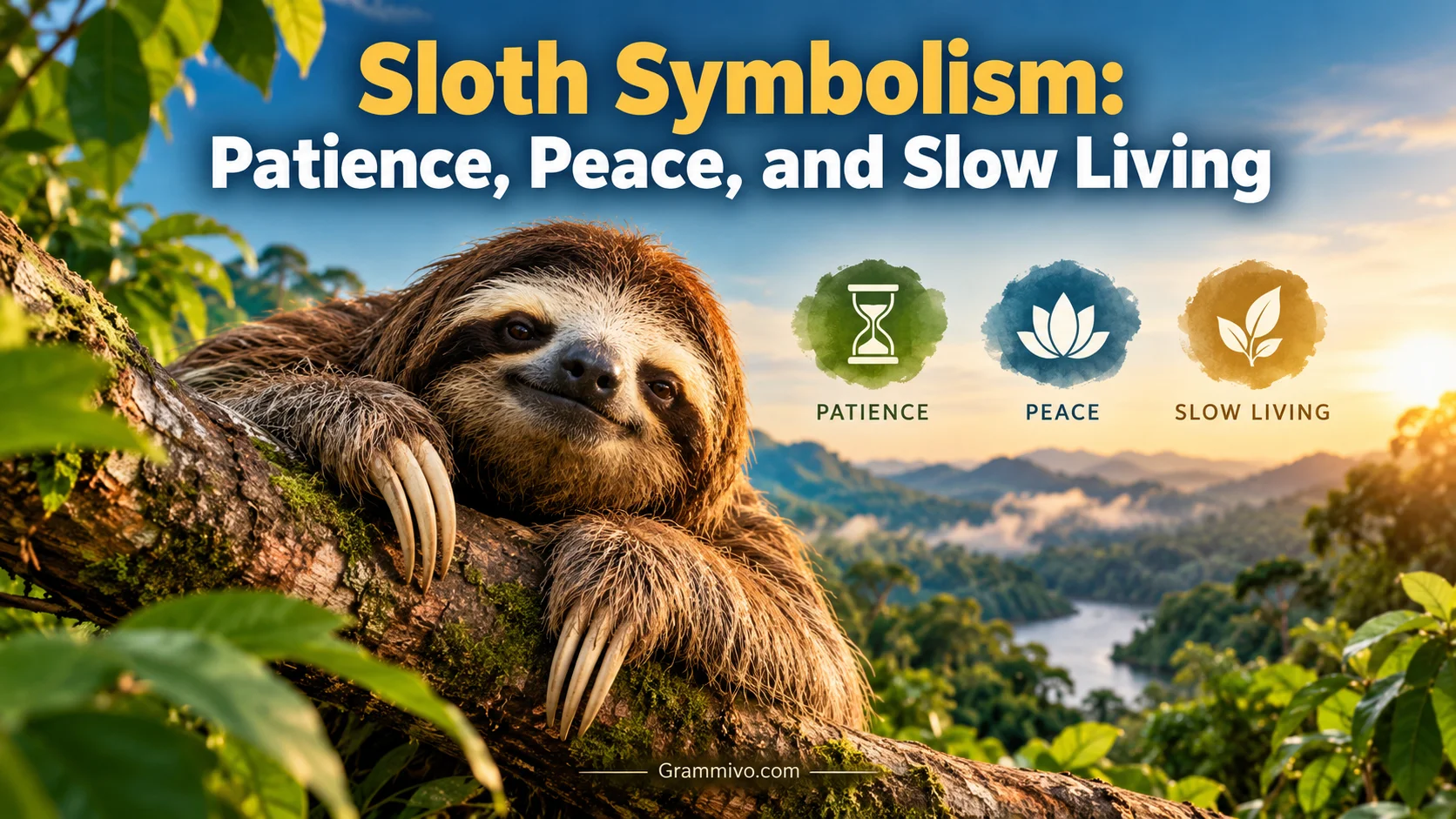
Sloth symbolism explores the meanings people attach to one of nature’s most relaxed animals. In the United States, the sloth often represents patience, peaceful living, emotional balance, and the freedom to move at your own pace. Its gentle expression and slow movements remind people that life doesn’t always have to be a race.
Today, sloths appear on clothing, greeting cards, home decorations, tattoos, and social media posts. Many Americans associate them with self-care, cozy weekends, and taking a break from demanding routines. However, the sloth can also represent procrastination, avoidance, or a reluctance to face responsibilities.
These contrasting meanings make the sloth an interesting symbol. Its message depends on the situation, the person’s beliefs, and the qualities they admire. For some, it encourages a calmer lifestyle. For others, it highlights the difference between healthy rest and unhelpful inactivity.
Understanding sloth symbolism also means looking beyond popular images. Sloths are real wild animals with remarkable adaptations, not simply symbols of laziness. Their natural behavior offers a useful starting point for exploring patience, conservation, spirituality, and modern American culture.
Quick Answer
Sloth symbolism in the United States primarily represents patience, relaxation, mindfulness, and resistance to a rushed lifestyle. Spiritually, people may associate the sloth with grounding, inner peace, and trusting life’s timing, while its traditional association with slothfulness can represent procrastination or spiritual inactivity.
TL;DR
- Sloths commonly symbolize patience, peace, and a slower approach to life.
- In American culture, they represent relaxation and resistance to constant busyness.
- Spiritually, some people connect sloths with grounding and personal reflection.
- Their traditional negative association involves laziness and neglected responsibilities.
- Sloth tattoos can express individuality, humor, and a preference for calm living.
- Conservation imagery connects sloths with wildlife protection and respect for nature.
What Does a Sloth Symbolize?
Sloths are tree-dwelling mammals known for their slow movements, curved claws, and distinctive facial markings. They spend much of their lives in trees, where their adaptations help them conserve energy. Their appearance and behavior have inspired several symbolic interpretations.
In the United States, people often see sloths as reminders to slow down. However, the same qualities can carry different meanings depending on how someone interprets them.
Patience and Slow Living
Patience is one of the most recognizable meanings associated with sloths. Their unhurried movements contrast sharply with modern schedules, deadlines, and expectations of constant productivity.
Consequently, a sloth can represent the idea that meaningful progress doesn’t always require speed. It encourages people to appreciate small steps rather than judge themselves by how quickly they achieve something.
Peace and Emotional Balance
Sloths are often depicted hanging comfortably from branches or resting among green leaves. These images suggest quietness, security, and a peaceful relationship with the surrounding environment.
For people experiencing demanding routines, the sloth can serve as a reminder to create room for rest. It represents a preference for balance rather than constant pressure.
Independence and Self-Acceptance
A sloth doesn’t need to imitate the movement or behavior of faster animals. Symbolically, this quality can represent confidence in one’s natural rhythm.
People may identify with this meaning when they feel different from their peers. The sloth becomes a gentle reminder that personal worth doesn’t depend entirely on speed, competition, or public approval.
Sloth Symbolism in American Culture
In American culture, sloths have become familiar symbols of relaxation, humor, and resistance to the pressure of staying busy. Their popularity reflects a broader interest in finding balance between professional obligations and personal well-being.
However, their cultural meaning isn’t limited to relaxation. Sloths also appear in entertainment, children’s products, conservation campaigns, and conversations about productivity.
The Appeal of Slowing Down
American life often places considerable emphasis on efficiency, achievement, and time management. Against this background, the sloth offers a humorous alternative to the expectation of always doing more.
For example, someone might use a sloth image to express a desire for a quiet weekend. Another person might choose a sloth mug as a playful reminder not to rush through the morning.
These uses turn the animal into a symbol of personal boundaries. They suggest that rest can be a meaningful part of life rather than something people must continually earn.
Sloths in American Entertainment
Sloths have gained visibility through children’s entertainment, animated characters, plush toys, and internet culture. Their slow movements and expressive faces make them easy to recognize and portray humorously.
One well-known example is Flash, the slow-moving sloth character in the animated film Zootopia. The character uses exaggerated slowness for comedy, reinforcing the familiar association between sloths and taking one’s time.
However, fictional portrayals don’t define every meaning of the animal. Real sloths are adapted to their environments, and their slow movements serve practical biological purposes.
Everyday American Associations
Common American interpretations include:
- Relaxation: Enjoying quiet mornings, comfortable surroundings, and peaceful weekends.
- Work-life balance: Making room for personal interests beyond professional responsibilities.
- Humor: Joking about tiredness, delayed replies, or reluctance to leave bed.
- Individuality: Accepting a personal pace instead of following social expectations.
Together, these associations make the sloth an approachable symbol. It can communicate a serious personal value without appearing formal or overly philosophical.
Historical Origins of Sloth Symbolism
The sloth’s symbolic history differs from that of familiar animals such as lions, eagles, and horses. It is native to the Americas, particularly tropical Central and South American forests, so its older cultural associations developed in different regional settings.
European interpretations later added another layer. When sloths became known to European observers, their unusual movements encouraged judgments about laziness and inactivity.
Indigenous American Connections
Sloths inhabit regions with diverse Indigenous cultures, each possessing distinct languages, beliefs, artistic traditions, and relationships with wildlife. Their significance cannot be reduced to one universal Indigenous interpretation.
Animals in many Indigenous traditions may carry relationships to place, practical knowledge, stories, or spiritual understanding. However, a specific sloth meaning should be connected to a documented community or tradition rather than assigned to all Indigenous peoples.
This distinction matters because modern spiritual articles sometimes describe animals as having ancient universal meanings without reliable historical evidence. A respectful interpretation acknowledges what is known while leaving room for cultural differences.
European Encounters and Early Descriptions
European naturalists encountered sloths through exploration and the exchange of natural history specimens. Their unusual anatomy and slow movements attracted attention because they differed from familiar European mammals.
Some early descriptions interpreted slowness through human ideas about laziness or weakness. Such judgments reflected cultural expectations as much as the animals’ actual biology.
Over time, improved scientific understanding helped explain why sloths move slowly. Their low-energy lifestyle is an adaptation, not evidence of a personal failing.
From Natural History to Popular Symbol
As illustrated books, zoos, films, and educational materials introduced sloths to wider audiences, their appearance became increasingly familiar.
In modern America, their symbolic meanings have expanded beyond older associations with laziness. They now represent comfort, patience, environmental awareness, and a playful rejection of constant activity.
This shift illustrates an important point: animal symbolism changes as people learn more about the animal and reinterpret its qualities.
Spiritual Meaning of the Sloth
The spiritual meaning of the sloth depends on an individual’s beliefs and experiences. There isn’t one universally accepted religious or spiritual interpretation, but contemporary spiritual readers often associate the animal with patience, grounding, and mindful living.
For some people, encountering a sloth in a dream, illustration, or meaningful personal moment becomes an invitation to reflect on their priorities.
Patience and Divine Timing
Some spiritual interpretations connect the sloth with the idea that personal growth unfolds at its own pace. Not every opportunity, relationship, or life change needs to happen immediately.
From this perspective, the sloth represents trust in a process rather than pressure for instant results. It can encourage reflection on whether impatience is creating unnecessary stress.
However, this interpretation shouldn’t be treated as proof that a supernatural message has been delivered. It is a personal framework for understanding experiences.
Grounding and Presence
Grounding involves paying attention to the present moment and reconnecting with what feels stable and meaningful. Because sloths live among trees and remain closely connected to their environment, people may associate them with steadiness and a grounded approach to life.
This interpretation can encourage simple habits, such as spending time outdoors, enjoying quiet activities, or taking a thoughtful pause before making a decision.
Rest Without Guilt
Some contemporary spiritual perspectives emphasize the importance of rest. The sloth fits this theme because it challenges the idea that constant movement is necessary for a meaningful life.
Its symbolic message isn’t that people should avoid effort. Instead, it suggests that rest and purposeful action can coexist.
For someone who feels guilty about taking breaks, the sloth may become a reminder to reconsider unrealistic expectations.
Sloth Symbolism in Different Cultures and Traditions
Sloths don’t carry identical meanings across cultures. Their symbolism depends on regional history, religious ideas, artistic representation, and the contexts in which people encounter them.
Because sloths are native to the Americas, their cultural history differs from that of animals found throughout Europe, Asia, and Africa.
Central and South American Contexts
Sloths are part of the natural environments of Central and South America. Their place in local life includes ecological relationships, wildlife observation, and growing conservation efforts.
Some artistic or community traditions may feature native animals in particular ways. However, it would be inaccurate to claim that every Central or South American culture considers the sloth sacred, lucky, or spiritually protective.
Specific interpretations require evidence from the relevant community or historical source.
Contemporary Global Spirituality
In modern spiritual writing and popular symbolism, sloths are sometimes associated with tranquility, patience, and living in harmony with nature.
These interpretations are best understood as contemporary symbolic readings rather than universal beliefs inherited from ancient religions.
For example, someone practicing mindfulness might view the sloth as an image of presence and patience. Another person might simply appreciate its gentle appearance without attaching any spiritual significance.
Both responses are valid personal interpretations.
Why Cultural Context Matters
Animal symbolism becomes misleading when modern interpretations are presented as ancient facts. A popular meaning may be personally useful without having a documented historical origin.
When exploring sloth symbolism across cultures, consider these principles:
- Distinguish documented traditions from modern personal interpretations.
- Avoid assigning one belief to entire regions or communities.
- Recognize the difference between ecological knowledge and spiritual symbolism.
- Respect cultural meanings without inventing historical claims.
These distinctions make it easier to appreciate symbolism without confusing speculation with established history.
The Psychological Meaning of the Sloth
Psychologically, the sloth can represent a person’s relationship with time, effort, expectations, and rest. Its slow movements invite people to question the assumption that faster always means better.
However, the emotional meaning depends on the observer. One person may see peaceful self-acceptance, while another sees a reminder of tasks left unfinished.
A Symbol of Calm and Comfort
Sloths often appear in soft colors, rounded shapes, and relaxed poses. These visual features can make them seem approachable and reassuring.
People may respond positively to these images because they associate them with familiar comforts. A plush sloth, for example, may evoke feelings of coziness, affection, or safety.
Such associations are personal rather than universal psychological rules. Still, they help explain the animal’s popularity in products intended to feel friendly and comforting.
Resistance to Constant Productivity
Some people feel pressure to make every hour productive. A sloth can represent a different approach, encouraging them to consider whether their schedules leave enough room for rest.
Its meaning may be especially relevant when someone compares their progress with other people’s achievements. The animal offers a simple reminder that different people have different needs and rhythms.
However, this message doesn’t mean every delay is healthy. Restorative breaks and persistent avoidance are different behaviors, even when both involve doing less.
Self-Acceptance and Personal Identity
The sloth can also represent acceptance of one’s natural temperament. Someone who prefers quiet activities may use the animal to express that preference with humor and confidence.
Rather than presenting calmness as a weakness, the symbol can celebrate it as a legitimate way of living.
This meaning becomes particularly useful when people feel pressured to appear constantly energetic or outgoing.
Sloth Symbolism in Dreams
Dream interpretations vary widely, and no single explanation can establish what a dream means for everyone. Nevertheless, sloths can provide useful themes for personal reflection.
The details of a dream, the dreamer’s feelings, and their current circumstances may influence its personal significance.
Seeing a Sloth in a Dream
A sloth might represent a desire for rest, a slower pace, or relief from everyday demands. If the dream feels peaceful, the animal may reflect a wish for greater balance.
However, a frustrating dream involving a sloth could bring attention to delays or responsibilities that feel difficult to manage.
A Sloth Moving Slowly
Watching a sloth move slowly might prompt reflection on patience and progress. Perhaps a personal goal is taking longer than expected, or a decision requires more time.
The dream doesn’t predict the outcome. Instead, it can serve as a starting point for considering whether patience or action is needed.
Holding or Helping a Sloth
A dream involving caring for a sloth may bring attention to gentleness, responsibility, or the need to protect something vulnerable.
Consider whether the experience felt comforting, demanding, or uncertain. Your emotional response may offer more useful insight than a fixed symbolic definition.
Read More: Termite Symbolism: Hard Work, Unity, and Hidden Strength
Sloth Symbolism in Tattoos, Fashion, and Home Decor
Sloths have become popular design subjects because they combine distinctive physical features with familiar emotional associations. In American fashion and home decor, they often communicate comfort, humor, and a relaxed personality.
Their recognizable shape also works well in simple illustrations and small decorative designs.
Sloth Tattoos and Personal Meaning
A sloth tattoo can represent a commitment to slower living or a reminder to protect personal time. Others choose one because they enjoy wildlife, appreciate the animal’s appearance, or prefer playful designs.
Common interpretations include:
- Patience: Allowing progress to happen without unnecessary pressure.
- Self-acceptance: Embracing a personality that doesn’t depend on constant activity.
- Humor: Acknowledging tiredness or a relaxed attitude toward everyday demands.
- Nature appreciation: Expressing affection for wildlife and the natural world.
The meaning can also change through design choices. A sloth hanging from a branch may emphasize relaxation, while a sloth surrounded by leaves may highlight a connection to nature.
Clothing and Accessories
Sloth graphics appear on pajamas, T-shirts, socks, backpacks, mugs, and novelty gifts. These products often use the animal’s relaxed posture to communicate comfort or amusement.
For example, someone might wear a sloth shirt during a casual weekend. Another person might give a sloth-themed gift to a friend who appreciates gentle humor.
These choices usually express personal taste rather than a formal spiritual belief.
Home Decor and Personal Spaces
In bedrooms, offices, and family rooms, sloth decorations can contribute to a cozy or playful atmosphere.
Their association with slowing down may also suit spaces intended for reading, resting, or relaxing after work.
However, there is no single correct way to use the symbol. A person may choose a sloth simply because its face makes them smile.
Sloth Symbolism on Social Media and in Popular Culture
Online, sloths often represent tiredness, delayed responses, relaxed weekends, and resistance to busy schedules. Their expressive faces make them useful for communicating emotions with humor.
The animal has become especially recognizable in memes, reaction images, short videos, and playful illustrations.
Memes and Digital Communication
A sloth image can communicate feelings that might otherwise require several sentences. For example, someone might share a sloth meme to explain why they need another cup of coffee or prefer staying home.
The intended message depends on the accompanying words and situation.
A relaxed sloth might suggest contentment. A sleepy-looking sloth might express exhaustion, while an exaggeratedly slow character might joke about procrastination.
Branding and Merchandise
Businesses sometimes use sloth imagery to create a friendly, approachable personality. The animal can suit products associated with comfort, relaxation, children’s entertainment, or nature.
However, its meaning depends on the product and presentation. A sloth used for a sleep-related product communicates something different from one featured in a wildlife conservation campaign.
A Symbol of Modern Boundaries
The sloth’s online popularity also reflects conversations about burnout, rest, and personal boundaries.
People may share sloth imagery to signal that they’re unavailable, taking a break, or choosing a quieter day.
Although these messages can be lighthearted, they may express a meaningful preference for balance. The symbol makes that preference easy to communicate without turning it into a serious declaration.
Positive and Negative Meanings of the Sloth
Sloth symbolism includes both admired and criticized qualities. Understanding this contrast helps explain why the animal can represent healthy patience in one situation and unhelpful inactivity in another.
In American culture, the difference often comes down to whether slowing down supports well-being or prevents necessary action.
Positive Symbolic Meanings
The sloth’s most popular positive meanings include:
- Patience during periods of uncertainty or gradual change.
- Peacefulness and appreciation of quiet surroundings.
- Self-acceptance without constant comparison.
- Respect for rest and personal boundaries.
- Connection with wildlife and environmental awareness.
These interpretations focus on deliberate calm rather than an inability to act.
Negative Symbolic Meanings
The animal can also represent qualities people want to avoid. Its traditional association with slowness sometimes becomes shorthand for procrastination or missed opportunities.
For example, a person might use a sloth image to joke about postponing an assignment. In a more serious context, the same image might suggest frustration with repeated delays.
The symbol itself doesn’t determine whether a behavior is good or bad. Context and consequences matter more than the animal.
Patience Versus Procrastination
Patience means allowing something to develop when time is necessary. Procrastination involves delaying an action despite having a reason to begin.
The distinction is important because the sloth can illustrate either idea.
| Context | Meaning in the USA | Common Association | Key Distinction |
| Personal growth | Patience and gradual progress | Building skills over time | Progress continues, even when slowly |
| Rest and leisure | Peace and relaxation | Quiet weekends and self-care | Rest helps restore energy |
| Work or study | Delayed action | Putting off responsibilities | Avoidance can create further problems |
| Wildlife conservation | Respect for nature | Protecting native animals | Focuses on real ecological needs |
| Personal style | Individuality and humor | Tattoos, clothing, and gifts | Meaning depends on the person’s intention |
Recognizing these differences prevents a simple animal symbol from becoming an overly broad judgment about someone’s character.
Sloths, Wildlife Conservation, and Environmental Symbolism
Beyond personal meanings, sloths can symbolize the importance of protecting wildlife and natural habitats. Their lives depend on functioning forest ecosystems, making them relevant to conversations about biodiversity.
In the United States, sloths are often encountered through zoos, wildlife education, conservation organizations, and media about tropical forests.
A Connection to Tropical Forests
Sloths inhabit tropical environments in Central and South America. Their survival depends on suitable habitat, food sources, and ecological conditions.
When a sloth appears in conservation imagery, it may represent the value of protecting forest ecosystems. The animal’s distinctive appearance can help introduce audiences to broader environmental concerns.
However, protecting sloths involves more than admiring individual animals. Conservation requires attention to their habitats and the conditions that support wild populations.
Responsible Wildlife Appreciation
Sloths are sometimes portrayed online as cuddly animals that naturally enjoy human contact. This image can obscure their needs as wild mammals.
Although individual animals may appear calm, they aren’t domesticated pets. Handling, feeding, or keeping wild sloths without appropriate expertise can harm them.
Responsible wildlife appreciation emphasizes observation, education, and respect for natural behavior.
The Meaning of Sloths in Conservation Messaging
A sloth image can communicate several related ideas:
- Protecting the forests that support diverse wildlife.
- Recognizing that unusual adaptations have ecological value.
- Encouraging responsible wildlife tourism and observation.
- Supporting education about threatened habitats and biodiversity.
These meanings extend the symbol beyond personal relaxation. The sloth can represent care for living systems that require protection.
Misunderstandings and Changing Meanings of Sloth Symbolism
Sloth symbolism can become misleading when people assume that its popular meanings are universal or biologically accurate. The animal’s slow movement has inspired many interpretations, but not every interpretation reflects its actual behavior.
Understanding these differences helps separate cultural associations from factual claims.
Sloths Aren’t Simply Lazy Animals
The word sloth is commonly associated with laziness in everyday English. However, a sloth’s slow movement is linked to its physiology, diet, and way of life.
Its behavior reflects adaptation rather than a moral choice. Calling the animal lazy may be convenient in a joke, but it doesn’t accurately explain its biology.
This distinction also makes the sloth a useful symbol for questioning unfair judgments about people who work or progress at different speeds.
Spiritual Meanings Aren’t Universal Facts
Some contemporary interpretations describe sloths as spirit guides or signs of divine timing. These can be meaningful personal beliefs, but they aren’t universally accepted spiritual teachings.
There is also no reliable basis for claiming that every sloth encounter predicts a specific event or guarantees a particular outcome.
A balanced approach allows personal reflection without presenting spiritual interpretations as established facts.
Cultural Claims Require Evidence
Popular symbolism articles sometimes assign identical meanings to animals across ancient civilizations and modern communities. Such claims can overlook important historical differences.
Sloths have specific geographical and ecological origins. Their presence in a cultural tradition should be established through relevant evidence rather than assumed from modern popularity.
Respectful interpretation recognizes that a symbol can develop new meanings without those meanings necessarily having ancient roots.
How Sloth Symbolism Has Evolved Over Time
The sloth’s modern meaning reflects changes in scientific knowledge, popular entertainment, and attitudes toward work and rest.
Although slowness once encouraged negative judgments, contemporary audiences often find the same quality appealing.
Earlier Associations With Inactivity
Early outside descriptions sometimes treated the sloth’s unusual movements as signs of weakness or laziness. These interpretations reflected human expectations about how active an animal should appear.
The word sloth also has a much older moral meaning in English. This linguistic association helped connect the animal’s name with ideas about inactivity, even though the animal’s biology tells a different story.
Scientific Understanding and Public Education
As knowledge of animal adaptations expanded, sloths became easier to understand in their ecological context.
Their behavior came to be recognized as part of a specialized lifestyle. Wildlife education also helped people appreciate them as living animals rather than simple examples of laziness.
This shift allowed more positive interpretations to develop.
The Modern Celebration of Slow Living
In contemporary American culture, sloths often represent a desire for less pressure and more balance. Their popularity fits conversations about personal boundaries, rest, and the value of living intentionally.
Social media has amplified these associations through memes, merchandise, and relatable images.
Still, older meanings haven’t disappeared. The sloth can represent patience, humor, or procrastination, depending on the context.
Its symbolism continues to evolve because people use familiar animals to express changing ideas about how life should be lived.
FAQs:
What Does a Sloth Symbolize Spiritually?
Spiritually, a sloth may represent patience, grounding, inner peace, and trust in gradual progress. These are contemporary interpretations rather than universal teachings shared by every religion or spiritual tradition.
Is Seeing a Sloth a Sign of Good Luck?
Some people interpret a sloth encounter as an encouraging reminder to slow down and appreciate the present. However, there is no universal tradition establishing sloths as signs of good luck.
What Does a Sloth Tattoo Mean?
A sloth tattoo can represent patience, relaxation, individuality, or resistance to constant pressure. Some people choose the design simply because they enjoy sloths or appreciate their playful appearance.
What Does a Sloth Mean in a Dream?
A sloth in a dream may prompt reflection on rest, delays, patience, or responsibilities. Its personal meaning depends on the dream’s emotional tone and the dreamer’s current experiences.
Why Are Sloths Associated With Laziness?
Sloths move slowly, and their name is also associated with inactivity in everyday English. However, their movement reflects biological adaptations rather than laziness as a human character trait.
What Does a Sloth Represent in American Culture?
In the United States, sloths commonly represent relaxation, humor, patience, and a slower lifestyle. They also appear in wildlife education, entertainment, clothing, and home decor.
Conclusion:
Sloth symbolism brings together patience, peace, individuality, and the importance of rest. In the United States, the animal has become a familiar reminder that life doesn’t always need to move at maximum speed. Its image can express a preference for comfort, a desire for balance, or a playful attitude toward everyday pressure.
However, the sloth also carries associations with procrastination and inactivity. Its meaning changes with the context, whether it appears in a tattoo, a social media post, a spiritual reflection, or a wildlife conservation campaign. Understanding these differences makes its symbolism more useful and meaningful.

1 thought on “Sloth Symbolism: Patience, Peace, and Slow Living”