
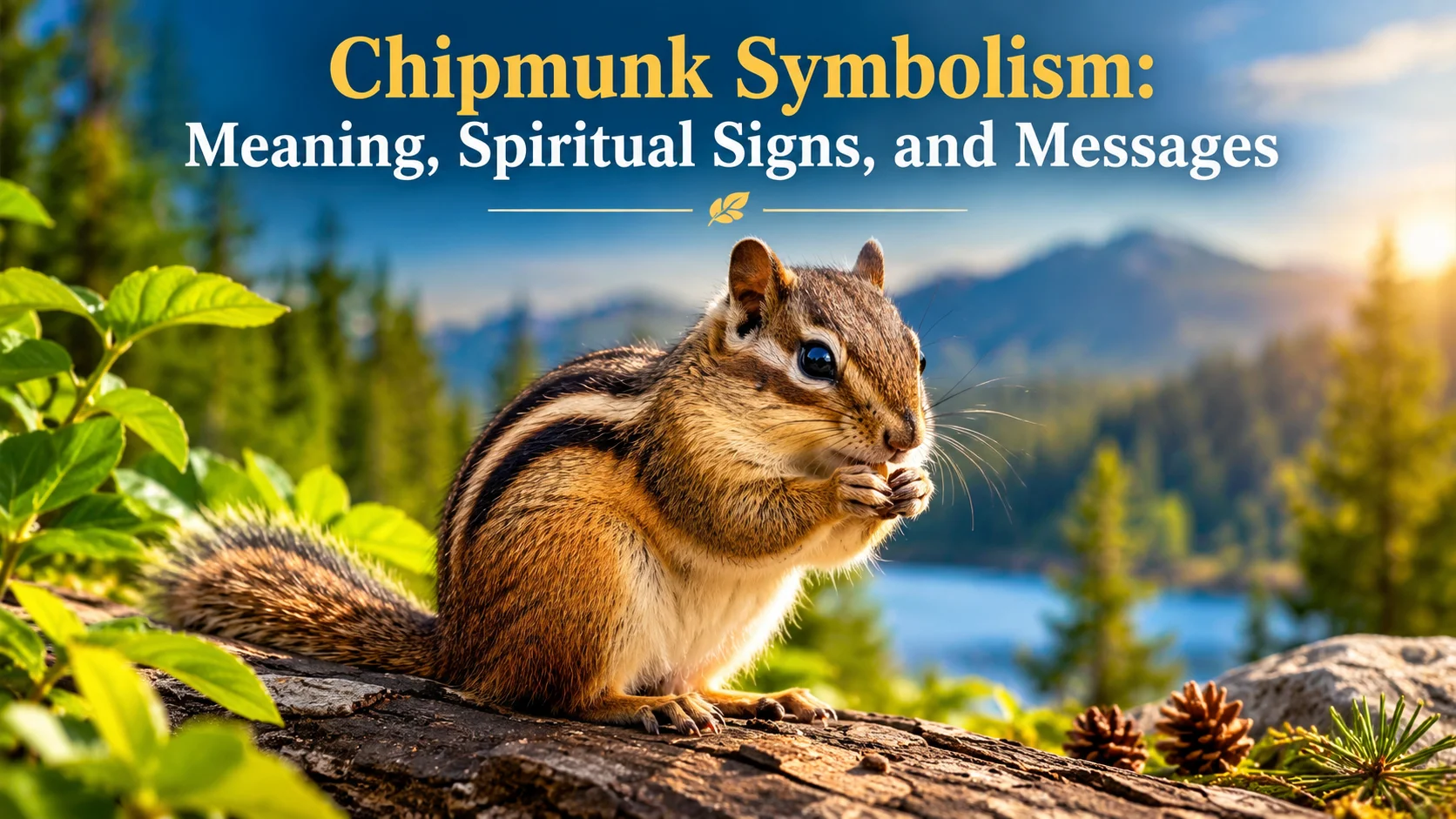
Chipmunk symbolism often represents preparation, curiosity, resourcefulness, and the importance of enjoying life’s small moments. Across the United States, these lively little animals are familiar sights in gardens, parks, forests, and backyards. Their quick movements, striped bodies, and habit of gathering food make them natural symbols of energy and readiness.
However, chipmunks can mean more than being busy or collecting supplies. Their behavior also reminds people to balance hard work with play, protect what matters, and stay curious about the world around them. For some, seeing a chipmunk feels like a cheerful encounter with nature. For others, it carries a spiritual message about patience, abundance, or preparing for a new chapter.
Unlike symbols with a single established meaning, chipmunk symbolism depends on personal experience, cultural background, and the situation in which the animal appears. A chipmunk gathering acorns might inspire thoughts about saving for the future, while one darting across a path might represent spontaneity or a need to slow down and pay attention.
In modern American culture, chipmunks also appear in wildlife photography, children’s stories, seasonal decorations, and nature-inspired designs. Their small size and energetic personality make them easy to associate with determination, innocence, and everyday happiness. Understanding these connections can help you appreciate what this familiar animal represents without assuming every encounter carries a supernatural message.
Quick Answer
Chipmunk symbolism in the United States primarily represents resourcefulness, preparation, curiosity, and playful energy. Spiritually, some people interpret chipmunks as reminders to trust their abilities, appreciate abundance, maintain balance, and prepare thoughtfully for future opportunities.
TL;DR
- Resourcefulness: Chipmunks symbolize making the most of available opportunities.
- Preparation: Their food-gathering habits represent planning and thinking ahead.
- Curiosity: Their alert behavior reflects exploration, learning, and awareness.
- Playfulness: Their energetic movements encourage joy and a lighter outlook.
- Spiritual growth: Some interpret chipmunks as reminders to maintain balance.
- Modern symbolism: Chipmunks appear in nature art, tattoos, stories, and seasonal decor.
What Does a Chipmunk Symbolize?
Chipmunks are small members of the squirrel family, recognized by their striped backs, cheek pouches, and quick movements. Although they may look delicate, their behavior reveals impressive determination and adaptability. These characteristics help explain why people connect chipmunks with several positive qualities.
In the United States, chipmunks are especially familiar to people who spend time outdoors. Their everyday presence makes them accessible symbols of nature, practical wisdom, and simple happiness.
The Three Core Meanings
Resourcefulness is one of the strongest associations. Chipmunks gather food, locate shelter, and adapt to changing conditions. Symbolically, they represent the ability to work with what you have instead of waiting for perfect circumstances.
Preparation is another important meaning. Because many chipmunks collect and store food, people often connect them with planning, saving, and building a foundation for future needs.
Curiosity and playfulness complete this picture. Chipmunks investigate their surroundings, move quickly, and frequently appear active and alert. Their behavior can remind observers to explore new possibilities while leaving room for enjoyment.
What Their Behavior Represents
Different chipmunk behaviors can inspire different symbolic interpretations.
- Gathering seeds suggests preparation, patience, and thoughtful planning.
- Exploring a garden represents curiosity and openness to discovery.
- Darting between hiding places reflects alertness and adaptability.
- Pausing to observe surroundings symbolizes awareness before taking action.
- Climbing over rocks suggests persistence when facing small obstacles.
These meanings are interpretations rather than universal rules. A chipmunk’s natural behavior offers inspiration, but it doesn’t guarantee a particular outcome in your life.
Chipmunk Spiritual Meaning
The spiritual meaning of a chipmunk often centers on abundance, awareness, preparation, and balance. People who view animals as spiritual messengers may see a chipmunk encounter as an invitation to examine their priorities and daily habits.
However, there is no single spiritual interpretation accepted by every religion or tradition. The meaning often depends on personal beliefs and the circumstances surrounding the encounter.
A Reminder to Prepare for the Future
A chipmunk gathering food can represent the value of making thoughtful preparations. You might connect this image with developing a useful skill, organizing your responsibilities, or creating healthier routines.
The message isn’t necessarily to accumulate more possessions. Instead, it may encourage you to recognize which resources genuinely support your future.
A Symbol of Abundance
Chipmunks collect food because they need nourishment and suitable supplies. Symbolically, this behavior can represent recognizing the abundance already present in your life.
For example, you might appreciate supportive relationships, opportunities to learn, or small achievements that deserve recognition. This interpretation emphasizes gratitude rather than promising wealth or unexpected good fortune.
A Call for Balance
Chipmunks spend considerable time gathering food, but their active lives also include exploration and movement. Their symbolism can therefore encourage a healthier relationship between responsibility and enjoyment.
If you’ve been concentrating entirely on work, a chipmunk encounter might inspire you to make room for rest. If you’ve been avoiding important responsibilities, it could remind you to begin preparing for what lies ahead.
These are reflective interpretations, not proof that an animal has been sent with a supernatural instruction.
Chipmunk Symbolism in American Culture
In the United States, chipmunks generally evoke friendly associations with wildlife, outdoor recreation, and familiar natural settings. Their appearance in yards, parks, and wooded areas makes them recognizable even to people who know little about wildlife.
Unlike the bald eagle or American bison, the chipmunk isn’t a major national symbol. Its cultural meaning is more informal, developing through everyday encounters, children’s entertainment, and appreciation for nature.
Backyards, Parks, and Outdoor Life
For many Americans, seeing a chipmunk brings to mind a peaceful afternoon outdoors. The animal may appear near a garden wall, beside a hiking trail, or underneath a bird feeder.
These encounters can connect chipmunks with the comfort of familiar places and the excitement of discovering wildlife close to home.
Their presence also reflects the value many people place on protecting local habitats. Gardens with native plants, natural spaces, and wooded parks can support wildlife that people enjoy observing.
Children’s Stories and Entertainment
Small, expressive animals frequently appear in children’s stories because their behavior is easy to recognize and understand. Chipmunks can represent cleverness, mischief, enthusiasm, and determination.
American popular culture has also used cartoon chipmunks to create memorable characters. Alvin and the Chipmunks, for example, helped establish an energetic, humorous image of chipmunks in entertainment.
However, fictional characters don’t define the symbolism of real animals. Their personalities are creative interpretations that reflect the storytelling needs of their time.
Seasonal Associations
Chipmunks may appear in autumn-themed artwork because their food-gathering behavior fits common images of preparation for colder weather.
Their presence can complement decorations featuring leaves, acorns, woodland animals, and harvest scenes. Nevertheless, chipmunks aren’t universal symbols of Thanksgiving or any particular American holiday.
Their strongest cultural connection remains the familiar charm of small wildlife and the natural world.
Chipmunk Symbolism in Different Cultures
Chipmunks belong to a larger family of squirrel-like animals found across different regions. Consequently, interpretations of chipmunks sometimes overlap with broader squirrel symbolism, although the two animals aren’t interchangeable in every cultural context.
It’s important to distinguish documented cultural traditions from modern spiritual interpretations. Not every meaning commonly shared online has an established historical origin.
Indigenous Traditions in North America
Indigenous nations across North America have distinct languages, histories, spiritual practices, and relationships with local wildlife. Animals may feature in stories, teachings, and artistic traditions, but their meanings vary between communities.
Some stories involving squirrels or other small animals emphasize cleverness, resourcefulness, or relationships between humans and the natural world. However, those themes shouldn’t automatically be attributed to chipmunks across all Indigenous traditions.
A respectful interpretation recognizes that particular teachings belong to the communities that preserve them. Without a reliable, specific source, it’s better not to claim that all Indigenous peoples consider chipmunks sacred messengers or symbols of good fortune.
Broader Animal Symbolism
In many modern nature-based spiritual practices, small animals are interpreted through their observable characteristics.
For example, a food-gathering animal might inspire reflection on preparation, while an alert animal might represent awareness. These interpretations draw on behavior rather than a single shared religious doctrine.
Similarly, some contemporary spiritual writers extend general squirrel symbolism to chipmunks. This can provide a useful personal framework, provided the interpretation is identified as a modern association rather than an ancient universal belief.
What About Ancient Mythology?
Chipmunks don’t have one widely established symbolic role in ancient mythology comparable to animals such as lions, serpents, or eagles.
Although squirrel-like animals appear in different cultural contexts, it would be misleading to invent an ancient chipmunk legend or assign the animal a universal sacred meaning.
For modern readers, the most meaningful approach is to appreciate documented traditions on their own terms while allowing personal reflection to develop separately.
The Psychological Meaning of Seeing a Chipmunk
A chipmunk encounter can create an immediate emotional response. Its small size, quick movements, and alert behavior may inspire amusement, affection, or curiosity.
Psychologically, these feelings can shape the meaning you attach to the experience. The animal may remind you of childhood, time spent outdoors, or a quality you want to develop in your own life.
Why Chipmunks Make People Smile
Small animals often attract attention because their movements and behaviors are easy to observe. A chipmunk stuffing its cheeks or quickly disappearing behind a tree can create a moment of surprise and amusement.
That experience may encourage you to pause and notice your surroundings.
The animal doesn’t need to carry a supernatural message to make the moment meaningful. Sometimes, a brief encounter with wildlife simply offers a welcome break from a busy day.
Chipmunks as Symbols of Personal Qualities
You might associate a chipmunk with a particular strength or challenge in your life.
- Resourcefulness may remind you to solve problems creatively.
- Curiosity may encourage you to learn something unfamiliar.
- Preparation may inspire you to organize unfinished responsibilities.
- Playfulness may help you reconnect with activities you enjoy.
- Alertness may encourage you to observe before making decisions.
These associations can become useful prompts for self-reflection. However, they shouldn’t be treated as psychological diagnoses or evidence of hidden personality traits.
The Meaning of a Personal Memory
Suppose you regularly watched chipmunks with a grandparent when you were young. Seeing one years later might bring back feelings of safety, affection, or nostalgia.
Someone else might associate the same animal with a favorite hiking trip or a peaceful garden.
In both cases, the personal memory contributes more to the encounter’s meaning than any universal symbolic rule.
Chipmunk Spirit Animal and Totem Meanings
In contemporary spiritual language, people sometimes use animal symbolism to describe personal qualities, sources of inspiration, or a sense of connection with nature. Chipmunks may represent adaptability, careful planning, enthusiasm, and a practical approach to challenges.
However, terms such as spirit animal and totem have different meanings across traditions. They shouldn’t be treated as interchangeable labels or applied carelessly to Indigenous spiritual practices.
Chipmunk as a Personal Spiritual Symbol
You might feel connected to chipmunk symbolism because its characteristics reflect qualities you admire.
Perhaps you value being prepared, enjoy discovering new things, or prefer solving problems through small, steady efforts. The chipmunk can serve as a personal reminder of those values.
This interpretation doesn’t require you to believe that a chipmunk has chosen you or possesses special knowledge about your future.
What a Chipmunk Might Encourage You to Consider
If chipmunk symbolism resonates with you, reflect on questions such as:
- Am I preparing for the future without worrying excessively about it?
- Do I make enough time for curiosity and enjoyment?
- Am I using the resources already available to me?
- Could a small, consistent action help me reach an important goal?
These questions turn symbolism into a practical exercise. Instead of searching for a guaranteed prediction, you can use the animal as a reminder to consider your choices.
What Does It Mean When a Chipmunk Crosses Your Path?
When a chipmunk crosses your path, the experience may feel memorable because the animal appears unexpectedly. Some people interpret such encounters spiritually, while others simply enjoy seeing wildlife.
There is no reliable evidence that a chipmunk crossing your path predicts a specific event. Still, the moment can become a meaningful personal symbol.
A Symbol of New Possibilities
A chipmunk appearing along a walking path might inspire thoughts about curiosity and exploration. You could take the encounter as a reminder to remain open to experiences you haven’t considered.
This doesn’t mean you should make major decisions based on the animal’s appearance. Instead, let the moment encourage thoughtful curiosity about your existing plans.
A Reminder to Stay Alert
Chipmunks often pause, observe their surroundings, and quickly retreat when they sense danger. Their behavior can inspire a practical lesson about paying attention.
Perhaps you’ve been overlooking an important detail or rushing through everyday tasks. In that situation, the chipmunk can become a personal reminder to slow down and observe.
When the Encounter Feels Unusually Meaningful
Sometimes, an ordinary event feels significant because it happens during a period of change.
If you’re starting a new job, working through a difficult decision, or adjusting to a new routine, a chipmunk encounter might connect with your desire for confidence and preparation.
That personal connection can be meaningful without proving that the encounter was arranged by a supernatural force.
Chipmunk Symbolism in Dreams
Dreams about chipmunks can be interpreted in different ways, depending on the dreamer’s emotions, memories, and circumstances. There is no scientifically established dictionary that assigns one fixed meaning to every animal dream.
Nevertheless, chipmunk behavior provides several useful themes for personal reflection.
Dreaming About a Chipmunk Gathering Food
A chipmunk collecting food might bring to mind preparation, saving, or concern about having enough resources.
Consider whether you’re planning for a major change or feeling pressure to become more organized. The dream may reflect those concerns rather than predict future abundance.
Dreaming About a Fast-Moving Chipmunk
A chipmunk that keeps running or disappearing could remind you of a busy schedule or competing responsibilities.
You might ask whether you’re moving too quickly to appreciate your surroundings. Alternatively, the dream could simply reflect a recent encounter with a real chipmunk.
Dreaming About Feeding a Chipmunk
Feeding a chipmunk may connect with generosity, care, or your relationship with the natural world.
Your feelings during the dream matter. If you feel calm, the scene might evoke comfort. If you feel anxious, it could reflect concerns about responsibility or boundaries.
Ultimately, dream symbolism works best as a way to explore your thoughts rather than as a reliable method of predicting events.
Read More: Anteater Symbolism: Patience, Protection, and Focus
Chipmunk Tattoo Meaning and Modern Uses
Chipmunk imagery can communicate personality, affection for wildlife, or an appreciation for small but meaningful details. Although chipmunk tattoos are less common than designs featuring wolves, bears, or eagles, they can offer a distinctive alternative for nature lovers.
Their symbolism depends on the design, accompanying elements, and the wearer’s personal story.
Chipmunk Tattoo Symbolism
A chipmunk tattoo might represent several qualities.
- Preparation: A reminder to build a strong foundation for the future.
- Curiosity: An expression of enthusiasm for learning and exploration.
- Playfulness: A celebration of humor and a youthful outlook.
- Adaptability: A symbol of responding creatively to life’s changes.
- Nature connection: An expression of affection for wildlife and outdoor spaces.
A tattoo featuring a chipmunk holding an acorn might emphasize preparation. A design showing a chipmunk among wildflowers could highlight a love of nature.
Home Decor and Personal Style
Chipmunk illustrations can suit woodland-themed interiors, children’s rooms, garden decorations, and nature-inspired artwork.
In autumn, their appearance alongside acorns and leaves can reinforce seasonal themes of gathering and preparation.
However, a decorative image doesn’t automatically communicate a spiritual belief. For many people, a chipmunk is simply an appealing animal that makes a room or garden feel more connected to nature.
Social Media and Digital Culture
On social media, chipmunk photographs and videos often emphasize their energetic movements and expressive behavior.
A person might share a chipmunk gathering seeds to celebrate determination or post a funny clip to express a playful mood. Others use chipmunk imagery to represent their love of wildlife.
These meanings are flexible and informal. Unlike established national emblems, chipmunk imagery doesn’t have one fixed interpretation across online communities.
Chipmunk Symbolism by Color, Behavior, and Setting
The details of a chipmunk encounter can shape the interpretation you give it. Color, movement, and surroundings provide different points for reflection, although none has a universally accepted spiritual meaning.
For American readers, these details can connect ordinary wildlife observations with personal experiences and familiar outdoor settings.
What Different Chipmunk Colors Mean
Most commonly encountered North American chipmunks have brownish or reddish fur, contrasting light and dark stripes, and pale undersides. These natural features help distinguish them from many other small mammals.
Symbolic interpretations of color are personal rather than scientifically established.
| Appearance | Possible Symbolic Association | Important Context |
| Brown or reddish fur | Grounding, warmth, and connection with nature | These colors occur naturally in many chipmunks. |
| Dark and light stripes | Contrast, awareness, and balance | The stripes are useful identification features. |
| Pale underside | Gentleness, simplicity, and openness | The association is interpretive, not universal. |
| Unusually light-colored fur | Individuality or uniqueness | Unusual coloration doesn’t establish a spiritual meaning. |
These interpretations can inspire reflection, but a chipmunk’s appearance shouldn’t be treated as a supernatural code.
What Different Behaviors Might Suggest
A chipmunk gathering food can symbolize preparation, while one exploring unfamiliar surroundings may suggest curiosity. A chipmunk resting quietly might remind you to value pauses between periods of activity.
However, real animals behave according to their needs and surroundings. Their actions don’t necessarily communicate messages intended for human observers.
Why the Setting Matters
Seeing a chipmunk in a forest may remind you of wilderness and exploration. Encountering one beside your home might evoke familiarity, comfort, or the pleasure of sharing space with wildlife.
Likewise, a chipmunk appearing during a stressful day may feel especially meaningful because you’re looking for reassurance or perspective.
The setting helps explain your emotional response, but it doesn’t establish a universal interpretation.
Chipmunk Symbolism Compared With Squirrel Symbolism
Chipmunks and squirrels belong to the same broader animal family, and their symbolic meanings often overlap. Both are associated with gathering food, agility, adaptability, and preparation.
Nevertheless, their different appearances and behaviors can inspire slightly different interpretations.
Shared Symbolic Meanings
Both animals collect and store food, making them natural examples of preparation and resourcefulness. Their quick movements can also suggest alertness and adaptability.
In modern animal symbolism, either creature may represent making practical use of available resources.
What Makes Chipmunk Symbolism Different?
Chipmunks are often associated with smaller woodland spaces, ground-level exploration, and cheek pouches used to carry food. Their striped appearance also makes them visually distinctive.
Squirrels, particularly familiar tree squirrels in American neighborhoods, are often associated with climbing, jumping between branches, and navigating urban green spaces.
These differences can shape the imagery people choose, although they don’t establish strict symbolic boundaries.
A Simple Comparison
| Symbol | Chipmunk Associations | Squirrel Associations |
| Preparation | Gathering and carrying supplies | Collecting and storing food |
| Curiosity | Exploring spaces near the ground | Investigating trees and surrounding structures |
| Resourcefulness | Using small spaces and available shelter | Adapting to varied habitats |
| Playfulness | Quick movements and cheek-pouch behavior | Climbing, jumping, and chasing |
These are common interpretive associations, not rules shared by every culture or spiritual tradition.
Misunderstandings About Chipmunk Spiritual Symbolism
Chipmunks are generally viewed positively, but online spiritual content can sometimes present personal interpretations as established facts. Understanding the difference helps readers appreciate symbolism without accepting unsupported claims.
A symbol can be meaningful even when its interpretation isn’t universal or scientifically proven.
Does Seeing a Chipmunk Guarantee Good Luck?
No. Some people associate chipmunks with abundance, opportunity, or positive change, but there is no reliable evidence that seeing one guarantees good luck.
You can still enjoy the encounter and use it as a reminder to recognize opportunities. The distinction is between personal inspiration and a prediction about the future.
Does Every Encounter Carry a Spiritual Message?
Not necessarily. Chipmunks enter yards, cross paths, and gather food because these actions serve their ordinary needs.
If you interpret an encounter spiritually, consider it a personal reflection rather than proof that the animal has appeared for a specific supernatural purpose.
Are Chipmunks Always Symbols of Hard Work?
Preparation is a common association, but chipmunk symbolism can also emphasize curiosity, playfulness, and balance.
Interpreting the animal only as a symbol of productivity overlooks the joy people often experience when watching wildlife. A broader interpretation recognizes both practical effort and enjoyment.
Why Accuracy Matters
Responsible symbolism distinguishes documented traditions, modern interpretations, and individual beliefs.
This is particularly important when discussing Indigenous spirituality or other cultural traditions. Avoid presenting unsupported claims as universal teachings, and respect the communities that preserve their own histories and practices.
How Chipmunk Symbolism Has Changed Over Time
The meaning people assign to chipmunks has developed alongside changing relationships with wildlife. Their natural behaviors provide a consistent starting point, but modern stories, photography, and spiritual writing have added new interpretations.
Rather than following one universal symbolic history, chipmunk symbolism reflects several overlapping influences.
From Wildlife Observation to Personal Reflection
People have long observed animals to understand their habits and surroundings. The chipmunk’s food-gathering behavior offers an obvious example of preparation, while its agility suggests adaptability.
These observations can support practical lessons without requiring a formal spiritual system.
Over time, people have also used animal behavior as a starting point for personal reflection. A familiar creature can become a reminder of qualities someone wishes to develop.
The Influence of Modern Entertainment
Cartoons, children’s books, wildlife programs, and photographs have helped shape contemporary images of chipmunks.
Entertainment often emphasizes humor, energy, and cleverness. Meanwhile, wildlife photography can encourage appreciation for their natural behavior and habitats.
These influences coexist, meaning a chipmunk may represent a playful fictional character to one person and a real connection with nature to another.
Contemporary Spiritual Interpretations
Modern spiritual discussions sometimes connect chipmunks with abundance, intuition, balance, or personal growth.
Such interpretations may be useful to people who enjoy reflecting on animal symbolism. However, many are contemporary beliefs rather than meanings supported by a continuous historical tradition.
Recognizing this distinction allows chipmunk symbolism to remain meaningful without inventing a false history.
FAQs:
What Is the Main Spiritual Meaning of a Chipmunk?
Chipmunks are commonly associated with preparation, resourcefulness, curiosity, and balance. In modern spiritual interpretations, they can remind people to plan thoughtfully while enjoying the present.
Is Seeing a Chipmunk Considered Good Luck?
Some people interpret chipmunk encounters as positive signs connected with opportunity or abundance. However, no established evidence shows that seeing a chipmunk predicts good fortune.
What Does a Chipmunk Symbolize in Dreams?
A chipmunk in a dream may bring to mind preparation, activity, curiosity, or concerns about resources. The most useful interpretation depends on your feelings, memories, and current circumstances.
What Does It Mean When a Chipmunk Visits Your Yard?
A chipmunk visiting your yard is usually searching for food, shelter, or a safe route through its environment. Symbolically, you might associate the encounter with nature, resourcefulness, or everyday happiness.
What Does a Chipmunk Tattoo Represent?
A chipmunk tattoo can represent curiosity, preparation, adaptability, playfulness, or affection for wildlife. Its specific meaning depends on the design and the personal experiences of the person wearing it.
Are Chipmunks Symbols of Abundance?
Chipmunks are sometimes associated with abundance because they gather and store food. This interpretation can encourage gratitude and thoughtful preparation, but it doesn’t guarantee wealth or material success.
Conclusion:
Chipmunk symbolism offers a cheerful reminder of resourcefulness, preparation, curiosity, and the value of balancing responsibility with enjoyment. In the United States, chipmunks are familiar wildlife whose energetic behavior inspires connections with nature, childhood memories, and everyday happiness. Their spiritual meanings can add another layer of personal reflection, provided they’re understood as interpretations rather than universal truths.
Whether you encounter a chipmunk in your backyard, dream about one, or choose it for a tattoo, consider what the animal represents to you. Perhaps it reminds you to prepare for tomorrow, explore something new, or appreciate a small moment of joy today. Sometimes, the most meaningful lesson comes from paying closer attention to the ordinary world around you.

1 thought on “Chipmunk Symbolism: Meaning, Spiritual Signs, and Messages”