
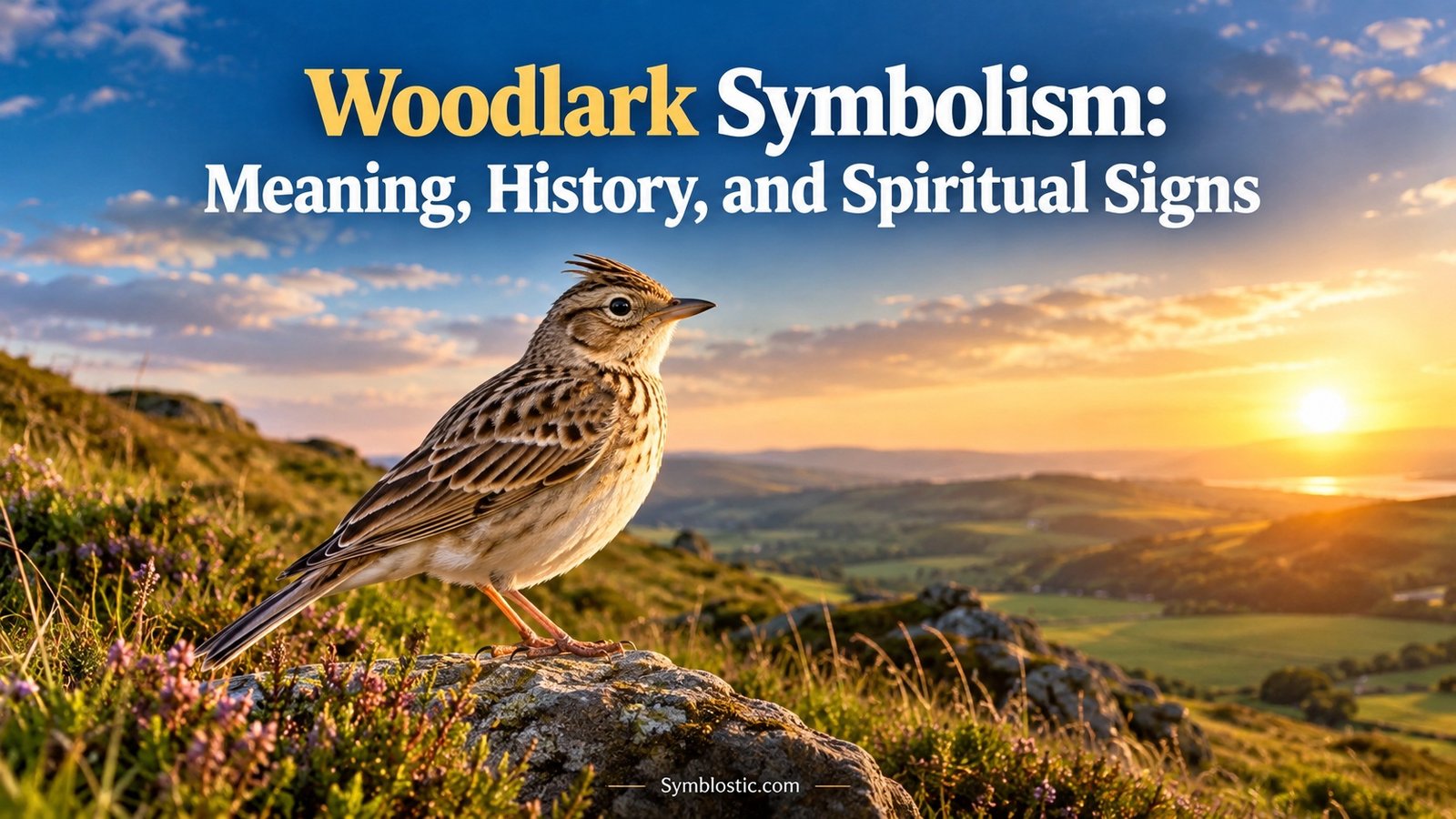
A Woodlark Symbolism search usually points to a small songbird with a surprisingly powerful cultural image. The woodlark, Lullula arborea, is known for its gentle appearance, distinctive song, and close connection with wooded heath, open clearings, and countryside.
For American readers, there is an important detail to understand first. The woodlark isn’t a native North American bird, so its symbolism in the United States comes mainly through literature, nature writing, European cultural traditions, bird imagery, and modern spiritual interpretation.
Still, the bird’s qualities translate easily across cultures. Its song can suggest hope, beauty, self-expression, and the ability to bring light into quiet or difficult moments.
Quick Answer
Woodlark Symbolism is commonly associated with joy, renewal, intuition, freedom, and finding your voice. In the United States, the meaning is mostly literary and symbolic rather than part of a major national tradition, while broader spiritual interpretations often connect the woodlark with moving beyond hardship and trusting your inner awareness.
TL;DR
- The woodlark symbolizes joy, renewal, freedom, and expressive communication.
- Its beautiful song gives it strong associations with hope and inspiration.
- The bird is European rather than native to the United States.
- Literature helped preserve the woodlark as a symbol of beauty and song.
- Modern spiritual readings often connect it with intuition and recovery.
- Today, it can represent independence, creativity, nature, and personal growth.
What Does the Woodlark Represent?
The woodlark is a small, brown, streaked bird with a short crest and a memorable song. It often lives around sandy heathland, open woodland, clearings, and old farmland.
Its physical appearance is modest. However, its voice is much more noticeable than its size suggests. That contrast helps explain why the bird became a useful symbol of quiet strength.
The Main Symbolic Meanings
People commonly connect the woodlark with:
• Joy after a difficult period
• Creative expression and finding your voice
• Freedom and independence
• Renewal and fresh beginnings
• Intuition and inner awareness
• Beauty hidden in ordinary places
The meanings aren’t fixed rules. Symbolism changes depending on the culture, personal experience, and context in which someone encounters the bird.
Woodlark Symbolism in the United States
The woodlark has a different cultural position in America than birds such as the bald eagle, robin, cardinal, or meadowlark.
Because the woodlark isn’t a native American species, it doesn’t carry a major official role in U.S. national identity. Instead, American audiences usually encounter it through poetry, books, wildlife imagery, European folklore, or modern spiritual content.
A Symbol of the Unfamiliar
That distance can actually make the woodlark more interesting.
For an American reader, the bird can represent something discovered rather than something familiar. It may symbolize curiosity, travel, learning, or appreciation for a natural world beyond one’s immediate surroundings.
Why Its Song Matters
Birdsong has a long place in American culture. The Library of Congress has documented how birds and their calls have influenced North American folk traditions, storytelling, hunting practices, and cultural memory.
The woodlark fits naturally into that broader idea. Its song can be viewed as a reminder that communication doesn’t always require human language.
The Historical Roots of Woodlark Symbolism
The woodlark’s symbolic history is strongly connected to European nature writing and poetry. Unlike some animals with clearly documented ancient religious meanings, the woodlark doesn’t have one universally accepted ancient symbolic system.
Instead, its reputation grew through its behavior, habitat, and song.
The Ancient Lark Connection
The woodlark belongs to the lark family, and larks have long appeared in European literature and folklore.
Larks are often associated with the sky, morning, singing, and movement between earth and heaven. However, it’s important not to automatically assign every lark tradition specifically to the woodlark.
The two ideas overlap, but they aren’t identical.
Medieval and Later Associations
As European countryside traditions developed, birdsong became connected with seasonal change and natural beauty.
The woodlark’s song made it especially suitable for poetry. Its ability to sing while remaining difficult to see also added a sense of mystery.
That combination created an enduring symbolic pattern:
You may not see the source immediately, but you can still recognize its presence through its voice.
Woodlark Symbolism in Poetry and Literature
Literature is one of the strongest historical sources for woodlark symbolism.
Two especially important poets are Robert Burns and Gerard Manley Hopkins. Both wrote about the woodlark and helped turn its song into a subject of emotional and artistic reflection.
Gerard Manley Hopkins and the Woodlark
Hopkins’ poem “The Woodlark” focuses heavily on the bird’s elusive song.
His approach is unusual because he attempts to capture the sound itself through imaginative language. The bird therefore becomes more than a physical creature.
It becomes an experience.
The poem encourages readers to think about how beauty can be heard even when its source remains difficult to locate.
Robert Burns and Emotional Beauty
Robert Burns also wrote “To the Woodlark.”
His treatment of the bird carries a more emotional and reflective quality. The woodlark becomes connected with beauty, song, nature, and a sense of longing.
Together, these literary traditions helped create the symbolic image that survives today.
Spiritual Meaning of the Woodlark
Modern spiritual interpretations often treat the woodlark as a positive sign.
One popular interpretation connects the bird with the end of a difficult period. In that reading, the woodlark appears as a reminder that hardship doesn’t last forever.
A Sign of Renewal
The woodlark’s symbolism can represent a transition from darkness into greater emotional clarity.
For someone going through change, its image may suggest:
• A difficult chapter is gradually closing.
• New opportunities may be developing quietly.
• Patience can eventually produce meaningful results.
• Joy can return after emotional exhaustion.
• A new beginning doesn’t need to be dramatic.
This is a spiritual interpretation, not a proven prediction about future events.
A Symbol of Inner Guidance
The woodlark is also associated with intuition in modern symbolic writing.
Its quiet appearance and strong voice create an interesting contrast. Symbolically, that can suggest trusting what you sense even when external evidence seems limited.
In practical terms, the message is simple: listen carefully before deciding what something means.
What Does the Woodlark Mean in Dreams?
Dream symbolism is personal, so there isn’t one universal interpretation of seeing a woodlark in a dream.
However, several themes fit the bird’s traditional and modern symbolism.
Common Dream Interpretations
A woodlark dream may be interpreted as:
• A desire for emotional freedom
• Hope after disappointment
• A need to express something honestly
• A quiet opportunity you haven’t noticed
• A connection with nature and simplicity
• A period of personal renewal
The details matter. A singing woodlark may feel different from an injured, trapped, silent, or flying bird.
For example, hearing the bird without seeing it could symbolize an idea or feeling that you sense but haven’t fully understood.
Emotional and Psychological Meaning
The woodlark can have a calming psychological association because its symbolism centers on sound, nature, and quiet observation.
It doesn’t represent power through physical dominance. Instead, its symbolic strength comes from expression.
Finding Your Voice
A small bird producing a beautiful song can become a metaphor for self-expression.
For someone who feels overlooked, the woodlark may represent the idea that being small or quiet doesn’t make your contribution unimportant.
Your voice can still matter.
Freedom Without Isolation
The woodlark can also represent independence.
However, independence doesn’t necessarily mean avoiding everyone else. Instead, it can mean knowing your own direction while remaining connected to the world around you.
This makes the woodlark useful as a symbol of balanced independence.
Woodlark Symbolism and Nature
The woodlark’s real habitat adds another layer to its symbolism.
It isn’t simply a “forest bird.” It is associated with open woodland, heathland, clearings, and other transitional environments.
That matters symbolically because transitional landscapes sit between different worlds.
The Meaning of In-Between Spaces
A clearing can represent a place between forest and open country.
Symbolically, that can suggest:
• Transition from one stage of life to another
• Space for reflection and decision-making
• Freedom without complete separation
• Growth after leaving familiar surroundings
• Balance between solitude and connection
The symbolism becomes especially meaningful for people experiencing major life changes.
Read More: Cormorant Symbolism: Meaning, History, and Spiritual Signs
Woodlark Symbolism in Modern American Culture
Although the woodlark isn’t a major American cultural symbol, its broader themes fit several modern interests.
Nature photography, mindfulness, birdwatching, environmental art, and spiritual symbolism all create space for the bird’s image.
Tattoos and Personal Identity
A woodlark tattoo may represent a personal journey rather than a specific cultural tradition.
Someone might choose it to express:
• Recovery after a difficult experience
• Love of birds and natural landscapes
• Independence and personal freedom
• Creativity and artistic expression
• A connection with poetry
• A reminder to keep moving forward
Because the woodlark isn’t widely recognized in America, a tattoo can also have a more private meaning.
Home Decor and Artwork
Woodland bird artwork can create feelings of peace, simplicity, and natural beauty.
A woodlark image may work especially well in spaces designed around natural materials, countryside themes, botanical artwork, or quiet colors.
The symbolism is generally gentle rather than dramatic.
Woodlark Symbolism in Cross-Cultural and Spiritual Traditions
The woodlark itself doesn’t have one worldwide spiritual meaning.
Instead, its symbolism overlaps with broader lark traditions found in European literature and spiritual thought. Those traditions often connect larks with song, rising movement, morning, and spiritual aspiration.
European Symbolic Themes
European poetry frequently uses birdsong to express emotions that are difficult to state directly.
The lark can therefore represent:
• Hope
• Morning
• Spiritual awakening
• Joy
• Inspiration
• The movement from earth toward sky
However, these themes shouldn’t be treated as identical across every European culture.
A Respectful Approach to Spiritual Symbolism
Modern websites sometimes describe birds as “spirit animals” or “totems.”
These terms can have different meanings across traditions. They should not be treated as interchangeable with the specific ceremonial or religious practices of Indigenous peoples.
For general readers, it’s safer to understand modern woodlark symbolism as a personal spiritual interpretation unless a specific cultural tradition is clearly identified.
Woodlark Meaning in Different Contexts
The same bird can suggest different things depending on where and how it appears.
| Context | Meaning in the USA | Common Association | Symbolic Emphasis |
| Poetry | Beauty and emotional expression | Song and nature | Inspiration |
| Spiritual reflection | Hope and renewal | Moving beyond hardship | Inner growth |
| Tattoo | Personal transformation | Freedom and identity | Individual meaning |
| Nature artwork | Peace and simplicity | Woodland landscapes | Connection with nature |
| Dream symbolism | Change or self-expression | Hearing or seeing a bird | Personal interpretation |
This is why symbolism shouldn’t be reduced to one fixed definition.
A person choosing a woodlark tattoo may mean something completely different from a poet describing its song.
Misunderstandings and Misuse of Woodlark Symbolism
One of the biggest problems with bird symbolism is mixing different species together.
A woodlark isn’t the same as a meadowlark, skylark, nightingale, or woodpecker.
Woodlark vs. Meadowlark
This distinction is particularly important for American readers.
Meadowlarks are North American birds, while the woodlark is a Eurasian species. Their names sound similar, but they belong to different groups.
As a result, symbolism associated with American meadowlarks shouldn’t automatically be presented as woodlark symbolism.
Woodlark vs. Skylark
The woodlark is also different from the Eurasian skylark.
Both belong to the lark family and share some broad cultural themes. However, their songs, appearances, habitats, and cultural histories differ.
Careful symbolism keeps those distinctions clear.
How Woodlark Symbolism Has Changed Over Time
The woodlark’s meaning has gradually moved from direct observation toward literary and personal symbolism.
Historically, people encountered the bird as part of a living rural landscape. Poets then transformed its song into an emotional and artistic subject.
Today, many people encounter the bird through photographs, poems, digital articles, artwork, or symbolic interpretations.
From Nature to Personal Meaning
The shift can be summarized simply:
Bird → song → poetry → emotion → personal symbolism
This doesn’t mean older meanings disappeared.
Instead, modern interpretations build new layers around the bird’s existing associations with song and beauty.
Conservation Adds Another Layer
Modern interest in the woodlark also connects with habitat conservation.
In Britain, woodlark populations and distribution have been monitored closely because suitable heathland and open habitats can change significantly over time. This gives the bird another modern meaning: the value of protecting fragile natural spaces.
Why the Woodlark Can Feel Symbolically Powerful
The woodlark’s symbolism works because it combines several contrasting qualities.
It is small but expressive. It can be difficult to notice but easy to remember once heard.
Its habitat also sits between woodland and open land. Symbolically, these contrasts create a strong image of quiet confidence.
The Deeper Message
The woodlark can remind you that:
• Visibility isn’t the only form of influence.
• Quiet people can have powerful voices.
• Change can happen gradually.
• Beauty doesn’t always demand attention.
• Difficult seasons can eventually give way to renewal.
That makes the bird especially appealing as a symbol of personal growth.
FAQs:
What does a woodlark symbolize?
A woodlark commonly symbolizes joy, renewal, intuition, freedom, and self-expression. Modern spiritual interpretations often connect its song with hope after difficult experiences.
Is the woodlark native to the United States?
No. The woodlark, Lullula arborea, is primarily associated with Europe and parts of western Asia. American audiences generally encounter it through literature, symbolism, artwork, and bird-related cultural material.
What does seeing a woodlark mean spiritually?
Some modern spiritual interpretations view a woodlark sighting as a reminder of renewal, intuition, or emotional recovery. However, there is no universally accepted spiritual rule that says seeing one predicts a specific event.
What does a woodlark represent in dreams?
A woodlark in a dream may represent freedom, self-expression, hope, or a transition in life. The emotional feeling of the dream usually matters more than a fixed dictionary definition.
What does a woodlark tattoo mean?
A woodlark tattoo can represent independence, creativity, renewal, or finding your voice. Its meaning is usually personal rather than tied to a single established American tradition.
Is woodlark symbolism the same as meadowlark symbolism?
No. The birds are different species and have different geographic and cultural histories. Some themes overlap because both are songbirds, but American meadowlark traditions shouldn’t automatically be assigned to the woodlark.
Why is the woodlark associated with singing?
The woodlark is known for its distinctive, melodic song. Its voice has inspired European poets, which helped turn the bird’s song into a lasting symbol of beauty and emotional expression.
Conclusion:
Woodlark Symbolism centers on a simple but powerful idea: something small and quiet can still have a meaningful voice. Its strongest associations include renewal, freedom, intuition, creativity, beauty, and hope after hardship.
For Americans, the woodlark isn’t a major national symbol like the bald eagle. Instead, it offers a more literary and reflective image, shaped by European poetry and modern interpretations of nature.

1 thought on “Woodlark Symbolism: Meaning, History, and Spiritual Signs”