
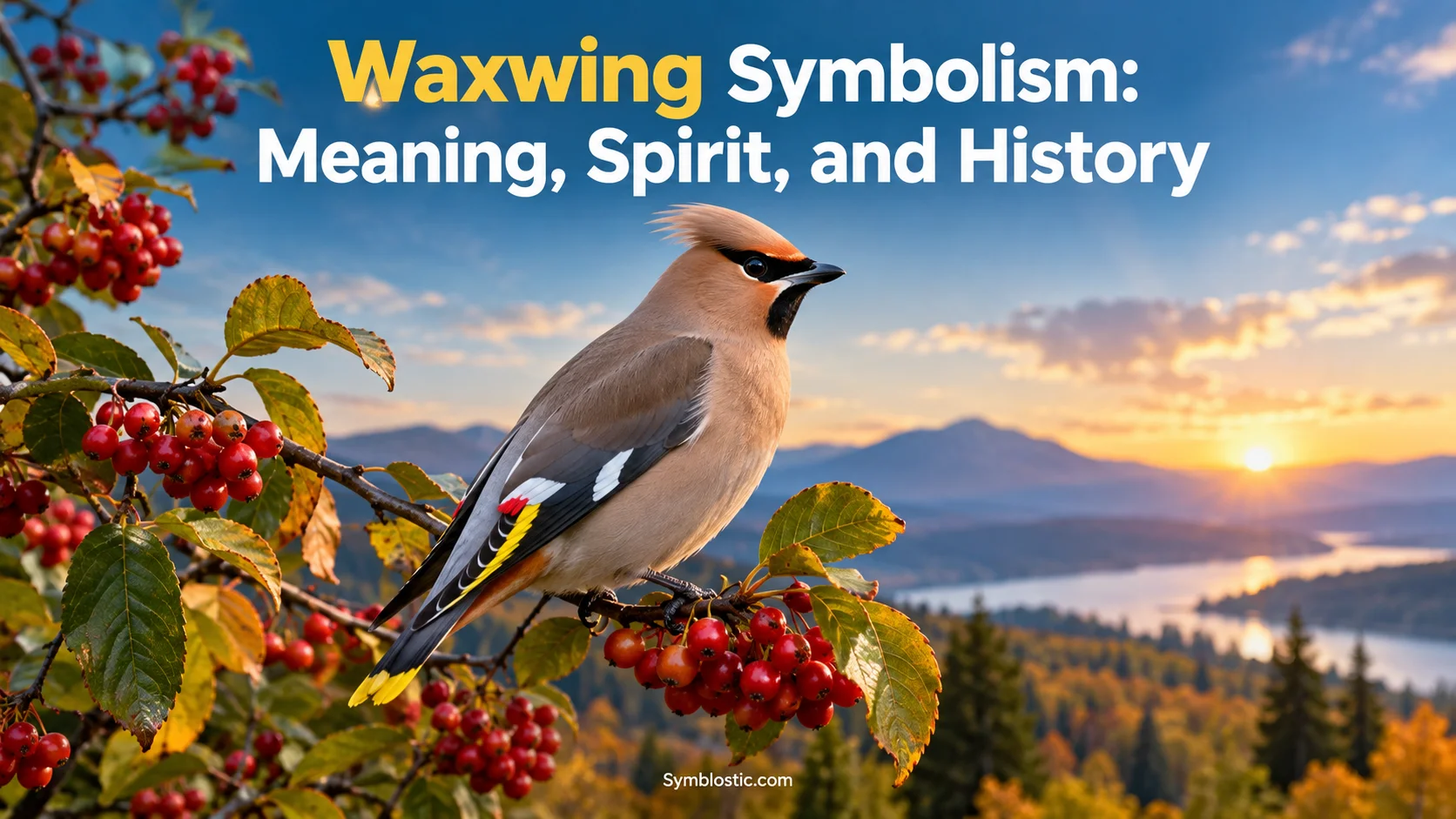
The Waxwing Symbolism connects one of North America’s most distinctive birds with ideas of community, sharing, beauty, abundance, and graceful adaptation. The bird’s silky feathers, black mask, yellow tail, and small red wing tips make it visually memorable.
For many Americans, the waxwing is not an ancient religious symbol with one fixed meaning. Instead, its symbolism comes largely from watching how the bird lives. Waxwings gather in groups, seek fruit together, share food, and move with the changing seasons.
Today, that makes the bird especially meaningful to people interested in nature, family, friendship, personal growth, and spiritual reflection. However, symbolic interpretations should be separated from established biological facts and from claims about specific cultural traditions.
Quick Answer
Waxwing symbolism commonly represents community, generosity, abundance, beauty, cooperation, and adaptability in the United States. Spiritually, some modern interpretations view the bird as a reminder to share what you have while remaining open to change and connection.
TL;DR
- Waxwings often symbolize community and close social bonds.
- Their fruit-based diet inspires associations with abundance.
- Sharing food supports modern ideas of generosity and reciprocity.
- Their elegant appearance represents beauty and graceful individuality.
- Seasonal movement can symbolize flexibility and adaptation.
- Modern meanings are interpretations, not universal spiritual rules.
What Does a Waxwing Symbolize?
The waxwing has several symbolic meanings today, especially when people connect its behavior with human values. These meanings are strongest when they arise from observable features of the bird.
In the United States, the waxwing is often understood as a nature-based symbol rather than a formal religious emblem. Its social behavior makes community especially important.
Core Waxwing Meanings
Common modern associations include:
• Community through large, closely connected flocks
• Generosity through food-sharing behavior
• Abundance through its strong connection with fruit
• Beauty through its unusual and refined appearance
• Adaptability through seasonal movements and changing diets
• Connection through social feeding and pair bonding
These meanings can overlap. For example, a flock feeding on a fruit tree can suggest both abundance and community.
At the same time, the symbolism doesn’t mean every waxwing sighting carries a supernatural message. Sometimes a beautiful bird is simply a beautiful bird.
Waxwing Appearance and Symbolic Meaning
The waxwing’s appearance gives it much of its symbolic appeal. Unlike some birds with dramatic colors, it uses subtle shades and small details.
The Cedar Waxwing has silky brown and gray feathers, a pointed crest, a black facial mask, a yellow tail tip, and distinctive red wax-like tips on some wing feathers. (All About Birds)
The Black Mask
The dark mask can inspire symbolic ideas about mystery, privacy, and hidden identity.
However, these are modern visual interpretations. The mask itself evolved for biological reasons and isn’t evidence of an ancient spiritual meaning.
The Red Wing Tips
The red tips are especially interesting because they resemble tiny drops of wax. Their exact biological function isn’t fully established, although they may play a role in attracting mates. (All About Birds)
Symbolically, people may connect this unusual feature with individuality, maturity, attraction, or distinctive personal qualities.
The Yellow Tail
The bright yellow tail tip adds warmth to the bird’s otherwise muted colors. As a symbol, yellow can suggest optimism, vitality, sunlight, and joy.
Together, these details create an image of quiet elegance rather than loud display.
Waxwing Symbolism in American Culture
In the United States, waxwing symbolism is closely tied to everyday encounters with nature. Cedar Waxwings live across many kinds of American landscapes, including forests, farms, orchards, parks, and suburban areas.
Because they often appear around fruiting trees, Americans may encounter them in places that don’t feel particularly wild. That makes the bird an accessible symbol of nature within ordinary life.
A Bird of Community
Waxwings are highly social birds. They commonly form flocks and may gather in large numbers around fruiting trees. (All About Birds)
That behavior naturally supports American interpretations involving:
• Family bonds
• Friendship
• Cooperation
• Belonging
• Shared resources
• Social harmony
For someone going through a major life transition, a flock of waxwings can therefore become a personal reminder that independence doesn’t always mean isolation.
A Symbol of American Nature
The Cedar Waxwing is a North American bird, so its imagery often fits American nature photography, bird art, gardens, conservation themes, and outdoor culture.
It doesn’t carry the same national symbolism as the bald eagle. Still, its presence in ordinary neighborhoods makes it a familiar part of America’s living landscape.
Waxwing Symbolism and Abundance
Abundance is one of the easiest meanings to understand when looking at waxwing behavior.
Cedar Waxwings rely heavily on fruit. They eat berries from many trees and shrubs, including serviceberry, dogwood, mulberry, juniper, hawthorn, and other fruiting plants. (All About Birds)
Why Fruit Matters Symbolically
A fruit-filled tree creates a powerful image of plenty. When many waxwings gather around that tree, the symbolism becomes even stronger.
This can represent:
• Having enough to share
• Seasonal prosperity
• Nourishment
• Gratitude
• Receiving life’s gifts
• Enjoying simple pleasures
However, abundance doesn’t have to mean money. It can also mean having supportive relationships, meaningful experiences, time, food, creativity, or emotional support.
For that reason, waxwing imagery can work especially well in homes where people value hospitality and connection.
Waxwing Symbolism and Generosity
Generosity is another major modern interpretation.
Waxwings sometimes pass food between birds during social and courtship behavior. Males may offer fruit, insects, or flower petals to females, creating an especially memorable image of giving and receiving. (All About Birds)
Giving and Receiving
This behavior can inspire a simple human lesson: generosity works in both directions.
Giving can express affection. Receiving graciously can also strengthen relationships.
Therefore, a waxwing can symbolize:
• Sharing without unnecessary competition
• Mutual care
• Reciprocity
• Thoughtful giving
• Emotional generosity
• Cooperation within relationships
The important distinction is that birds aren’t consciously teaching a human moral lesson. People interpret their behavior symbolically.
That distinction keeps the symbolism meaningful without pretending that science proves a spiritual message.
Waxwing Spiritual Meaning
Modern spiritual interpretations often describe the waxwing as a gentle symbol of connection, generosity, harmony, and abundance.
These ideas are especially popular among people who use animals as personal symbols during reflection, meditation, journaling, or nature-based spirituality.
Spiritual Themes
A waxwing sighting may personally inspire thoughts about:
• Sharing your gifts with others
• Accepting support instead of doing everything alone
• Appreciating beauty in ordinary moments
• Remaining flexible during change
• Building stronger relationships
• Recognizing abundance beyond material wealth
However, there is no single spiritual meaning that everyone must accept.
A person may see a waxwing as a meaningful sign, while another person may simply appreciate its natural behavior. Both responses can coexist respectfully.
Waxwing Symbolism Across Cultures
Birds have symbolic roles in many cultures because they move between earth and sky. Yet the specific meaning of the waxwing should not be confused with broader bird symbolism.
There is no well-established universal ancient tradition that assigns one fixed spiritual meaning to all waxwings.
Indigenous Traditions
Claims about a universal “Native American waxwing meaning” should be treated carefully.
Native American nations have distinct histories, languages, beliefs, and relationships with animals. A story associated with one nation cannot automatically represent every Indigenous community.
Some modern sources attribute ideas such as generosity or spiritual messages to Native traditions. Without a clearly identified nation and reliable cultural source, however, such claims should not be presented as universal facts.
Broader Bird Symbolism
Across many cultures, birds can represent freedom, communication, movement, or connection between different realms.
The waxwing can fit these broad themes because it flies, migrates or moves seasonally, and lives socially. Still, its specific meanings today are largely modern interpretations rather than one shared ancient doctrine.
Waxwing Symbolism in Dreams
Dream interpretations are personal, so a waxwing doesn’t have one guaranteed meaning.
The details of the dream matter. A single bird can create a different feeling from a huge flock, while a bird feeding peacefully can feel different from one trapped indoors.
Common Dream Interpretations
A waxwing in a dream may suggest:
• Community: You may be thinking about belonging.
• Abundance: Something valuable may deserve greater appreciation.
• Sharing: You may be considering what you give others.
• Freedom: The flying bird may represent movement or possibility.
• Change: Seasonal birds can reflect transitions in life.
These interpretations are reflective tools, not predictions.
Instead of asking, “What will this dream cause?” consider asking, “What emotion did this bird create for me?”
Emotional and Psychological Meaning of the Waxwing
The waxwing can evoke a surprisingly gentle emotional response.
Its smooth appearance and soft colors create an impression of calm. Meanwhile, its flocking behavior adds warmth and social energy.
What the Bird Can Represent Emotionally
For many people, waxwing imagery can suggest:
• Calm after a stressful period
• Comfort in close relationships
• Joy in simple experiences
• Curiosity about nature
• A desire for belonging
• Appreciation of quiet beauty
The symbolism can also reflect personality.
Someone who chooses a waxwing tattoo or painting may want to express connection without choosing a more aggressive or dramatic animal symbol.
Waxwing Symbolism in Tattoos and Art
Waxwing tattoos can carry highly personal meanings. The same bird may represent family for one person and personal freedom for another.
A flock can emphasize relationships, while a single bird can create a quieter sense of individuality.
Popular Symbolic Designs
Common artistic approaches include:
• A waxwing perched beside berries
• Two birds representing partnership
• A small flock symbolizing family
• A bird surrounded by branches and leaves
• A flying waxwing representing change
• Realistic feathers emphasizing natural beauty
Color can change the feeling too. Natural brown, gray, yellow, and red tones create a realistic look, while simplified artwork can make the symbolism more personal.
Waxwing Symbolism in Home Decor and Modern Life
Waxwings also work naturally in home decor because their appearance is elegant without being overly dramatic.
Paintings, prints, garden art, nature journals, and seasonal decorations can use the bird as a quiet reminder of connection and natural beauty.
Modern American Associations
In today’s culture, waxwing imagery may appear in:
• Bird photography
• Nature-inspired wall art
• Garden decorations
• Wildlife illustrations
• Personal journals
• Tattoos and jewelry
• Social media nature posts
The bird can also fit seasonal themes because waxwings become especially noticeable around fruiting plants during colder months.
Importantly, the symbolism remains flexible. There is no requirement to attach one meaning to the image.
Waxwing Symbolism and Relationships
The social behavior of waxwings makes them particularly interesting as relationship symbols.
They don’t live as isolated creatures. Instead, they often gather, feed, communicate, and move together.
Partnership and Family
A pair of waxwings can symbolize affection and reciprocity. A larger group can represent family, friendship, community, or shared purpose.
This makes the bird suitable for relationship-focused artwork.
| Waxwing Image | Symbolic Meaning in the USA | Common Association | Emotional Tone |
| Single waxwing | Individual beauty | Identity and reflection | Calm |
| Pair of waxwings | Partnership | Love and reciprocity | Warm |
| Large flock | Community | Family and belonging | Connected |
| Waxwing near berries | Abundance | Nourishment and sharing | Joyful |
| Flying waxwing | Adaptability | Freedom and transition | Hopeful |
These meanings are interpretive rather than fixed rules. Context and personal experience can change what the image represents.
Waxwing Symbolism, Misunderstandings, and Controversies
Most waxwing symbolism is positive, but several misunderstandings deserve attention.
The biggest issue is presenting modern interpretations as ancient facts. A website or social post may describe a meaning as “ancient” or “universal” without identifying a reliable cultural tradition.
Common Misunderstandings
One common mistake is assuming that seeing a waxwing guarantees good luck.
Another is claiming that every Indigenous culture gives the bird the same spiritual meaning. Neither claim should be treated as established fact.
A third mistake is assuming that animal symbolism predicts future events. Symbolism can help people reflect, but it doesn’t provide scientific proof of what will happen next.
Keeping Symbolism Respectful
A good approach is simple:
• Separate biology from spiritual interpretation.
• Identify specific traditions instead of making broad cultural claims.
• Treat personal symbolism as personal.
• Avoid presenting modern ideas as ancient facts.
• Let people interpret nature through their own experiences.
This makes waxwing symbolism more thoughtful and culturally respectful.
How Waxwing Symbolism Has Changed Over Time
The waxwing’s modern symbolism is shaped less by ancient mythology and more by observation of the bird itself.
As birdwatching, wildlife photography, conservation, and nature-based spirituality have grown, people have found new ways to interpret familiar species.
From Bird to Metaphor
The basic progression is easy to understand.
People notice that waxwings gather together. They connect that behavior with community.
They notice fruit feeding. They connect it with abundance.
They notice food-sharing behavior. They connect it with generosity.
They notice the bird’s elegant appearance. They connect it with beauty.
Over time, those observations become metaphors that people use in art, writing, tattoos, and personal reflection.
Today, the strongest waxwing meanings are therefore practical and nature-based rather than tied to one fixed historical doctrine.
Why Waxwings Feel Meaningful to Modern Americans
The waxwing fits modern American life surprisingly well because its symbolism focuses on values many people recognize.
Americans often move between independence and community. The waxwing offers an image that combines both.
Independence Without Isolation
A waxwing is an individual bird, but it is also part of a larger social world.
That makes it a useful metaphor for modern identity. You can maintain your individuality while still depending on friends, family, neighbors, and communities.
The bird also reminds us that abundance can be shared.
A fruiting tree doesn’t become less valuable because many birds use it. Instead, the shared resource supports the whole group.
That simple image can encourage a healthier view of cooperation, generosity, and connection.
FAQs
What does a waxwing symbolize spiritually?
A waxwing is often interpreted spiritually as a symbol of community, generosity, abundance, beauty, and adaptability. These are modern interpretations based largely on the bird’s observable behavior.
Is seeing a waxwing a sign of good luck?
Some people interpret a waxwing sighting positively, but there is no universal rule saying it predicts good luck. Its meaning depends on personal beliefs and circumstances.
What does a waxwing represent in Native American culture?
There isn’t one universal Native American meaning for the waxwing. Indigenous nations have different traditions, so broad claims about a single shared interpretation should be treated cautiously.
What does a waxwing mean in a dream?
A waxwing dream may symbolize connection, sharing, abundance, freedom, or change. The bird’s behavior and your emotional reaction are often more useful than a fixed dream dictionary definition.
What does a waxwing tattoo symbolize?
A waxwing tattoo can represent family, friendship, generosity, beauty, abundance, or personal growth. A flock often emphasizes community, while one bird can suggest individuality.
Conclusion
Waxwing Symbolism is best understood as a collection of modern meanings inspired by the bird’s real behavior and appearance. Community, generosity, abundance, beauty, connection, and adaptability are among its strongest associations in the United States.
The waxwing doesn’t need an ancient legend to be meaningful. Its simple presence around a fruiting tree can remind you of something deeply familiar: life becomes richer when beauty, resources, and companionship are shared. Whether you encounter a waxwing in your backyard, photograph one in the wild, or choose it for artwork, its symbolism can offer a gentle reflection on connection and appreciation.

1 thought on “Waxwing Symbolism: Meaning, Spirit, and History”