
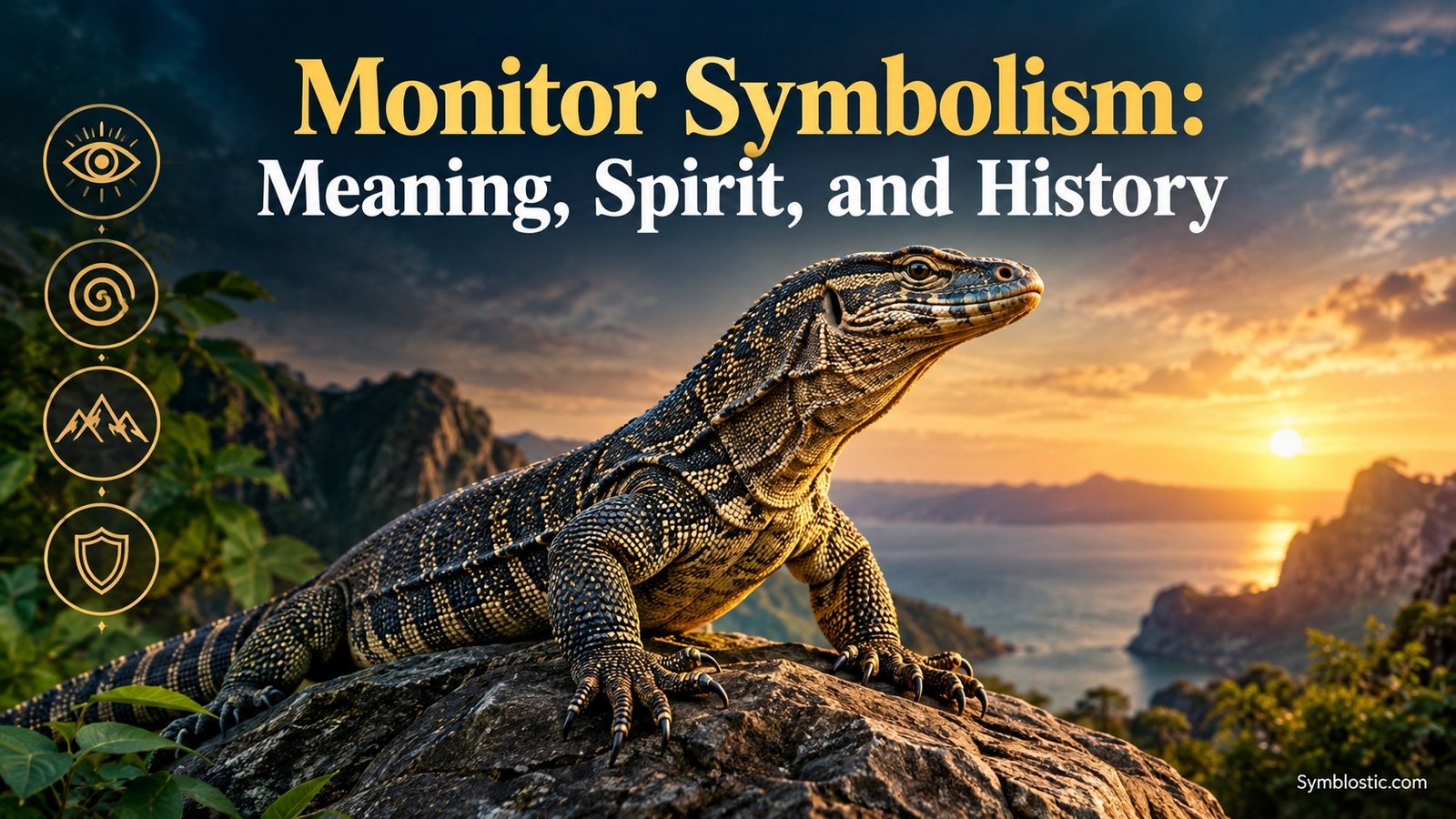
Monitor symbolism is closely connected with watchfulness, patience, strength, adaptability, and survival. The monitor lizard is an ancient-looking reptile with a powerful body, sharp senses, and an ability to move through very different environments. Those traits have naturally inspired symbolic interpretations.
In the United States, however, monitor lizards don’t have one fixed cultural meaning. They are better known through zoos, reptile keeping, wildlife media, and the fascination surrounding animals such as the Komodo dragon. Because most monitor species aren’t native to the United States, their symbolism here is often personal or influenced by global culture rather than a single American tradition.
At the same time, monitor lizards have deep cultural histories elsewhere. In parts of Asia, Australia, and Africa, different monitor species have been connected with folklore, food traditions, ancestral stories, practical knowledge, and spiritual beliefs. These traditions vary greatly, so it’s important not to treat them as one universal belief.
Quick Answer
Monitor symbolism in the United States commonly represents watchfulness, resilience, independence, adaptability, and controlled strength. Spiritually, people may also interpret the monitor lizard as a reminder to observe carefully, trust instinct, protect personal boundaries, and adapt when circumstances change.
TL;DR
- Monitor lizards commonly symbolize patience, awareness, and survival.
- In America, their meaning is mostly personal and modern.
- Their physical strength creates associations with protection and resilience.
- Their adaptable behavior supports meanings of flexibility and resourcefulness.
- Global traditions give different monitor species their own cultural meanings.
- Modern tattoos often represent independence, transformation, or inner strength.
What Does a Monitor Lizard Symbolize?
The monitor lizard’s symbolism comes largely from what the animal actually does. It watches, investigates, waits, searches, climbs, swims, hunts, and protects itself when necessary.
For American readers, this makes the monitor a useful symbol for people who value calm observation over impulsive action. Its message isn’t simply “be strong.” Instead, it suggests knowing when to stay still and when to act.
Watchfulness and Awareness
Monitor lizards have strong senses and spend much of their time responding to their surroundings. Smithsonian information about monitor species describes their use of keen senses, climbing ability, powerful tails, and other adaptations.
As a result, the monitor can represent someone who notices details before making a decision.
Strength Without Constant Aggression
A large monitor can look intimidating. Yet its symbolic power doesn’t require constant confrontation.
Instead, it can represent quiet strength. You don’t have to prove your power every moment to possess it.
Adaptability and Survival
Different monitor species live in forests, wetlands, grasslands, deserts, islands, and other environments. Their ability to use different terrain helps explain why adaptability is such a common modern interpretation.
Symbolically, the lesson is simple: change your strategy without losing yourself.
Monitor Lizard Appearance and Symbolic Traits
Physical features strongly influence how people interpret animal symbols. The monitor lizard’s appearance creates a distinctive combination of earthiness, alertness, and power.
Its long body, muscular tail, claws, scales, and focused eyes give it an ancient appearance. Meanwhile, its forked tongue and active searching behavior make it seem highly aware of its surroundings.
What Its Features Can Represent
The symbolism can be connected with specific physical traits:
• Scales can suggest protection and emotional boundaries.
• Strong claws can represent determination and persistence.
• A powerful tail can symbolize defense and physical strength.
• Alert eyes can represent awareness and careful observation.
• A forked tongue can suggest sensing hidden information.
• Earth-toned colors can create associations with grounding and nature.
These meanings are symbolic interpretations, not scientific claims about personality or destiny.
Historical Roots of Monitor Lizard Symbolism
Monitor lizards have existed alongside humans for thousands of years. Their cultural meaning developed differently across regions because people encountered different species and used them in different ways.
There is no single ancient “monitor lizard meaning.” Instead, there are many local histories involving monitors, goannas, and related lizards.
Ancient and Traditional Associations
Lizards more broadly have sometimes represented renewal, wisdom, survival, and regeneration. Their ability to shed skin helped create associations with change and renewal in several cultural traditions.
However, monitor lizards deserve some distinction. They are larger and more powerful than many familiar lizards, so their symbolism can also involve hunting, territory, danger, and physical power.
In South Asia, monitor lizards have appeared in folklore and traditional knowledge for centuries. A famous Maharashtra story connects a monitor lizard with the 17th-century capture of Kondana Fort, later known as Sinhagad. The details of the story vary, so it is best understood as a long-standing legend rather than a simple historical fact.
Why Their Ancient Image Still Matters
Modern people still respond to the same physical traits that earlier communities noticed.
A monitor looks ancient. It moves deliberately. It can disappear into difficult terrain and then reappear quickly.
Therefore, modern symbolism often feels surprisingly similar to older interpretations: survival, awareness, patience, and power.
Monitor Symbolism in the United States
In the United States, monitor lizards don’t have the same long-standing cultural role that some native American animals have.
Most monitor species are native to Africa, Asia, and Australia. The Komodo dragon, for example, is a famous monitor lizard but comes from Indonesia. In America, these animals are encountered mainly through zoos, wildlife programs, private reptile keeping, education, and popular media.
The American Meaning of the Monitor
For many Americans, the monitor represents something exotic and powerful.
It can suggest:
• Independence from ordinary expectations
• Fascination with unusual wildlife
• Strength and physical endurance
• Connection with wild landscapes
• Curiosity about ancient-looking creatures
• Respect for animals that aren’t easily controlled
The Komodo dragon has especially shaped American perceptions of monitors. Its size and predatory abilities make it appear almost mythical, even though it is a real animal.
A Modern American Contrast
There is also a more complicated side.
Some nonnative monitor species have appeared in the United States after being released or escaping captivity. The U.S. Geological Survey records established Nile monitor populations in parts of Florida and tracks other nonnative monitor sightings.
That means the animal can symbolize both wild fascination and ecological responsibility in modern American discussions.
| Context | Meaning in the USA | Common Association | Note |
| Wildlife | Power and survival | Wild nature | Often influenced by documentaries |
| Pet keeping | Independence and fascination | Exotic animals | Responsible care matters |
| Tattoos | Resilience and individuality | Strength | Usually highly personal |
| Art and decor | Ancient natural power | Earth and wilderness | Often decorative rather than religious |
| Conservation | Respect for wildlife | Responsibility | Nonnative species create concerns |
Spiritual Meaning of the Monitor Lizard
There isn’t one universal spiritual meaning for the monitor lizard. Modern spiritual interpretations often draw from its behavior and physical characteristics rather than one shared religious doctrine.
For some people, the animal represents a period when they need to slow down and observe. For others, it represents protection, transformation, or the ability to survive difficult conditions.
Patience Before Action
A monitor can remain still while assessing its surroundings. Symbolically, that can represent waiting for the right moment instead of reacting immediately.
This interpretation can be especially meaningful during uncertain periods.
The message isn’t necessarily to do nothing. Instead, it is about gathering information before committing to action.
Protection and Boundaries
The monitor’s claws, teeth, tail, and physical size can symbolize protection.
Spiritually, some people interpret this as a reminder to establish healthier boundaries. The symbolism doesn’t require hostility. It can simply mean knowing what you will and won’t accept.
Transformation and Renewal
Lizards are often connected with renewal because of their ability to shed skin. Modern spiritual writing extends that idea to monitors.
In this interpretation, the animal can represent leaving behind an old pattern and making room for something new.
Monitor Lizard Meanings Across Cultures
Monitor symbolism becomes much richer when viewed across different regions. However, these traditions should not be treated as interchangeable.
India and South Asia
Monitor lizards have a long presence in South Asian folklore and traditional culture. Research on Indian beliefs shows that lizard symbolism can be highly varied, sometimes carrying positive associations and sometimes being viewed as an omen.
The Bengal monitor also appears in regional folklore under different local names. Some communities have historically used monitors for food or other practical purposes.
This mixture of usefulness, fear, folklore, and respect shows why there isn’t one universal interpretation.
Australia
Australian Aboriginal traditions include many culturally important relationships with goannas, which are monitor lizards.
Different Aboriginal nations have their own stories, laws, ancestral relationships, and knowledge. Some goannas have roles involving food, art, Country, and traditional stories.
Therefore, it would be inaccurate to say that “Aboriginal culture believes one thing about monitor lizards.” The traditions are diverse and tied to specific communities and places.
Indonesia
The Komodo dragon provides one of the strongest examples of a monitor lizard with distinctive cultural meaning.
Local traditions on Komodo and nearby islands have included stories of kinship between humans and the great lizards. This creates a very different symbolic relationship from the Western image of a monster or predator.
The animal can therefore represent family, place, respect, and coexistence, as well as danger.
Africa
Monitor lizards also occur across large parts of Africa. Their meanings vary by region and community.
Some traditions emphasize their toughness, persistence, practical value, or relationship with the landscape. These meanings should be understood locally rather than combined into one continent-wide belief.
Psychological Meaning of the Monitor Lizard
Animal symbolism often works because animals give people a simple image for complicated emotions.
The monitor lizard can represent the part of you that stays alert while everyone else relaxes. It can also represent the desire to become less reactive and more deliberate.
When the Symbol Feels Positive
A monitor image may appeal to someone who sees themselves as:
• Independent but observant
• Calm during difficult situations
• Protective of close relationships
• Comfortable working alone
• Adaptable when plans change
• Strong without seeking attention
In this sense, the monitor becomes a visual metaphor for quiet competence.
When the Symbol Has a Shadow Side
Every strong symbol can have a darker interpretation.
Constant observation can become suspicion. Independence can become isolation. Protection can become defensiveness.
Therefore, monitor symbolism can also ask an uncomfortable question: Are you observing wisely, or are you always expecting danger?
That distinction makes the symbol more psychologically useful.
Read More: Pika Symbolism: Meaning, Spirit, and Signs
What Does Seeing a Monitor Lizard Mean?
Seeing a monitor lizard can feel meaningful, especially when the encounter is unusual or emotionally powerful. Still, there is no scientific evidence that seeing one predicts a specific future event.
A symbolic interpretation is best treated as personal reflection rather than a guaranteed message.
Possible Personal Interpretations
Depending on your situation, you might associate the encounter with:
• A need to slow down before making a decision
• A reminder to protect personal boundaries
• A period of major adjustment
• The need to trust your practical instincts
• Greater awareness of your surroundings
• A desire for independence
The setting matters too. Seeing a monitor near water may feel different from seeing one in a dry landscape.
Your own emotions are also important. Fear, curiosity, admiration, or calmness can completely change the meaning you give the encounter.
Monitor Lizard Dream Meaning
Dreams involving monitor lizards are often interpreted through themes of survival, observation, fear, boundaries, and change.
However, dream symbolism isn’t universal. The same animal can mean something completely different to two people.
Dreaming of a Calm Monitor
A calm monitor may symbolize controlled strength or patient observation.
It can suggest that you don’t need to react immediately. Sometimes the best response is simply to understand what’s happening first.
Dreaming of an Aggressive Monitor
An aggressive monitor can represent a perceived threat or conflict.
It may also reflect your own defensive side. Consider whether someone has crossed a boundary or whether you’re preparing for conflict that hasn’t actually happened.
Dreaming of a Monitor Watching You
A watching monitor can symbolize self-awareness.
It may encourage you to notice something you’ve been avoiding. Alternatively, it could reflect the feeling that you’re constantly being evaluated by others.
The strongest interpretation usually comes from the emotions surrounding the dream.
Monitor Lizard Tattoo Meaning
Monitor lizard tattoos are uncommon compared with snake, wolf, eagle, or lion tattoos. That rarity can actually make the image more personal.
Someone may choose a monitor because it represents survival, individuality, patience, or a connection with reptiles and wilderness.
Common Tattoo Interpretations
A monitor tattoo can represent:
• Survival after a difficult chapter
• Independence and self-reliance
• Personal transformation
• Protection and strong boundaries
• Connection with a specific landscape
• Admiration for reptiles or wildlife
• Courage without unnecessary aggression
A Komodo dragon tattoo may carry a somewhat different feeling. It can emphasize enormous natural power, endurance, danger, and respect for an ancient predator.
Monitor Symbolism in Art, Decor, and Social Media
Today, animal symbolism spreads through visual culture. People encounter monitor lizards through wildlife photography, artwork, tattoos, clothing, home decor, videos, and social platforms.
Because monitors have striking silhouettes, they work well visually.
Home Decor
A monitor image can bring an earthy or adventurous feeling into a room.
Dark reptile artwork may create a dramatic atmosphere, while natural wildlife photography can suggest wilderness and exploration.
In most American homes, however, such decor is aesthetic rather than religious.
Social Media
A monitor lizard may be used online to communicate individuality or toughness.
The image can also work humorously because the animal looks prehistoric and unusually serious. This is especially common when people contrast its intimidating appearance with ordinary human situations.
Identity and Personal Expression
Unlike common animal symbols, the monitor can communicate a more unusual identity.
Someone who chooses it may be saying, in effect, “I don’t need the obvious symbol to express strength.”
FAQs:
What does a monitor lizard symbolize?
A monitor lizard commonly symbolizes patience, watchfulness, adaptability, resilience, and protection. The exact meaning depends on the cultural or personal context.
What does it mean spiritually when you see a monitor lizard?
Spiritually, some people interpret seeing a monitor as a reminder to observe carefully and trust their instincts. It may also represent change, boundaries, or resilience.
Is a monitor lizard a good symbol?
Yes, it can be a powerful positive symbol. Its strongest associations include survival, independence, patience, adaptability, and controlled strength.
What does a monitor lizard tattoo mean?
A monitor lizard tattoo can represent resilience, independence, transformation, protection, or an appreciation for wildlife. Some people choose a particular species because of its cultural or personal significance.
What does a monitor lizard mean in a dream?
A monitor lizard in a dream may symbolize alertness, survival instincts, boundaries, or a situation requiring patience. The animal’s behavior and your feelings during the dream are important.
Conclusion:
Monitor symbolism brings together several powerful ideas: watchfulness, patience, adaptability, resilience, protection, and controlled strength. In the United States, the meaning is mostly shaped by modern wildlife culture, personal symbolism, tattoos, art, zoos, and fascination with unusual reptiles rather than one traditional American belief.
Across the world, however, monitor lizards have much deeper and more varied histories. Their stories can involve kinship, survival, practical knowledge, folklore, and spiritual ideas. The most useful way to understand Monitor Symbolism is therefore to see it as a flexible symbol rather than a fixed message.
