
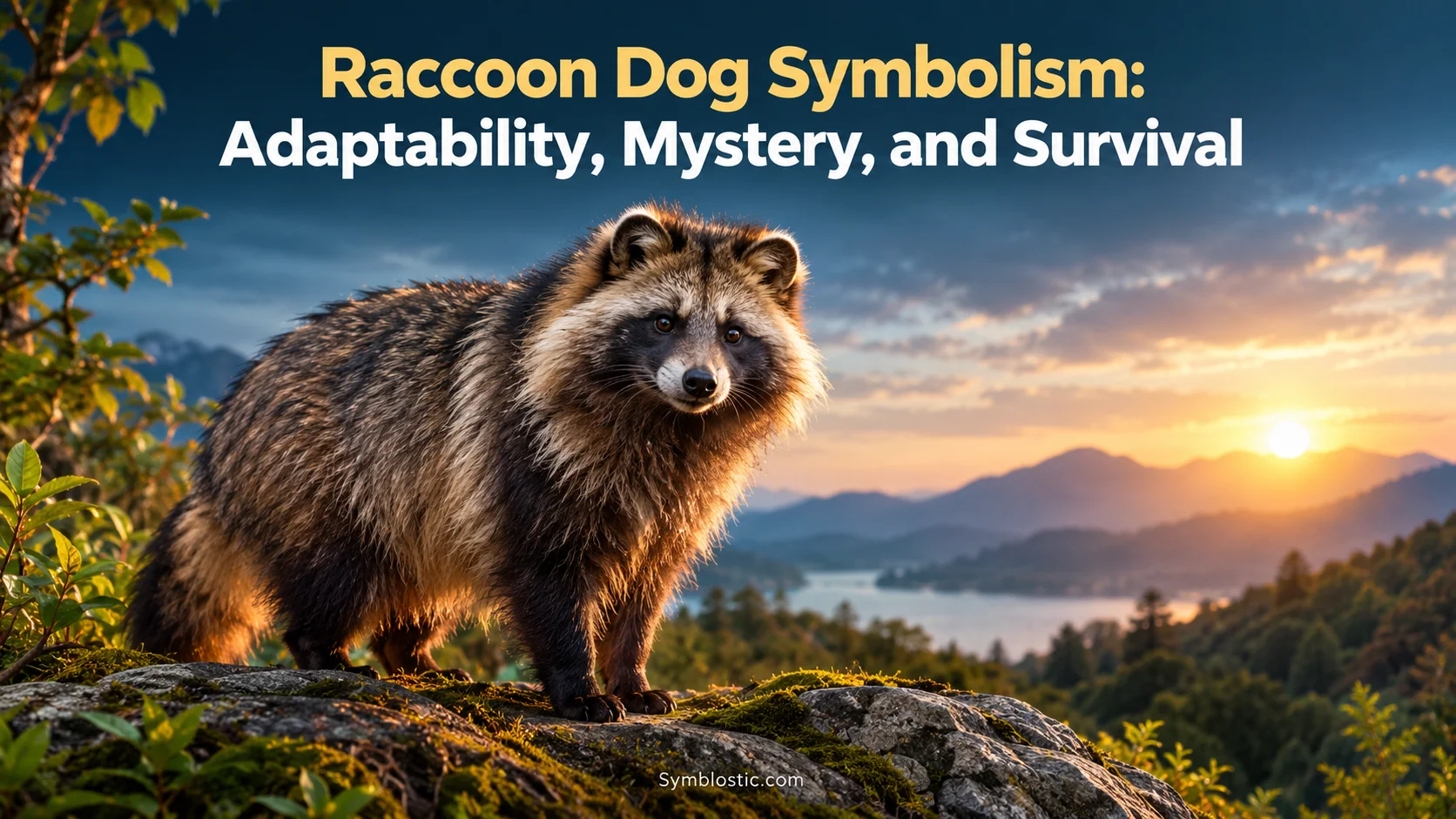
A raccoon dog is an unusual wild canid that can look like a raccoon but belongs to the dog family. Raccoon Dog Symbolism often explores adaptability, resourcefulness, mystery, and the ability to live between familiar categories. For readers in the United States, this animal offers a fresh way to think about identity, survival, and how appearances can mislead us.
Raccoon dogs are native to East Asia, where they appear in folklore, art, and stories about supernatural transformation. Their connection with Japanese folklore is especially important because the animal is associated with the tanuki, a figure known for shapeshifting and playful trickery. However, the real animal and the legendary character aren’t exactly the same thing.
Today, raccoon dog imagery can suggest curiosity, cleverness, or a love of unusual wildlife. Its meaning depends on whether you’re considering the animal itself, its cultural history, or a personal encounter. Understanding those differences helps you appreciate the symbol without confusing folklore with zoology.
Quick Answer
In modern American interpretations, raccoon dog symbolism can represent adaptability, resourcefulness, mystery, and the need to look beyond appearances. In Japanese folklore, the related tanuki figure is also associated with shapeshifting, mischief, and playful transformation.
TL;DR
- Adaptability: Raccoon dogs represent adjusting to different environments and circumstances.
- Resourcefulness: Their survival skills can suggest practical intelligence and flexibility.
- Mystery: Their unusual appearance challenges quick assumptions about identity.
- Transformation: Japanese tanuki folklore connects them with shapeshifting and illusion.
- Playfulness: The legendary tanuki often represents humor, mischief, and unexpected surprises.
- Modern meaning: The animal can symbolize curiosity, individuality, and respect for wildlife.
What Does a Raccoon Dog Symbolize?
The raccoon dog is a useful symbol because it combines a distinctive appearance with an unusual place in the animal world. In the United States, where raccoons and dogs are familiar animals, its name and appearance immediately invite questions.
Adaptability and Resourcefulness
Raccoon dogs can live in different habitats, including forests, grasslands, and areas near human settlements. Their ability to use available food and shelter makes adaptability a natural symbolic association.
As a metaphor, the animal can represent finding workable solutions when circumstances change. It suggests flexibility rather than stubbornly following one plan.
Mystery and Unclear Identity
Its dark facial markings resemble those of a raccoon, yet the animal belongs to the canid family. This contrast makes it a symbol of mistaken assumptions and hidden complexity.
For a person, that meaning might relate to being misunderstood or having qualities that others don’t immediately recognize. It can also encourage a more thoughtful view of people who seem unfamiliar.
Playfulness and Transformation
The raccoon dog is closely linked with the tanuki of Japanese folklore. In traditional stories, the tanuki may disguise itself, transform objects, or fool other characters.
Consequently, the symbol can suggest humor, imagination, and the ability to see beyond appearances. These meanings belong especially to folklore and shouldn’t automatically be treated as traits of every real raccoon dog.
Raccoon Dog Symbolism in the United States
In American culture, the raccoon dog doesn’t have the same established symbolic role as the bald eagle, bear, or raccoon. Most Americans encounter it through wildlife education, international media, or Japanese-inspired art.
An Animal That Challenges Familiar Labels
The United States has a long tradition of using animals to express human qualities. Raccoons often suggest cleverness and adaptability, while dogs commonly suggest loyalty and companionship.
The raccoon dog complicates those familiar associations. It resembles one animal but belongs to another family, making it a useful symbol of individuality and the limits of first impressions.
Curiosity About Wildlife
For many Americans, learning about a raccoon dog starts with a simple question: Is it a raccoon or a dog? That curiosity can lead to a broader interest in biodiversity and wildlife from other parts of the world.
Its symbolic value in the United States is therefore often personal rather than traditional. Someone might choose the animal because it represents being unusual, misunderstood, or comfortable outside familiar categories.
The Japanese Tanuki and Its Cultural Meaning
The strongest established cultural associations of the raccoon dog come from Japan. There, the real animal known as tanuki inspired a rich tradition of supernatural stories, playful images, and familiar decorative figures.
The Shapeshifting Trickster
In Japanese folklore, a supernatural tanuki may transform into a person or object. These stories belong to a wider tradition of yōkai, a broad category of unusual or supernatural beings.
Some tales portray tanuki as frightening or deceptive. Others present them as comic troublemakers who enjoy confusing people and turning ordinary situations upside down.
Over time, many popular portrayals became more playful. The tanuki’s tricks could create surprise and laughter rather than serious harm.
The Lucky Tanuki Statue
In Japan, ceramic tanuki statues are commonly placed outside shops, restaurants, and inns. These figures often wear a straw hat and carry a bottle or account book.
They are associated with good fortune, hospitality, and business success. Their cheerful appearance makes them welcoming decorations rather than frightening supernatural images.
However, these meanings belong to a particular Japanese cultural tradition. They shouldn’t be treated as universal spiritual meanings for everyone who encounters a raccoon dog.
Raccoon Dog Symbolism in Spiritual Interpretations
Outside Japanese folklore, raccoon dog symbolism is often interpreted through general themes such as adaptability, intuition, and changing appearances. These are personal or modern readings, not a single established spiritual doctrine.
Adaptability During Uncertain Times
A raccoon dog may serve as a reminder that flexibility can help you navigate unfamiliar circumstances. When a plan changes, adapting doesn’t necessarily mean abandoning your values.
Instead, it can mean finding a new route toward what matters. This interpretation is especially relevant during moves, career changes, or other periods of adjustment.
Looking Beneath the Surface
Because the animal resembles a raccoon without being one, it can symbolize the difference between appearance and reality. You may use that idea to question assumptions about yourself or other people.
However, it doesn’t mean that everyone around you is hiding something. A more balanced interpretation encourages curiosity and careful judgment instead of suspicion.
Making Room for Humor
The folkloric tanuki often uses humor and mischief to disrupt expectations. As a personal symbol, it can suggest that not every challenge requires a rigid or serious response.
Sometimes a little playfulness helps you see a problem differently. Humor doesn’t remove responsibility, but it can make difficult moments easier to approach.
The Psychological Meaning of a Raccoon Dog
The raccoon dog’s unusual appearance and cultural associations make it an interesting symbol of identity. For modern readers, it can represent the tension between how others see us and who we feel we are.
Being Different Without Apologizing
Some people feel they don’t fit neatly into familiar groups. The raccoon dog can reflect that experience because it resists easy classification.
Its symbolism may appeal to people who value independence, unconventional interests, or a distinctive personal style. It suggests that being difficult to categorize doesn’t make someone less worthy of understanding.
Cleverness and Flexible Thinking
A raccoon dog can also represent practical problem-solving. Rather than relying on one approach, this interpretation values noticing opportunities and adjusting to circumstances.
In everyday life, that might mean learning from a mistake or finding a creative way around an obstacle. The symbol celebrates flexibility, not dishonesty or manipulation.
Mystery Without Fear
Mystery can feel exciting when it invites discovery. It can feel unsettling when it creates uncertainty about what comes next.
The raccoon dog offers a way to hold both reactions. You can accept that you don’t know everything yet while remaining open to learning more.
What Does It Mean to See a Raccoon Dog?
A raccoon dog sighting may feel meaningful because the animal is unusual to many Americans. Symbolically, the encounter can invite reflection on adaptability, unfamiliar experiences, and the difference between curiosity and fear.
Seeing One in Nature
If you encounter a raccoon dog while traveling in East Asia, you might connect the experience with wildlife, discovery, or cultural curiosity. In the United States, a reported sighting deserves careful identification because raccoons, foxes, and other mammals may look similar at a glance.
A sighting isn’t proof of a spiritual message. Still, it can become a useful personal reminder to stay observant and approach unfamiliar things with an open mind.
Seeing One in Art or Media
A raccoon dog in a film, illustration, or story may represent a trickster, a clever survivor, or a character who changes appearances. The meaning depends on the work’s cultural background and the role the animal plays.
If the image comes from Japanese folklore, its tanuki associations may be especially important. If it appears in a modern design, the creator may simply be drawn to its unusual face and expressive shape.
Reflecting on the Encounter
If the animal has caught your attention, consider what you noticed first. Was it the mask-like face, its behavior, or the fact that you couldn’t identify it immediately?
Your response may reveal more about the encounter’s personal meaning than any fixed symbolic definition. Curiosity itself can be a valuable starting point.
Raccoon Dog Symbolism in Dreams
Dream interpretations are personal, and no single meaning applies to every dream. A raccoon dog may bring up themes of disguise, flexibility, uncertainty, or the need to question appearances.
Dreaming of a Raccoon Dog Watching You
An animal watching you may reflect a feeling of being observed, judged, or unsure of another person’s intentions. It could also represent your own curiosity about something unfamiliar.
Consider how you felt in the dream. Calmness may suggest interest, while fear could point to uncertainty in a current situation.
Dreaming of a Raccoon Dog Changing Shape
A shapeshifting raccoon dog connects naturally with the tanuki stories of Japan. In a dream, it might symbolize changing roles, a shifting identity, or difficulty understanding a situation.
It doesn’t mean someone is definitely deceiving you. Instead, ask whether your expectations are changing or whether you need more information before making a judgment.
Dreaming of a Friendly Raccoon Dog
A friendly animal may suggest comfort with difference or a growing willingness to explore new ideas. It might also reflect a playful side of your personality.
Dreams often draw on recent experiences, memories, and emotions. Your own associations with wildlife and folklore can help you understand the image more meaningfully.
Read More: Caterpillar Symbolism: Transformation, Patience, and Growth
Raccoon Dog Tattoos, Art, and Modern Design
Raccoon dog imagery can appeal to people who want a symbol that feels unusual, playful, and culturally rich. In American tattoo and design choices, it may communicate individuality or a fascination with folklore.
Raccoon Dog Tattoo Meaning
A raccoon dog tattoo can represent flexibility, curiosity, humor, or comfort with an unconventional identity. A design based on the Japanese tanuki may also reference transformation and trickster stories.
Popular design directions include:
• A realistic raccoon dog to express appreciation for wildlife.
• A stylized tanuki to reference Japanese folklore and storytelling.
• A playful character to symbolize humor and mischief.
• A woodland scene to suggest resourcefulness and connection with nature.
• A minimalist animal outline to represent individuality and mystery.
If you choose a design inspired by tanuki folklore, learn about its cultural context. That extra care can help you distinguish a meaningful reference from an image used without understanding.
Home Decor and Collectibles
Animal figurines, prints, and ceramic decorations can make a space feel personal. A Japanese-style tanuki statue may be chosen for its traditional associations with welcome and good fortune.
However, the symbolism is not identical to that of a generic raccoon dog illustration. The statue’s clothing, objects, expression, and artistic style can all connect it to a specific cultural tradition.
Social Media and Online Identity
Online, raccoon dog images may signal a love of unusual animals, playful humor, or Japanese animation and folklore. They can also serve as avatars for people who enjoy characters that challenge expectations.
The meaning depends on context. A cartoon tanuki used as a profile picture may communicate a different message from a realistic wildlife photograph.
Raccoon Dog Colors and Visual Features
The animal’s physical appearance helps explain why it attracts so much attention. Its coat, facial markings, rounded ears, and sturdy body can influence how people interpret it in art and personal symbolism.
The Dark Facial Mask
Dark markings around the eyes create a mask-like appearance. In modern visual interpretations, masks can suggest mystery, hidden identity, or the difference between a public face and private feelings.
However, the raccoon dog’s markings are natural features, not evidence of deception. Their symbolic meaning comes from human associations with masks.
The Thick Coat and Rounded Shape
Its dense fur and compact body may evoke warmth, resilience, or a connection with wild places. Artists may exaggerate these features to make a tanuki character appear friendly or comic.
These are design interpretations rather than fixed cultural meanings. A realistic image may emphasize the animal’s wild nature, while a cartoon may focus on its personality.
Comparing Common Visual Interpretations
| Visual feature | Possible symbolic association | Context |
| Dark facial mask | Mystery and hidden identity | Modern artistic interpretation |
| Thick coat | Resilience and protection | Often linked with wilderness imagery |
| Rounded, friendly figure | Comfort and playfulness | Common in stylized character designs |
| Straw hat and bottle | Hospitality and good fortune | Traditional Japanese tanuki decoration |
| Shapeshifting image | Transformation and illusion | Japanese folklore |
A visual feature can support several interpretations. Consider the full image and its cultural context before assigning it a meaning.
Misunderstandings About Raccoon Dog Symbolism
The raccoon dog is easy to misunderstand because its name, appearance, and folklore associations can blur together. Separating the real animal from the legendary tanuki makes its symbolism clearer.
A Raccoon Dog Is Not a Raccoon
Despite its name, the raccoon dog is a member of the dog family, or Canidae. Raccoons belong to a different family and are native to the Americas.
Both animals have facial markings that can look like masks, but they’re not close relatives. This distinction supports one of the symbol’s most useful modern meanings: appearances don’t always tell the whole story.
The Real Animal Isn’t a Supernatural Shapeshifter
In folklore, a tanuki may transform into humans or everyday objects. Real raccoon dogs don’t have supernatural powers, and the stories should be understood as cultural narratives.
These tales can still offer symbolic meaning without being treated as zoological facts. Their value lies in storytelling, humor, and the questions they raise about trust and perception.
Not Every Tanuki Image Has the Same Meaning
Some depictions emphasize trickery, while others suggest luck, hospitality, or comedy. Meaning can change with region, historical period, and artistic purpose.
It’s therefore inaccurate to describe the tanuki as always evil, always lucky, or always harmless. A thoughtful interpretation leaves room for the variety found in folklore.
The Real Raccoon Dog: Nature and Survival
The animal’s actual biology provides a foundation for many modern symbolic readings. Understanding its habits also prevents folklore from replacing the facts about a living species.
Where Raccoon Dogs Live
Raccoon dogs are native to parts of East Asia, including Japan, China, and the Korean Peninsula. They also occur in other parts of the region, and populations have been introduced beyond their native range.
They generally favor habitats that offer cover and food, including woodland edges, wetlands, and areas near human activity. Their ability to use different environments helps explain why adaptability is a natural association.
Diet and Daily Behavior
Raccoon dogs are omnivores, meaning they eat both plant and animal matter. Their diet can include fruit, insects, small animals, and other available food.
They are also mainly active at night. This nocturnal behavior may contribute to their association with mystery in stories and modern interpretations, though nighttime activity is simply part of their natural behavior.
Respecting the Animal
A raccoon dog is a wild animal, not a domestic dog or a pet raccoon. Its unusual appearance may encourage curiosity, but wild animals are best observed from a safe distance.
Their presence also has different ecological implications in different places. In some parts of Europe, introduced populations raise concerns about their effects on native wildlife. Their status and impact depend on the region.
How Raccoon Dog Symbolism Has Evolved
Raccoon dog symbolism has changed as stories, images, and knowledge of the animal have spread. Its meaning now ranges from traditional folklore to modern ideas about individuality and flexibility.
From Folklore to Popular Characters
In Japan, stories about the tanuki developed over many centuries. Early tales could be frightening, while later popular images often emphasized comedy, clever tricks, and good fortune.
Traditional tanuki figures became familiar decorations outside businesses. These statues helped make the animal a recognizable symbol of welcome and prosperity in everyday settings.
From Local Tradition to Global Recognition
Films, animation, games, and international travel have introduced tanuki imagery to audiences outside Japan. American viewers may recognize the animal through fictional characters before learning about the real species.
As a result, the symbol can mean different things to different people. For some, it’s a reference to Japanese folklore; for others, it’s a playful image of a distinctive wild animal.
What the Symbol Means Today
Modern interpretations often emphasize adaptability, humor, and being more complex than you first appear. These themes connect the animal’s unusual looks with its long cultural history.
Still, no single interpretation applies to everyone. The most meaningful reading depends on whether you’re looking at a living animal, a traditional statue, a fictional character, or a personal symbol.
FAQs:
What does a raccoon dog symbolize spiritually?
In modern spiritual interpretations, a raccoon dog may represent adaptability, mystery, and flexible thinking. These associations are personal interpretations rather than universal spiritual teachings.
Is a raccoon dog the same as a tanuki?
A raccoon dog is the real animal called tanuki in Japanese. In folklore, the supernatural bake-danuki is a legendary shapeshifter inspired by the animal.
Is a tanuki a symbol of good luck?
Yes, tanuki statues are commonly associated with good fortune, hospitality, and prosperity in Japan. However, traditional stories also portray tanuki as mischievous or frightening, so their symbolism isn’t limited to luck.
What does a raccoon dog tattoo mean?
A raccoon dog tattoo may represent individuality, adaptability, curiosity, or a playful personality. A design based on Japanese tanuki folklore can also express an interest in shapeshifting stories and cultural traditions.
What is the difference between a raccoon and a raccoon dog?
A raccoon belongs to the Procyonidae family, while a raccoon dog belongs to the Canidae family. Their similar facial markings can be confusing, but they are different animals with distinct evolutionary histories.
Why is the tanuki associated with shapeshifting?
Japanese folklore portrays the supernatural tanuki as a creature capable of changing its appearance and disguising objects. These stories developed through local legends and wider traditions about mysterious animals, trickery, and the limits of human perception.
Conclusion:
Raccoon dog symbolism brings together adaptability, mystery, resourcefulness, and playful transformation. In the United States, the animal can represent individuality and the value of looking beyond appearances. Its deeper cultural associations come from Japan, where tanuki folklore connects the creature with shapeshifting, mischief, hospitality, and good fortune.
The key is to distinguish the real raccoon dog from its legendary counterpart. Both can inspire curiosity, but they offer different kinds of meaning: one reveals the remarkable variety of wildlife, while the other reflects the stories people create around it.

1 thought on “Raccoon Dog Symbolism: Adaptability, Mystery, and Survival”