
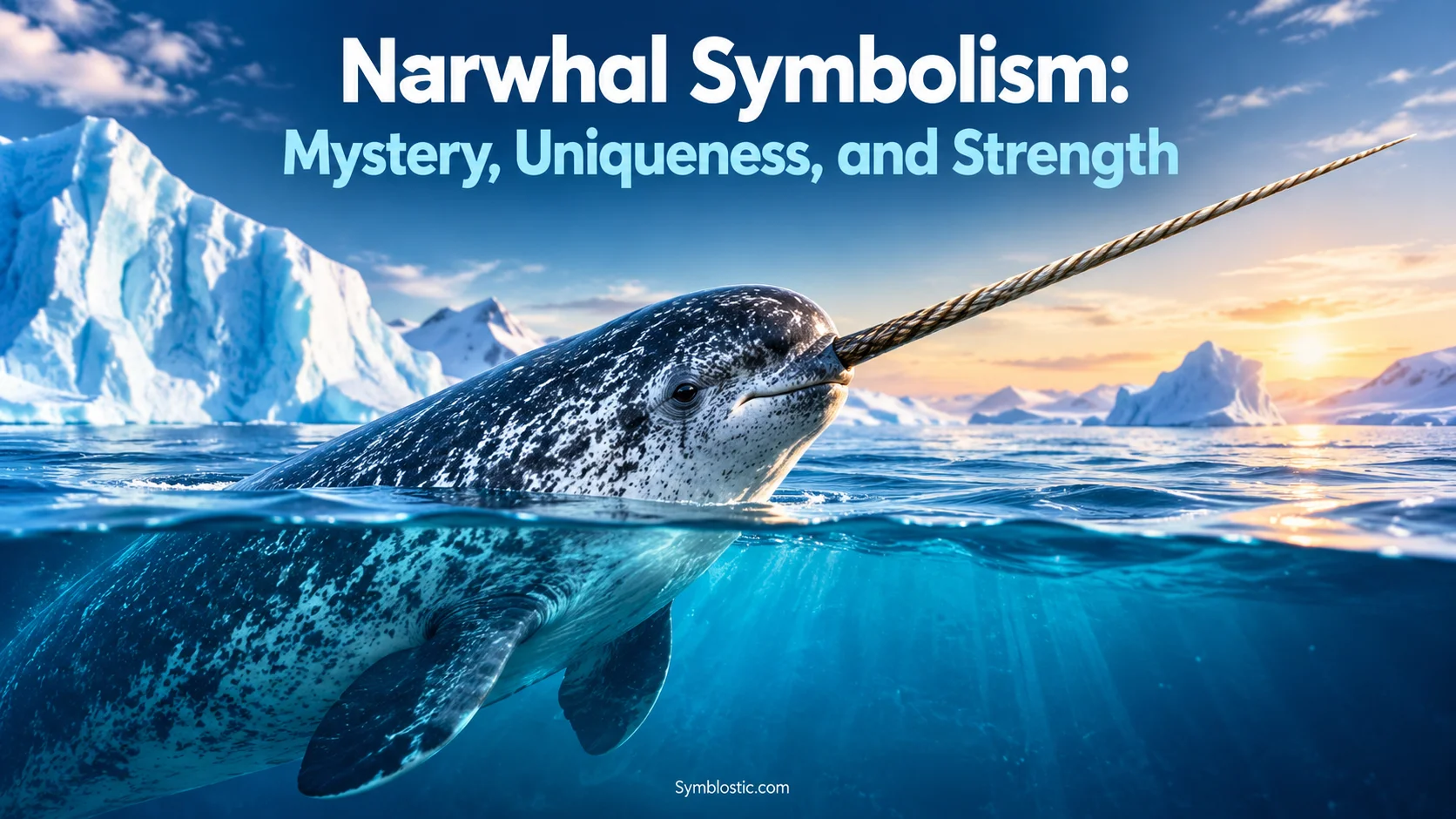
The meaning of narwhal symbolism goes far beyond the unusual appearance of this Arctic whale. With its long, spiraled tusk and quiet life beneath icy waters, the narwhal inspires ideas of mystery, individuality, resilience, and hidden beauty. Its remarkable appearance also connects it to one of history’s most fascinating animal legends: the unicorn.
In the United States, narwhals often represent the magic of nature, the freedom to be different, and the excitement of discovering something extraordinary. Their playful image appears in children’s books, ocean-themed decorations, clothing, toys, and online culture. However, the animal also carries deeper historical and cultural significance that deserves attention.
For Inuit communities, narwhals have long been important sources of food, materials, knowledge, and cultural tradition. Meanwhile, European stories about unicorn horns helped turn the narwhal into a symbol of wonder and mystery. These different associations show how one animal can hold several meanings across time and place.
Whether you encountered a narwhal in a dream, feel drawn to its unusual appearance, or simply want to understand its spiritual meaning, its symbolism offers several ways to reflect on your own life.
Quick Answer
Narwhal symbolism in the United States commonly represents individuality, mystery, resilience, and the beauty of being different. Spiritually, people may associate the narwhal with intuition, inner strength, and exploring the unknown, while its historical and Inuit cultural connections add important layers of meaning.
TL;DR
- Uniqueness: The narwhal celebrates individuality and embracing what makes you different.
- Mystery: Its Arctic habitat represents the unknown and hidden wonders of nature.
- Resilience: Its life in icy waters suggests endurance and adaptation.
- Spirituality: Its unusual tusk inspires personal interpretations of intuition and inner discovery.
- Cultural heritage: Inuit traditions connect the narwhal with survival, knowledge, and community.
- Modern culture: Its unicorn-like appearance makes it a popular symbol of imagination and playful identity.
What Does a Narwhal Symbolize?
The narwhal’s symbolism begins with its distinctive appearance and the environment in which it lives. For American audiences, it combines the appeal of a real wild animal with the enchantment of a legendary creature.
Unlike symbols with one fixed cultural definition, the narwhal can mean different things depending on the person and context.
The Three Core Meanings
Individuality and uniqueness: The narwhal’s tusk makes it instantly recognizable. Symbolically, it can remind you that your differences may be your greatest strengths.
Mystery and discovery: Narwhals live in remote Arctic waters that many people will never visit. Their elusive nature makes them natural symbols of unexplored places and unanswered questions.
Resilience and adaptation: Narwhals survive in a demanding environment. Their lives can inspire reflections on patience, flexibility, and finding your way through difficult circumstances.
What Makes the Narwhal Different?
A narwhal is a toothed whale, not a mythical animal. Most males develop a long, spiraled tooth that projects from the upper jaw. Females usually lack this prominent tusk, although rare females can develop one.
The animal’s pale, speckled body and unusual profile create a striking image. Consequently, it can symbolize the surprising beauty of nature without requiring supernatural explanations.
The Historical Origins of Narwhal Symbolism
Narwhal symbolism developed through real relationships with Arctic communities, European trade, and stories about extraordinary animals. Understanding this history helps separate documented cultural meanings from newer personal interpretations.
Ancient Arctic Connections
Inuit communities have maintained relationships with narwhals for generations. The animals provided food, blubber, skin, and tusks, supporting life in a challenging environment.
These relationships involved detailed knowledge of seasonal movements, hunting practices, and Arctic conditions. Therefore, narwhals cannot be understood only as mysterious creatures or decorative symbols. They are also part of a living cultural and ecological history.
The European Unicorn Connection
During medieval and early modern European history, narwhal tusks circulated through trade networks. Many buyers believed these tusks belonged to unicorns.
The tusks became prized objects associated with rarity, prestige, and supposed protective powers. Some wealthy people and institutions displayed them as extraordinary treasures.
As knowledge of the animal spread, the connection between narwhal tusks and unicorn legends became clearer. This history helped create the modern image of the narwhal as a bridge between scientific reality and fantasy.
From Curiosity to Popular Symbol
Over time, the narwhal moved from rare natural-history displays into books, museums, educational materials, and popular entertainment. Its unusual shape made it easy to recognize and remember.
Today, the animal can suggest both genuine Arctic wildlife and imaginative fantasy. That combination gives it a special place in modern symbolism.
Narwhal Symbolism in American Culture
In the United States, the narwhal often represents imagination, individuality, and the wonder of the natural world. Its meaning has been shaped by children’s entertainment, marine education, fantasy imagery, and growing interest in Arctic wildlife.
The Narwhal as an American Pop Culture Symbol
American popular culture frequently presents narwhals as friendly, unusual, and magical. Their resemblance to unicorns makes them appealing to children and adults who enjoy playful fantasy.
However, their cultural appeal isn’t limited to childhood. Adults may also appreciate the narwhal as a reminder to remain curious and resist pressure to fit conventional expectations.
Common American associations include:
- Individual expression: Celebrating personal qualities that make someone different.
- Imagination: Connecting everyday life with fantasy, wonder, and creativity.
- Ocean appreciation: Expressing interest in marine animals and underwater environments.
- Playfulness: Embracing humor, colorful design, and a lighter approach to life.
- Exploration: Showing curiosity about distant places and unfamiliar experiences.
The Narwhal and American Identity
The narwhal isn’t an official national emblem of the United States. Instead, its meaning comes from popular culture, personal choices, and interest in wildlife.
For some Americans, it represents the freedom to develop an unconventional identity. For others, it reflects a fascination with science and the discovery of animals that once seemed almost imaginary.
Its popularity also demonstrates how modern symbols can develop without formal traditions. A distinctive animal can become meaningful through stories, shared interests, and personal experiences.
Narwhal Spiritual Meaning
The narwhal’s spiritual meaning generally centers on inner wisdom, individuality, resilience, and exploring what lies beneath the surface. These interpretations are personal or contemporary spiritual associations rather than universal beliefs shared by every culture.
Intuition and Inner Wisdom
Narwhals spend much of their lives in deep Arctic waters, far from ordinary human experience. Symbolically, this hidden world can represent the inner self and the feelings people don’t always express.
If you feel spiritually connected to the narwhal, you might interpret it as a reminder to listen carefully to your thoughts. However, intuition works best alongside reflection and sound judgment rather than replacing them.
Transformation and Personal Growth
The narwhal’s unusual appearance challenges familiar ideas about what a whale should look like. This quality can symbolize the courage to grow beyond an old identity.
Its spiritual message may encourage you to:
- Accept changes that help you become more authentic.
- Explore unfamiliar ideas without immediately judging them.
- Recognize strengths that others might overlook.
- Remain flexible when life takes an unexpected direction.
Protection and Guidance
Some modern spiritual interpretations associate the narwhal’s tusk with protection, direction, or inner strength. These meanings arise from symbolic readings of its distinctive feature, not from a universal religious rule.
You can use this imagery as a personal reminder of courage or self-trust. Still, seeing a narwhal doesn’t establish that a supernatural force is sending you a message.
Narwhal Symbolism in Inuit Traditions
The narwhal has deep significance in Inuit life, especially in communities across Greenland and the Canadian Arctic. For an American audience, understanding this relationship is essential because it offers a perspective beyond the popular image of a magical sea unicorn.
Survival, Knowledge, and Community
Narwhals have supported Inuit communities through food, materials, and generations of environmental knowledge. Their importance extends beyond their appearance or the stories outsiders tell about them.
Traditional hunting knowledge includes understanding seasonal changes, sea ice, animal behavior, and local conditions. This knowledge reflects careful observation developed over many generations.
The narwhal can therefore be understood in this context through several connected themes:
- Sustenance: Providing food and useful materials for community life.
- Knowledge: Reflecting close observation of Arctic wildlife and changing conditions.
- Continuity: Connecting present-day practices with inherited experience.
- Relationship with nature: Demonstrating how people depend on and understand their environment.
Folklore and the Origin of the Tusk
Some recorded Inuit stories explain the narwhal’s distinctive tusk through a transformation involving a human woman and a whale. Versions of this story differ, and they belong to particular storytelling traditions rather than representing one universal Inuit belief.
These narratives offer cultural explanations of the animal’s unusual form. They should be approached as meaningful traditional stories, not simply as fantasy entertainment.
It’s also important to distinguish Inuit cultural knowledge from European unicorn legends. Although both traditions have connections to the narwhal’s tusk, their histories and meanings are not interchangeable.
Respectful Modern Interpretation
The narwhal can inspire universal reflections on nature while retaining its specific cultural significance. However, reducing its entire history to a mystical animal symbol overlooks the people whose lives and knowledge are connected to it.
When using narwhal imagery, consider the difference between appreciating the animal and borrowing specific cultural designs or stories without understanding their context.
Narwhal Symbolism Across Cultures
Different societies have interpreted the narwhal through their own experiences, beliefs, and historical circumstances. These interpretations aren’t identical, even when they share an interest in the animal’s remarkable tusk.
European Symbolism: Rarity and Wonder
In medieval and early modern Europe, narwhal tusks were sometimes sold as unicorn horns. Because unicorns were associated with extraordinary qualities, the tusks acquired meanings connected with rarity, prestige, and supposed magical powers.
This history illustrates how limited scientific knowledge can shape symbolism. An object from a distant environment can become a powerful symbol when people interpret it through familiar legends.
Contemporary Spiritual Interpretations
Modern spiritual writing often associates narwhals with intuition, transformation, emotional depth, and individuality. These interpretations usually draw from the animal’s habitat, unusual appearance, and reputation as an elusive whale.
However, there is no single spiritual interpretation accepted across all religions or cultures. The meaning often depends on the beliefs and experiences of the person interpreting the animal.
A Simple Cultural Comparison
| Context | Common association | Important distinction |
| American popular culture | Imagination and individuality | Often playful and fantasy-inspired |
| Inuit communities | Food, knowledge, and cultural continuity | Rooted in living traditions and Arctic life |
| Medieval European history | Unicorn legends and rare treasures | Shaped by historical beliefs about tusks |
| Modern personal spirituality | Intuition and inner discovery | Reflective interpretation, not universal doctrine |
The main lesson is that symbols don’t carry one fixed meaning everywhere. Their significance develops through history, culture, and personal experience.
The Psychological Meaning of the Narwhal
From a psychological perspective, the narwhal can represent the desire to feel unique while still belonging to a community. Its distinctive appearance makes it a useful image for thinking about identity, confidence, and acceptance.
These associations are interpretive rather than established psychological findings. Still, they can help explain why people find the animal personally meaningful.
Embracing Your Differences
The narwhal’s tusk makes it stand apart from other whales in the public imagination. For someone who has felt unusual or misunderstood, this feature may symbolize the value of individuality.
Instead of treating differences as flaws, the narwhal encourages a more accepting perspective. It suggests that you don’t have to become someone else to deserve respect.
Finding Calm in Uncertainty
The Arctic ocean is vast, cold, and difficult to explore. As a symbol, this setting can represent uncertainty, emotional depth, and the parts of life you haven’t fully understood.
A narwhal image may remind you to approach uncertainty with patience. You don’t need every answer immediately to continue learning and growing.
Strength Without Aggression
Narwhals survive in a demanding environment without looking fierce or intimidating. This makes them useful symbols of quiet resilience.
Their image can represent:
- Confidence without the need to dominate others.
- Patience during uncertain periods of life.
- Acceptance of personal differences and imperfections.
- Curiosity about feelings, relationships, and new experiences.
For many people, the narwhal’s appeal lies in this balance. It feels unusual without appearing threatening and resilient without seeming aggressive.
Narwhal Symbolism in Dreams
Dreaming about a narwhal can invite reflection on individuality, curiosity, uncertainty, or personal change. However, dreams don’t have universally established symbolic meanings, and one image can’t reliably predict future events.
Your feelings during the dream and the details you remember may offer more useful clues than a fixed interpretation.
Seeing a Narwhal in Clear Water
A narwhal swimming through clear water might suggest curiosity or a growing willingness to understand yourself. If the dream feels peaceful, you might associate it with openness and emotional clarity.
Consider whether something in your waking life has recently become easier to understand.
Seeing a Narwhal Beneath Ice
A narwhal beneath thick ice might represent an unanswered question or an aspect of yourself that feels difficult to reach. It could also simply reflect your interest in Arctic animals.
If the dream feels tense, ask yourself whether you’re facing uncertainty or keeping something important to yourself.
Encountering a Narwhal With a Broken Tusk
A damaged tusk might bring up feelings about confidence, identity, or losing something that once made you feel special. However, it doesn’t mean that a real loss or misfortune is coming.
You might instead use the dream to consider whether you’re relying too heavily on one part of your identity.
Questions to Ask Yourself
After a memorable narwhal dream, consider these questions:
- Did I feel peaceful, curious, afraid, or excited?
- Was the narwhal alone or swimming with others?
- Did the water appear clear, dark, frozen, or stormy?
- Does the animal remind me of a current challenge or personal goal?
These questions help you explore your own associations without treating dream symbolism as a prediction.
Read More: Canary Symbolism: Joy, Hope, and Inner Freedom
Narwhal Symbolism in Tattoos and Personal Identity
A narwhal tattoo can express individuality, imagination, a love of marine life, or a personal connection to Arctic environments. In the United States, its unusual silhouette also makes it a distinctive alternative to more familiar animal tattoos.
Popular Narwhal Tattoo Styles
Different tattoo styles can emphasize different aspects of the animal.
- Minimalist outlines: Suggest simplicity, quiet confidence, and understated individuality.
- Watercolor designs: Emphasize imagination, softness, and a playful connection with the ocean.
- Realistic narwhals: Highlight wildlife appreciation and the animal’s natural beauty.
- Cosmic designs: Pair the narwhal with stars or moons to suggest wonder and exploration.
- Arctic scenes: Place the animal among icebergs or northern lights to emphasize its natural habitat.
What a Narwhal Tattoo Might Say About You
A narwhal tattoo can serve as a reminder that being different isn’t something to hide. It may also commemorate a meaningful experience, a fascination with marine biology, or a personal connection to the sea.
However, tattoo meanings depend on the wearer. A design that represents resilience for one person might simply celebrate a favorite animal for someone else.
If your design draws on Inuit stories or particular cultural art traditions, learn about their origins before incorporating them. A respectful design can celebrate the animal without treating a living culture as a decorative theme.
Narwhal Symbolism in Home Decor, Fashion, and Social Media
In contemporary American life, narwhals often appear in spaces where people want to combine nature, fantasy, and humor. Their recognizable tusks and friendly appearance make them especially adaptable to casual visual styles.
Home Decor and Gifts
Narwhal imagery works well in children’s bedrooms, ocean-themed rooms, and playful accessories. Soft blues, white backgrounds, and icy patterns often reinforce associations with the Arctic.
A narwhal decoration might symbolize curiosity, a love of wildlife, or the desire to keep a sense of wonder in everyday surroundings. However, it doesn’t automatically indicate a spiritual belief.
Clothing and Accessories
Narwhals appear on T-shirts, socks, bags, jewelry, and other accessories. Some designs emphasize the animal’s real appearance, while others turn it into a colorful cartoon.
For wearers, the imagery may communicate a playful personality, appreciation for unusual animals, or affection for fantasy-inspired art.
Online Culture and Digital Identity
Online, the narwhal’s unicorn-like appearance lends itself to humorous illustrations, cute characters, and imaginative content. It can help people express a personality that feels unconventional without making a serious statement.
A narwhal avatar, for example, might communicate friendliness, creativity, or a fondness for marine life. Its meaning remains flexible because online symbols depend heavily on context.
Why the Symbol Appeals to Different Ages
Children may enjoy the narwhal because it resembles a magical creature. Adults may appreciate the scientific surprise behind its appearance or the idea of being comfortable with their differences.
This combination helps the narwhal move between playful entertainment and more thoughtful personal expression.
Narwhal Conservation and Environmental Symbolism
The narwhal’s natural habitat adds another important layer to its symbolism. For many modern readers, the animal represents the beauty of the Arctic and the need to understand how environmental changes affect wildlife.
The Narwhal as a Symbol of the Arctic
Narwhals live in Arctic waters, particularly around Greenland and the Canadian Arctic. Their lives are closely connected to sea ice, seasonal movements, and the changing conditions of northern oceans.
Because their environment can be difficult to study, narwhals also remind people how much remains unknown about the natural world. Their symbolism can encourage curiosity grounded in observation rather than speculation.
Climate Change and Wildlife Protection
Changes in sea ice and ocean conditions can affect Arctic ecosystems. Narwhals face challenges related to habitat changes, human activity, and disturbances in their environment.
For environmentally minded Americans, the narwhal may symbolize:
- The importance of protecting fragile marine habitats.
- The connection between wildlife and changing climate conditions.
- Respect for Indigenous knowledge and Arctic communities.
- The need to balance human activity with ecological responsibility.
From Personal Symbol to Environmental Reminder
A narwhal image can express concern for endangered environments without requiring a political message. It can simply remind someone that unusual animals deserve attention and that healthy ecosystems support many forms of life.
However, conservation symbolism is most meaningful when paired with accurate information. The narwhal isn’t just a fantasy creature; it is a real animal living in a specialized and changing environment.
Misunderstandings and Controversies About Narwhal Symbolism
Narwhal symbolism is generally playful and positive, but several misunderstandings can obscure its history. Recognizing these differences helps people appreciate the animal without confusing popular interpretations with documented traditions.
Is the Narwhal Really a Unicorn?
No. The narwhal is a real Arctic whale, and its prominent tusk is an elongated tooth, not a magical horn.
The unicorn connection comes from historical beliefs about narwhal tusks. European traders sold these objects as supposed unicorn horns, helping create a lasting association between the two creatures.
Today, calling the narwhal the “unicorn of the sea” is usually a playful nickname. The problem arises only when the nickname replaces accurate information about the real animal.
Does the Narwhal Have One Universal Spiritual Meaning?
No. Ideas such as intuition, protection, transformation, and spiritual guidance are contemporary symbolic interpretations. They aren’t universal teachings shared by all cultures or religions.
A personal spiritual connection can be meaningful without being presented as a fact about everyone. Keeping that distinction clear allows room for individual beliefs and cultural differences.
Does Every Narwhal Symbol Refer to Inuit Culture?
No. Some imagery draws from Inuit history and traditions, while other designs reflect wildlife education, European unicorn legends, or modern entertainment.
Nevertheless, Inuit communities have longstanding relationships with narwhals. Presenting the animal only as a cute fantasy character can overlook those relationships.
Respectful interpretation recognizes both the animal’s broad appeal and its particular cultural significance.
When Does Cultural Use Become Disrespectful?
Using an ordinary narwhal illustration to express a love of the ocean isn’t inherently disrespectful. Concerns become more relevant when a design copies specific Indigenous artwork, uses sacred narratives without context, or misrepresents Inuit traditions.
The distinction isn’t about banning cultural exchange. It’s about understanding the source, avoiding false claims, and giving living traditions the respect they deserve.
How Narwhal Symbolism Has Changed Over Time
The narwhal’s meaning has shifted as people have learned more about the animal and encountered it through different cultural settings. Its history shows how scientific knowledge and popular imagination can coexist.
From Arctic Life to European Legend
For Inuit communities, narwhals have long been part of practical life, traditional knowledge, and cultural storytelling. In Europe, the tusk became associated with unicorn legends and valuable objects.
These interpretations developed in different circumstances. Neither should be treated as a simple substitute for the other.
From Scientific Curiosity to Popular Entertainment
As knowledge of narwhals spread, their unusual appearance became easier to explain. The tusk was recognized as a tooth, and the supposed unicorn horn became part of a fascinating historical story.
Later, popular entertainment emphasized the animal’s whimsical appearance. This helped transform the narwhal into a recognizable figure in children’s media and playful consumer designs.
The Narwhal’s Meaning Today
In 2025 and 2026, the narwhal remains easy to interpret through several overlapping ideas. People may associate it with individuality, fantasy, wildlife appreciation, Arctic environments, or personal spirituality.
These meanings don’t erase older associations. Instead, they reflect the way symbols accumulate new layers as knowledge and culture change.
The narwhal’s enduring appeal comes from the combination of a real animal, an extraordinary appearance, and a history filled with surprising connections.
FAQs:
What Does a Narwhal Symbolize Spiritually?
Spiritually, the narwhal can represent intuition, individuality, inner strength, and curiosity about the unknown. These meanings are personal interpretations rather than universal spiritual teachings.
Is Seeing a Narwhal a Sign of Good Luck?
Some people may interpret a narwhal encounter as a positive reminder of wonder, possibility, or personal growth. However, there’s no established evidence that seeing a narwhal predicts good luck or future events.
What Does a Narwhal Tattoo Mean?
A narwhal tattoo often expresses uniqueness, creativity, love of marine life, or fascination with the mysterious. Its meaning depends on the wearer’s experiences and the design’s personal significance.
What Does a Narwhal Represent in Inuit Culture?
Narwhals have longstanding cultural, practical, and historical importance for Inuit communities. They provide food and materials and are connected to traditional knowledge and storytelling, although specific meanings and practices vary among communities.
Why Is the Narwhal Called the Unicorn of the Sea?
The narwhal earned this nickname because its long, spiraled tusk resembles a unicorn’s horn. Historically, narwhal tusks were sold in Europe as supposed unicorn horns, helping establish the association.
What Does a Narwhal Mean in a Dream?
A narwhal in a dream might prompt reflection on individuality, uncertainty, discovery, or emotional growth. However, dreams don’t have fixed meanings, so your feelings and personal circumstances matter more than a universal interpretation.
Conclusion:
Narwhal symbolism brings together individuality, mystery, resilience, and the wonder of the natural world. In the United States, the animal often represents creativity, playful imagination, and the freedom to embrace what makes you different. Its spiritual interpretations add themes of intuition and self-discovery, while its historical connections reveal a deeper story involving Inuit communities and European unicorn legends.

1 thought on “Narwhal Symbolism: Mystery, Uniqueness, and Strength”