
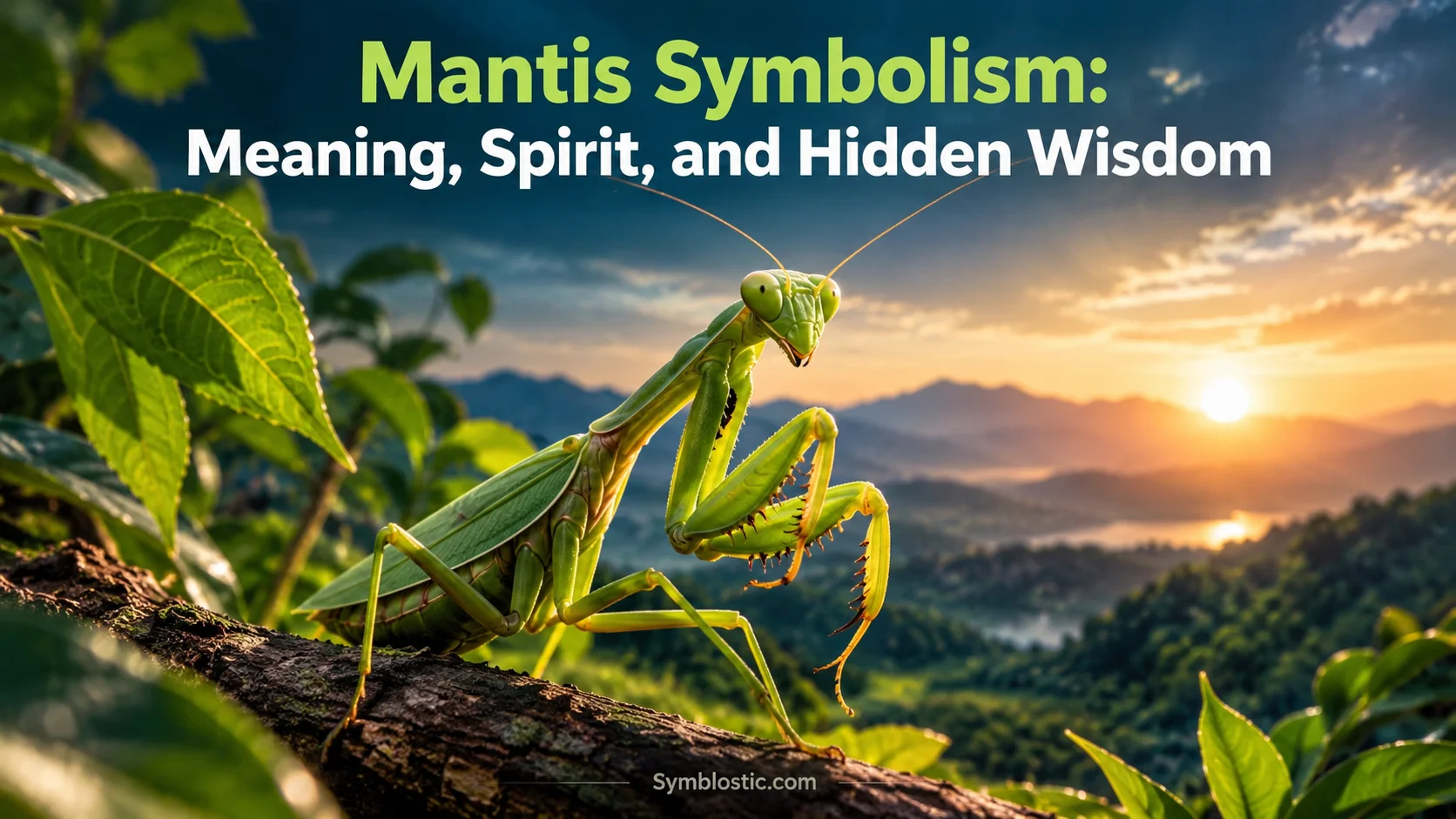
The praying mantis is a fascinating insect that often captures attention through its unusual posture, quiet movements, and watchful appearance. Mantis symbolism commonly represents patience, awareness, stillness, and the power of thoughtful action. Its folded front legs resemble hands held in prayer, giving the insect a spiritual appearance that has inspired curiosity across different cultures.
In the United States, people often connect the mantis with mindfulness, personal growth, nature, and trusting their instincts. Some interpret seeing one as a reminder to slow down and pay attention to their surroundings. Others admire its ability to remain still before making a precise move.
However, the mantis doesn’t have one universal spiritual meaning. Its symbolism depends on personal beliefs, cultural traditions, and the situation in which someone encounters it. Understanding these different interpretations helps you appreciate the insect without treating every encounter as a supernatural message.
From ancient stories to modern tattoos and nature-inspired artwork, the praying mantis offers a powerful symbol of quiet strength. Its behavior also provides a practical lesson: sometimes, observing carefully is more valuable than acting immediately.
Quick Answer
In American symbolism, mantis symbolism commonly represents patience, mindfulness, intuition, and purposeful action. Spiritually, people may associate the insect with inner peace, transformation, protection, and paying closer attention to life’s opportunities.
TL;DR
- Patience: Wait for the right moment instead of rushing.
- Awareness: Observe your surroundings before making important decisions.
- Intuition: Pay attention to your instincts and inner thoughts.
- Spirituality: Connect the mantis with reflection, stillness, and personal meaning.
- Transformation: Treat periods of change as opportunities for growth.
- Modern meaning: Use mantis imagery to express calmness, focus, and individuality.
What Does a Praying Mantis Symbolize?
The praying mantis stands out because of its triangular head, long body, folded front legs, and deliberate movements. These physical features influence how people interpret it, especially when it appears unexpectedly in a garden, on a porch, or near a window.
For American readers, the mantis often represents a balance between calm observation and decisive action. Its quiet presence suggests that strength doesn’t always need to be loud or aggressive.
Patience and Timing
A mantis can remain motionless for extended periods while waiting for prey. Symbolically, this behavior represents knowing when to wait and when to act.
The lesson isn’t to avoid taking action altogether. Instead, it encourages you to recognize the difference between useful patience and unnecessary hesitation.
Awareness and Focus
The mantis uses its vision and movements to respond to its surroundings. People may interpret this alertness as a reminder to notice details they might otherwise overlook.
For example, encountering a mantis during a stressful day might prompt you to pause, breathe, and consider your next decision carefully.
Quiet Strength
Despite its delicate appearance, a mantis is a skilled predator. This contrast makes it a symbol of hidden ability, self-control, and confidence without showiness.
Spiritual Meaning of a Praying Mantis
Spiritually, people often interpret the praying mantis as a reminder to become more attentive to their inner lives. Its distinctive posture can resemble prayer or meditation, although the insect’s biological behavior doesn’t establish a spiritual message.
In American spiritual communities, mantis encounters may be connected with reflection, personal guidance, and a renewed sense of purpose. These interpretations are personal beliefs rather than proven supernatural facts.
Stillness and Inner Peace
A mantis may encourage you to create space for quiet thought. Instead of reacting immediately to every problem, consider what you can learn by observing first.
This interpretation can feel especially meaningful during periods of uncertainty, when constant activity makes it difficult to think clearly.
Intuition and Inner Guidance
Some spiritual interpretations connect the mantis with intuition, or the ability to recognize something through experience and instinct. Seeing one may become a personal reminder to examine your feelings alongside the available facts.
However, intuition shouldn’t replace careful judgment. You can respect your instincts while still considering evidence, asking questions, and weighing your choices.
A Reminder to Be Present
The mantis’s stillness can symbolize living in the present moment. It invites you to notice ordinary experiences rather than becoming completely absorbed in worries about the future.
For some people, that message is spiritual. For others, it’s simply a useful reminder to slow down and appreciate nature.
Mantis Symbolism in American Culture
In the United States, the praying mantis is familiar to gardeners, nature enthusiasts, educators, and people interested in spiritual symbolism. Its unusual appearance makes it memorable, while its behavior provides several ways to interpret its presence.
Unlike national emblems such as the bald eagle, the mantis doesn’t have one widely established national meaning. Its American symbolism is largely shaped by individual experience, popular nature writing, and modern spiritual interests.
Nature, Gardens, and Everyday Encounters
Many Americans encounter mantises in gardens, yards, parks, and outdoor spaces. Gardeners may appreciate them because they hunt other insects, although they can also catch beneficial insects.
A mantis appearing on a plant can inspire thoughts about ecological balance, patience, and the small forms of life sharing our surroundings. The encounter doesn’t need to be supernatural to feel meaningful.
Independence and Self-Reliance
The mantis’s solitary hunting style can suggest independence and self-sufficiency. In personal symbolism, it may represent someone who trusts their abilities without constantly seeking approval.
This interpretation can appeal to people who value quiet confidence, thoughtful decisions, and personal boundaries.
The American Interest in Personal Meaning
Many Americans use animals to express ideas about identity, resilience, and personal growth. The mantis fits this interest because its appearance and behavior are easy to connect with patience and deliberate action.
Still, these associations vary between individuals. A gardener may see a helpful predator, while an artist may see a striking shape or a spiritual reminder.
Historical Origins of Mantis Symbolism
The praying mantis has inspired human attention for centuries, but its meanings have never been identical everywhere. Historical interpretations developed through encounters with the insect, local beliefs, language, and stories about the natural world.
It’s important to separate documented cultural traditions from modern spiritual interpretations. Similar ideas can arise in different societies without sharing the same historical origin.
Ancient Greek Connections
The English word mantis comes from an ancient Greek word associated with a prophet or diviner. This linguistic connection reflects a historical association between the insect’s unusual appearance and ideas about spiritual insight.
However, the word’s origin doesn’t prove that every ancient Greek community worshiped the mantis or considered it sacred. Historical claims should remain limited to what the evidence supports.
Traditional African Interpretations
Some San traditions of southern Africa include the mantis in important stories and spiritual understandings of the natural world. In particular, the figure commonly known as /Kaggen appears in San mythology and is associated with a mantis.
These traditions are diverse, and not every San community tells the same stories or interprets the figure identically. Their cultural meanings shouldn’t be reduced to a universal message about luck, manifestation, or personal success.
From Folklore to Modern Spirituality
Over time, people have interpreted unusual animals through religious beliefs, folklore, scientific observation, and personal experience. Today, online spirituality often associates the mantis with mindfulness, transformation, and intuitive guidance.
Some of these modern meanings draw on the insect’s actual behavior. Others are contemporary interpretations rather than established ancient traditions.
Different Mantis Colors and Their Symbolic Meanings
Praying mantises can appear in shades of green, brown, and other natural colors. Their coloration often helps them blend into plants, branches, and dry vegetation.
People sometimes assign symbolic meanings to these colors. Such interpretations can be useful for personal reflection, but they aren’t universal cultural rules.
Green Mantis: Growth and Renewal
A green mantis can evoke fresh leaves, springtime, and healthy plant life. Symbolically, people may associate it with renewal, balance, and the willingness to grow.
In an American garden, its color can also suggest a close relationship with nature. This makes the green mantis a fitting image for environmental appreciation and personal development.
Brown Mantis: Stability and Grounding
A brown mantis may blend into dead leaves, bark, and dry grass. Its earthy appearance can suggest stability, practicality, and a connection with the natural world.
For someone going through a difficult transition, this interpretation may serve as a reminder to focus on reliable habits and realistic next steps.
Color Depends on the Species and Environment
A mantis’s appearance is primarily shaped by biology, species, development, and environmental conditions. Not every color variation has a spiritual explanation.
If a particular color feels meaningful to you, consider what it personally represents rather than assuming it predicts a future event.
Psychological Meaning of the Mantis
The mantis can function as a psychological symbol because its behavior resembles qualities people admire or struggle to develop. Stillness suggests restraint, its hunting posture suggests focus, and its sudden movements suggest decisive action.
These connections can help people reflect on their habits without treating animal symbolism as a formal psychological diagnosis.
Learning to Pause Before Reacting
A mantis waits for a suitable moment rather than chasing every opportunity. As a personal metaphor, it can encourage you to think before responding during a disagreement or stressful situation.
For example, you might use the mantis as a reminder to wait until you’re calm before sending an emotional message.
Balancing Caution and Action
Waiting can be wise, but excessive hesitation can also prevent progress. The mantis offers a useful image of preparation followed by movement.
Its symbolism can encourage you to gather enough information, recognize a reasonable opportunity, and then take a clear step forward.
Confidence Without Attention-Seeking
The mantis doesn’t need to look powerful in the way a large mammal does. Its distinctive posture and effective hunting behavior can represent competence that doesn’t depend on public recognition.
This meaning may resonate with people who prefer to work quietly, protect their privacy, and let their actions demonstrate their abilities.
What Does It Mean When You See a Praying Mantis?
Seeing a praying mantis can feel memorable because the insect often remains still while everything around it moves. The meaning people assign to the encounter depends on their beliefs, emotions, and circumstances.
In the United States, people may interpret a mantis sighting as a reminder to practice patience or reconnect with nature. However, an ordinary encounter doesn’t automatically predict a particular event.
Seeing a Mantis in Your Yard
A mantis in your yard can symbolize growth, environmental awareness, and appreciation for small details. If you’ve been feeling overwhelmed, the encounter might remind you to take a break and look at your surroundings.
There is also a practical explanation: yards provide shelter, vegetation, and insects that mantises hunt for food.
Seeing a Mantis on Your Door
A mantis resting near your front door may inspire thoughts about transitions, boundaries, and new beginnings. In personal symbolism, a doorway often represents movement from one stage of life to another.
You might use the encounter to reflect on what you’re welcoming into your life. However, there’s no established rule that a mantis at your door guarantees visitors, opportunities, or good fortune.
Seeing a Mantis Repeatedly
Repeated encounters can make an animal feel especially significant. You might associate the mantis with a lesson you’re currently learning, such as patience or confidence.
At the same time, noticing an insect more often can happen because you’ve become more attentive to it. Repetition alone doesn’t establish a supernatural message.
Praying Mantis as a Spirit Animal
In contemporary spiritual language, a spirit animal is often understood as an animal representing qualities that someone wants to recognize or develop. However, the term has specific meanings in some Indigenous traditions, so it shouldn’t be treated as a universal label for every personal animal connection.
For American readers exploring animal symbolism, the mantis can serve as a personal symbol of restraint, awareness, and deliberate action.
Lessons Associated With the Mantis
People who identify with mantis symbolism may connect with several qualities:
- Patience: Allow situations to develop before making a decision.
- Observation: Notice small details before reaching a conclusion.
- Discipline: Focus energy on meaningful goals instead of distractions.
- Adaptability: Adjust your approach when circumstances change.
- Self-trust: Recognize your strengths without needing constant approval.
These associations are reflective tools, not proof that an animal has selected or contacted someone spiritually.
When the Mantis Feels Personally Significant
You may feel drawn to the mantis during a period of change, uncertainty, or personal growth. Its stillness can become a reminder to make thoughtful choices rather than react out of fear.
Ask yourself what was happening when you noticed it. The answer may reveal why the encounter felt important to you, even without assuming a supernatural cause.
Praying Mantis in Different Spiritual Traditions
Mantis symbolism varies across cultures, and its meaning should be understood within each tradition’s own history. Although modern spiritual writing often combines different beliefs, those traditions don’t necessarily share the same ideas.
A respectful interpretation recognizes cultural differences rather than presenting one meaning as universal.
African Cultural Traditions
Some San communities of southern Africa have stories featuring a mantis-associated figure known as /Kaggen. In these traditions, the figure has a complex place in mythology and can’t be reduced to a simple symbol of patience or good luck.
This cultural background is distinct from modern American interpretations of the mantis as a personal spiritual guide. Understanding the difference helps preserve the depth of the original stories.
Western Spiritual Interpretations
In modern Western spiritual settings, people sometimes connect the mantis with meditation, intuition, and mindful living. Its folded front legs can resemble a praying figure, which helps explain why observers may associate it with contemplation.
However, the posture is part of the insect’s anatomy and behavior. The spiritual meaning comes from human interpretation rather than a demonstrated religious purpose.
Read More: Indigo Symbolism: Meaning, History, and Spiritual Significance
Personal Beliefs and Cultural Respect
You can appreciate the mantis as a spiritual symbol without claiming that every culture interprets it identically. If a particular tradition matters to you, learn about its actual teachings instead of relying on simplified social media summaries.
This approach allows symbolism to remain meaningful while respecting the people and histories behind it.
Mantis Symbolism in Dreams
Dreams involving mantises can be interpreted as reflections of personal concerns, emotions, or recent experiences. There isn’t one scientifically established meaning for dreaming about this insect, so the details of the dream and your own associations matter.
In contemporary dream interpretation, the mantis often represents waiting, observation, control, or the need to act carefully.
Dreaming of a Calm Mantis
A calm mantis might represent a desire for quiet, patience, or greater concentration. If life has felt hectic, the dream could reflect your wish to slow down.
Consider whether you need more time to think before making a decision. Your current circumstances may provide a more useful interpretation than a fixed dream dictionary.
Dreaming of a Mantis Attacking
An attacking mantis may reflect feelings of pressure, defensiveness, or uncertainty. Its predatory behavior can make it a powerful image when you’re worried about competition or conflict.
However, such a dream doesn’t predict that someone will harm you. Think about recent events and the emotions you experienced during the dream before drawing conclusions.
Dreaming of a Green or Brown Mantis
A green mantis might remind you of renewal, nature, or personal growth. A brown mantis could evoke stability, familiarity, or a desire to feel grounded.
These are possible personal associations, not universal rules. Your emotional response to the dream is an important part of understanding it.
Mantis Symbolism in Tattoos and Body Art
A praying mantis tattoo can express individuality through an unusual and recognizable natural form. In the United States, animal tattoos often help people communicate personal values, interests, memories, or connections with nature.
The mantis offers several visual styles, from realistic insect portraits to minimalist line drawings. Its meaning depends on the wearer’s intention rather than one fixed cultural definition.
Common Mantis Tattoo Meanings
A mantis tattoo may represent qualities that someone wants to carry into everyday life.
- Patience and discipline: A reminder to wait for the right opportunity.
- Quiet power: Confidence that doesn’t depend on showing off.
- Mindfulness: A commitment to noticing the present moment.
- Individuality: Appreciation for an unusual and often misunderstood creature.
- Personal transformation: Recognition of a meaningful change or new chapter.
Choosing a Design
A realistic green mantis can emphasize nature and biological detail. A geometric design may highlight its angular body, while a simple silhouette can represent focus and restraint.
Some people combine the insect with leaves, flowers, moons, or abstract shapes. These additional elements introduce their own meanings, so the final design can express a personal story rather than a universal message.
Mantis Symbolism in Art, Fashion, and Home Decor
The mantis has a distinctive shape that works well in illustrations, clothing, jewelry, and decorative objects. Its long body and folded front legs create a recognizable outline even in simple designs.
In American homes, a mantis illustration might reflect an interest in gardening, wildlife, unusual insects, or nature-inspired interiors. Its symbolic associations can add another layer of meaning.
Nature-Inspired Artwork
An illustration of a mantis among leaves can suggest patience, balance, and attention to the natural world. A close-up portrait may instead emphasize its unusual eyes and alert posture.
Artists can also use the insect to explore contrasts between delicacy and strength. Such imagery can feel both peaceful and slightly mysterious.
Clothing and Jewelry
Mantis imagery may appeal to people who prefer less common animal designs. Unlike familiar motifs such as butterflies or eagles, the mantis can express an appreciation for overlooked creatures.
A pendant, embroidered design, or printed shirt might represent curiosity, independence, or a personal interest in insects. However, the meaning is shaped by the person wearing it.
Social Media and Personal Identity
On social media, animal imagery often becomes a shorthand for a mood, interest, or personal value. A mantis image might accompany reflections on patience, concentration, or taking time away from distractions.
Still, not everyone who shares a mantis picture intends a spiritual message. Sometimes, the insect is simply fascinating to look at.
Is the Praying Mantis a Sign of Good Luck?
Some people interpret a praying mantis encounter as a sign of good luck, favorable timing, or a positive change. In modern spiritual settings, the insect may be viewed as an encouraging reminder to remain patient and open to possibilities.
However, there is no reliable evidence that seeing a mantis causes good fortune or predicts future success. The idea is best understood as a cultural or personal belief.
Why People Associate It With Good Fortune
The mantis’s stillness can suggest that waiting may lead to a useful opportunity. Its sudden, precise movements can also represent readiness when the moment arrives.
For someone facing a difficult choice, this symbolism may offer encouragement without promising a particular result.
Turning the Symbol Into a Practical Reminder
Rather than treating a sighting as a guarantee, use it as an opportunity to consider your next step.
- Identify an opportunity that deserves careful attention.
- Think about whether you’re rushing a decision.
- Prepare for a goal instead of relying on chance.
- Stay open to new possibilities without ignoring practical concerns.
This approach preserves the positive message while keeping expectations realistic.
Negative Meanings and Misunderstandings About the Mantis
Not every mantis association is positive. Its hunting behavior, unusual appearance, and ability to remain motionless can make it seem mysterious or intimidating.
These qualities can inspire interpretations involving secrecy, control, or danger. Yet such meanings aren’t inherently negative, and the insect itself isn’t an omen of harm.
Why Some People Find It Frightening
A mantis has large, forward-facing eyes, grasping front legs, and quick movements. Those features can appear unsettling to someone unfamiliar with insects.
However, praying mantises don’t generally pose a threat to people. Their front legs are adapted for catching prey, not attacking humans.
The Meaning of the Name
The word praying refers to the appearance of the insect’s folded front legs. It doesn’t mean that the mantis practices religion or possesses supernatural knowledge.
Likewise, the Greek origin of the word mantis shouldn’t be used to claim that every mantis sighting predicts the future.
Avoiding Fear-Based Interpretations
Some online spiritual content presents animal encounters as warnings about betrayal, danger, or negative energy. Such claims can create unnecessary anxiety when they aren’t supported by evidence.
A more balanced approach considers the insect’s natural behavior, your personal feelings, and the cultural context of the interpretation.
Mantis Symbolism Through Time
The mantis has been understood through several different lenses, including language, folklore, natural history, and contemporary spirituality. Its meanings have changed as people developed new ways to describe and interpret the natural world.
Understanding these shifts helps explain why the same insect can represent spiritual insight to one person and ecological curiosity to another.
From Traditional Stories to Natural History
Historical stories sometimes gave unusual animals roles connected with the sacred, the mysterious, or the unknown. Over time, natural history added detailed explanations of mantis anatomy, hunting, camouflage, and reproduction.
These scientific explanations didn’t eliminate personal symbolism. Instead, they gave people more information about the animal that inspired it.
The Rise of Personal Spiritual Interpretations
Today, many people explore animal symbolism as a way to reflect on identity, relationships, and personal development. The mantis fits this interest because its behavior offers clear metaphors for patience and deliberate action.
Some contemporary interpretations draw from older cultural traditions, while others are newly developed personal associations. They shouldn’t all be treated as ancient beliefs.
What Its Changing Meaning Tells Us
The history of mantis symbolism shows how people create meaning through encounters with nature. An insect can be biologically ordinary while remaining emotionally or culturally significant.
You don’t need to believe in omens to appreciate the mantis as a symbol of thoughtful action. Its practical lessons can remain valuable regardless of your spiritual outlook.
Mantis Symbolism at a Glance
The table below summarizes common modern interpretations, especially those relevant to American readers. These meanings are possibilities rather than fixed rules shared by every culture.
| Context | Common symbolic meaning | Practical interpretation |
| Everyday sighting | Awareness and patience | Pause and observe your surroundings |
| Spiritual reflection | Stillness and intuition | Make room for quiet thought |
| Green mantis | Growth and renewal | Welcome opportunities to learn |
| Brown mantis | Stability and grounding | Focus on what you can control |
| Tattoo or artwork | Quiet strength and individuality | Express personal values through art |
| Dream encounter | Caution or concentration | Reflect on current feelings and concerns |
The most meaningful interpretation is often the one that helps you reflect without creating fear or unrealistic expectations.
FAQs:
What Does a Praying Mantis Mean Spiritually?
A praying mantis often symbolizes patience, awareness, intuition, and inner stillness in modern spiritual interpretations. Some people view an encounter as a reminder to slow down and consider their choices carefully.
Is Seeing a Praying Mantis a Good Omen?
Some people consider a mantis a positive sign associated with good fortune, timing, or personal growth. However, no scientific evidence shows that a sighting predicts future events.
What Does a Green Praying Mantis Symbolize?
A green mantis can represent renewal, growth, balance, and a connection with nature. These associations often come from its color and its natural surroundings rather than a universal spiritual tradition.
What Does It Mean When a Praying Mantis Visits Your House?
A mantis inside your house may inspire personal interpretations involving change, awareness, or new beginnings. Practically, it may simply have entered through an open door or window while seeking shelter or following prey.
Does a Praying Mantis Represent Protection?
Some modern spiritual interpretations associate the mantis with protection through awareness, patience, and careful decisions. This is a symbolic meaning, not evidence that the insect provides supernatural protection.
What Does a Praying Mantis Tattoo Mean?
A praying mantis tattoo can express patience, quiet strength, concentration, or individuality. Its meaning depends on the wearer’s personal experiences, chosen design, and reasons for selecting the insect.
Conclusion:
Mantis symbolism centers on patience, awareness, intuition, and quiet strength. In the United States, people often connect the praying mantis with mindfulness, personal growth, and an appreciation for nature. Across different spiritual and cultural settings, its unusual appearance has inspired additional interpretations, although those meanings vary considerably.
Whether you encounter a mantis in your garden, dream about one, or choose it for a tattoo, you can use its symbolism as an opportunity for reflection. Let its calm posture remind you to observe carefully, trust thoughtful judgment, and act when the time feels right.

1 thought on “Mantis Symbolism: Meaning, Spirit, and Hidden Wisdom”