
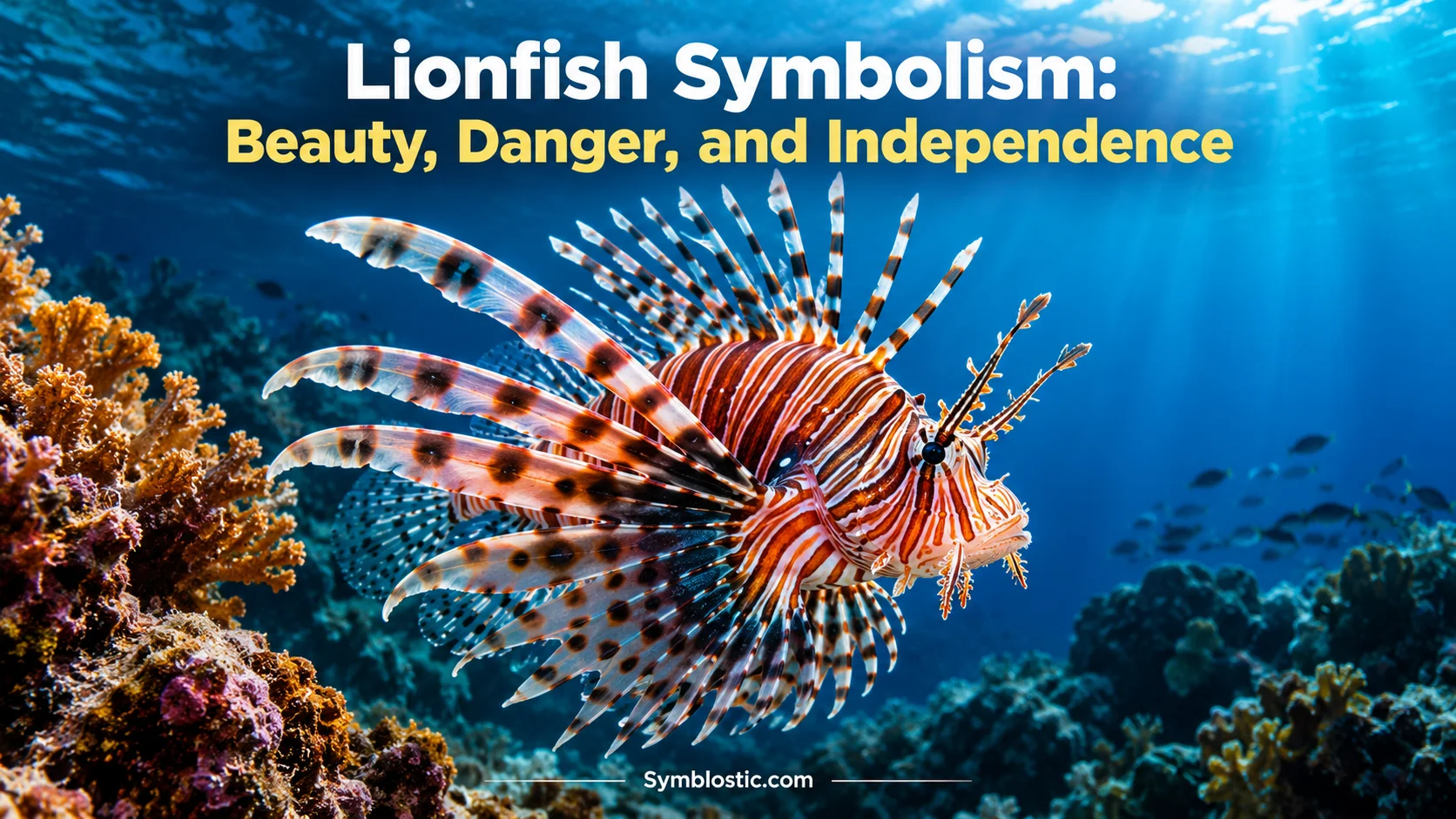
The ocean holds many creatures that seem beautiful at first glance, yet carry deeper meanings. Lionfish symbolism often represents striking beauty, hidden danger, independence, and the need for healthy boundaries. With its fan-shaped fins, bold stripes, and long spines, the lionfish stands out in a world filled with fascinating marine life.
In the United States, this unusual fish has gained attention for more than its appearance. Lionfish are admired by aquarium enthusiasts, featured in underwater photography, and discussed in connection with marine conservation. Their spread across parts of the Atlantic and Caribbean has also made them symbols of how beauty and ecological harm can exist together.
Spiritually, some people interpret the lionfish as a reminder to protect personal energy while remaining confident in their individuality. Others associate it with self-defense, patience, and awareness. However, these interpretations aren’t universal traditions or proven messages from nature. They’re ways people connect an animal’s observable traits with human experiences.
Understanding this symbol means looking beyond its dramatic appearance. Its natural behavior, history, environmental impact, and modern cultural associations all help explain why the lionfish can represent both attraction and caution.
Quick Answer
In American culture, lionfish symbolism commonly suggests beauty, danger, independence, self-protection, and environmental awareness. Spiritually, people may interpret the lionfish as a reminder to establish boundaries, trust their individuality, and approach unfamiliar situations with care.
TL;DR
- Beauty and danger can exist in the same creature.
- Lionfish represent independence, confidence, and personal boundaries in modern interpretations.
- Their venomous spines symbolize protection and the consequences of ignoring warning signs.
- In the United States, lionfish are associated with marine conservation and invasive species awareness.
- Spiritually, they may inspire patience, self-respect, and thoughtful action.
- Tattoos and artwork use their dramatic appearance to express strength and individuality.
What Does a Lionfish Look Like as a Symbol?
The lionfish has one of the most recognizable shapes in the underwater world. Its appearance gives people several visual clues when interpreting it as a symbol of strength, beauty, and caution.
Colors, Fins, and Spines
Lionfish usually display red, brown, white, or cream-colored stripes. Their broad pectoral fins spread like fans, while their long spines create an almost crown-like outline.
Each feature can suggest a different human quality:
- Red and white stripes: Passion, contrast, visibility, and individuality.
- Fan-shaped fins: Openness, self-expression, and a willingness to stand out.
- Sharp spines: Protection, boundaries, and defensive strength.
- Slow, controlled movement: Patience, awareness, and deliberate action.
These meanings are symbolic interpretations rather than fixed cultural definitions. Still, they help explain why the lionfish can feel both graceful and intimidating.
Why Its Appearance Matters
Unlike animals that rely on hiding, the lionfish is highly conspicuous. Its dramatic fins and stripes make it difficult to overlook.
As a result, people may associate it with someone who refuses to blend into the crowd. Its spines add another layer: being noticeable doesn’t mean being available to everyone.
Historical Background of Lionfish Symbolism
Lionfish symbolism doesn’t have one widely established ancient meaning. Instead, its modern interpretations emerge from the fish’s natural characteristics, regional marine traditions, and changing human relationships with the ocean.
Origins in the Indo-Pacific
Lionfish are native to tropical waters of the Indo-Pacific, including parts of the Indian and Pacific Oceans. People in these regions have encountered them in reef environments for generations.
However, it’s important to distinguish cultural history from modern symbolic interpretation. The lionfish doesn’t have one universal meaning shared by every community across its native range.
People may have understood it through practical experiences with fishing, food, marine life, and its dangerous spines. Those relationships can carry local knowledge without necessarily forming a formal spiritual symbol.
The Rise of Aquarium Culture
During the twentieth century, colorful marine fish became popular among aquarium enthusiasts in the United States. Lionfish attracted attention because of their striking appearance and unusual fins.
This popularity helped shape their modern image as exotic, mysterious, and visually impressive creatures. At the same time, aquarium releases likely contributed to their introduction into Atlantic waters.
Consequently, the lionfish acquired a complicated American identity. It became both a prized display animal and a reminder that human choices can have unintended environmental consequences.
Lionfish Symbolism in American Culture
In the United States, lionfish symbolism is strongly shaped by marine life, coastal recreation, aquarium culture, and environmental awareness. Its meaning can change depending on whether someone encounters it in a tank, underwater, or in a conservation campaign.
Beauty and Danger in the American Imagination
American popular culture often finds meaning in animals that combine attractive appearances with serious defensive abilities. The lionfish fits this pattern naturally.
Its elegant fins can inspire admiration, while its venomous spines encourage caution. This combination makes it a useful symbol for situations that seem appealing but require careful judgment.
For example, someone might connect a lionfish with a relationship that looks exciting but demands clear boundaries. Another person might see it as a reminder that confidence and vulnerability can exist together.
Coastal Communities and Conservation
In Florida and other coastal areas, the lionfish has become closely associated with the challenge of protecting native marine ecosystems.
The National Oceanic and Atmospheric Administration identifies lionfish as invasive in Atlantic waters, where they can threaten reef fish populations. This environmental history adds meanings of responsibility, ecological balance, and unintended consequences.
The following American associations are especially relevant:
- Marine exploration: Curiosity about unfamiliar underwater environments.
- Environmental responsibility: Recognition that human actions can change ecosystems.
- Personal independence: Admiration for a distinctive animal that commands attention.
- Caution and awareness: Respect for beauty that comes with genuine risks.
These associations aren’t all equally widespread. Environmental meanings have a particularly strong basis in documented American conservation efforts, while personal meanings often depend on individual experience.
Spiritual Meaning of Lionfish
Some people interpret the lionfish spiritually as a symbol of self-protection, individuality, patience, and personal power. These ideas come mainly from reflecting on its natural features rather than from a single established spiritual tradition.
Protection and Personal Boundaries
The lionfish’s venomous spines offer an obvious starting point for spiritual reflection. They can represent the importance of protecting your time, energy, and emotional well-being.
This doesn’t mean you should become hostile or distrustful. Instead, the image may encourage you to recognize your limits and communicate them clearly.
For someone navigating a difficult relationship or a major life change, the lionfish can serve as a personal reminder to remain kind without abandoning self-respect.
Individuality and Inner Strength
Lionfish have an unmistakable appearance. Their broad fins and bold stripes make them stand out even among colorful reef creatures.
Spiritually minded readers may interpret this as encouragement to embrace qualities that make them different. It can also suggest that strength doesn’t always need to appear loud or aggressive.
A Symbol of Careful Awareness
The lionfish’s striking appearance can attract attention, but its spines demand respect. This contrast offers a simple lesson about looking beyond first impressions.
When using the fish as a spiritual symbol, consider these reflective questions:
- Am I protecting my boundaries without shutting everyone out?
- Am I judging a situation by its appearance alone?
- Where could patience help me make a better decision?
- How can I express my individuality with greater confidence?
There is no single correct spiritual answer. The value lies in how thoughtfully you connect the animal’s traits with your own experience.
Lionfish as a Symbol of Strength and Independence
Strength is one of the most natural symbolic associations people make with the lionfish. Its defensive spines and distinctive appearance suggest an animal that doesn’t need to look like everything around it.
Quiet Strength Rather Than Aggression
The lionfish often moves with controlled, measured motions. It doesn’t need to appear constantly frantic to navigate its environment.
Symbolically, this can represent quiet confidence. A person may be strong because they understand their limits, think before acting, and don’t feel compelled to prove themselves repeatedly.
However, the comparison has limits. Lionfish are predators, and their success in unfamiliar ecosystems has caused harm. Their natural behavior shouldn’t be treated as a perfect model for human conduct.
Independence and Self-Trust
A lionfish image may appeal to someone who values independence or prefers an unconventional path. Its distinctive shape suggests a refusal to disappear into the background.
In this context, independence doesn’t mean avoiding relationships or rejecting help. It means developing a clear sense of identity while respecting other people’s needs.
The symbol may be especially meaningful during periods of personal growth, when someone is learning to trust their judgment and make decisions more confidently.
Lionfish Symbolism in Dreams
Dream interpretations often depend on the dreamer’s emotions, memories, and personal circumstances. Seeing a lionfish in a dream doesn’t establish that a spiritual message or prediction has occurred.
Seeing a Lionfish in Clear Water
A lionfish swimming through clear water might represent curiosity, self-awareness, or a situation you’re beginning to understand.
If you feel calm in the dream, the fish might reflect appreciation for your individuality. If you feel uneasy, it could connect with concerns about hidden risks or unfamiliar surroundings.
Being Chased or Stung by a Lionfish
A threatening encounter might reflect feelings of vulnerability, conflict, or concern about crossing someone’s boundaries. The interpretation depends on what the experience reminds you of.
For instance, a recent disagreement could influence how you experience a defensive animal in a dream. The fish may provide an image for feelings you’re already processing rather than predict future events.
Watching a Lionfish From a Distance
Observing the fish without approaching it may suggest reflection and caution. You might be interested in a situation while recognizing that you need more information before getting involved.
Rather than searching for one fixed interpretation, consider the setting, your emotional response, and any recent experiences that might have influenced the dream.
Read More: Weasel Symbolism: Cleverness, Survival, and Strategy
Emotional and Psychological Meaning of the Lionfish
The lionfish can bring together feelings that seem contradictory. People may find it beautiful and fascinating while also recognizing its potential danger.
Attraction Mixed With Caution
Its dramatic fins and bold markings can create immediate visual interest. Yet the venomous spines introduce a reason to maintain distance.
Psychologically, this combination resembles situations where curiosity and caution appear together. A new opportunity, relationship, or personal challenge might feel exciting without being entirely comfortable.
The lionfish can therefore become a reminder to acknowledge both sides of an experience. You don’t have to ignore something’s appeal to recognize its risks.
What the Lionfish May Represent Emotionally
Different people will connect with different aspects of the animal:
- Confidence: Feeling comfortable with your distinctive qualities.
- Vigilance: Paying attention to warning signs and changing circumstances.
- Resilience: Continuing through challenges without losing your sense of self.
- Ambivalence: Recognizing that something can be attractive and troubling at once.
These are possible associations, not psychological diagnoses. The same image can mean something entirely different to two people.
Using the Symbol for Reflection
If the lionfish feels meaningful to you, identify which feature captures your attention first. Its fins might suggest freedom, while its spines might represent boundaries.
Then consider how that feature relates to your current life. A useful symbol helps you ask better questions rather than dictating what you must believe.
Lionfish Tattoo Meaning and Modern Uses
Lionfish imagery works well in tattoos, artwork, jewelry, and ocean-inspired decor because its silhouette is distinctive. In modern American settings, its meaning often depends on the design and the person’s connection to the sea.
Lionfish Tattoo Symbolism
A lionfish tattoo may express individuality, self-protection, marine appreciation, or a meaningful diving experience. However, no universal tattoo dictionary determines what the image must mean.
Common design choices can influence the message:
- Realistic lionfish: Appreciation for marine life and natural detail.
- Spread fins and visible spines: Confidence, boundaries, and striking individuality.
- Blackwork design: A dramatic, bold, or minimalist personal statement.
- Lionfish with coral: A connection to ocean ecosystems and conservation.
- Lionfish with waves: A personal bond with the sea or coastal living.
For some people, the design may commemorate a memorable trip or a fascination with underwater photography. For others, it may simply be an animal they find beautiful.
Home Decor and Personal Style
Lionfish imagery also appears in marine-themed paintings, decorative sculptures, aquarium photography, and coastal interiors.
In these settings, the animal often communicates an appreciation for color, ocean biodiversity, and unusual natural forms. Its fan-shaped fins make it particularly suitable for detailed artwork.
On social media, a lionfish photograph may express curiosity, diving expertise, or interest in marine conservation. Its meaning comes from the accompanying story as much as the image itself.
Lionfish Symbolism Across Cultures and Spiritual Traditions
Lionfish live across a wide native range, but their presence doesn’t mean every culture has developed a specific spiritual interpretation for them. A respectful discussion should avoid assigning one meaning to entire regions or religious communities.
Indigenous and Regional Marine Knowledge
Communities throughout the Indo-Pacific have diverse relationships with reef environments. Local knowledge may include recognizing marine species, understanding fishing practices, and respecting animals that can cause injury.
However, these practical relationships shouldn’t automatically be labeled spiritual symbolism. Specific claims about sacred meanings require evidence from the relevant community and tradition.
The lionfish’s ecological and physical characteristics provide a reasonable starting point for modern personal reflection. They don’t prove that a particular ancient belief existed.
Contemporary Spiritual Interpretations
Today, people may use lionfish imagery in personal meditation, journaling, or nature-based reflection. Common themes include protection, uniqueness, careful observation, and respect for the unknown.
These meanings are contemporary interpretations, not universal teachings shared by all spiritual traditions.
The distinction matters because animal symbolism is often presented online as though every creature has one ancient, fixed message. In reality, meanings vary with historical evidence, cultural context, and individual experience.
Lionfish Symbolism in Nature and Environmental Awareness
The lionfish has an especially complex meaning in the United States because its ecological role differs between its native waters and its introduced Atlantic range. This distinction changes how conservationists, divers, and coastal residents understand the fish.
A Beautiful but Invasive Predator
Lionfish are native to the Indo-Pacific. However, they became established in Atlantic waters after being detected off South Florida in 1985.
Researchers believe aquarium releases likely contributed to their introduction, although the full history of every release is unknown. In their introduced range, lionfish prey on native reef fish and can disrupt marine ecosystems.
As a result, the animal has become a powerful example of how a species can be fascinating in appearance yet harmful in a particular environment.
The Meaning of Ecological Responsibility
For American readers, the lionfish can represent the importance of understanding consequences before acting. Releasing an unwanted aquarium animal may seem harmless, but introduced species can create lasting ecological problems.
This association doesn’t make lionfish morally bad. The fish is behaving according to its natural instincts in an environment where human activity helped establish it.
Instead, the broader lesson concerns responsibility. People can admire an animal while also recognizing the need to protect native wildlife and habitats.
Conservation and Community Action
Lionfish management efforts have encouraged education, monitoring, targeted removal, and public participation in affected regions.
These efforts give the animal an additional symbolic meaning: awareness can lead to action. The lionfish story illustrates why conservation requires both understanding natural systems and accepting responsibility for human choices.
Common Misunderstandings About Lionfish Symbolism
Because lionfish combine striking beauty with real defensive abilities, their symbolism can easily become exaggerated. Understanding the difference between observation, interpretation, and evidence helps keep their meaning grounded.
Myth Versus Reality
| Common claim | More accurate interpretation | Why it matters |
| Lionfish always symbolize danger | Danger is one possible association based on their venomous spines. | Their appearance can also inspire admiration and curiosity. |
| Lionfish are ancient universal spiritual guides | No single universal spiritual meaning is established. | Personal interpretations should be distinguished from documented traditions. |
| Seeing a lionfish predicts betrayal | Dreams and encounters don’t reliably predict future events. | Reflection is more useful than treating symbolism as certainty. |
| Lionfish represent strength in every context | Meaning depends on the observer and setting. | Ecological harm complicates their otherwise impressive image. |
| Every lionfish tattoo has the same message | Tattoo meanings depend on individual choices and experiences. | Personal intention matters more than a fixed symbolic definition. |
Avoiding Unsupported Spiritual Claims
A lionfish can inspire a meaningful personal lesson without requiring supernatural certainty. It’s reasonable to associate its spines with boundaries, for example, but that doesn’t establish that the universe is sending a specific warning.
Likewise, its presence in a dream isn’t proof of a future event. Interpretations are most helpful when they encourage honest reflection rather than fear.
Appreciating the Animal Without Ignoring Its Impact
The lionfish’s ecological role is another important distinction. Admiring its colors doesn’t require denying its effects on Atlantic reef ecosystems.
Similarly, describing it as an invasive species in American waters doesn’t mean it is inherently harmful everywhere. Its impact depends on location and ecological context.
How Lionfish Symbolism Has Changed Over Time
Lionfish symbolism is better understood as an evolving set of associations than as a single tradition passed unchanged through history. Its modern meaning reflects changes in aquarium culture, marine research, environmental awareness, and personal expression.
From Reef Inhabitant to Aquarium Favorite
In its native waters, the lionfish is part of a complex marine environment. Its colorful appearance also made it attractive to aquarium enthusiasts far beyond that region.
For many observers, this created an image of exotic beauty and underwater mystery. The fish’s defensive spines added a sense of danger that made it even more fascinating.
The American Conservation Connection
Following the fish’s introduction into Atlantic waters, its public image gained a more serious dimension. Researchers documented its spread and its potential effects on native reef communities.
By the 2000s and 2010s, lionfish had become a familiar example in discussions of invasive marine species. This history added themes of environmental responsibility and unintended consequences to its existing associations with beauty and danger.
Meaning in 2025 and 2026
In contemporary culture, the lionfish can carry several meanings at once. A tattoo enthusiast might value its individuality, while a diver might connect it with a memorable underwater encounter.
A conservation volunteer, meanwhile, might see it as a reminder of ecological vulnerability. These interpretations can coexist because symbolism depends on the context in which people encounter the animal.
The clearest modern approach is to acknowledge both its visual appeal and its environmental significance. That balance makes the lionfish a particularly rich subject for personal and cultural reflection.
FAQs:
What does a lionfish symbolize spiritually?
A lionfish may symbolize self-protection, individuality, awareness, and quiet confidence in contemporary spiritual interpretations. These meanings come from reflecting on its distinctive appearance and defensive spines rather than from one universal spiritual tradition.
Is the lionfish a symbol of protection?
Yes, some people interpret its venomous spines as a symbol of protection and personal boundaries. However, the meaning is personal and doesn’t imply that the animal provides supernatural protection.
What does a lionfish tattoo mean?
A lionfish tattoo may represent independence, strength, ocean appreciation, or a connection to diving and marine life. Its colors, design, and the wearer’s personal experiences influence the intended meaning.
What does seeing a lionfish in a dream mean?
A lionfish dream might encourage reflection on confidence, caution, or a situation that feels attractive but risky. Your emotions and recent experiences are more useful interpretive clues than a fixed dream dictionary.
Why are lionfish important in American culture?
Lionfish are notable in the United States because they’re popular aquarium animals and invasive predators in Atlantic waters. Their story connects marine beauty with conservation, responsibility, and the consequences of introducing non-native species.
Are lionfish considered good or bad symbols?
Neither interpretation is universally correct. A lionfish can represent individuality and beauty in personal artwork while also reminding Americans of ecological disruption in Atlantic reefs.
Conclusion:
Lionfish symbolism brings together beauty, danger, independence, and self-protection. Its dramatic fins and venomous spines offer vivid images for thinking about confidence, personal boundaries, and the importance of looking beyond appearances. In the United States, the lionfish also carries an environmental meaning shaped by its spread through Atlantic waters. Its story highlights the relationship between human choices and the health of natural ecosystems.

1 thought on “Lionfish Symbolism: Beauty, Danger, and Independence”