
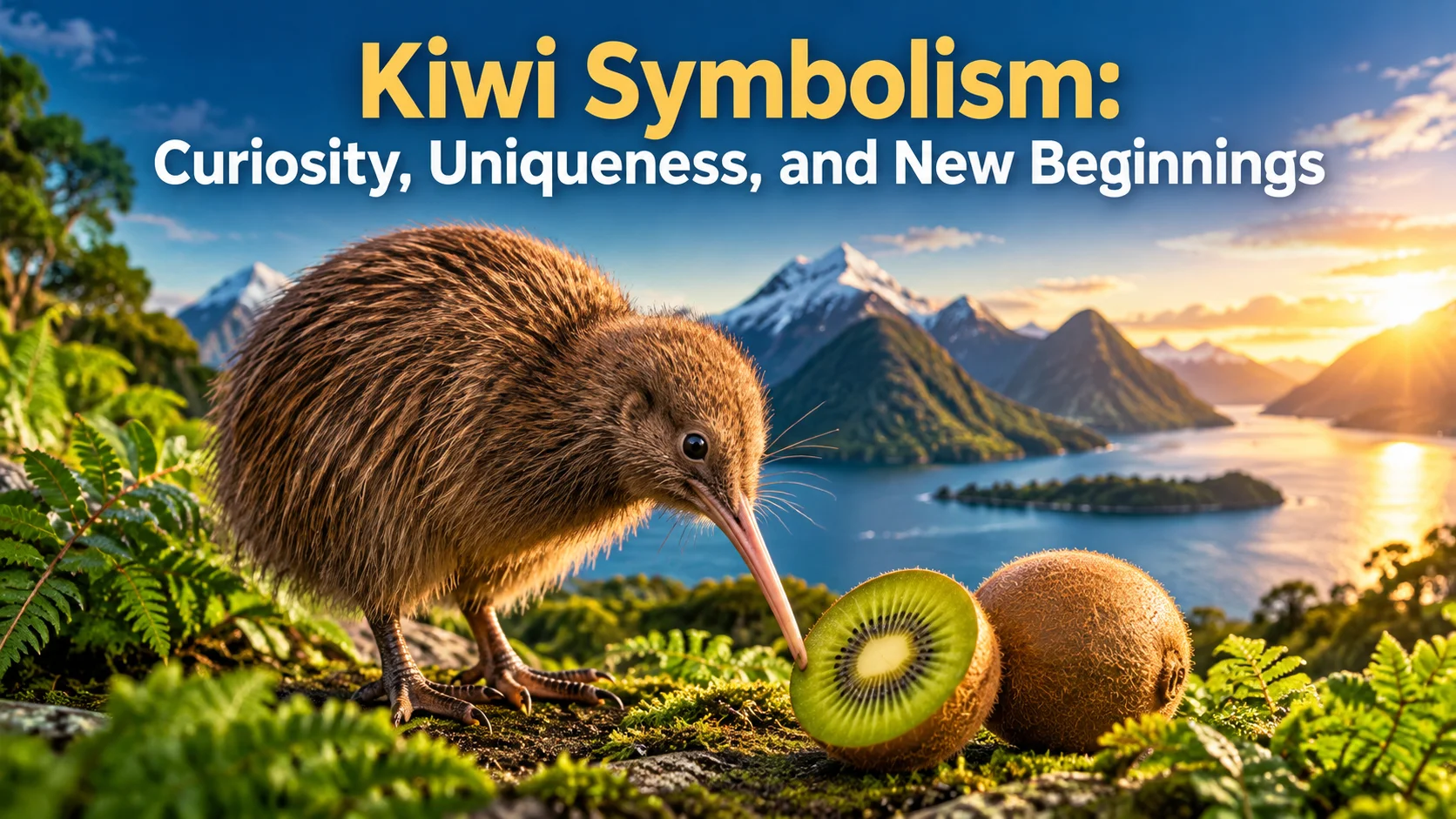
The kiwi is a small, flightless bird with a long beak, shaggy feathers, and a surprisingly strong presence. In Kiwi Symbolism, this unusual creature often represents individuality, quiet strength, curiosity, and the courage to follow your own path. Although the kiwi is native to New Zealand, its image also carries meaning for people in the United States.
Unlike eagles or hawks, kiwis don’t fly through the sky. Instead, they search the forest floor, relying on their sharp senses to find food and navigate their surroundings. Because of this behavior, people may connect the kiwi with patience, grounded living, and trusting instincts.
Today, the kiwi appears in wildlife art, travel designs, educational materials, and conversations about identity. Its association with New Zealand also makes it a recognizable symbol of national pride and cultural belonging. However, its deeper meaning depends on context. A kiwi can represent independence to one person and family, protection, or perseverance to another.
Understanding this bird’s symbolism means looking beyond popular spiritual interpretations. Its natural behavior, cultural importance, and modern image all help explain why such a small bird can inspire powerful ideas.
Quick Answer
Kiwi symbolism commonly represents individuality, resilience, intuition, and quiet determination. In the United States, the bird may also symbolize New Zealand, wildlife conservation, and the freedom to embrace what makes you different. Spiritual interpretations often connect it with grounded energy, patience, and trusting your inner guidance.
TL;DR
- Individuality: The kiwi reminds us to embrace our differences.
- Resilience: Its flightless nature reflects adapting to life’s challenges.
- Intuition: Its sensitive senses suggest trusting subtle signals.
- Grounded living: Its forest-floor habits represent patience and practical wisdom.
- Cultural identity: The kiwi is an important national symbol of New Zealand.
- New beginnings: Its association with eggs and new life can inspire fresh starts.
What Does Kiwi Symbolism Mean?
The kiwi’s symbolism comes largely from its unusual appearance and behavior. It has tiny wings, strong legs, and a long bill that helps it locate food. Rather than relying on flight, it survives through adaptation, awareness, and persistence.
For American readers, these qualities offer an appealing alternative to traditional symbols of power. The kiwi doesn’t need an impressive wingspan or a loud call to stand out. Its uniqueness becomes its defining strength.
The Core Meanings of the Kiwi
Several themes commonly emerge when people interpret the kiwi as a symbol:
- Being different: Its unusual body reminds people that individuality has value.
- Quiet confidence: It survives without needing to dominate its surroundings.
- Persistence: Its adaptations show how different abilities can meet life’s challenges.
- Intuition and awareness: Its strong sense of smell and touch suggest careful observation.
- Protection and renewal: Its connection with nesting and eggs can evoke care and new life.
These are symbolic interpretations, not universal beliefs. A kiwi doesn’t automatically carry the same meaning for everyone. Your personal experiences and the context in which you encounter the bird can shape its significance.
Why the Kiwi Stands Out
Many familiar animal symbols emphasize speed, strength, or freedom. The kiwi offers a different message: you can thrive without matching someone else’s abilities.
For example, someone who feels overlooked at work might connect with the kiwi’s quiet persistence. A person beginning a new chapter might appreciate its connection with survival and adaptation. In both cases, the symbolism encourages confidence without comparison.
Kiwi Bird History and Ancient Symbolism
The kiwi’s story begins in New Zealand, where it evolved in isolation over millions of years. Its history is closely tied to the country’s forests, Indigenous traditions, and changing relationship with wildlife. For Americans, this background explains why the bird means much more than an unusual animal.
The Kiwi in Māori Tradition
In Māori culture, the kiwi holds deep cultural and spiritual importance. It is associated with Tāne, a deity connected with forests and the natural world. The kiwi is sometimes described as the hidden bird of Tāne, reflecting its elusive, forest-dwelling nature.
Kiwi feathers have also been used in kahu kiwi, traditional cloaks valued as important cultural treasures. These garments carry meanings connected with heritage, status, identity, and relationships with the natural world.
Therefore, the kiwi shouldn’t be reduced to a generic spiritual symbol. Its place in Māori culture involves specific traditions, knowledge, and responsibilities that deserve respect.
How the Kiwi Became a National Symbol
The kiwi became increasingly recognizable as an emblem of New Zealand during the late nineteenth and early twentieth centuries. Its image appeared on commercial products, stamps, and other public items.
In 1904, a political cartoon used the bird to represent New Zealand in a sporting context. During the First World War, the word “Kiwi” also became associated with New Zealand soldiers. Over time, the nickname extended to New Zealanders more generally.
These historical changes helped establish the kiwi as a symbol of national identity, distinctiveness, and belonging. Today, those associations remain central to its public meaning.
What Its History Teaches Us
The kiwi’s history illustrates how a living creature can become a powerful cultural emblem. Its significance developed through relationships between people, landscapes, traditions, and shared experiences.
For American readers, this offers a useful reminder. An animal’s symbolism isn’t always ancient or universal. Sometimes, its meaning grows through modern history and the communities that embrace it.
Kiwi Symbolism in the United States
In the United States, the kiwi doesn’t have the same national status it holds in New Zealand. Americans are more likely to recognize it through wildlife documentaries, zoos, travel imagery, or its association with New Zealand. However, its unusual characteristics also make it a useful symbol of individuality and adaptation.
Individuality and Being Different
American culture often celebrates standing out, pursuing personal goals, and expressing individuality. The kiwi fits these ideas because it doesn’t resemble the birds people commonly associate with freedom or power.
Its small wings and flightless body make it distinctive. Yet it has adapted to its environment through other abilities.
People may connect this with several personal values:
- Embracing qualities that make you different from others.
- Finding alternative ways to overcome difficult situations.
- Building confidence without seeking constant attention.
- Recognizing that success doesn’t require following conventional paths.
These interpretations reflect modern American attitudes rather than a single established national tradition.
Travel, Wildlife, and National Identity
For Americans visiting New Zealand, the kiwi can represent discovery, adventure, and appreciation for unfamiliar landscapes. Its image often evokes the country’s forests, wildlife, and distinctive natural heritage.
The bird also offers a connection to conservation. Because several kiwi species face serious threats, the animal can represent the importance of protecting vulnerable wildlife.
In this context, kiwi symbolism combines personal meaning with a broader message about responsibility toward the natural world.
Spiritual Meaning of the Kiwi
The spiritual meaning of the kiwi often centers on inner awareness, patience, grounded energy, and quiet resilience. These interpretations are especially appealing to people who prefer symbols of steady personal growth over dramatic transformation. However, they are contemporary spiritual readings, not universal religious teachings.
Trusting Your Inner Guidance
The kiwi uses its sensitive beak and strong sense of smell to locate food. Symbolically, these abilities can represent noticing details that others overlook.
If the bird feels meaningful to you, consider whether you’re ignoring your instincts or overlooking information around you. The symbolism can encourage thoughtful observation before making a decision.
Still, intuition works best alongside evidence and sound judgment. Seeing a kiwi doesn’t establish that the universe is sending you a particular message.
Grounding and Inner Strength
Because the kiwi spends its life close to the ground, people may associate it with stability and a practical approach to life.
Its symbolism can suggest slowing down, focusing on what matters, and developing strength through consistent effort. Rather than chasing every opportunity, you might benefit from building a steady foundation.
Spiritual Renewal
The kiwi’s association with eggs and reproduction can also inspire thoughts about beginnings, growth, and the protection of something valuable.
This interpretation may resonate during a career change, a personal transition, or the start of a creative project. It encourages patience while something new develops.
Kiwi Symbolism in Dreams
Dream interpretations vary widely, and there is no scientifically established meaning for dreaming about a kiwi. Nevertheless, examining your emotions and the details of the dream can help you understand its personal significance.
Seeing a Kiwi in a Dream
A kiwi might represent feeling different, exploring an unfamiliar situation, or learning to trust your abilities. The meaning depends on what the bird does and how you feel while watching it.
For example, a peaceful kiwi in a forest might remind you of a need for quiet time. A kiwi searching for food could bring to mind persistence or the search for answers.
A Kiwi Running or Hiding
A running kiwi could symbolize a desire to avoid pressure or protect your personal space. A hidden kiwi might reflect privacy, uncertainty, or something you haven’t yet understood.
However, neither image predicts a future event. Dreams often combine memories, emotions, and everyday experiences in unexpected ways.
A Kiwi Egg or Chick
An egg may represent a new idea, a developing relationship, or a project that needs protection. A kiwi chick could suggest vulnerability and the early stages of growth.
Ask yourself what feels new or uncertain in your life. Your own associations will usually provide a more meaningful starting point than a fixed dream dictionary.
Kiwi Symbolism in Love, Family, and Relationships
The kiwi can represent loyalty, care, and the protection of family relationships. These associations come from the bird’s reproductive behavior and the attention needed to protect its vulnerable young. However, these meanings are symbolic interpretations rather than universal cultural beliefs.
Love and Emotional Connection
In personal symbolism, the kiwi may represent a relationship built on quiet understanding instead of grand gestures. It can remind people that affection doesn’t always need to be loud or publicly displayed.
For someone who values privacy, the bird might symbolize a relationship that feels safe away from outside pressure. Its understated appearance can also suggest that genuine connection matters more than outward appearances.
Family and Protection
Kiwi eggs are remarkably large compared with the adult bird’s body. This unusual feature can inspire symbolism around nurturing something precious despite limited resources.
People may interpret the bird as a reminder to:
- Protect family time from unnecessary distractions.
- Support loved ones through difficult transitions.
- Build security through everyday acts of care.
- Respect each person’s need for independence and privacy.
These meanings can make kiwi imagery suitable for family artwork or gifts celebrating a new chapter.
Kiwi Symbolism in Psychology and Personal Growth
From a psychological perspective, the kiwi offers a useful metaphor for adaptation. It doesn’t need to resemble other birds to survive, making it an appealing symbol for people developing confidence or changing their approach to life.
Embracing Your Differences
People sometimes compare themselves with others and assume they’re falling behind. The kiwi provides a different perspective: not every individual needs the same strengths to thrive.
Someone who prefers working quietly might connect with its understated nature. A person changing careers could see its adaptations as a reminder to develop new skills rather than imitate someone else’s path.
Resilience Without Perfection
The kiwi’s survival depends on specialized traits, but its flightlessness also leaves it vulnerable to certain threats. This makes the bird a more balanced symbol than an image of unlimited strength.
Its message isn’t that you can overcome every obstacle through determination alone. Instead, it can represent recognizing your strengths, understanding your limitations, and adapting when circumstances change.
Patience and Self-Awareness
Because kiwi forage by sensing food in their environment, they can symbolize paying attention before acting.
In everyday life, this might mean listening carefully during a difficult conversation, noticing recurring habits, or allowing yourself time to make a thoughtful choice. The symbolism favors awareness over impulsiveness.
Kiwi Symbolism in Tattoos, Art, and Home Decor
Kiwi imagery can express individuality, affection for wildlife, travel memories, or a connection with New Zealand. Its rounded body and distinctive beak also make it recognizable in both realistic and simplified designs.
Kiwi Tattoo Meaning
A kiwi tattoo can hold different meanings depending on the wearer’s experiences and design choices.
- Minimalist kiwi: Personal independence and understated confidence.
- Kiwi with an egg: New beginnings, family, and protection.
- Kiwi in a forest: Grounded living and appreciation for nature.
- Kiwi with a map: Travel memories or a connection to New Zealand.
- Realistic kiwi portrait: Wildlife appreciation and conservation awareness.
A tattoo doesn’t have one fixed meaning. Before choosing a design, consider whether you connect with the bird personally or want to acknowledge its cultural significance.
Art and Home Decor
Kiwi illustrations can add a playful, natural element to a room. Their distinctive silhouettes work well in wildlife prints, children’s bedrooms, nature-themed spaces, and travel-inspired collections.
For a subtler look, a simple outline can emphasize the bird’s shape without making the design feel overly decorative. More detailed artwork can highlight its brown feathers, long bill, and forest habitat.
Social Media and Digital Identity
Online, kiwi images may communicate curiosity, humor, travel, or a love of unusual animals. A person might use a kiwi illustration as an avatar because it feels distinctive or reflects a memorable trip.
However, a kiwi emoji or picture doesn’t have a universal spiritual meaning. Its message depends on the caption, surrounding images, and the person using it.
Read More: Waterbuck Symbolism: Strength, Alertness, and Resilience
Kiwi Symbolism Across Cultures and Spiritual Traditions
The kiwi’s cultural meanings are not identical worldwide. Its strongest traditional associations belong to New Zealand, while its spiritual meanings elsewhere are often personal or contemporary interpretations.
Māori Cultural Significance
For Māori, the kiwi is a taonga, or treasured being, with important cultural and spiritual connections. Its relationship with Tāne and the use of kiwi feathers in traditional cloaks reflect a deeper cultural history.
These traditions shouldn’t be treated as interchangeable with general internet interpretations of animal spirituality. Understanding them requires respect for Māori knowledge, heritage, and guardianship of the natural world.
Meanings Beyond New Zealand
Outside New Zealand, people may associate the kiwi with uniqueness, survival, and ecological responsibility. These interpretations often arise from its unusual biology rather than an established ancient tradition.
In the United States, for instance, someone might choose the bird to represent a personal journey or a commitment to wildlife protection. Another person might simply appreciate its distinctive appearance.
A Note About Universal Spiritual Claims
There is no single worldwide tradition that assigns the kiwi one universal spiritual meaning. Claims that it always represents good luck, predicts a major life change, or delivers a supernatural message should be treated as personal beliefs rather than established facts.
The symbol can still be meaningful without requiring everyone to interpret it in the same way.
Kiwi Symbolism and Conservation
The kiwi represents more than personal growth or national identity. It also highlights the relationship between wildlife, human activity, and environmental responsibility.
A Symbol of Vulnerability
Kiwi populations face threats from introduced predators, habitat pressures, and other human-related impacts. Their flightlessness makes them particularly vulnerable to certain dangers, especially attacks on chicks and adults.
Consequently, the bird can symbolize the need to protect species that cannot easily adapt to every environmental change.
Resilience and Responsibility
It may be tempting to interpret resilience as the ability to survive anything. The kiwi’s actual situation offers a more realistic lesson: even well-adapted animals need suitable habitats and protection from avoidable threats.
This idea applies beyond wildlife. Communities and individuals may also need support, resources, and cooperation to recover from difficult circumstances.
What Conservation Adds to Its Meaning
In modern discussions, the kiwi can represent:
- Protecting vulnerable species and their habitats.
- Respecting Indigenous knowledge and environmental stewardship.
- Supporting long-term conservation rather than quick solutions.
- Recognizing that individual actions can help protect wildlife.
This meaning gives the bird a practical significance beyond decorative or spiritual imagery.
Kiwi Symbolism by Color, Behavior, and Context
The kiwi’s appearance can influence how people interpret it as a symbol. Its natural brown feathers, compact body, and long beak create a grounded, earthy image. Meanwhile, its behavior offers additional ways to explore its meaning.
What Different Kiwi Images Can Represent
| Kiwi Image or Context | Possible Symbolic Meaning | Common Association |
| Brown kiwi in a forest | Grounding and adaptation | Nature and stability |
| Kiwi searching for food | Awareness and persistence | Patience and resourcefulness |
| Kiwi with an egg | New beginnings and care | Family and growth |
| Kiwi standing alone | Individuality and independence | Self-confidence |
| Kiwi with a New Zealand landscape | Cultural identity and belonging | Travel and heritage |
These interpretations aren’t official symbolic rules. They are useful ways to explore the ideas an image may communicate.
The Meaning of Natural Colors
The kiwi’s earthy brown and muted tones can evoke forests, soil, and a close connection with nature. In artwork, these colors may reinforce themes of simplicity, stability, and belonging.
However, color symbolism depends on context. Brown can suggest warmth and comfort in one design, while a darker palette might communicate mystery or solitude.
Why Behavior Matters
A kiwi walking through a forest may suggest steady progress. A kiwi searching for food might represent curiosity or practical problem-solving.
Instead of relying on appearance alone, consider what the bird is doing. Its posture, surroundings, and relationship with other animals can change the message an image conveys.
Kiwi Symbolism in American Pop Culture and Everyday Life
In American popular culture, the kiwi is less familiar than animals such as eagles, bears, or owls. Even so, it appears in travel-related imagery, wildlife education, children’s materials, and conversations about New Zealand.
Travel and Adventure
For an American traveler, a kiwi can represent the excitement of discovering a place with unfamiliar wildlife and landscapes. It may also become a reminder of a memorable vacation, a study-abroad experience, or a meaningful connection with New Zealand.
Unlike generic travel symbols, the kiwi points toward a particular natural and cultural setting. Its meaning can therefore be both personal and geographical.
Education and Wildlife Awareness
Zoos, museums, and conservation programs introduce American audiences to the kiwi’s distinctive biology. Its unusual features make it memorable, particularly for children learning about birds and ecosystems.
This educational role can connect the kiwi with curiosity, discovery, and respect for biodiversity.
Holidays, Gifts, and Collectibles
Kiwi-themed gifts may suit someone who loves birds, appreciates New Zealand, or enjoys unusual wildlife. A small figurine, illustrated card, or travel souvenir can represent shared memories and personal interests.
However, the kiwi doesn’t have a widely established role in major American holidays. Its appearance in seasonal decor is generally a personal or creative choice rather than a traditional national custom.
Misunderstandings About Kiwi Symbolism
As animal symbolism becomes more popular online, interpretations can sometimes lose their historical context. The kiwi is particularly vulnerable to this problem because its cultural significance is much stronger in New Zealand than in most other countries.
Assuming Every Meaning Is Ancient
Some websites present modern spiritual interpretations as if they were ancient beliefs shared by all cultures. This approach can blur the difference between documented traditions and personal reflection.
The kiwi’s Māori associations have specific cultural foundations. Meanings such as independence, personal transformation, and emotional grounding may be modern interpretations rather than traditional teachings.
Confusing the Bird With the Fruit
The word kiwi can refer to the bird, the fruit, or a person from New Zealand. These meanings overlap in everyday language, but their symbolism differs.
The bird may suggest individuality, wildlife, or national identity. The fruit may evoke freshness, nutrition, or its green interior. A person described as a Kiwi is generally being identified with New Zealand.
Understanding the context prevents unnecessary confusion.
Treating the Bird as a Guaranteed Spiritual Sign
Encountering a kiwi image doesn’t prove that a supernatural event is coming. Likewise, dreaming about one doesn’t establish that a specific outcome is destined to happen.
You can still use the bird as a prompt for reflection. The important distinction is between a meaning you personally find helpful and a claim presented as objective fact.
Overlooking Its Conservation Status
The kiwi is sometimes portrayed as a cute, quirky animal without attention to its vulnerability. Although its appearance invites affection, its conservation challenges are an important part of its modern significance.
Appreciating the bird means recognizing it as a living species, not simply an attractive symbol.
How Kiwi Symbolism Has Changed Over Time
The kiwi’s meaning has developed through changes in culture, public identity, wildlife awareness, and popular imagery. Its history shows how a symbol can retain older associations while gaining new ones.
From Forest Bird to National Icon
Originally, the kiwi’s significance was closely connected with its place in New Zealand’s natural world and Māori cultural traditions. During the nineteenth and early twentieth centuries, its image increasingly appeared in public emblems and national representations.
By the early twentieth century, it had become strongly associated with New Zealand and its people. This shift gave the bird a public identity beyond its ecological role.
From National Identity to Global Recognition
As travel, sports, media, and international cultural exchange expanded, the kiwi became more recognizable outside New Zealand. In the United States, it gradually gained associations with travel, wildlife education, and distinctive national imagery.
Today, the bird may also represent individuality or resilience in personal artwork. These modern meanings coexist with its established cultural significance.
Conservation and Contemporary Meaning
Environmental awareness has added another layer to the kiwi’s symbolism. The bird increasingly serves as a reminder that national pride and love for wildlife can involve practical responsibility.
Its story also challenges the assumption that a famous symbol is necessarily a species doing well in the wild. A recognizable emblem can still need active protection.
FAQs:
What Does a Kiwi Symbolize Spiritually?
A kiwi may symbolize intuition, patience, individuality, and grounded strength in contemporary spiritual interpretations. These meanings are personal rather than universal, so your own experiences can influence what the bird represents to you.
Is Seeing a Kiwi a Sign of Good Luck?
Some people may interpret a kiwi encounter as an encouraging reminder to stay curious or trust themselves. However, there is no established universal belief that seeing a kiwi guarantees good luck or predicts future events.
What Does a Kiwi Mean in a Dream?
A kiwi in a dream may represent independence, adaptation, or a situation that requires patience. Consider the bird’s behavior and your feelings during the dream instead of relying on a fixed interpretation.
Why Is the Kiwi a Symbol of New Zealand?
The kiwi became a recognizable national emblem through its distinctive appearance, public imagery, sporting associations, and cultural importance. Today, it represents New Zealand’s identity and natural heritage, although its significance extends beyond national symbolism.
What Does a Kiwi Tattoo Represent?
A kiwi tattoo can represent individuality, resilience, a love of nature, or a personal connection with New Zealand. A design featuring an egg might also express new beginnings or family, depending on the wearer’s intentions.
Conclusion:
Kiwi symbolism offers a meaningful way to explore individuality, resilience, intuition, and the value of adapting to life’s challenges. In the United States, the bird can also evoke curiosity, travel, wildlife conservation, and an appreciation for what makes each person unique.
Its history adds another important dimension. As a treasured bird in Māori culture and a national icon of New Zealand, the kiwi carries significance that goes beyond modern spiritual interpretations. Respecting that background helps us appreciate the symbol without reducing it to a simple motivational message.

1 thought on “Kiwi Symbolism: Curiosity, Uniqueness, and New Beginnings”