
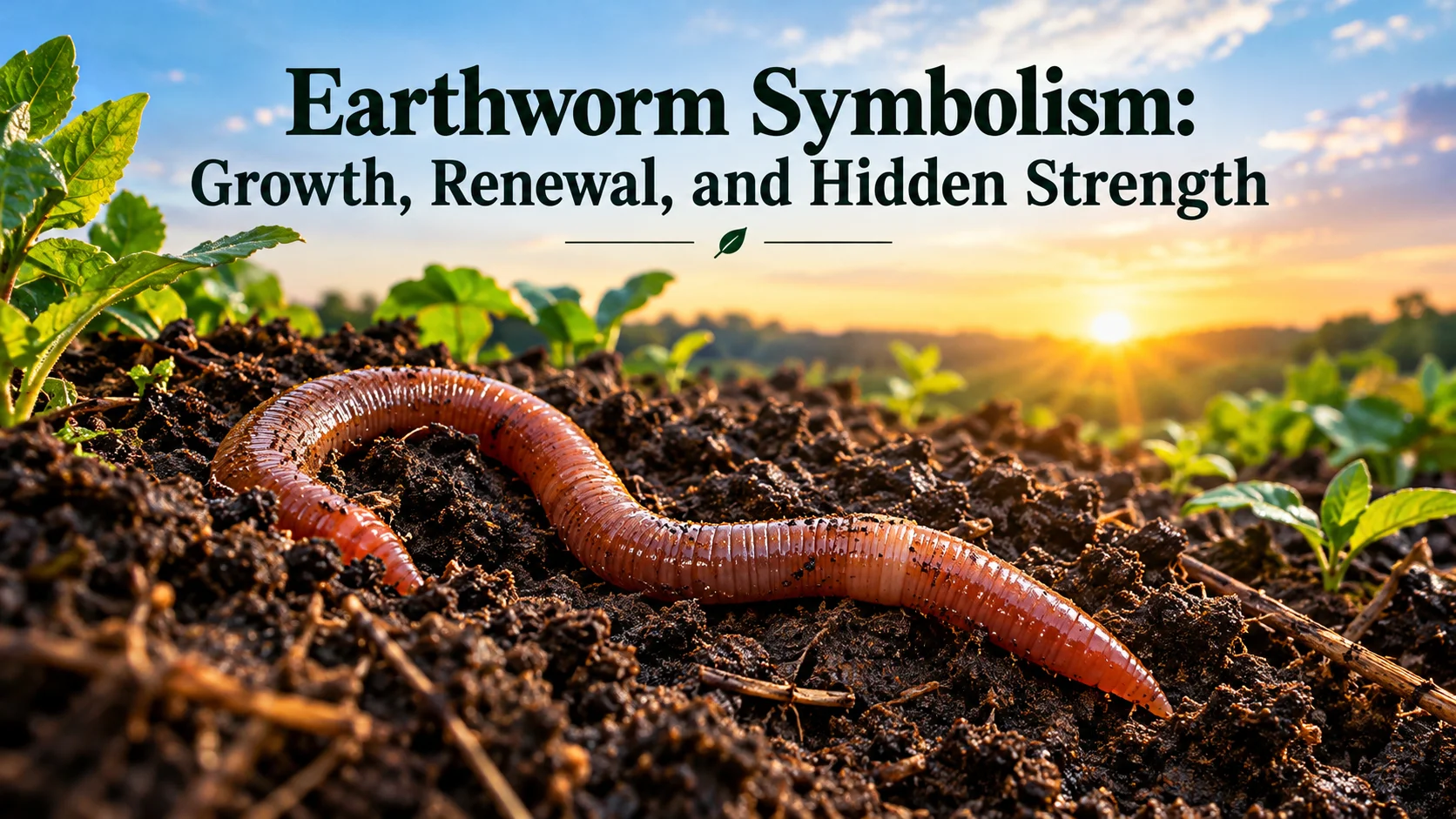
Earthworm symbolism explores the lessons people find in one of nature’s smallest and most overlooked creatures. Earthworms live beneath the soil, rarely attracting attention. Yet their quiet work supports plant growth, improves soil, and helps keep ecosystems healthy. For many people in the United States, earthworms represent renewal, patience, humility, and the power of small actions.
Unlike animals associated with speed, strength, or beauty, earthworms make their impact through steady work. They break down organic matter and help create healthier ground. As a result, they offer a powerful image of progress that happens slowly, even when nobody sees it.
Today, people may connect earthworms with personal transformation, spiritual reflection, gardening, environmental awareness, and fresh beginnings. Finding an earthworm after rain might simply remind someone of nature’s cycles. However, another person might see it as a symbol of resilience or a chance to reconnect with the earth.
These interpretations aren’t universal rules or guaranteed spiritual messages. Instead, they are ways people use an ordinary creature to understand life’s changes. By looking at earthworms through American culture, history, psychology, and spirituality, we can discover why these humble animals carry such meaningful lessons.
Quick Answer
Earthworm symbolism in the United States commonly represents renewal, patience, humility, fertility, and steady growth. Spiritually, some people associate earthworms with grounding, transformation, and hidden progress because they work beneath the surface and help new life flourish.
TL;DR
- Renewal: Earthworms help create conditions for fresh growth and new beginnings.
- Patience: Their steady work reflects progress that takes time.
- Humility: They show how overlooked contributions can make a meaningful difference.
- Spirituality: Some people connect earthworms with grounding and personal transformation.
- Nature: Earthworms represent healthy soil, ecological balance, and the cycles of life.
- Resilience: Their underground lifestyle suggests quiet persistence through changing conditions.
What Does Earthworm Symbolism Mean?
Earthworms have a simple appearance, but their role in nature gives them several layers of symbolic meaning. In American culture, they are familiar sights in gardens, yards, farms, and sidewalks after rainfall. These everyday encounters can inspire reflections on growth, work, and the natural world.
The Main Symbolic Meanings
Three central themes explain why earthworms can become meaningful symbols.
Renewal and regeneration: Earthworms help break down dead plant material and improve soil conditions. Symbolically, this process resembles turning old experiences into opportunities for growth.
Patience and persistence: Earthworms move through soil gradually. Their behavior suggests that worthwhile progress doesn’t always happen quickly or attract attention.
Humility and hidden value: Earthworms rarely receive the admiration given to colorful birds or large mammals. Nevertheless, their work supports life around them. They remind us that importance doesn’t depend on visibility.
Why Their Appearance Matters
An earthworm’s long, soft body and close connection to the ground shape its symbolism. Its movement is gradual, while its habitat remains hidden beneath the surface.
These features can suggest flexibility, adaptability, and a connection to everyday realities. However, the meaning depends on context. Someone tending a vegetable garden may see an earthworm as a sign of healthy soil, while someone reflecting on a difficult period may associate it with quiet recovery.
Historical Background of Earthworm Symbolism
Earthworms have lived alongside humans for thousands of years. Their importance in agriculture, soil health, and food chains has influenced how people understand them. However, practical knowledge about earthworms is not the same as evidence of an ancient, universal symbolic tradition.
Ancient Observations and Agricultural Life
Early farming communities depended on fertile soil. Although earthworms were small and often hidden, their presence could be noticed when people dug fields or worked with the land.
Over time, people developed explanations for how soil became productive. Some observations came from direct experience, while others reflected older beliefs about nature. It would be inaccurate to claim that every ancient civilization assigned earthworms the same spiritual meaning.
Still, their connection to fertile ground provides a reasonable basis for interpreting them as symbols of nourishment and renewal.
From Traditional Farming to Modern Science
In the nineteenth century, naturalists paid increasing attention to earthworms and their role in shaping soil. Charles Darwin’s 1881 book, The Formation of Vegetable Mould Through the Action of Worms, helped explain how earthworms influence the ground over long periods.
This scientific perspective strengthened the understanding of earthworms as essential contributors to the natural environment. Today, their role in breaking down organic matter and changing soil structure supports common associations with regeneration and unseen work.
The historical lesson is straightforward: earthworms became easier to appreciate as people better understood what happened beneath their feet.
Earthworm Symbolism in American Culture
In the United States, earthworms are closely connected to gardening, farming, fishing, and outdoor childhood experiences. They rarely serve as major national symbols. Instead, their meaning usually develops through everyday contact with nature.
Gardening and American Backyards
For American gardeners, earthworms can represent healthy soil and the promise of a productive growing season. Seeing them while preparing a garden bed often creates a practical connection between small creatures and flourishing plants.
Their symbolism also fits the satisfaction of growing something over time. A seedling doesn’t become a mature plant overnight, and healthy soil doesn’t develop through one action alone.
Earthworms can therefore represent the value of preparation, care, and steady effort.
Fishing and Childhood Memories
Fishing is another familiar American setting where earthworms appear. Many children first encounter them while digging in the backyard or helping prepare fishing bait.
These memories can create mixed associations. Some people remember curiosity and outdoor adventure, while others feel discomfort around the worms’ texture or movement.
Neither reaction defines the animal’s meaning. Instead, personal experience often determines whether earthworms symbolize childhood wonder, practical usefulness, or something unpleasant.
Environmental Awareness
Earthworms also fit modern conversations about composting, soil conservation, and sustainable gardening. Their role in breaking down organic matter makes them useful examples of how ecosystems recycle resources.
In this context, they may represent responsibility toward the environment. Their quiet contribution reminds people that healthy landscapes depend on many small processes working together.
Spiritual Meaning of Earthworms
Earthworm spiritual meanings generally center on grounding, renewal, patience, and the relationship between visible life and hidden processes. These interpretations are especially appealing to people who use nature as a starting point for reflection.
However, spiritual meanings vary between individuals. There is no single established spiritual message that an earthworm must represent.
Grounding and Connection to the Earth
Because earthworms spend much of their lives in soil, some people associate them with grounding. Grounding, in this symbolic sense, means staying connected to everyday needs, personal values, and the present moment.
An earthworm might encourage someone to slow down and pay attention to what supports their life. Rather than chasing constant excitement, a person may reflect on rest, routines, relationships, and practical responsibilities.
Hidden Transformation
Earthworms work in places people rarely see. This makes them useful symbols for changes that happen privately before becoming visible.
For example, learning a skill, rebuilding confidence, or recovering from disappointment may involve months of effort. Other people might not notice the progress immediately.
An earthworm can represent that quiet stage of transformation. The symbol offers encouragement without promising that every struggle will automatically lead to success.
Humility as a Spiritual Lesson
Some spiritual interpretations connect earthworms with humility. Their small size and ordinary appearance contrast with the importance of their ecological role.
This contrast can prompt reflection on service, modesty, and meaningful work. A person doesn’t need public recognition to make a positive difference.
Such an interpretation can be valuable without treating the earthworm as a supernatural sign or claiming that all spiritual traditions share this belief.
Earthworm Symbolism Across Different Cultures
Earthworms appear in many societies through farming, folklore, literature, and religious storytelling. Their meanings can differ significantly, so it’s important not to treat every cultural interpretation as interchangeable.
Earthworms in Western Traditions
In Western literature, worms sometimes represent decay, mortality, and the temporary nature of human power. Their association with the decomposition of bodies has inspired writers to reflect on death and the limits of earthly status.
However, earthworms also symbolize fertility and renewal through their connection to soil. These contrasting meanings show how one creature can represent both an ending and the conditions for new beginnings.
Earthworms in Buddhist Stories
A traditional story about Siddhartha Gautama, the future Buddha, describes him observing living creatures exposed during agricultural plowing. The suffering he witnessed is sometimes connected with his developing awareness of life’s vulnerability.
Versions of this story emphasize compassion for living beings. Although the earthworm isn’t a universal Buddhist symbol, the episode offers a meaningful connection between small creatures, suffering, and thoughtful awareness.
Broader Cultural Interpretations
Across different communities, people may understand earthworms through agricultural experience, local folklore, or personal spiritual beliefs.
• In farming traditions, earthworms can suggest fertile ground and productive land.
• In environmental reflection, they may represent the interconnectedness of living things.
• In spiritual journaling, they can become symbols of patience and unseen personal change.
• In literature, worms may represent mortality, humility, or the return of life to the earth.
These are broad interpretive themes rather than fixed beliefs shared by entire cultures. Specific meanings should always be understood within their own historical and religious contexts.
The Psychological Meaning of Earthworms
Earthworms can evoke surprisingly strong feelings. Some people find them fascinating, while others feel disgust or discomfort. Psychology helps explain why the same animal can carry different meanings for different people.
Patience and Quiet Progress
Earthworms don’t appear to rush toward a visible goal. Their slow movement makes them a natural metaphor for steady progress.
For someone learning a new skill or rebuilding a routine, this image can encourage patience. It suggests that small actions may gradually produce meaningful results.
For example, studying for twenty minutes daily may seem insignificant. Over several months, however, that routine can create substantial progress.
Humility and Self-Worth
Earthworms aren’t admired for their appearance. Nevertheless, they play important roles in many environments.
This contrast can encourage people to reconsider how they measure personal worth. A person’s contribution doesn’t have to be impressive or publicly recognized to matter.
Earthworm symbolism may therefore appeal to people who value service, modesty, and practical kindness.
Discomfort and Personal Associations
Not everyone finds earthworms inspiring. Their soft bodies, moist surfaces, and unusual movements can trigger disgust.
Such reactions don’t mean a person has missed a hidden spiritual lesson. They reflect ordinary differences in perception, experience, and personal comfort.
Instead, noticing your reaction can help you understand what the creature represents to you. Curiosity, discomfort, nostalgia, and admiration can all become starting points for reflection.
Earthworms as Symbols of Renewal and Rebirth
Renewal is one of the most intuitive meanings associated with earthworms. Their connection to decomposition and soil processes creates a powerful picture of how natural systems reuse materials.
Turning Endings Into New Beginnings
Earthworms feed on organic matter and help break it down. Their activity contributes to nutrient cycling and can improve soil structure under suitable conditions.
Symbolically, this process resembles finding value in something that appears finished. An ending might create space for a different direction, even when the transition feels uncomfortable.
For example, leaving an old routine behind may help someone develop healthier habits. The earthworm becomes a reminder that change can begin quietly.
Rebirth Without Instant Results
Earthworm symbolism doesn’t suggest that every difficult experience immediately becomes positive. Real renewal usually requires time, support, and effort.
Instead, the earthworm represents the possibility of gradual improvement. Its work continues beneath the surface before anyone notices the results.
This interpretation can be especially meaningful during periods of transition, when progress feels slow or uncertain.
Read More: Kiwi Symbolism: Curiosity, Uniqueness, and New Beginnings
Earthworm Symbolism in Dreams
Dreaming about an earthworm may prompt questions about growth, vulnerability, work, or your connection to nature. However, dreams don’t have universally accepted symbolic meanings, and a single image can’t reliably predict future events.
The setting and your emotional response may offer more useful clues than the animal alone.
Common Earthworm Dream Interpretations
| Dream scenario | Possible symbolic association | Reflection question |
| Seeing an earthworm in soil | Growth, stability, or preparation | What am I building gradually? |
| Finding earthworms after rain | Change, openness, or renewed awareness | What has recently come into view? |
| Seeing many earthworms | Overlooked details or growing responsibilities | What needs my attention? |
| Feeling afraid of an earthworm | Discomfort with vulnerability or uncertainty | What am I avoiding? |
| Watching an earthworm move forward | Persistence and adaptability | Where would steady effort help? |
These interpretations are reflective possibilities, not proven explanations of dreams. Your recent experiences and personal associations may matter more than any general symbolism guide.
How to Reflect on an Earthworm Dream
Start by recalling what happened in the dream and how you felt. Was the earthworm in a garden, on a sidewalk, or somewhere unexpected?
Next, consider whether anything in your life feels unfinished or is changing slowly. You don’t need to force a connection if none feels natural.
A useful interpretation should help you reflect, not make you fearful about an imagined prediction.
Earthworm Symbolism in Tattoos, Art, and Home Decor
Earthworms aren’t as common in symbolic artwork as butterflies, snakes, or birds. Still, their unusual appearance and ecological role can make them meaningful choices for people who appreciate overlooked forms of life.
Earthworm Tattoos and Personal Identity
An earthworm tattoo can express a personal philosophy rather than a widely recognized symbol. Its meaning depends on the design, accompanying imagery, and wearer’s experience.
Possible interpretations include:
• A reminder to keep growing during difficult periods.
• A tribute to gardening, farming, or environmental stewardship.
• An expression of humility and appreciation for overlooked things.
• A personal symbol of transformation and persistence.
Some designs might combine an earthworm with roots, leaves, mushrooms, or flowers. These elements can reinforce themes of connection, renewal, and ecological balance.
Earthworms in Illustrations and Decor
Earthworm illustrations may suit nature journals, children’s books, educational posters, and garden-themed artwork. Their simple shape also works well in playful drawings and handmade crafts.
In home decor, earthworm imagery is more likely to appear in gardening spaces or educational settings than in mainstream decorative styles.
Unlike a traditional religious emblem, an earthworm illustration doesn’t have one established meaning. Its message comes from the artist’s intention and the surrounding imagery.
Earthworms on Social Media
Online, earthworms can represent gardening, composting, environmental awareness, or a playful appreciation of unusual animals.
A person might share an earthworm photograph after rain to celebrate spring. Another might use a worm drawing to express humor or affection for creatures that others overlook.
These uses are informal and continually changing. A social media post doesn’t automatically reflect a deeper cultural or spiritual belief.
When Earthworm Symbolism Has Negative Meanings
Earthworms have positive ecological associations, but their symbolism isn’t always uplifting. Historical literature and everyday language sometimes use worms to suggest weakness, decay, or humiliation.
Understanding these associations prevents a balanced interpretation from becoming overly idealistic.
Mortality and Decay
Because worms are associated with soil and decomposition, they can appear in writing about death. This imagery reminds readers that human life is temporary and physical bodies eventually return to natural processes.
Such symbolism can feel unsettling. However, it can also encourage reflection on the value of time and the importance of meaningful relationships.
Insults and Images of Weakness
English expressions sometimes use the word worm to describe someone considered powerless or contemptible. These expressions can turn a small creature into a symbol of social humiliation.
Earthworms themselves aren’t morally weak. This negative association comes from human language and cultural attitudes about size, status, and vulnerability.
Recognizing that distinction helps separate the animal’s natural characteristics from judgments imposed on it.
Why Context Matters
An earthworm in a garden doesn’t communicate the same message as a worm in a poem about death. Similarly, an earthworm tattoo chosen to represent resilience shouldn’t automatically be interpreted as an insult.
The setting, intended meaning, and surrounding imagery all matter. A thoughtful reading considers these details before assigning a positive or negative interpretation.
Are Earthworms Always a Sign of Good Luck?
Some people interpret unexpected animal encounters as lucky signs or meaningful coincidences. An earthworm appearing after rainfall may feel encouraging, especially during a period of personal change.
However, there is no universal tradition establishing that every earthworm encounter predicts good fortune.
Possible Positive Interpretations
An earthworm might remind you of new opportunities, steady progress, or the importance of nurturing your environment. If gardening is meaningful to you, seeing one could feel like a welcome sign of life in the soil.
These interpretations can provide personal encouragement without requiring a supernatural explanation.
Natural Explanations Matter Too
Earthworms often come to the surface when soil conditions change. Heavy rain can fill their burrows with water, making movement above ground useful for some species.
Therefore, finding an earthworm after rain has a straightforward ecological explanation. You can appreciate its symbolic meaning while recognizing the natural process behind the encounter.
A balanced perspective leaves room for personal reflection without treating coincidence as proof of a prediction.
How Earthworm Symbolism Has Changed Over Time
The meaning of earthworms has shifted as people’s relationships with agriculture, science, and the natural world have changed. Older ideas about worms often emphasized decay or low status, while modern interpretations also highlight ecology and regeneration.
From Unwanted Creatures to Ecological Contributors
In some historical settings, earthworms were treated as insignificant or undesirable animals. Their underground lifestyle made their work easy to overlook.
Charles Darwin’s research helped demonstrate their long-term influence on soil formation. Today, gardeners and educators often recognize their contributions to soil structure and organic matter breakdown.
This scientific understanding has strengthened positive symbolic associations with hidden work and renewal.
Why the Modern Meaning Is More Complex
Modern environmental awareness has also challenged the idea that all earthworms are beneficial everywhere. Some introduced species can harm certain forest ecosystems by changing leaf litter and soil conditions.
As a result, earthworm symbolism can represent both ecological contribution and the need to understand nature carefully.
The broader lesson is that a creature’s value depends partly on its environment. Simple symbols can inspire reflection, but the natural world is often more complicated than a single interpretation suggests.
FAQs:
What does an earthworm symbolize spiritually?
Earthworms may symbolize grounding, patience, humility, and quiet transformation. These meanings come from personal and spiritual interpretations rather than one universal belief system.
What does it mean when you see an earthworm?
Symbolically, seeing an earthworm might remind you of growth, renewal, or the value of small actions. In practical terms, it may simply reflect suitable moisture and soil conditions.
Is an earthworm a symbol of rebirth?
An earthworm can represent rebirth because it contributes to natural cycles of decomposition and renewal. This is a metaphorical interpretation, not a claim that earthworms represent literal spiritual rebirth in every tradition.
What does an earthworm mean in a dream?
An earthworm in a dream may prompt reflection on persistence, vulnerability, or changes happening out of sight. Your feelings and the dream’s context are more useful than assuming one fixed meaning.
Are earthworms a sign of good luck?
Some people view an earthworm encounter as an encouraging coincidence or a symbol of new beginnings. However, no universal rule establishes earthworms as predictors of luck or future events.
What does an earthworm tattoo symbolize?
An earthworm tattoo can represent humility, resilience, environmental appreciation, or personal growth. The design and the wearer’s intentions determine its specific meaning.
Conclusion:
Earthworm symbolism reveals how a small, familiar creature can inspire meaningful ideas about life. In the United States, earthworms are closely associated with gardening, fertile soil, childhood memories, and environmental awareness. Their quiet work also offers useful metaphors for patience, humility, renewal, and progress that happens beyond public view.
Their meaning isn’t entirely positive or universal. Earthworms can also represent decay, vulnerability, and mortality, while some introduced species create ecological problems in particular environments. These contrasting associations make their symbolism more interesting and remind us to consider context.

1 thought on “Earthworm Symbolism: Growth, Renewal, and Hidden Strength”