
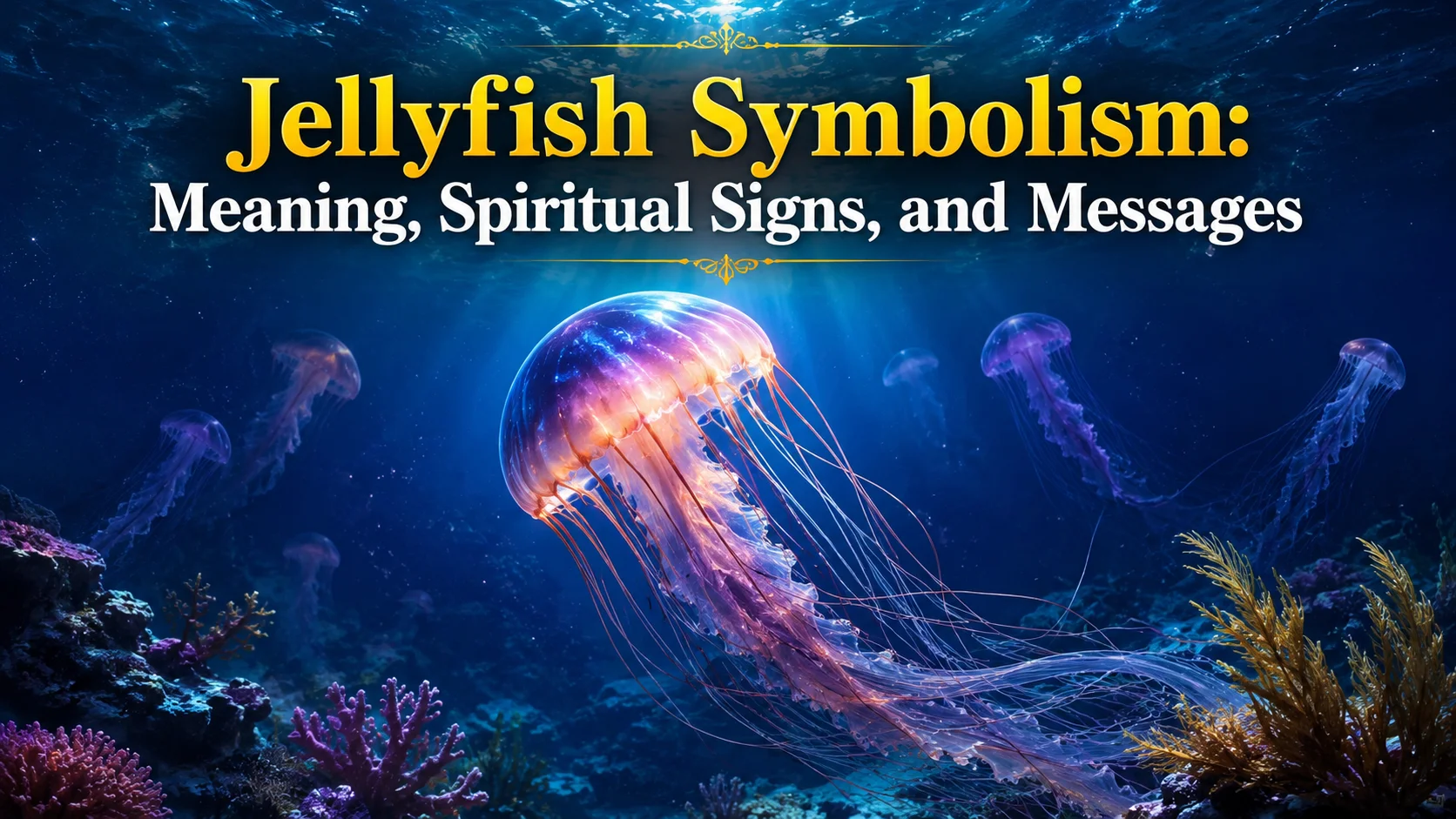
Jellyfish symbolism explores the connection between emotional freedom, resilience, intuition, and the natural flow of life. These mysterious ocean creatures have fascinated people for centuries. Their transparent bodies, graceful movements, and delicate tentacles create an unusual combination of beauty and danger. They seem peaceful, yet they can defend themselves when threatened.
In the United States, jellyfish often represent adaptability, independence, and the importance of protecting personal boundaries. Their ability to drift with ocean currents also creates a powerful image of letting go. Instead of fighting every change, they move with their surroundings while maintaining their natural identity.
However, the meaning of a jellyfish can change depending on its appearance and context. A glowing jellyfish might suggest mystery and spiritual awareness. A drifting jellyfish may represent emotional freedom, while a stinging jellyfish can symbolize hidden dangers or boundaries.
Whether you encounter one at the beach, dream about it, admire it in an aquarium, or consider getting a jellyfish tattoo, its symbolism offers several interesting ways to understand personal growth and life’s uncertainties.
Quick Answer
Jellyfish symbolism primarily represents adaptability, emotional sensitivity, resilience, and freedom in American culture. Spiritually, it can symbolize trusting life’s natural flow, listening to your intuition, and protecting your energy without losing your gentle nature.
TL;DR
- Adaptability: Jellyfish represent moving through life’s changes without losing yourself.
- Emotional sensitivity: Their delicate bodies symbolize deep feelings and awareness.
- Resilience: Their ancient survival reflects endurance through difficult circumstances.
- Freedom: Their drifting movements represent independence and surrender.
- Protection: Their stinging tentacles symbolize personal boundaries and self-defense.
- Transformation: Their unusual life cycle represents renewal and changing identities.
What Does a Jellyfish Symbolize?
Jellyfish have a distinctive appearance that makes them powerful symbols of nature. Their umbrella-shaped bodies and flowing tentacles create an image of effortless movement. Unlike many ocean animals, they don’t need to fight constantly against surrounding currents.
For American audiences, this appearance often connects with emotional balance, independence, and personal resilience. A jellyfish can remind you that strength doesn’t always require aggression.
The Main Symbolic Meanings
Several important ideas are associated with jellyfish:
- Adaptability: Learning to adjust when circumstances change unexpectedly.
- Gentleness: Maintaining kindness without becoming emotionally weak.
- Independence: Following your own direction instead of seeking approval.
- Protection: Recognizing when you need stronger personal boundaries.
- Mystery: Accepting that not everything needs an immediate explanation.
- Resilience: Continuing through challenges without losing your identity.
What Makes the Jellyfish Symbolic?
Its unusual biology contributes to its symbolic appeal.
A jellyfish has no bones, brain, or central nervous system like humans. Yet it can sense its surroundings, respond to stimuli, and survive in different ocean environments.
This creates an interesting metaphor. You don’t always need complete control to navigate complicated situations. Sometimes, awareness and flexibility are enough.
Spiritual Meaning of Jellyfish
Spiritually, jellyfish often represent surrender, intuition, emotional awareness, and trust. Their gentle movements suggest allowing life to unfold without forcing every outcome.
For people exploring spirituality in the United States, the jellyfish can serve as a personal reminder to slow down. It encourages you to notice your feelings and recognize changes happening around you.
Trusting the Flow of Life
A jellyfish moves with ocean currents while using its body to influence its direction. This creates a meaningful spiritual metaphor.
You may not control every situation, relationship, or opportunity. However, you can decide how to respond.
The jellyfish encourages you to:
- Accept changes that cannot be avoided.
- Stop forcing situations that aren’t working.
- Remain open to unexpected opportunities.
- Trust your ability to adjust when circumstances shift.
- Find peace without giving up personal responsibility.
Listening to Your Intuition
Jellyfish also symbolize awareness beyond appearances.
Their transparent bodies can suggest seeing beneath the surface. Spiritually, this may represent recognizing emotions, noticing subtle changes, and paying attention to your inner feelings.
However, intuition doesn’t mean treating every feeling as a supernatural message. It can also reflect experience, observation, and emotional awareness.
Jellyfish Symbolism in the Bible and Christianity
Jellyfish don’t have a widely established symbolic role in the Bible or traditional Christian teachings. Unlike lambs, doves, and fish, they aren’t recognized as major Christian symbols.
However, Christians may interpret their natural characteristics through broader spiritual themes.
Possible Christian Interpretations
The jellyfish can inspire reflections on several familiar values:
- Humility: Its simple body suggests that greatness doesn’t require outward strength.
- Trust: Its movement through water can inspire reflections on trusting God’s guidance.
- Creation: Its unusual beauty can encourage appreciation for the natural world.
- Protection: Its defensive tentacles can suggest the importance of spiritual discernment.
- Patience: Its slow movement can remind people to avoid unnecessary haste.
A Symbol of God’s Creation
Many Christians view the natural world as an expression of divine creativity.
From this perspective, jellyfish demonstrate how different and fascinating living creatures can be. Their unusual forms offer an opportunity to appreciate the complexity of creation.
However, these interpretations are personal reflections rather than established biblical meanings. It’s important not to present modern spiritual associations as direct scriptural teachings.
Jellyfish Symbolism in American Culture
In the United States, jellyfish have several cultural associations. Their meaning comes from coastal experiences, aquariums, marine science, environmental awareness, and popular imagery.
For many Americans, they represent the beauty and unpredictability of ocean life.
Coastal and Beach Culture
Jellyfish are familiar sights along American coastlines, including Florida, California, Hawaii, and the Gulf Coast.
Beachgoers often associate them with summer vacations, ocean exploration, and unexpected encounters with marine wildlife.
However, their stings also create a practical association with caution. This combination makes jellyfish interesting symbols of beauty that deserves respect.
Aquariums and Marine Conservation
American aquariums often display jellyfish in illuminated tanks. Their movements and translucent bodies create a peaceful viewing experience.
Institutions such as the Monterey Bay Aquarium have helped introduce visitors to the beauty and biology of marine animals.
As a result, jellyfish can symbolize:
- Curiosity about underwater ecosystems.
- Respect for marine biodiversity.
- Environmental awareness and ocean conservation.
- Appreciation for unusual forms of natural beauty.
- The importance of protecting fragile ecosystems.
Jellyfish in American Art
Jellyfish appear in ocean-themed paintings, photography, clothing, jewelry, and home decorations.
Artists often use their flowing shapes to express movement and freedom. Their glowing appearance also makes them attractive subjects for dreamlike and abstract designs.
Today, they can represent a connection to the ocean without relying on familiar symbols like dolphins, whales, or seashells.
Jellyfish Symbolism in Different Cultures
Jellyfish don’t carry one universal meaning. Different cultures have developed their own relationships with marine creatures through mythology, folklore, art, and everyday experiences.
Some interpretations focus on mystery and danger. Others emphasize the relationship between ocean life and the natural world.
Japanese Folklore
Japanese folklore includes stories about jellyfish and their relationship with the underwater world.
One well-known folktale explains why jellyfish have no bones. In the story, a jellyfish serves the Dragon King of the Sea. After failing to complete an important task involving a monkey, it is punished and loses its bones.
This story gives the jellyfish a connection with the underwater kingdom and the consequences of carelessness.
Japanese marine folklore also includes unusual supernatural sea phenomena. However, these stories shouldn’t be treated as proof that every jellyfish has a sacred or spiritual meaning.
Greek Mythology
Jellyfish have an interesting connection with Greek mythology through the name Medusa.
In Greek mythology, Medusa was a Gorgon with snakes for hair. Her appearance could turn people to stone.
The scientific term Medusa describes the free-swimming body form of many jellyfish. The resemblance comes from their rounded bodies and trailing tentacles.
This connection adds themes of mystery, beauty, danger, and transformation to modern jellyfish interpretations.
However, the animal itself isn’t a direct representation of Medusa in ancient Greek religious practice.
Broader Ocean Traditions
Across different coastal societies, marine creatures have often represented the power and uncertainty of the ocean.
Jellyfish can fit into these broader interpretations because they are beautiful, unfamiliar, and sometimes dangerous.
Their symbolism may therefore connect with:
- Respect for the natural world.
- The mystery of deep and open water.
- The balance between vulnerability and defense.
- The unpredictable nature of life.
- Humanity’s relationship with the sea.
These are broad interpretive themes, not meanings shared by every culture.
Jellyfish as a Symbol of Emotional Sensitivity
One of the most interesting aspects of jellyfish symbolism involves emotional sensitivity.
Their transparent bodies create an image of openness and vulnerability. Their delicate movements also suggest a creature that responds to its environment rather than dominating it.
Psychologically, this can represent people who experience emotions deeply.
Understanding Emotional Vulnerability
A jellyfish may symbolize someone who feels things intensely but doesn’t always express those feelings openly.
You might connect with this symbol if you:
- Notice small changes in people’s behavior.
- Feel affected by the emotions around you.
- Prefer peaceful environments.
- Need time alone to process difficult experiences.
- Value meaningful relationships over superficial connections.
Sensitivity Doesn’t Mean Weakness
People sometimes confuse gentleness with an inability to defend themselves.
The jellyfish challenges that assumption. Its body looks delicate, but its tentacles provide an effective defense.
Symbolically, this represents an important lesson: You can remain compassionate while maintaining firm boundaries.
You don’t have to become harsh to protect yourself.
Jellyfish Symbolism: Strength, Resilience, and Survival
Jellyfish have survived through enormous changes in Earth’s history. Their ancient evolutionary history makes them natural symbols of endurance.
The fossil record includes a well-preserved swimming jellyfish from approximately 505 million years ago.
This remarkable history gives the jellyfish a connection with survival and persistence.
Strength Without Aggression
Many traditional symbols of strength feature powerful animals, such as lions, bears, and eagles.
Jellyfish offer a different perspective.
They don’t rely on muscular limbs or physical dominance. Instead, their survival depends on biological adaptations that suit their environment.
Their symbolism can encourage you to:
- Stay flexible when life becomes difficult.
- Avoid unnecessary conflicts.
- Recover after emotionally challenging experiences.
- Recognize different forms of personal strength.
- Continue growing without comparing yourself to others.
The Meaning of Ancient Survival
Jellyfish existed long before humans appeared.
Their evolutionary history can inspire a sense of perspective. Personal difficulties may feel overwhelming, but change is a natural part of life.
The jellyfish reminds us that survival sometimes comes from adapting rather than resisting every challenge.
Jellyfish Symbolism in Dreams
Dreaming about jellyfish can reflect emotional sensitivity, uncertainty, hidden fears, or a desire for freedom.
However, dream interpretations aren’t scientifically established predictions. Your personal experiences and feelings matter more than any universal dream dictionary.
Seeing a Jellyfish in Clear Water
Clear water may suggest emotional awareness or a desire for peace.
A jellyfish moving calmly through clear water could represent:
- Understanding your feelings more clearly.
- Finding balance after a stressful period.
- Becoming comfortable with uncertainty.
- Developing greater emotional awareness.
Being Stung by a Jellyfish
A jellyfish sting in a dream may represent an unexpected emotional experience.
Perhaps someone hurt your feelings, crossed a boundary, or disappointed you.
The dream may encourage you to examine relationships where you feel exposed or unprotected.
Watching a Glowing Jellyfish
A glowing jellyfish can represent curiosity, inspiration, or something mysterious entering your awareness.
It may reflect a period of personal discovery.
Many Jellyfish Swimming Together
A group of jellyfish may suggest social influences, emotional overwhelm, or the feeling of being surrounded by unfamiliar situations.
Consider whether you feel comfortable in your current environment or need more personal space.
Different Jellyfish Colors and Their Symbolic Meanings
Jellyfish come in different colors, shapes, and sizes. Their appearance can influence how artists and spiritual enthusiasts interpret them.
Color symbolism isn’t scientifically fixed. However, common associations help explain why certain jellyfish designs create particular emotional impressions.
| Jellyfish Color | Symbolic Meaning | Common Association |
| White | Purity and clarity | Peace and simplicity |
| Blue | Calmness and intuition | Emotional balance |
| Pink | Love and sensitivity | Compassion and affection |
| Purple | Mystery and imagination | Spiritual curiosity |
| Orange | Energy and creativity | Confidence and enthusiasm |
| Transparent | Openness and vulnerability | Authenticity and awareness |
White Jellyfish
White jellyfish often symbolize peace, simplicity, and emotional clarity.
Their pale appearance can create a feeling of calmness and openness.
Blue Jellyfish
Blue jellyfish are commonly associated with emotional balance and tranquility.
They can represent the desire to remain peaceful during difficult situations.
Pink Jellyfish
Pink jellyfish often suggest affection, compassion, and emotional sensitivity.
Their appearance makes them popular in softer, romantic, and artistic designs.
Purple Jellyfish
Purple jellyfish can represent mystery, imagination, and spiritual exploration.
Their unusual coloring creates a sense of wonder.
Transparent Jellyfish
Transparent jellyfish symbolize vulnerability and authenticity.
They can remind you that being open doesn’t mean allowing everyone access to your private world.
Jellyfish Tattoo Meaning and Symbolism
Jellyfish tattoos have become an interesting choice for people who appreciate ocean imagery and unconventional animal designs.
Unlike common tattoos featuring lions, butterflies, or snakes, jellyfish offer a softer and more mysterious appearance.
Their meaning often depends on the wearer’s personal experiences.
Popular Jellyfish Tattoo Meanings
A jellyfish tattoo may represent:
- Resilience: Surviving difficult periods without losing your identity.
- Freedom: Choosing your own direction through life’s uncertainty.
- Sensitivity: Accepting your emotional nature.
- Independence: Feeling comfortable being different.
- Transformation: Moving beyond an earlier version of yourself.
- Protection: Maintaining boundaries while remaining compassionate.
Jellyfish Tattoo Placement
Placement can add personal meaning to a design.
For example, a jellyfish tattoo on the forearm may serve as a visible reminder of independence. A shoulder design might represent personal strength.
Smaller designs around the ankle or wrist can create a subtle connection with the ocean.
Popular Design Styles
Some common approaches include:
- Minimalist jellyfish outlines.
- Realistic underwater jellyfish.
- Watercolor designs with flowing colors.
- Glowing jellyfish with dark backgrounds.
- Fine-line designs with delicate tentacles.
A jellyfish tattoo doesn’t have one traditional or universally accepted meaning. Its strongest symbolism often comes from the story behind it.
Jellyfish Personality Traits
Someone who connects with jellyfish symbolism may identify with these qualities:
- You prefer peaceful surroundings over constant competition.
- You adapt quickly when plans change.
- You notice emotional details that others overlook.
- You value independence and personal freedom.
- You protect your privacy and emotional boundaries.
- You appreciate beauty in unusual places.
The Jellyfish as a Personal Guide
As a personal symbol, the jellyfish encourages you to find a balance between flexibility and self-protection.
It suggests that you can move through uncertain situations without abandoning your values.
You can also remain gentle without accepting every demand placed on you.
Jellyfish Symbolism in Love, Relationships, and Friendship
In relationships, jellyfish can symbolize emotional sensitivity, independence, and the importance of healthy boundaries.
Their movements suggest a relationship that allows both people to grow without unnecessary pressure.
Jellyfish Meaning in Love
A jellyfish may represent a gentle and emotionally aware approach to romance.
It can symbolize allowing love to develop naturally instead of forcing a connection.
Its symbolism also highlights the importance of personal space.
Friendship and Emotional Connection
In friendship, jellyfish can represent understanding and acceptance.
They may appeal to people who value relationships without constant expectations.
However, their defensive tentacles introduce another important message: Even close friendships need boundaries.
When a Relationship Feels Uncertain
A jellyfish can serve as a reminder to observe rather than immediately react.
You can listen to your feelings, communicate honestly, and decide whether a relationship supports your emotional well-being.
Jellyfish Symbolism in Modern Art, Fashion, and Home Decor
Jellyfish have an unusual visual appeal that makes them popular in contemporary creative designs.
Their flowing tentacles, translucent bodies, and glowing colors work particularly well in modern art and decorative spaces.
Home Decor
Jellyfish-inspired decorations often create a peaceful underwater atmosphere.
Common examples include:
- Jellyfish wall art in bedrooms and living rooms.
- Ocean-inspired lamps with glowing designs.
- Decorative glass sculptures.
- Aquarium-themed artwork.
- Blue and purple abstract paintings.
These designs can symbolize tranquility, curiosity, and a connection with nature.
Fashion and Jewelry
Jellyfish appear in necklaces, earrings, clothing prints, and accessories.
Some people choose these designs because they appreciate marine life. Others connect with the symbolism of independence and unconventional beauty.
Social Media and Digital Expression
On social media, jellyfish imagery can communicate different moods.
A glowing jellyfish photograph might express fascination with nature. An animated jellyfish illustration can create a dreamy aesthetic.
The jellyfish emoji (🪼) can also appear in ocean-related conversations, marine-life posts, and playful messages.
However, emoji meanings depend heavily on context. They don’t have one established spiritual interpretation.
Negative Jellyfish Symbolism and Common Misunderstandings
Although jellyfish generally have positive symbolic associations, their meaning isn’t always gentle or peaceful.
Their stinging tentacles and unpredictable movements can also represent hidden problems, emotional discomfort, and caution.
Understanding these associations helps create a more balanced interpretation.
Hidden Danger
A jellyfish can look harmless while possessing tentacles capable of delivering painful stings.
Symbolically, this can represent situations where appearances don’t reveal the complete truth.
It may encourage you to recognize warning signs before becoming involved.
Emotional Distance
A drifting jellyfish may also suggest emotional detachment.
For some people, its passive appearance represents someone who avoids responsibility or allows others to make every decision.
However, this isn’t the only interpretation. Drifting can also represent flexibility and acceptance.
Misunderstanding Gentleness
One common mistake is interpreting jellyfish symbolism as a sign of weakness.
Their bodies look fragile, but their survival depends on effective biological adaptations.
The deeper symbolic message isn’t that you should avoid conflict at all costs. Instead, it suggests choosing your responses wisely.
Avoiding Invented Spiritual Claims
Online symbolism discussions sometimes present personal interpretations as ancient religious facts.
For example, the idea that every jellyfish encounter represents a specific divine warning isn’t supported by universal religious teaching.
It’s better to distinguish established folklore, scientific facts, and modern personal interpretations.
How Jellyfish Symbolism Has Changed Over Time
Jellyfish symbolism has developed alongside humanity’s understanding of the ocean.
In earlier periods, people often viewed unusual marine creatures with fascination, fear, and uncertainty.
Today, scientific discoveries and modern artistic culture have introduced additional meanings.
Ancient and Medieval Perspectives
Ancient naturalists studied jellyfish as unusual marine animals.
Aristotle described stinging sea creatures, while later writers explored their strange movements and physical characteristics.
During medieval European periods, marine creatures sometimes appeared in bestiaries alongside fantastical animals and sea monsters.
Their unfamiliar appearance contributed to associations with mystery and danger.
Scientific Discoveries and Modern Interpretations
Scientific classification gradually changed how people understood jellyfish.
Carl Linnaeus introduced the zoological name Medusa in the eighteenth century. The name reflected the resemblance between the animal’s tentacles and the hair of the Greek mythological figure.
Later scientific discoveries revealed more about their ancient evolutionary history and unusual biology.
These developments helped create modern associations with resilience, adaptation, and natural complexity.
Jellyfish Symbolism Today
In contemporary American culture, jellyfish have become more than mysterious ocean creatures.
They represent:
- Environmental awareness and marine conservation.
- Emotional freedom and personal independence.
- The beauty of unusual natural forms.
- Adaptability during uncertain circumstances.
- The balance between vulnerability and protection.
Their symbolism continues to evolve as people find new ways to connect with nature and personal identity.
FAQs:
What Does Seeing a Jellyfish Symbolize Spiritually?
Seeing a jellyfish can symbolize adaptability, emotional awareness, and trusting life’s natural flow. Some people interpret the encounter as a reminder to remain flexible while protecting their personal boundaries.
Is a Jellyfish a Symbol of Good Luck?
Jellyfish aren’t universally recognized as traditional good-luck symbols. However, some modern interpretations connect them with resilience, positive change, and new opportunities.
What Does a Jellyfish Symbolize in a Dream?
A jellyfish in a dream may represent emotional sensitivity, uncertainty, or hidden concerns. Its behavior and your feelings during the dream can provide additional personal context.
What Does a Glowing Jellyfish Mean Spiritually?
A glowing jellyfish may symbolize inspiration, intuition, mystery, and personal discovery. Its light can serve as a metaphor for finding clarity during uncertain periods.
What Does a Jellyfish Tattoo Represent?
A jellyfish tattoo commonly represents freedom, resilience, emotional sensitivity, and independence. Some people also choose it to express their love of marine life or personal connection with the ocean.
Conclusion:
Jellyfish symbolism brings together several meaningful ideas, including adaptability, emotional sensitivity, independence, resilience, and personal protection. Their unusual appearance and graceful movements offer a different perspective on strength. They demonstrate that gentleness and resilience can exist together.
In American culture, jellyfish also represent ocean beauty, environmental awareness, and the mystery of marine life. Their connections with Greek mythology, Japanese folklore, and modern spiritual interpretations add further depth to their meaning.
