
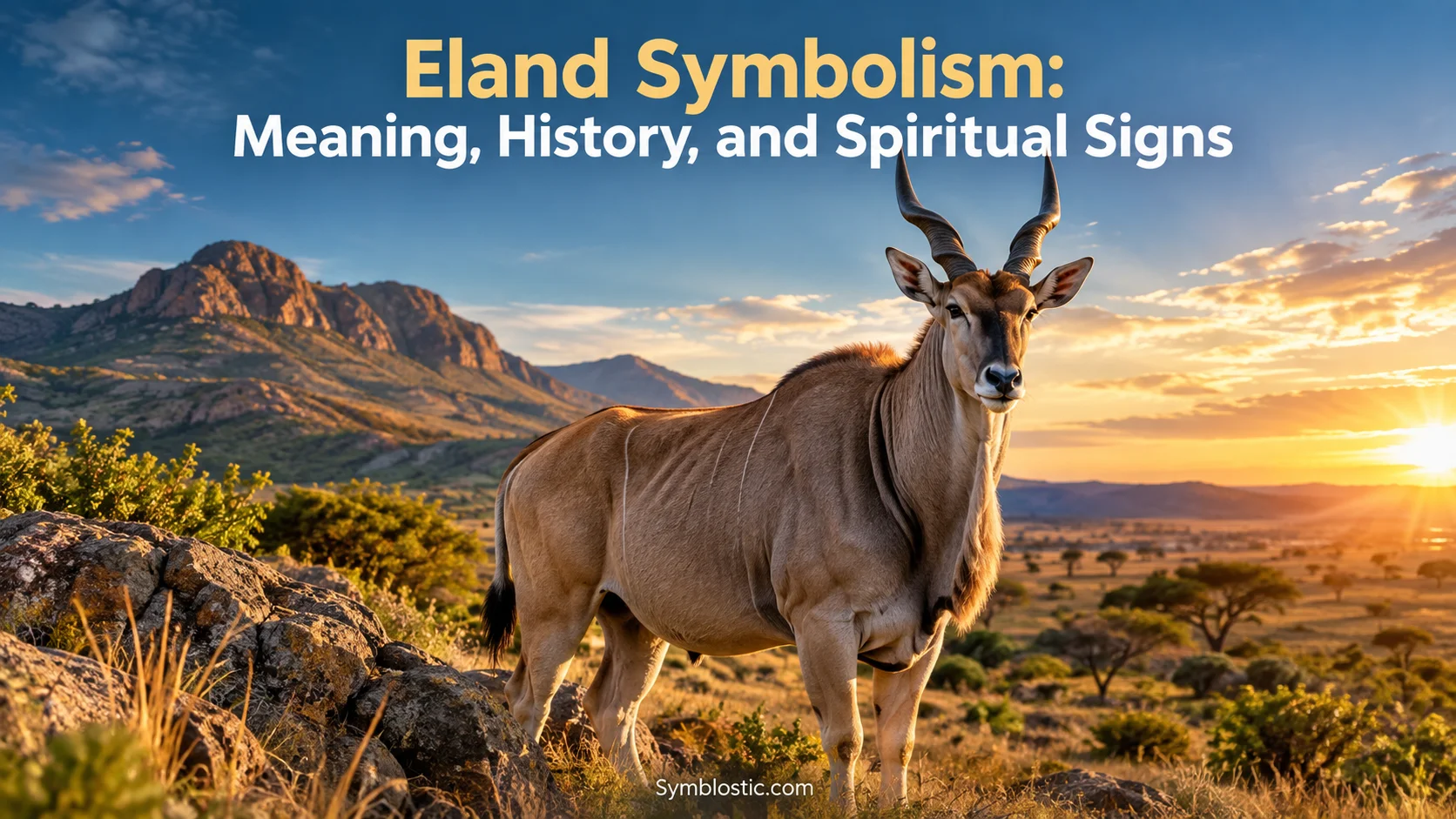
The Eland Symbolism found in modern writing often centers on strength, spiritual power, abundance, transformation, and a deep connection with nature. The eland is one of Africa’s largest antelopes, and its impressive size and calm appearance have made it an important cultural symbol in parts of southern Africa.
For American readers, however, the meaning requires some context. Elands aren’t native wildlife in the United States, so their symbolism usually reaches American audiences through African art, wildlife conservation, museums, cultural studies, spiritual writing, tattoos, and nature-inspired design.
Historically, the eland has a much deeper role in southern African traditions. San rock art, in particular, contains many eland images connected with spiritual power, ritual, trance experiences, rain, hunting, and relationships between the human and spirit worlds.
Today, people may encounter the eland as a personal symbol rather than as part of a specific traditional belief. Its huge body, graceful movement, and distinctive horns can suggest quiet strength without aggression.
Quick Answer
Eland Symbolism commonly represents strength, spiritual power, abundance, transformation, fertility, and connection with nature. In the USA, it’s usually understood through African cultural history and wildlife symbolism rather than as a traditional American symbol.
TL;DR
- Elands can symbolize strength without unnecessary aggression.
- San traditions give the animal major spiritual importance.
- Eland imagery appears prominently in southern African rock art.
- Its horns can suggest growth, endurance, and spiritual connection.
- American meanings usually come through African art and wildlife culture.
- Modern tattoos often emphasize resilience, nature, or personal transformation.
What Does an Eland Symbolize?
The eland has several layers of meaning. Its symbolism changes depending on whether you view it through wildlife behavior, San traditions, modern spirituality, or contemporary American culture.
The animal’s physical appearance explains some modern associations. An adult eland is large and powerful, yet it can appear calm and graceful.
Core symbolic meanings
- Strength: Its massive body represents physical and inner power.
- Abundance: Its historical importance as a large game animal connects it with plenty.
- Spiritual power: San traditions give the eland an especially important spiritual role.
- Transformation: Its place in trance-related rock art supports themes of change.
- Endurance: Its size and ability to survive difficult environments suggest persistence.
- Connection: Its presence in sacred art links nature with spiritual experience.
However, these meanings shouldn’t be treated as universal rules. Symbolism depends heavily on cultural context.
An eland tattoo inspired by San rock art, for example, has a different background from a modern wildlife tattoo chosen simply because the animal looks majestic.
Eland Symbolism in San Rock Art and Tradition
The strongest historical symbolism of the eland comes from southern Africa. San rock art contains numerous eland images, especially in regions such as the Drakensberg.
Researchers have connected many of these paintings with spiritual practices and trance experiences. However, interpretations vary, and scholars continue to debate how individual images should be understood.
The eland and spiritual power
The eland was associated with a powerful spiritual potency in San belief. This helps explain why the animal appears so often in rock art.
Some interpretations connect dying or collapsing eland with the altered state experienced during trance rituals. The physical behavior of an injured eland could provide a powerful visual metaphor for spiritual transformation.
Other researchers have emphasized hunting, gender, social relationships, and broader human-animal connections. Therefore, the eland shouldn’t be reduced to one single meaning.
The importance of rock art
Southern African rock art is not simply a collection of wildlife drawings. Many researchers understand it as a complex system involving spiritual and cultural ideas.
The eland appears in different postures and relationships with human figures. These details can change the possible interpretation of an image.
That makes the eland especially interesting as a symbol. It can represent several ideas at once rather than one fixed message.
Ancient Roots of Eland Symbolism
Eland symbolism reaches back thousands of years through the rock-art traditions of southern Africa. These traditions developed long before modern national borders and modern ideas about wildlife symbolism.
The animal was part of both the physical environment and the cultural imagination of communities living with it.
An animal of exceptional importance
The eland is Africa’s largest antelope. Its size, meat, fat, horns, and behavior made it significant to people who hunted and lived alongside it.
However, its importance went beyond food.
In San traditions recorded by researchers, the eland became connected with ritual life, spiritual potency, rainmaking, healing, initiation, and other important events.
Symbolism was not one-dimensional
Older interpretations sometimes tried to assign a single meaning to specific animals. Modern scholarship is more cautious.
The same animal could have different meanings in different rituals or artistic settings. The eland could therefore represent life, death, power, fertility, transformation, hunting, or spiritual experience depending on context.
What Does the Eland Mean in America?
The eland doesn’t have the same historical status in the United States that it has in southern Africa. It isn’t a native American antelope and isn’t part of traditional Indigenous American symbolism as a single widely recognized animal.
Instead, American interpretations generally come from exposure to African wildlife and African cultural traditions.
Eland symbolism in American culture
In the USA, an eland image may appear in:
- African wildlife exhibitions and natural-history displays.
- Art inspired by southern African landscapes.
- Wildlife photography and conservation projects.
- African-inspired interior design.
- Tattoos and nature-themed artwork.
- Educational material about San rock art.
- Personal spiritual writing about animal symbolism.
This distinction matters.
Calling the eland a traditional American symbol would create a misleading impression. In contemporary American use, its meaning is usually borrowed or adapted from African cultural and natural history.
A modern American interpretation
American readers may associate the eland with the idea of quiet strength.
That interpretation fits the animal’s physical appearance. It looks powerful without appearing constantly aggressive.
As a result, someone may choose an eland image to express resilience, patience, independence, or respect for nature.
Spiritual Meaning of the Eland
Spiritual interpretations of the eland often focus on transformation, power, connection, and inner growth.
These interpretations partly draw from documented San traditions, while others come from modern spiritual practices.
It’s important to separate those two sources. A modern spiritual interpretation isn’t automatically an ancient San belief.
Common spiritual interpretations
- Transformation: Moving from one stage of life into another.
- Inner strength: Remaining grounded during difficult experiences.
- Spiritual connection: Feeling connected with nature and something larger.
- Renewal: Leaving an old identity behind.
- Abundance: Recognizing resources, opportunity, and nourishment.
- Courage: Facing major changes without losing balance.
For some people, seeing an eland in art or dreaming about one can feel personally meaningful.
However, there is no universal spiritual rule saying that an eland encounter must have one specific message.
Eland Symbolism and Transformation
Transformation is one of the strongest modern ways to interpret the eland.
This connection is especially interesting because of the animal’s role in San rock-art interpretations involving trance and altered states.
The eland can therefore become a metaphor for crossing a boundary. That boundary might be between fear and confidence, childhood and adulthood, or an old life and a new one.
From ordinary to extraordinary
An eland looks like an ordinary animal when viewed simply as wildlife. Yet its cultural history gives it a much deeper symbolic role.
That contrast can make it useful as a personal symbol.
Someone beginning a new chapter may see the animal as representing the strength needed to change without losing their identity.
Transformation without losing stability
The eland also offers a different idea of transformation.
Change doesn’t always mean becoming unrecognizable. Sometimes it means becoming stronger while remaining grounded.
That interpretation works well with the animal’s calm appearance and powerful physical presence.
Eland Symbolism, Strength, and Endurance
Strength is an obvious modern association with the eland. Its enormous size immediately creates an impression of power.
However, its symbolism can go beyond physical strength.
Quiet strength
The eland can represent strength that doesn’t need constant display.
That makes it different from symbols traditionally associated with aggression or domination.
For modern readers, this can suggest:
- Patience during difficult periods.
- Confidence without hostility.
- Physical and emotional endurance.
- Protection without unnecessary conflict.
- Staying grounded under pressure.
This interpretation is especially common in modern symbolic art because people often prefer strength with a peaceful quality.
Read More: Barnacle Symbolism: Meaning, History, and Spiritual Signs
Eland Horns and Their Symbolic Meaning
The eland’s horns are among its most recognizable features. Both males and females have horns, although their appearance can differ.
Their spiral shape makes them visually striking.
What the horns can represent
In modern symbolic interpretation, the horns may suggest:
- Growth and upward movement.
- Protection and defense.
- Wisdom gained through experience.
- Connection between physical and spiritual worlds.
- Personal strength and confidence.
These meanings should be understood as modern symbolic associations rather than universal traditional definitions.
In artwork, the horns also make the eland instantly recognizable. A simplified silhouette can still communicate the animal’s identity.
Eland Symbolism Across Cultures
The deepest documented spiritual meanings of the eland come from southern African contexts, particularly San traditions.
Elsewhere, people may interpret the animal more generally as a symbol of wilderness, strength, grace, or African heritage.
Southern African traditions
San rock art provides the most important cultural background. Elands appear frequently and have been associated with spiritual potency and ritual experiences.
Some interpretations also connect elands with rain, fertility, rites of passage, hunting, and social relationships.
Modern global spirituality
Outside those cultural traditions, modern spiritual writers sometimes describe the eland as an animal guide representing abundance, endurance, or transformation.
These ideas can be meaningful to individuals, but they shouldn’t be presented as ancient San teachings unless supported by cultural evidence.
That distinction helps preserve respect for the communities whose traditions gave the eland its historical significance.
Emotional and Psychological Meaning of the Eland
Animals can become emotional symbols because humans naturally connect physical traits with personal qualities.
The eland’s appearance encourages several associations.
What an eland can emotionally suggest
A person may associate the animal with:
- Calm confidence.
- Safety and stability.
- Freedom and independence.
- Patience during uncertainty.
- Respect for the natural world.
- Strength without aggression.
The meaning often depends on personal experience.
For example, someone who grew up around African wildlife may connect an eland with home or family. Another person may associate it with a major personal change.
Why large peaceful animals feel powerful
There is something psychologically interesting about animals that are both huge and calm.
They can create a sense of controlled power.
The eland fits this pattern. Its physical size creates awe, while its graceful appearance softens that impression.
Eland Symbolism in Dreams
Dream interpretations are personal rather than scientific predictions. Still, people often use animals in dreams as metaphors for feelings and experiences.
An eland dream might therefore be interpreted around themes of strength, change, nature, or independence.
Possible dream themes
- Seeing an eland: Awareness of strength or a major life transition.
- Following an eland: Exploring a new direction.
- A running eland: Freedom, movement, or escaping limitations.
- A calm eland: Stability and emotional grounding.
- A wounded eland: Vulnerability, loss, or a need for recovery.
- A herd of elands: Community, belonging, or shared strength.
These aren’t fixed predictions.
The most useful interpretation usually comes from asking what the animal meant to you personally.
Eland Symbolism in Tattoos and Modern Art
Eland tattoos are relatively uncommon compared with symbols such as lions, wolves, eagles, or deer. That rarity can actually make the image more distinctive.
People may choose the eland because they want something connected with African wildlife, endurance, spiritual history, or personal transformation.
Popular visual approaches
- A realistic eland portrait emphasizes natural beauty.
- A horn-focused design highlights strength and identity.
- A silhouette creates a simple wilderness aesthetic.
- A rock-art-inspired design references southern African history.
- A landscape scene connects the animal with nature.
- A geometric design gives the symbol a modern appearance.
However, cultural context matters when using designs inspired by traditional San art.
A tattoo based directly on a sacred or culturally specific image deserves more care than simply using a realistic animal portrait.
Eland Symbolism in Home Decor, Media, and Identity
Modern animal symbolism isn’t limited to tattoos. Eland imagery can also appear in artwork, clothing, decorative objects, photography, and nature-themed spaces.
In an American home, an eland image may communicate an appreciation for African landscapes or wildlife.
Common modern associations
| Context | Meaning in the USA | Common Association | Important Note |
| Wildlife art | Wilderness and natural beauty | African landscapes | Usually nature-focused |
| Tattoo | Strength and transformation | Personal identity | Meaning varies by person |
| Home decor | Adventure and elegance | African-inspired design | Cultural context matters |
| Museum display | History and culture | San rock art | Educational setting |
| Spiritual artwork | Inner strength | Personal growth | Not necessarily traditional belief |
Social media has also made animal symbolism more personal.
People may post an eland image because it represents a mood, a journey, a love of wildlife, or an interest in African culture.
Misunderstandings and Cultural Concerns
The eland has a rich history, but modern interpretations can sometimes simplify it.
One common problem is treating every spiritual claim about the animal as an ancient fact.
Ancient tradition versus modern interpretation
A statement such as “the eland represents transformation” can be a modern interpretation.
A statement about what a particular San community traditionally believed requires stronger cultural and historical evidence.
Those are not the same thing.
Another concern involves using San imagery without understanding its background. Rock art isn’t simply an exotic decorative style. Many images have connections with complex cultural and spiritual traditions.
Why context matters
Respectful use doesn’t require avoiding cultural imagery altogether.
Instead, it means recognizing where the symbolism comes from and avoiding claims that flatten a complex tradition into a simple spiritual slogan.
This is particularly important when using traditional imagery for commercial art, tattoos, or branding.
How Eland Symbolism Has Changed Over Time
The meaning of the eland has never been completely fixed.
In ancient and historical southern African contexts, it was connected with everyday survival as well as ritual and spiritual life. Later researchers interpreted the animal through different theories about San art, hunting, gender, trance, and religion.
Modern audiences often use a simpler symbolic vocabulary.
Today, the eland may represent strength, freedom, abundance, nature, transformation, and spiritual awareness.
That doesn’t replace its older meanings. Instead, it shows how symbols can acquire new layers.
From sacred animal to modern symbol
The historical eland was part of a living cultural world.
The modern American eland is often encountered through museums, wildlife imagery, art, and personal spirituality.
That shift is important because it shows why the same animal can mean different things in different places.
Why the Eland Remains a Powerful Symbol Today
The eland combines several qualities that people naturally find meaningful.
It’s enormous but graceful. It’s powerful but not visually aggressive. Its horns create a memorable silhouette, while its long history gives it cultural depth.
For American audiences, that combination makes it especially useful as a symbol of quiet resilience.
The main symbolic themes
- Strength without aggression
- Spiritual and personal transformation
- Abundance and nourishment
- Connection with nature
- Endurance through hardship
- Respect for cultural heritage
- Freedom and grounded confidence
The most important point is that these meanings don’t all come from one tradition.
Some are documented cultural meanings. Others are modern interpretations shaped by contemporary readers.
FAQs:
What does an eland symbolize spiritually?
The eland can symbolize spiritual power, transformation, endurance, and connection with nature. Its strongest historical spiritual associations come from southern African San traditions and their rock-art traditions.
What does an eland represent in African culture?
The answer varies among African cultures and communities. In San traditions, the eland has been associated with ritual, spiritual potency, trance experiences, rainmaking, hunting, and important social practices.
Is the eland a symbol of strength?
Yes, strength is a common modern interpretation. Its large body and powerful appearance make it a natural symbol of physical and inner strength.
What does an eland mean in a dream?
An eland dream can be interpreted around strength, change, freedom, vulnerability, or personal growth. The specific meaning depends on what happened in the dream and how you felt about the animal.
What does an eland tattoo symbolize?
An eland tattoo may represent resilience, transformation, African heritage, nature, independence, or quiet strength. If the design draws directly from San rock art, understanding the cultural context is especially important.
Is the eland a sacred animal?
The eland has held major spiritual importance in some San traditions. However, calling it universally sacred across all African cultures would be inaccurate because African cultures and traditions are diverse.
Conclusion:
Eland Symbolism brings together strength, spiritual power, transformation, abundance, endurance, and a close relationship with nature. Its deepest historical meanings come from southern Africa, where eland imagery became an important part of San rock art and ritual traditions.
For Americans today, the eland is more often encountered through African wildlife, museums, art, conservation, tattoos, and personal symbolism. Its meaning can therefore be both culturally rooted and personally interpreted.

1 thought on “Eland Symbolism: Meaning, History, and Spiritual Signs”