
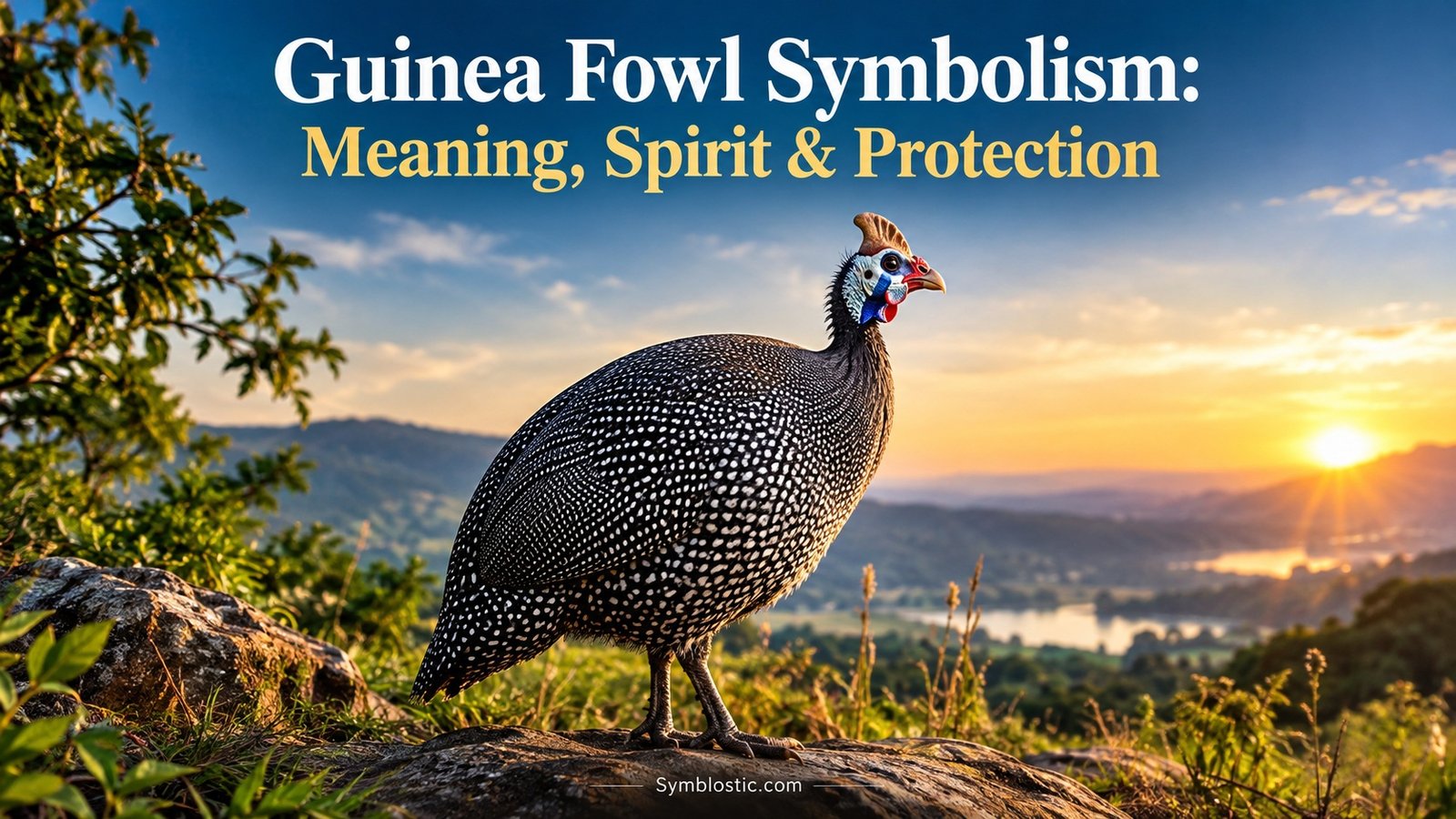
Guinea fowl are hard to ignore. Their spotted feathers, unusual heads, loud calls, and strong flock behavior give them a distinctive presence. Guinea Fowl Symbolism often centers on vigilance, protection, community, resilience, and awareness.
In the United States, guinea fowl can symbolize something slightly different depending on context. On farms, they are useful and alert birds. In folklore, they can represent cleverness and cooperation. In decorative art, their striking pattern can suggest individuality and natural beauty.
Their deeper history reaches back to Africa, where guinea fowl have been domesticated for thousands of years. Over time, the bird traveled through Europe and eventually reached the Americas. That journey created several layers of meaning around this unusual bird.
Quick Answer
Guinea Fowl Symbolism in the USA commonly represents vigilance, protection, community, resilience, and speaking up when something feels wrong. Its loud calls and flock behavior naturally connect it with awareness and social responsibility.
In broader African traditions, guinea fowl can also carry meanings connected with protection, communal life, ceremony, fertility, and cultural heritage.
TL;DR
- Guinea fowl commonly symbolize vigilance, protection, and awareness.
- Their flock behavior represents community, cooperation, and social connection.
- African traditions give the bird deep cultural and ceremonial importance.
- American folklore connects guinea fowl with cleverness and protective teamwork.
- Spotted feathers can represent individuality, adaptability, and natural beauty.
- Today, guinea fowl imagery appears in art, decor, tattoos, and farm culture.
What Does Guinea Fowl Symbolism Mean?
The guinea fowl has several symbolic qualities that come directly from its behavior. It stays alert, communicates loudly, and often moves with a group.
For American readers, these traits make the bird an interesting symbol of awareness. It suggests paying attention instead of ignoring small warning signs.
Core Symbolic Meanings
The most common interpretations include:
- Vigilance — noticing changes before others do.
- Protection — alerting a group when danger appears.
- Community — staying connected with family or a social group.
- Resilience — adapting to difficult environments.
- Communication — making your voice heard when necessary.
- Individuality — standing out without leaving the group.
However, symbolism isn’t fixed. Someone who keeps guinea fowl may associate them with independence, farm life, or practical usefulness instead.
What Does a Guinea Fowl Represent in America?
In the United States, guinea fowl have a practical identity alongside their symbolic one. They are familiar on farms and rural properties, where their loud calls can make them effective alarm birds.
That practical role strongly influences their modern symbolism. A bird that reacts loudly to unfamiliar activity naturally becomes associated with watchfulness.
Rural American Associations
In rural settings, guinea fowl can suggest:
- Protection of property and livestock
- Self-reliance and practical living
- Awareness of unfamiliar activity
- Connection with agricultural traditions
- Strong family or flock bonds
- A noisy but useful presence
American folklore has also given the guinea fowl a place in storytelling. Joel Chandler Harris’s Nights with Uncle Remus, published in 1883, included the tale “Why the Guinea-Fowls Are Speckled.” The story presents guinea fowl as active participants in a conflict with a lion.
That story is part of a complicated American literary history. It draws from African American storytelling traditions while also reflecting the racial language and plantation-era framing of its time. Today, it is best understood within that historical context rather than treated as a simple representation of African culture.
Guinea Fowl Symbolism in African Traditions
Because guinea fowl originated in Africa, many of its oldest cultural meanings developed there. The bird has been important to African communities for food, farming, ceremonies, folklore, and social life.
Modern research published in 2025 continues to document its cultural importance across several African countries. In different communities, guinea fowl have been connected with vigilance, protection, communal responsibility, ceremonies, and social relationships.
Protection and Vigilance
The bird’s behavior helps explain these associations. Guinea fowl often stay together and respond loudly to disturbances.
As a result, the bird can represent a community that watches out for its members.
Community and Ceremony
In parts of West Africa, guinea fowl have appeared in ceremonies, exchanges, and traditional practices. Their meaning varies between communities, so it’s important not to describe one interpretation as universal.
The strongest shared theme is often the connection between the bird and community life.
What Is the Historical Meaning of the Guinea Fowl?
Guinea fowl have a remarkably long relationship with humans. Archaeological evidence connects them with ancient Egypt, while later evidence points to domestication in parts of Africa.
Researchers generally place significant domestication developments thousands of years ago. The bird later traveled beyond Africa through trade, exploration, and farming.
Ancient Roots
Images of guinea fowl appear in ancient Egyptian contexts dating back thousands of years. Their presence shows that people recognized and interacted with these distinctive birds long before modern symbolism developed.
The bird later became known around the Mediterranean world. Romans had their own names and descriptions for guinea fowl, showing how its identity changed as it entered new cultures.
Arrival in the Americas
Guinea fowl reached the Americas during the colonial period. They became part of agricultural life in parts of the United States, especially in rural environments.
That history helps explain why modern American interpretations often combine African origins with farm culture and folklore.
Why Do Guinea Fowl Symbolize Protection?
Protection is one of the easiest meanings to understand because it comes from the bird’s behavior.
Guinea fowl can produce loud calls when they detect something unusual. Their reaction can alert humans and other animals to activity nearby.
The Alarm-Bird Archetype
Symbolically, this creates a simple pattern:
Something changes → the bird notices → the bird responds → others become aware.
That pattern makes guinea fowl a natural symbol for people who speak up.
The bird can therefore represent someone who refuses to stay silent when something matters.
Protection Without Aggression
Protection doesn’t always mean fighting. Sometimes protection means noticing danger early.
For that reason, guinea fowl symbolism can encourage awareness rather than confrontation. The message is often, “Pay attention before you act.”
What Does a Guinea Fowl Symbolize Spiritually?
Spiritually, guinea fowl symbolism varies considerably by tradition. There isn’t one universal spiritual meaning that applies to every culture or religion.
However, several interpretations naturally develop from the bird’s behavior and cultural history.
Spiritual Themes
People may interpret guinea fowl as representing:
- Awareness of hidden changes
- Protection of family and community
- Groundedness through connection with the earth
- Communication and speaking when necessary
- Collective strength through cooperation
- Resilience during difficult periods
Some modern spiritual writers describe the bird as a guardian or warning symbol. These interpretations are contemporary spiritual readings, not universal religious teachings.
A Grounded Spiritual Interpretation
If you encounter guinea fowl repeatedly, you don’t have to assume it carries a supernatural message.
Instead, you might use the encounter as a personal reflection. Ask yourself whether you’ve been ignoring an important warning, relationship, responsibility, or instinct.
What Do Guinea Fowl’s Spots Symbolize?
The guinea fowl’s spotted feathers are among its most recognizable features. Naturally, those spots have inspired symbolic interpretations about individuality and beauty.
The pattern also creates an interesting contrast. Every bird has a recognizable overall appearance, yet each feather pattern is visually distinct.
Spots as Individuality
The spots can symbolize:
- Individual identity within a group
- Beauty in natural imperfection
- Complexity beneath an ordinary appearance
- Adaptability and camouflage
- A balance between difference and belonging
This makes guinea fowl imagery especially interesting for modern art and tattoos.
The message can be simple: You can belong to a community without losing your individuality.
Read More: Killdeer Symbolism: Meaning, Spirit & Protection
Guinea Fowl Symbolism and Community
Few symbolic themes fit guinea fowl better than community. These birds are highly social and commonly move together.
That behavior makes the guinea fowl a useful symbol for family, friendship, cooperation, and shared responsibility.
Strength in Numbers
A single person may notice something important. A connected group can respond more effectively.
This doesn’t mean individuality disappears. Instead, guinea fowl symbolism suggests that independence and community can exist together.
For American readers, this idea can connect with family traditions, neighborhood relationships, teamwork, and rural community life.
| Context | Meaning in the USA | Common Association | Symbolic Lesson |
| Farm life | Awareness | Alarm calls | Notice what changes |
| Flock behavior | Community | Cooperation | Stay connected |
| Spotted feathers | Individuality | Natural beauty | Be yourself |
| Folklore | Cleverness | Teamwork | Work together |
| Spiritual reflection | Protection | Alertness | Trust awareness |
Guinea Fowl Symbolism in Dreams
Dream symbolism is highly personal. A guinea fowl in a dream doesn’t have one fixed interpretation for everyone.
However, its behavior can provide useful clues when interpreting the dream.
Common Dream Associations
A guinea fowl appearing in a dream may suggest:
- You need to pay closer attention.
- Someone around you may need support.
- You’re feeling protective of your family.
- You need to speak about something important.
- You feel overwhelmed by social demands.
- You’re learning to trust your instincts.
The dream’s emotional tone matters too.
For example, a peaceful guinea fowl may feel connected with community and belonging. A noisy or frightened bird may reflect tension, overstimulation, or a need for greater awareness.
Guinea Fowl Symbolism in Tattoos, Art, and Decor
Guinea fowl have an unusual visual advantage. Their spotted bodies and colorful heads create recognizable imagery without requiring complicated designs.
As a result, the bird can work well in decorative and symbolic art.
Tattoo Meaning
Someone choosing a guinea fowl tattoo might associate it with:
- Protection of loved ones
- African heritage or cultural appreciation
- Rural or agricultural identity
- Community and family
- Resilience
- Individuality
- Awareness
However, cultural imagery should be approached respectfully. If a design comes from a specific African tradition, learning its context is better than treating it as a generic mystical symbol.
Home Decor
Guinea fowl designs can also appear in:
- Farmhouse-style decoration
- Ceramic artwork
- Textile patterns
- Paintings and prints
- Garden ornaments
- Rustic kitchen decor
In these settings, the bird may symbolize country living more than spirituality.
Guinea Fowl Symbolism and Personality
People sometimes use animals as mirrors for personality traits. Guinea fowl fit this practice surprisingly well.
Their behavior creates a personality profile centered around awareness and social connection.
The “Guinea Fowl Personality”
Symbolically, a guinea fowl personality might be:
- Alert but not necessarily fearful
- Social but still distinctive
- Vocal when something matters
- Protective of its group
- Adaptable in changing conditions
- Comfortable standing out
This symbolism may appeal to someone who sees themselves as a watchful friend or protective family member.
At the same time, the bird’s loudness can represent a warning against overreacting. Awareness is valuable, but constant alarm can exhaust both you and everyone around you.
Guinea Fowl Symbolism, Folklore, and Misunderstandings
Guinea fowl symbolism can become confusing when modern spiritual claims are presented as ancient universal beliefs.
That distinction matters.
Tradition vs. Modern Interpretation
Some cultural traditions genuinely connect guinea fowl with ceremony, protection, community, or other important ideas. Yet a modern website may combine these traditions with unrelated claims about spirit animals, dreams, or supernatural messages.
Those claims shouldn’t automatically be treated as ancient facts.
For example, the idea that every guinea fowl encounter carries a specific divine message is a personal spiritual interpretation. It isn’t a universal belief shared by all cultures.
The Problem With “African Symbolism”
Africa contains thousands of cultures and many different religious and storytelling traditions.
Therefore, saying “Africans believe guinea fowl means X” is usually too broad.
A better approach is to identify the specific community or region whenever reliable information is available. This keeps the symbolism respectful and avoids turning diverse traditions into one simplified belief system.
How Guinea Fowl Symbolism Has Changed Over Time
The meaning of guinea fowl has shifted as the bird moved between environments and cultures.
In Africa, it has long had practical, social, agricultural, and ceremonial roles. In Europe, it became an exotic bird and food source. In America, it developed additional associations with farms, folklore, and rural life.
From Survival to Symbolism
Older communities often encountered animals through everyday survival. A bird could provide food, warn of danger, participate in ceremonies, or become part of a story.
Modern people are more likely to encounter animal symbolism through art, social media, tattoos, dreams, or personal spirituality.
As a result, the guinea fowl can now represent both practical wisdom and personal identity.
What Has Stayed Consistent?
Despite these changes, several themes remain surprisingly stable:
- Awareness
- Social connection
- Protection
- Adaptability
- Distinctive appearance
- Cooperation
These qualities come directly from the bird’s behavior, which helps explain their lasting appeal.
FAQs:
What Does Guinea Fowl Symbolism Mean?
Guinea fowl symbolism commonly represents vigilance, protection, community, communication, and resilience. In American settings, the bird can also symbolize rural life and practical awareness.
Is a Guinea Fowl a Symbol of Good Luck?
Some cultural traditions attach positive or negative omens to guinea fowl, but there isn’t one universal luck meaning. Its symbolism depends heavily on the culture and situation.
What Does Seeing a Guinea Fowl Mean Spiritually?
A modern spiritual interpretation may connect a guinea fowl sighting with awareness, protection, or community. However, this is personal symbolism rather than a universal spiritual rule.
What Does a Guinea Fowl Represent in African Culture?
Meanings differ across African communities. Documented associations include vigilance, protection, communal responsibility, ceremony, social relationships, and cultural identity.
What Does a Guinea Fowl Tattoo Mean?
A guinea fowl tattoo can symbolize protection, community, resilience, individuality, rural identity, or cultural heritage. Its exact meaning depends on the person wearing it and the design’s cultural context.
Why Are Guinea Fowl Associated With Protection?
Their loud calls and alert behavior help explain the connection. Symbolically, they represent noticing potential problems and alerting others before danger grows.
Conclusion:
Guinea Fowl Symbolism brings together several powerful ideas: vigilance, protection, community, resilience, communication, and individuality. In the USA, the bird carries strong rural and folkloric associations, while its deeper history connects it to African cultures where guinea fowl have held practical and ceremonial importance for centuries.
The bird’s symbolism is especially interesting because it balances two seemingly opposite qualities. It belongs to a flock, yet its spotted appearance makes it instantly distinctive. It is noisy, yet that noise can serve a useful purpose. It stays grounded while remaining highly alert to its surroundings.

1 thought on “Guinea Fowl Symbolism: Meaning, Spirit & Protection”