
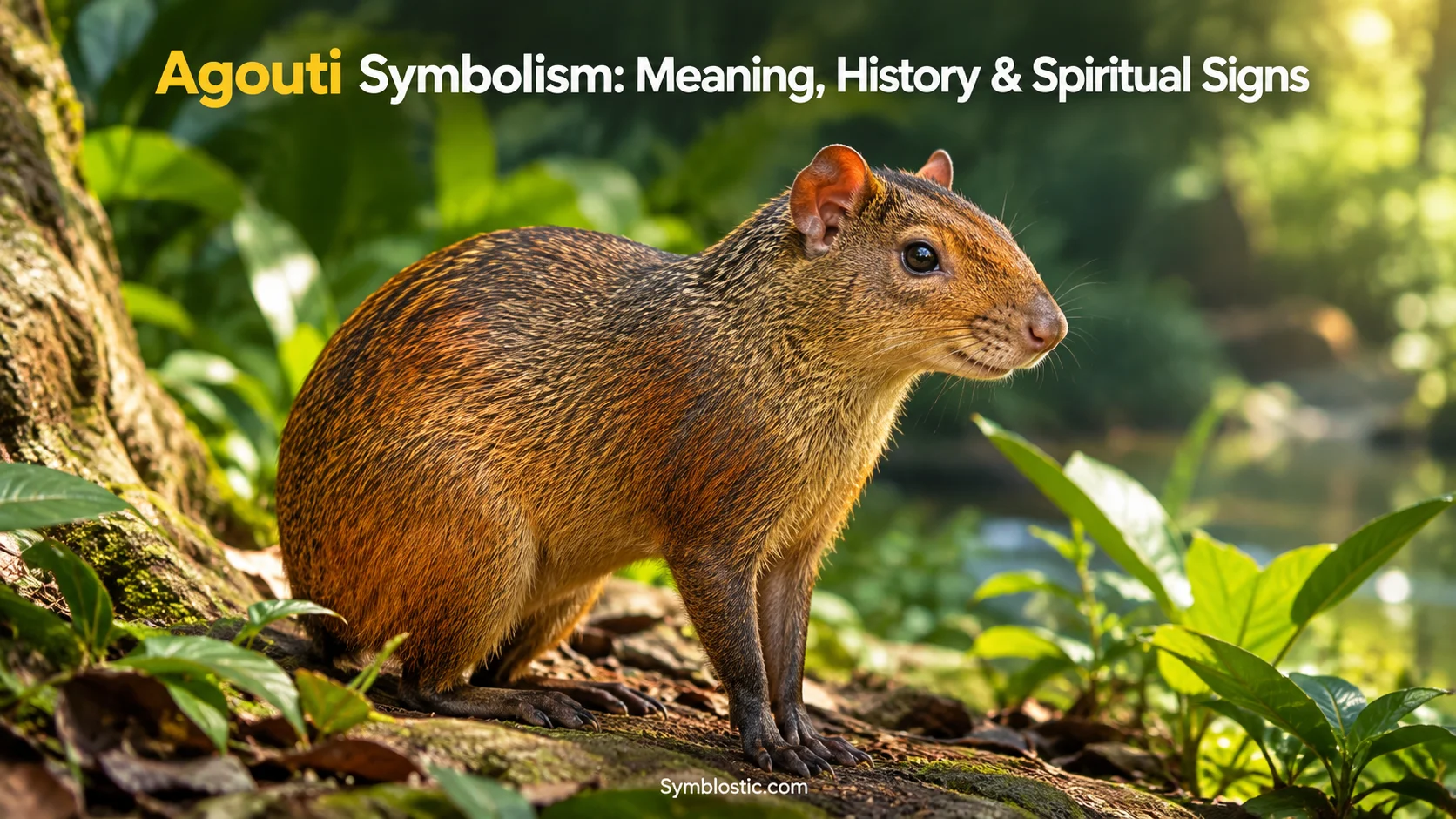
The Agouti Symbolism is especially interesting because this small rainforest animal carries meanings far beyond its size. Agoutis are quick, alert rodents native to Central and South America and parts of the Caribbean. Their lives are closely tied to seeds, forests, food storage, and survival.
For many American readers, the agouti may be unfamiliar compared with animals such as bears, wolves, eagles, or deer. However, its natural behavior offers powerful symbolic ideas. An agouti gathers food, hides seeds, remembers useful locations, and moves carefully through its surroundings.
Today, those traits can represent resourcefulness, preparation, adaptability, patience, cleverness, and renewal. Spiritual interpretations add ideas about staying grounded and working quietly toward future goals.
Quick Answer
Agouti Symbolism commonly represents resourcefulness, preparation, adaptability, cleverness, and connection with nature. In a broader spiritual sense, the animal can symbolize storing what you need today while preparing for tomorrow.
TL;DR
- The agouti often symbolizes resourcefulness and practical survival.
- Its seed-caching behavior connects it with preparation and future growth.
- Indigenous Caribbean traditions give the animal important historical context.
- Some South American stories portray the agouti as clever or deceptive.
- In America, it mainly symbolizes wildlife, ecology, and rainforest life.
- Modern interpretations connect it with patience, resilience, and quiet progress.
What Does an Agouti Symbolize?
The agouti is a small animal with surprisingly rich symbolic possibilities. Its behavior gives people several natural qualities to interpret.
Instead of relying on one universal meaning, it helps to look at what the animal actually does. Symbolism becomes stronger when it grows from recognizable behavior.
Resourcefulness and Preparation
Agoutis are excellent examples of practical preparation. They eat seeds, fruits, roots, and other plant material. When food is plentiful, they can bury nuts and return to them later.
That behavior naturally connects the animal with planning, saving, and thinking ahead.
For a modern reader, the message can be simple: use what you have wisely, and prepare for changing conditions.
Adaptability and Survival
Agoutis live in forests, brush, savannas, and areas affected by human activity. They can adjust to different environments while remaining closely connected to natural habitats.
Symbolically, this can represent the ability to change without losing your basic identity.
Quiet Cleverness
The agouti isn’t a large predator. It survives through awareness, speed, memory, and careful behavior.
Because of this, it can symbolize intelligence without intimidation.
Agouti Appearance and Natural Symbolism
An animal’s physical appearance often shapes how people interpret its symbolism. The agouti has several features that lend themselves naturally to symbolic ideas.
Its body is usually covered with brown, reddish, grayish, or dark fur. Some species have contrasting colors, while their long legs help them move quickly through forest environments.
Brown Fur and Earth Energy
Brown is strongly associated with soil, trees, roots, and natural landscapes. Since many agoutis have brown or grizzled coats, they visually blend with the forest floor.
Symbolically, this can suggest:
• Grounding and stability
• Connection with the natural world
• Patience and quiet strength
• Practical rather than flashy energy
• Comfort with simple surroundings
However, these color meanings are modern symbolic interpretations. They shouldn’t be treated as universal cultural beliefs.
Alert Posture
An agouti can appear highly attentive when it senses danger. Its body language reflects awareness and readiness.
This makes the animal a useful symbol for vigilance without constant fear.
The idea isn’t to live anxiously. Instead, it suggests paying attention before taking action.
What Is the Historical Meaning of the Agouti?
The agouti has a long relationship with people in tropical parts of the Americas. Archaeological and historical evidence shows that humans interacted with these animals for food, landscape use, and other purposes long before modern wildlife studies.
Agouti remains have been found at many archaeological sites in the Caribbean. Research published in 2021 documented pre-1492 agouti remains across dozens of sites and examined their relationship with Indigenous communities.
Indigenous Caribbean Connections
Historical evidence suggests that agoutis were introduced to some Caribbean islands by Indigenous peoples more than a thousand years ago.
This makes the animal important beyond simple folklore. It also reflects human movement, food systems, animal management, and relationships with island environments.
Some historical accounts also connect agouti skeletal material with ritual or ceremonial practices. However, researchers caution that the evidence is complex and doesn’t support one universal meaning for every Indigenous group.
The Agouti in Oral Traditions
Agoutis also appear in stories from parts of tropical South America and the Caribbean.
In some traditions, the animal appears as a clever character. It may survive through speed, deception, or intelligence rather than physical strength.
That creates a recurring symbolic theme:
The small and clever can sometimes overcome the large and powerful.
Agouti Symbolism in the USA
In the United States, agouti symbolism isn’t part of one major national tradition. The animal isn’t comparable to the eagle, bison, bear, or turkey in American cultural history.
Instead, Americans are more likely to encounter agoutis through zoos, wildlife education, documentaries, conservation programs, and tropical ecology.
Nature and Conservation
The agouti has an especially interesting ecological role. Some species eat and disperse large seeds, including Brazil nuts.
This gives the animal a strong modern environmental meaning. It isn’t simply another forest creature. Its behavior can help forests regenerate.
For American audiences, that makes the agouti a useful symbol of hidden environmental work.
A Symbol of Small Ecological Roles
The agouti demonstrates how a relatively small animal can influence an entire ecosystem.
That idea translates well into modern American thinking about conservation.
A person doesn’t need to be famous or powerful to have an effect. Small actions can contribute to much larger systems.
Common American Associations
| Context | Meaning in the USA | Common Associations | Notes |
| Wildlife | Natural diversity | Rainforests, mammals, ecosystems | Mostly educational |
| Conservation | Ecological contribution | Seeds, forests, regeneration | Based on natural behavior |
| Personal symbolism | Resourcefulness | Preparation, patience, survival | Modern interpretation |
| Art and design | Exotic nature | Tropical forests, wildlife | Often decorative |
| Spiritual interpretation | Grounding | Nature, adaptability, renewal | Personal rather than universal |
Spiritual Meaning of the Agouti
The spiritual meaning of an agouti depends heavily on the tradition being discussed. There isn’t one established spiritual interpretation shared by all cultures.
Modern spiritual animal writing often connects the agouti with grounding, adaptability, resourcefulness, and preparation.
A Symbol of Preparing for the Future
The animal’s habit of storing food makes this one of its clearest symbolic themes.
Spiritually, an agouti may represent the wisdom of preparing before a difficult period arrives.
That doesn’t necessarily mean accumulating material things. It can also mean developing skills, relationships, knowledge, patience, or emotional strength.
A Symbol of Grounding
Because the agouti spends much of its life close to the forest floor, it can represent staying connected with practical reality.
The symbolic lesson is straightforward:
Stay grounded while you pursue larger goals.
A Symbol of Natural Cycles
Seeds disappear into the ground and may later become part of new plant growth. The agouti participates in this ecological cycle.
For that reason, it can symbolize renewal, continuity, and unseen progress.
Agouti Meaning in South American and Caribbean Traditions
The agouti has a deeper cultural history in tropical regions than its modern popularity might suggest. However, it would be misleading to claim that all South American or Caribbean peoples assign it the same meaning.
Different communities have their own stories, relationships, and traditions.
The Clever Agouti
In some traditional stories, the agouti appears as a trickster-like character.
Its advantage isn’t brute force. Instead, it uses speed, intelligence, timing, or deception.
This creates a symbolic contrast between strength and cleverness.
The Agouti as a Forest Figure
Some Indigenous knowledge systems emphasize relationships among animals, plants, people, and landscapes.
A 2026 study involving Mebengokré Indigenous knowledge describes the agouti as a kind of forest gardener because of its relationship with Brazil nut trees and seeds.
This is particularly valuable because it shows a different way of understanding the animal. The agouti isn’t merely an animal living in the forest. Its actions can be understood as part of the forest’s ongoing life.
Why Context Matters
It’s important not to combine separate Indigenous traditions into one generalized “South American belief.”
An agouti story from one community doesn’t automatically represent another community.
That distinction makes the symbolism more accurate and respectful.
Emotional and Psychological Meaning of the Agouti
Animals can become mirrors for qualities people recognize in themselves. The agouti’s behavior naturally connects with several emotional and psychological themes.
It doesn’t mean that seeing an agouti predicts a particular event. Instead, people may use the animal as a personal metaphor.
Resourcefulness
An agouti doesn’t need perfect conditions to survive. It searches, adapts, stores food, and responds to danger.
As a personal symbol, this can represent making good use of limited resources.
Patience
Seed storage has a strong connection with delayed reward.
You do something useful now without receiving the full benefit immediately.
That makes the agouti a fitting symbol for people working toward long-term goals.
Quiet Confidence
The agouti isn’t usually imagined as a dominant animal.
Instead, its strength comes from practical abilities.
Symbolically, this can represent confidence that doesn’t need to attract attention.
Agouti Symbolism in Dreams
Dream symbolism is personal rather than scientifically fixed. An agouti appearing in a dream can mean different things depending on the dreamer’s emotions and circumstances.
However, several common interpretations can be explored.
Seeing an Agouti
Seeing an agouti may represent something small that deserves more attention.
The dream could encourage reflection on overlooked opportunities, habits, or resources.
An Agouti Storing Food
This image strongly connects with preparation.
It may remind the dreamer of something they are building slowly for future use.
An Agouti Running Away
A fleeing agouti can symbolize avoidance, caution, or the desire to escape pressure.
The surrounding dream details matter more than the animal alone.
Read More: Tree Kangaroo Symbolism: Meaning, Spirit & History
Agouti Symbolism in Tattoos, Art, and Decor
The agouti isn’t among the most common animal tattoo choices in America. Still, its unusual appearance can make it meaningful for people who want something less familiar.
A tattoo can represent personal connection rather than a traditional cultural symbol.
Agouti Tattoo Ideas
People may choose an agouti design to represent:
• Adaptability after major life changes
• Connection with tropical nature
• Patience during long-term growth
• Resourcefulness during difficult periods
• Appreciation for overlooked animals
Art and Home Decor
An agouti image can also work in wildlife art, rainforest-themed rooms, educational displays, or nature collections.
Its brown coloring makes it visually compatible with earthy palettes and botanical designs.
Agouti Symbolism in Modern Life
Modern symbolism often grows from the way people encounter animals today.
Most Americans won’t regularly see an agouti in the wild. Instead, they may encounter it through wildlife photography, zoos, nature videos, books, or online educational content.
Social Media
An unusual animal can attract attention precisely because it’s unfamiliar.
Agouti images may therefore communicate curiosity, biodiversity, exploration, or appreciation for lesser-known wildlife.
Identity and Personal Meaning
Someone who identifies with the agouti may see it as a reminder to stay practical and adaptable.
This can be especially appealing to people who prefer quieter symbols over familiar animals like wolves or eagles.
Environmental Awareness
The animal’s role in seed dispersal gives it another modern association.
It can represent the idea that every part of an ecosystem matters, even when the contribution isn’t immediately visible.
What Does the Agouti Mean in Different Contexts?
The same animal can carry different meanings depending on how someone encounters it.
Context is therefore more useful than assigning one fixed definition.
Nature Encounter
Seeing an agouti in a wildlife setting may simply create a sense of curiosity and connection with nature.
Spiritual Reflection
Someone using animal symbolism spiritually may interpret the encounter as a reminder about preparation or adaptability.
Artistic Use
An agouti in artwork may emphasize rainforest biodiversity or the beauty of lesser-known animals.
Personal Symbol
For an individual, the animal may represent surviving quietly, planning carefully, or making progress without recognition.
Misunderstandings and Controversies Around Agouti Symbolism
Agouti symbolism has relatively few major modern controversies in the United States. However, there are still several points worth handling carefully.
Not Every Meaning Is Ancient
Many websites describe the agouti as a universal symbol of grounding, prosperity, or spiritual awakening.
Those claims often mix modern spiritual interpretation with older cultural material.
It’s more accurate to distinguish documented traditions from modern symbolic readings.
Avoiding Pan-Indigenous Claims
Indigenous cultures across the Americas are not one cultural group.
A story from the Caribbean shouldn’t automatically be presented as a belief held throughout South America.
Trickster Doesn’t Always Mean Evil
When an agouti appears as a trickster, that doesn’t necessarily mean it represents wickedness.
Trickster figures can expose greed, foolishness, arrogance, or excessive confidence. Their behavior can also teach through humor and unexpected reversals.
How Agouti Symbolism Has Changed Over Time
The agouti’s meaning has shifted as human relationships with the animal have changed.
In older societies, the animal could be connected with food, hunting, landscape management, stories, and ritual practices.
Today, Americans are more likely to encounter it through wildlife education or environmental storytelling.
From Food to Ecology
Historical sources often describe agoutis in relation to hunting and food.
Modern conservation discussions can instead emphasize their ecological role.
That shift reflects a broader change in how people understand wildlife.
From Local Animal to Global Symbol
An animal once known mainly within tropical regions can now appear in global wildlife media.
As a result, people outside its native range can attach new personal meanings to it.
However, modern interpretations shouldn’t erase the animal’s actual cultural history.
What Can the Agouti Teach Us Today?
The agouti offers several simple lessons when viewed as a natural metaphor.
Its most interesting qualities aren’t dramatic. They’re practical.
Prepare Before You Need Something
The animal’s food-storage behavior offers a powerful image of preparation.
Small efforts today can support future needs.
Don’t Underestimate Quiet Strength
The agouti isn’t physically dominant compared with many rainforest animals.
Yet it survives through awareness, speed, memory, and adaptability.
Remember Your Connection to Nature
The agouti also demonstrates how animals influence plant life and forest renewal.
Its story encourages a broader view of nature, where even small creatures can have large ecological effects.
FAQs:
What does an agouti symbolize spiritually?
An agouti can symbolize resourcefulness, grounding, preparation, and adaptability in modern spiritual interpretations. These meanings come largely from its natural behavior rather than one universal religious tradition.
What does seeing an agouti mean?
Seeing an agouti can simply be an encounter with an unusual rainforest animal. If you’re interpreting it symbolically, you might connect it with preparation, patience, or adapting to changing circumstances.
Is the agouti a trickster animal?
In some South American and Caribbean stories, the agouti appears as a clever or trickster-like character. These stories vary by community, so the interpretation shouldn’t be treated as universal.
What does an agouti represent in dreams?
Dream interpretations often connect the agouti with preparation, hidden resources, cleverness, or adaptability. However, the dreamer’s feelings and surrounding events are important when considering its personal meaning.
What does an agouti symbolize in Indigenous cultures?
There isn’t one single Indigenous interpretation of the agouti. Historical and ethnographic evidence shows that different communities have had different relationships with the animal, including food, ecological, ceremonial, and storytelling roles.
Is the agouti a symbol of good luck?
Some modern spiritual interpretations may associate the animal with positive qualities such as resourcefulness and future preparation. However, there isn’t a universal traditional belief that an agouti guarantees good luck.
Conclusion:
Agouti Symbolism centers on practical qualities such as resourcefulness, adaptability, preparation, cleverness, and renewal. These meanings grow naturally from the animal’s behavior, especially its ability to gather food and participate in forest regeneration.
In the United States, the agouti is better understood as a symbol of wildlife, ecology, and quiet resilience than as a major national emblem. Its deeper cultural history adds another layer, especially through Indigenous Caribbean and South American traditions.

1 thought on “Agouti Symbolism: Meaning, History & Spiritual Signs”