
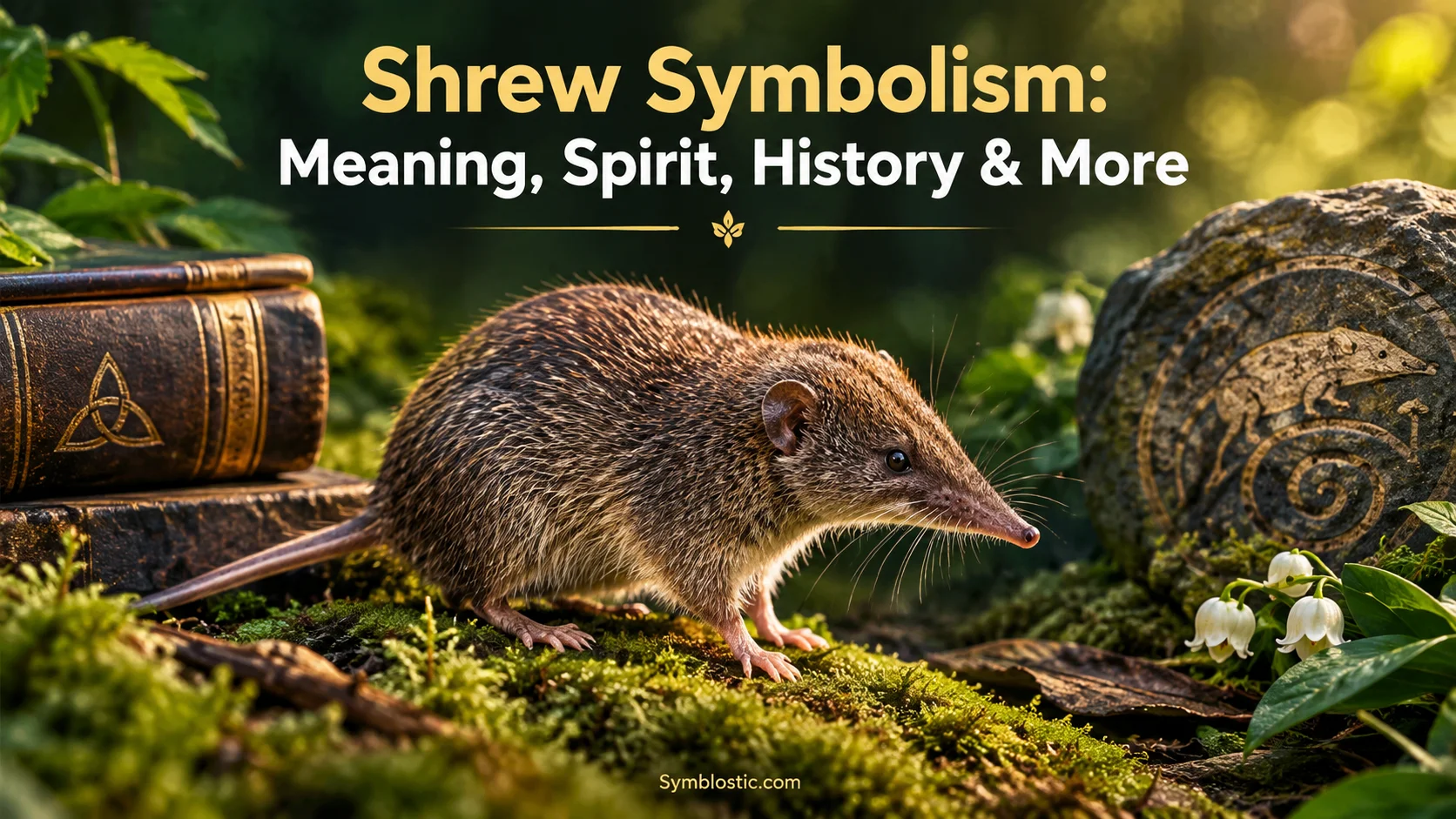
Shrew Symbolism connects a tiny, secretive mammal with ideas of determination, hidden strength, alertness, independence, and underestimated power. Although shrews are small, they are active predators with sharp senses and intense energy. That contrast between size and strength has made the shrew an interesting symbolic figure.
In the United States, however, the shrew carries another important layer of meaning. The word “shrew” also became a description for a difficult, outspoken, or supposedly bad-tempered person, especially a woman. Literature helped preserve that meaning, most famously through William Shakespeare’s The Taming of the Shrew.
Today, people can encounter the shrew in very different ways. Someone may see it as a fascinating wild animal, a symbol of resilience, or a reminder to notice what others overlook. Others may connect it with old literary ideas about anger and social expectations. Understanding both meanings gives the symbol much more depth.
Quick Answer
Shrew Symbolism commonly represents resourcefulness, alertness, hidden strength, independence, and persistence. In the USA, it also carries a literary meaning connected with an outspoken or strong-willed person, although that older label has gendered and negative associations.
TL;DR
- Shrews symbolize strength that can exist beneath a small appearance.
- Their constant activity connects them with energy and persistence.
- American literature gives “shrew” a separate human meaning.
- Shakespeare helped make the word strongly associated with difficult women.
- Spiritual interpretations often focus on awareness, resilience, and adaptability.
- Modern meanings increasingly separate the animal from the old insult.
What Does a Shrew Symbolize?
A shrew is a tiny mammal with a surprisingly intense way of living. It spends much of its time searching for food, responding to danger, and moving through its environment with remarkable alertness.
For American readers, this creates a useful symbolic contrast. Something doesn’t have to look powerful to possess strength.
Small Size, Strong Presence
The shrew can symbolize hidden power because its appearance doesn’t reveal its full capabilities.
Its small body may suggest vulnerability, yet its behavior can suggest determination. Symbolically, this creates an image of someone who doesn’t need size, status, or attention to remain capable.
Common symbolic associations include:
- Resourcefulness when circumstances are difficult.
- Alertness toward subtle changes around you.
- Persistence when progress requires repeated effort.
- Independence and the ability to function without attention.
- Hidden strength beneath an unassuming appearance.
Why the Shrew Feels Different
Unlike larger animals often used as symbols of power, the shrew represents a quieter form of strength.
It doesn’t need to dominate the landscape. Instead, its symbolism comes from survival, speed, awareness, and persistence.
Shrew Symbolism in the United States
In the USA, the shrew has two major symbolic identities. One comes from the real animal, while the other comes from English-language literature and social history.
The natural symbol tends to emphasize toughness and adaptability. The literary symbol is much more complicated because it developed around judgments about human behavior.
The American Meaning of a Small Survivor
American nature symbolism often celebrates animals that survive through adaptability rather than size.
The shrew fits that pattern well. It can represent the person who works quietly, notices details, and keeps going when circumstances become difficult.
For modern readers, that can translate into ideas such as:
- Quiet confidence rather than public dominance.
- Determination despite limited resources.
- Awareness of opportunities others overlook.
- Independence without needing constant recognition.
- Persistence during uncertain periods.
The Literary Meaning
The word “shrew” became strongly associated with a difficult or argumentative person in English.
That meaning eventually became particularly associated with women who were considered too outspoken or unwilling to accept expected social roles. Shakespeare’s The Taming of the Shrew helped make this usage famous.
That literary history matters in the USA because Shakespeare remains widely taught, performed, adapted, and discussed.
Shrew Symbolism in History and Folklore
The shrew has a much older symbolic history than Shakespeare. Ancient and medieval writers sometimes gave the animal unusual or threatening qualities because people had limited scientific knowledge about it.
This is important because older symbolism often reflected fear and misunderstanding rather than the animal’s actual behavior.
Ancient Associations
In ancient Egypt, shrew-like animals appear in religious and funerary contexts. Some shrews were associated with the god Horus of Letopolis, particularly with a nocturnal aspect connected to darkness and limited sight.
This created a symbolic relationship between the shrew and themes such as night, mystery, hidden perception, and the unseen world.
The historical evidence is more specific than the broad modern claim that “shrews were universally sacred.” Their religious importance varied by place and period.
Medieval European Symbolism
Medieval European bestiaries often described the shrew in negative terms.
Some texts portrayed it as dangerous or poisonous. These descriptions helped associate the animal with malice, hidden danger, deception, and unpleasant behavior.
Such interpretations should be viewed in their historical setting. Medieval writers often assigned moral lessons to animals without understanding animal biology in modern scientific terms.
From Animal to Human Metaphor
Over time, the word “shrew” developed a human meaning as well.
It could describe a person considered wicked, difficult, or scolding. Later, the label became particularly connected with women who challenged expected behavior.
This is one of the most important shifts in the symbol’s history.
The Shrew and The Taming of the Shrew
Shakespeare’s The Taming of the Shrew is probably the most influential literary reference connected with the word.
The play centers on Katherine, a strong-willed woman whose behavior conflicts with the social expectations surrounding women in early modern England.
Why Shakespeare Matters
The play did not invent every idea associated with the word “shrew.” Similar stories and labels existed before Shakespeare.
However, Shakespeare gave the concept enormous cultural visibility. Later readers, teachers, actors, and filmmakers continued debating what the play says about marriage, authority, gender, identity, and independence.
Modern Interpretations
Modern audiences don’t necessarily interpret Katherine’s story as a simple lesson about obedience.
Some interpretations focus on the play’s comedy and theatrical wordplay. Others emphasize its portrayal of gender expectations and power.
Because of this, “shrew” today can carry an uncomfortable historical reminder. It shows how language can turn a personality trait into a social judgment.
Spiritual Meaning of the Shrew
Spiritual interpretations of animals aren’t fixed religious facts. They are symbolic readings that vary among individuals and traditions.
For someone who uses animal symbolism personally, the shrew can represent awareness, persistence, intuition, and survival.
The Shrew as a Spiritual Messenger
The shrew’s hidden lifestyle can encourage reflection on things that aren’t immediately visible.
Seeing one may symbolically remind someone to pay closer attention to small details. It can also represent continuing forward without needing outside approval.
Common spiritual interpretations include:
- Awareness: Notice details that others may miss.
- Resilience: Continue moving through difficult circumstances.
- Intuition: Trust careful observation and subtle signals.
- Adaptability: Change your approach when conditions change.
- Persistence: Keep working even when progress feels small.
- Hidden potential: Don’t judge yourself by appearance alone.
A Balanced Interpretation
A shrew appearing in your yard does not prove that a supernatural message has been sent.
Wild animals have practical reasons for where they appear. Symbolism can still provide a personal framework for reflection, provided it isn’t confused with scientific evidence.
Shrew Symbolism in Different Cultures
Shrew meanings vary considerably across cultures and historical periods. There isn’t one universal interpretation.
Some traditions emphasize danger, while others highlight cleverness, liveliness, or unusual spiritual significance.
Native American Folklore
Some Native American stories feature shrews as small but capable animals. In one Miwok tradition, shrews play a role in obtaining fire for people.
Other traditions have viewed shrews less positively, including associations with bad luck or unwanted presence. These stories belong to particular cultural traditions and shouldn’t be treated as one universal “Native American” belief.
Ancient Egyptian Connections
Ancient Egyptian religious traditions provide one of the more distinctive historical examples.
Shrews could be connected with Horus of Letopolis and with nocturnal symbolism. Their association with darkness and limited sight created an interesting contrast with animals representing sharper daytime vision.
European Folklore
European traditions often gave shrews a darker reputation.
Their small size, rapid movements, biting behavior, and elusive nature made them easy subjects for stories about hidden danger.
These older meanings help explain why the word later acquired negative human associations.
Emotional and Psychological Meaning of the Shrew
Symbolically, the shrew can represent a particular kind of psychological strength.
It isn’t the strength of a bear or the freedom associated with an eagle. Instead, it represents constant awareness and practical persistence.
What the Shrew Can Represent Emotionally
People who identify with the shrew image may connect with being underestimated.
They may see themselves as observant people who prefer action over attention. The symbol can also appeal to anyone who has learned to survive through flexibility rather than force.
| Context | Meaning in the USA | Common Associations | Notes |
| Nature | Survival and adaptability | Energy, awareness | Based on the animal’s behavior |
| Personal identity | Quiet strength | Independence, persistence | Often a positive modern reading |
| Literature | Difficult or outspoken person | Conflict, strong will | Older and often negative usage |
| Spirituality | Awareness and resilience | Intuition, hidden knowledge | Personal interpretation |
| Art and tattoos | Unusual individuality | Mystery, toughness | Meaning depends on design |
| Dreams | Hidden concerns or strength | Vigilance, persistence | Symbolic rather than scientific |
When the Symbol Feels Negative
The shrew can also represent irritability, defensiveness, or conflict.
That interpretation comes largely from the historical meaning of the word rather than from the animal itself.
Separating those two meanings can prevent unfair assumptions.
Read More: Shrimp Symbolism: Meaning, Spirit, and Modern Culture
What Does a Shrew Mean in a Dream?
Dream symbolism is personal, so there isn’t one guaranteed meaning for dreaming about a shrew.
However, the animal can serve as a useful symbol for something small that demands your attention.
Possible Dream Associations
A shrew in a dream might represent a problem that seems minor but keeps returning.
Alternatively, it could symbolize your own ability to stay alert during a stressful situation.
Possible reflective meanings include:
- Something small may be receiving too much attention.
- A hidden concern may deserve closer examination.
- You may feel underestimated by other people.
- Your instincts may be telling you to stay alert.
- Persistent effort may matter more than dramatic action.
The emotional tone of the dream matters too. A frightening shrew may suggest anxiety, while a fascinating one may suggest curiosity or resilience.
Shrew Symbolism in Tattoos, Art, and Decor
Shrew imagery is relatively uncommon compared with wolves, snakes, butterflies, or eagles.
That rarity can make it attractive to someone who wants a less predictable animal symbol.
Shrew Tattoos
A shrew tattoo can represent quiet toughness, independence, survival, or individuality.
A realistic design may focus on the animal itself. A more artistic design might emphasize its nocturnal nature, long snout, movement, or connection with hidden spaces.
However, the meaning doesn’t have to be negative. Someone choosing a shrew can intentionally reject the old insult attached to the word.
Home Decor and Artwork
Shrew imagery can work especially well in nature-focused collections.
Natural-history illustrations, woodland artwork, and wildlife photography can present the animal without the negative human meaning of the word.
In this setting, the shrew usually represents curiosity, wilderness, and appreciation for overlooked creatures.
Social Media and Identity
Online, unusual animal symbolism can become a way to communicate personality.
A shrew might signal being observant, unconventional, private, energetic, or underestimated. The meaning depends heavily on the surrounding caption and visual style.
What Does a Shrew Mean in American Culture Today?
Modern American culture contains both old and new meanings of the shrew.
The animal itself is increasingly understood through biology and wildlife appreciation. Meanwhile, the figurative meaning remains familiar because of literature and everyday language.
The Positive Modern Reading
Many symbolic interpretations now focus on qualities such as resilience and adaptability.
This reflects a broader interest in finding strength in animals that aren’t traditionally viewed as powerful.
The Older Negative Reading
The word can still describe someone considered difficult or argumentative.
However, using it about a woman can carry historical baggage. The word’s connection with controlling female behavior makes context especially important.
Today, calling someone a “shrew” may sound insulting rather than descriptive.
Shrew Symbolism and Gender Expectations
The gender history of the word deserves special attention.
For centuries, societies often judged outspoken women more harshly than outspoken men. The term “shrew” became part of that language of judgment.
Why the History Matters
Shakespeare’s play reflects a culture in which female obedience was strongly valued.
Modern audiences often recognize the unequal expectations behind that tradition. As a result, the word can now raise questions about who gets labeled “difficult” and why.
Reclaiming the Symbol
Some modern readers can reinterpret the shrew as a symbol of voice, independence, and resistance to unfair expectations.
That doesn’t erase the word’s negative history. Instead, it shows how symbols can change when later generations give them new meanings.
Misunderstandings and Controversies About Shrew Symbolism
One common mistake is assuming that every shrew symbolism article describes an ancient universal belief.
It doesn’t. Shrew symbolism developed through different cultures, literary traditions, scientific misunderstandings, and modern personal interpretations.
Common Misunderstandings
A few distinctions are especially useful:
- Not every culture gives the shrew the same meaning.
- Spiritual symbolism isn’t scientific proof of supernatural messages.
- Shakespeare didn’t create every meaning associated with “shrew.”
- The animal isn’t the same thing as the human insult.
- Historical animal beliefs sometimes reflected incorrect biology.
- A shrew appearing nearby usually has an ordinary ecological explanation.
Avoiding Cultural Overstatement
It’s also important not to combine separate traditions into one generalized spiritual system.
A story from one Native community, for example, shouldn’t automatically be presented as a belief shared by every Indigenous nation.
Respectful symbolism keeps cultural differences visible.
How Shrew Symbolism Has Changed Over Time
The shrew’s symbolic journey is unusually complicated.
Its history moves from animal folklore to medieval moral symbolism, then into literary language and finally toward modern interpretations of resilience and individuality.
A Simple Timeline
Ancient period: Shrew-like animals could have religious or supernatural associations, particularly in ancient Egypt.
Medieval period: European bestiaries often described the shrew negatively, emphasizing danger and harmful qualities.
Late medieval and early modern period: “Shrew” became an established insult for a difficult or scolding person.
Elizabethan period: Shakespeare’s The Taming of the Shrew made the literary meaning especially influential.
Modern period: The animal is increasingly understood through wildlife science, while symbolic interpretations often emphasize hidden strength and persistence.
The result is a symbol with several layers rather than one fixed definition.
Why the Shrew Still Matters Today
The shrew remains interesting because it challenges the assumption that impressive things must look impressive.
A tiny mammal can represent persistence, awareness, and survival. At the same time, one word can carry centuries of social history.
A Symbol of the Overlooked
The shrew invites you to pay attention to what is easy to dismiss.
That can apply to animals, people, ideas, and even personal abilities. Sometimes the qualities that matter most aren’t the ones that attract immediate attention.
A Symbol With Two Histories
The animal’s history and the human metaphor should be understood separately.
The first can inspire appreciation for resilience in nature. The second reminds us that language can reflect old social expectations.
Together, these meanings make the shrew a surprisingly rich symbol.
FAQs
Is a Shrew a Good Symbol?
It can be, depending on the meaning you attach to it. Modern interpretations often connect shrews with persistence, alertness, adaptability, and hidden strength.
What Does Seeing a Shrew Symbolize Spiritually?
Some people interpret a shrew sighting as a reminder to stay alert and notice small details. This is a personal spiritual interpretation rather than a scientifically established message.
What Does a Shrew Represent in Dreams?
A dream shrew may symbolize something small that has become emotionally important. It can also represent vigilance, persistence, hidden concerns, or feeling underestimated.
Why Is Someone Called a Shrew?
Historically, “shrew” became a term for a difficult, scolding, or troublesome person. It became particularly associated with women whose behavior challenged traditional expectations.
What Does The Taming of the Shrew Have to Do With Shrew Symbolism?
Shakespeare’s play helped cement the word’s literary association with a strong-willed and supposedly difficult woman. Modern interpretations often examine the play through questions of gender, authority, identity, and social expectations.
Does Shrew Symbolism Always Mean Something Negative?
No. Older European traditions often gave the shrew negative meanings, but modern symbolic readings can emphasize resilience, awareness, independence, and hidden strength.
Conclusion
Shrew Symbolism brings together two very different histories. The animal can represent resourcefulness, alertness, persistence, adaptability, and strength that hides beneath a small appearance. Meanwhile, the human meaning of “shrew” carries a long literary history connected with conflict, social expectations, and gender.
For American readers today, the most useful approach is to recognize both sides. The shrew can be appreciated as an overlooked creature of remarkable energy while its older human meaning reminds us to question labels placed on people. In that sense, the shrew offers a simple reflection: being small, quiet, or overlooked doesn’t mean being powerless. Sometimes the most interesting strength is the kind that doesn’t announce itself.

1 thought on “Shrew Symbolism: Meaning, Spirit, History & More”