
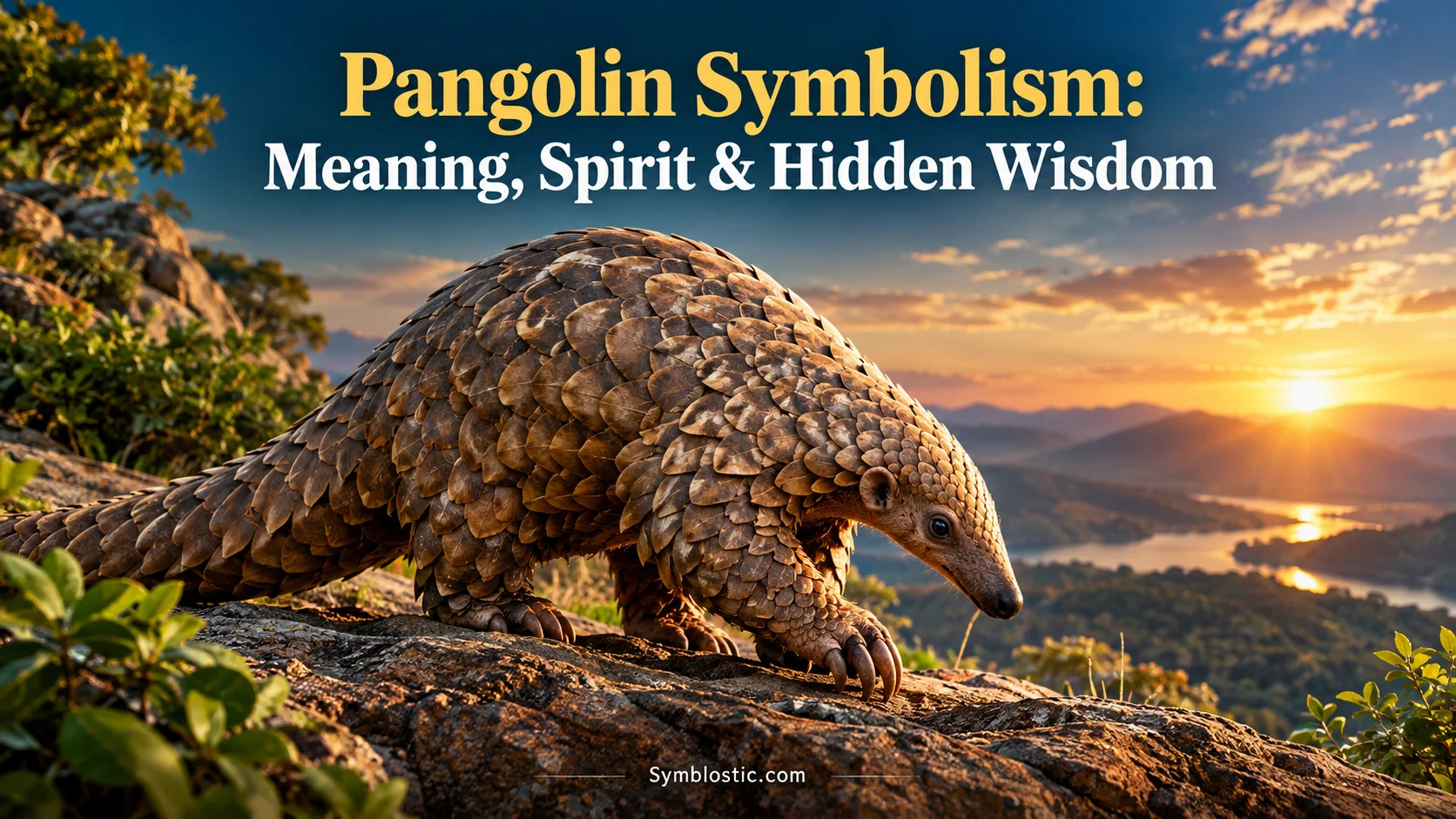
Pangolins are among the most unusual mammals on Earth. Their overlapping scales, quiet nature, and remarkable ability to curl into a protective ball make them powerful symbols of defense and resilience. Pangolin Symbolism often centers on protection, boundaries, patience, humility, and inner strength.
In the United States, pangolins aren’t native wildlife, so their symbolism comes mostly from their unusual natural behavior, conservation stories, wildlife culture, and modern spiritual interpretation. Their image can also appeal to people who value privacy, self-protection, and staying strong without seeking attention.
At the same time, pangolins have a deeper cultural history in parts of Africa and Asia. Their meanings vary by community, so there isn’t one universal spiritual interpretation. Today, the pangolin can also represent endangered wildlife and the importance of protecting vulnerable creatures.
Quick Answer
Pangolin Symbolism commonly represents protection, resilience, boundaries, patience, humility, and quiet strength in modern American symbolism. Spiritually, its ability to curl into a protective shape can suggest retreat, self-preservation, and trusting your instincts.
TL;DR
- Pangolins symbolize protection through boundaries and self-defense.
- Their scales represent resilience and emotional strength.
- Their quiet behavior connects them with humility and patience.
- Curling into a ball suggests retreat and self-preservation.
- Modern symbolism often highlights endangered wildlife and conservation.
- Pangolin tattoos can express strength without aggression.
What Does a Pangolin Symbolize?
A pangolin’s symbolism comes largely from its physical traits and behavior. Its scales provide protection, while its calm movements suggest patience rather than aggression.
For American readers, this makes the pangolin an interesting symbol of quiet confidence. It doesn’t need to appear powerful to survive difficult situations.
Protection and Boundaries
The strongest symbolic meaning is protection. A pangolin can curl its body tightly when threatened, creating a natural shield.
This behavior resembles the emotional boundaries people create when they feel vulnerable. Therefore, the pangolin can symbolize knowing when to step back.
Quiet Strength
Pangolins aren’t loud or threatening animals. Instead, their strength comes from specialized physical defenses and careful behavior.
Because of this, they can represent people who remain strong without constantly proving themselves.
Patience and Awareness
Pangolins spend much of their lives moving quietly and searching for food. Their behavior suggests observation, patience, and careful decision-making.
For modern readers, that can become a reminder to slow down before reacting.
Pangolin Symbolism in the United States
Pangolins have a different symbolic position in America than native animals such as bears, eagles, or wolves. Most Americans encounter them through zoos, wildlife documentaries, conservation campaigns, and online nature content.
As a result, their American symbolism is relatively modern. It often focuses on unusual beauty, vulnerability, conservation, and survival.
A Symbol of Conservation
Pangolins are widely recognized as threatened wildlife. Their unusual appearance also makes them memorable symbols in conversations about protecting animals.
In the United States, this can connect pangolin imagery with environmental awareness and responsible wildlife stewardship.
An Unusual American Symbol
Because pangolins aren’t part of everyday American wildlife, they can also represent individuality.
Someone drawn to a pangolin may appreciate symbols that feel less predictable than the usual lion, eagle, wolf, or bear.
What the Pangolin Can Represent in America
- Personal boundaries
- Quiet confidence
- Wildlife conservation
- Individuality and uniqueness
- Strength without aggression
- Respect for vulnerable creatures
The History Behind Pangolin Symbolism
Pangolins have lived alongside human communities for centuries, especially across parts of Africa and Asia. Their unusual bodies naturally attracted attention and encouraged different interpretations.
However, their symbolism wasn’t identical everywhere. Local beliefs, traditions, practical uses, and stories shaped how people understood these animals.
Ancient and Traditional Associations
In some African and Asian traditions, pangolins have been associated with ideas involving rain, fertility, protection, luck, or unusual spiritual qualities. These interpretations differ greatly by region.
It’s important not to combine them into one universal “pangolin meaning.” Cultural symbolism is local, and individual communities may understand the animal differently.
From Mystery to Conservation
Older interpretations often focused on the pangolin’s strange appearance and behavior. Modern audiences increasingly associate it with wildlife protection.
This shift gives the animal a new symbolic layer. It can now represent not only survival but also humanity’s responsibility toward vulnerable species.
Pangolin Spiritual Meaning
Spiritually, the pangolin can represent the wisdom of protecting yourself without becoming aggressive. Its defensive behavior shows that retreat can sometimes be a form of strength.
For people interested in animal symbolism, the pangolin can encourage reflection on boundaries, vulnerability, and personal renewal.
Protection as Spiritual Wisdom
A pangolin doesn’t fight every threat directly. Instead, it uses its natural defense and waits for danger to pass.
Symbolically, this can suggest that you don’t always need confrontation. Sometimes protecting your energy and creating distance is the wiser response.
Retreat and Renewal
Curling into a protective ball can represent temporary withdrawal.
Spiritually, that idea may resonate with people who need time alone before returning to relationships, work, or difficult situations.
A Symbol of Inner Security
The pangolin carries its protection with itself. This makes it a useful metaphor for developing inner security.
Rather than depending entirely on outside approval, the symbolism encourages you to recognize your own limits and strengths.
Pangolin Symbolism in African and Asian Cultures
Pangolins have long been part of human cultures in regions where they naturally occur. Their meanings can be complex because traditional beliefs vary between communities.
Some traditions have viewed pangolins as unusual or spiritually significant animals. In other settings, they have been connected with practical knowledge, traditional practices, or local beliefs about nature.
Why Cultural Context Matters
It would be misleading to say that all African or Asian cultures give pangolins the same meaning.
Instead, their symbolism should be understood within specific cultural settings. Modern conservation work has also changed how many people think about the animal.
A Broader Lesson
Across different interpretations, the pangolin often inspires curiosity because it doesn’t resemble ordinary mammals.
Its unusual appearance reminds people that nature contains forms of life that don’t fit familiar categories.
Pangolin Symbolism and Personality
The pangolin can appeal strongly to people who identify with quietness, independence, and emotional boundaries. It represents a different kind of strength from symbols built around dominance.
Instead of overpowering others, the pangolin survives through awareness and defense.
Traits Connected With the Pangolin
- Private and thoughtful
- Calm under pressure
- Protective of personal space
- Patient with difficult situations
- Independent without being hostile
- Comfortable with being different
The Introvert Connection
The pangolin is sometimes easy to interpret through an introvert-friendly lens. Its quiet lifestyle and protective behavior can symbolize someone who prefers peaceful surroundings.
However, this doesn’t mean the animal literally represents introversion. It’s simply a modern metaphor people may find relatable.
Read More: Kestrel Symbolism: Meaning, Spirit & Hidden Wisdom
What Does a Pangolin Mean Spiritually?
The spiritual meaning of a pangolin often centers on protection, boundaries, patience, and resilience.
For some people, seeing pangolin imagery can become a reminder to protect what matters without closing themselves off permanently.
When the Pangolin Feels Meaningful
The symbol may resonate during periods involving:
- Major personal changes
- Emotional recovery
- Difficult relationships
- A need for stronger boundaries
- Personal reinvention
- A desire for quieter living
The important idea is balance. Protection can be healthy, but permanent isolation can become limiting.
Pangolin Symbolism and Emotional Meaning
Animals often become emotional metaphors because their behavior resembles human experiences. The pangolin is especially powerful because its defense mechanism is so visually clear.
Its symbolism can therefore represent vulnerability hidden beneath protection.
Vulnerability Beneath the Scales
A pangolin’s scales look tough, but the animal still needs food, shelter, and safety.
This creates a useful emotional metaphor. A person can appear strong while still needing care and understanding.
Healthy Boundaries
The pangolin can symbolize knowing when to say no.
Its message isn’t necessarily “keep everyone away.” Instead, it can suggest choosing carefully who gets access to your time and emotional energy.
Emotional Resilience
Resilience doesn’t mean never feeling hurt. It means finding ways to recover after difficult experiences.
The pangolin’s survival strategy fits that idea surprisingly well.
Pangolin Symbolism in Dreams
Dream interpretations aren’t universal, so a pangolin dream shouldn’t be treated as having one fixed meaning. Your emotions and the dream’s setting matter greatly.
However, modern symbolic interpretation often connects the animal with protection and personal boundaries.
Seeing a Pangolin
Seeing a pangolin may represent a need for greater emotional safety. It could also reflect your admiration for someone who remains calm under pressure.
A Pangolin Curling Up
A curling pangolin may symbolize withdrawal, self-defense, or the need for personal space.
If the dream feels peaceful, the image might suggest healthy rest. If it feels frightening, it could reflect excessive defensiveness.
A Pangolin Walking Away
A pangolin moving away may represent letting go of conflict.
It can also symbolize choosing distance rather than continuing an argument.
Pangolin Tattoos and Modern Symbolism
Pangolin tattoos are relatively uncommon, which can make them especially meaningful for people who want an unusual animal design. The symbolism can be personalized through posture, surroundings, and artistic style.
A curled pangolin can emphasize protection. A walking pangolin may suggest independence, movement, or personal growth.
Common Tattoo Meanings
- Protection after hardship
- Emotional resilience
- Individuality
- Conservation awareness
- Quiet personal strength
- Respect for nature
A tattoo doesn’t have one universal meaning, though. The strongest interpretation usually comes from the personal story behind the design.
Pangolin Symbolism in Art, Decor, and Social Media
Today, unusual animals can become powerful visual symbols online. Pangolins stand out because their scales create distinctive patterns and textures.
In home decor, wildlife art featuring pangolins can suggest appreciation for nature and uncommon beauty. On social platforms, pangolin imagery can also support conservation messages.
Modern Visual Uses
Pangolin imagery may appear in:
- Wildlife photography
- Nature-inspired artwork
- Conservation campaigns
- Animal-themed decor
- Tattoos and illustrations
- Educational content
Their appearance also works well in minimalist art because the curved body and scales create a recognizable silhouette.
Pangolin Symbolism in Conservation
One of the most important modern meanings of the pangolin is vulnerability.
Pangolins face serious threats from illegal hunting and trafficking. Their scales have also been targeted in wildlife trade, despite widespread scientific misunderstanding about their supposed medicinal value.
From Symbol to Responsibility
This gives pangolin symbolism a modern ethical dimension. The animal can represent the idea that strength doesn’t make a creature invulnerable.
For American audiences, pangolin imagery can therefore symbolize wildlife protection and responsible relationships with nature.
The Conservation Message
A pangolin can remind people that unusual animals deserve attention too.
Its symbolic power grows when curiosity turns into respect rather than exploitation.
Pangolin Symbolism: Meanings at a Glance
| Context | Meaning in the USA | Common Associations | Notes |
| Physical defense | Protection | Boundaries, safety | Based on natural behavior |
| Curled posture | Retreat | Privacy, self-preservation | Can represent healthy withdrawal |
| Scales | Resilience | Strength, endurance | A visual metaphor rather than a tradition |
| Quiet behavior | Humility | Calmness, patience | Often used in modern interpretation |
| Conservation | Vulnerability | Wildlife protection | Strong contemporary association |
| Unusual appearance | Individuality | Uniqueness, curiosity | Especially relevant to modern art |
Misunderstandings and Controversies Around Pangolin Symbolism
Pangolin symbolism is generally positive, but several misunderstandings deserve attention.
First, there is no single ancient “pangolin meaning” shared by every culture. Second, modern spiritual interpretations shouldn’t automatically be presented as established traditional beliefs.
Avoiding Cultural Generalizations
A symbolic interpretation from one community shouldn’t be assigned to an entire continent.
For example, saying that “African culture believes pangolins bring luck” would be far too broad. Africa contains many distinct societies and traditions.
Avoiding Wildlife Misuse
Pangolin imagery should also be separated from the illegal wildlife trade.
Admiring a pangolin’s scales doesn’t justify possessing real scales or supporting products made from them. The animal’s modern conservation symbolism points in the opposite direction.
How Pangolin Meaning Has Changed Over Time
Pangolin symbolism has shifted from mystery and traditional interpretation toward conservation and individuality.
Older communities often encountered the animal directly and developed local understandings of its unusual behavior. Modern Americans are more likely to encounter it through media, zoos, educational programs, and conservation campaigns.
From Strange Animal to Conservation Icon
The pangolin’s unusual appearance once made it a curiosity. Today, that same appearance helps people recognize it as a species worth protecting.
From Protection to Personal Boundaries
Modern spiritual culture has also transformed physical defense into an emotional metaphor.
The scales now easily suggest psychological protection, while curling up can represent taking time away from stressful situations.
FAQs:
What does a pangolin symbolize?
A pangolin commonly symbolizes protection, resilience, patience, boundaries, and quiet strength. Modern interpretations also connect it with wildlife conservation and individuality.
What does a pangolin symbolize spiritually?
Spiritually, the pangolin can represent self-protection, emotional boundaries, patience, and retreat during difficult periods. Its symbolism often encourages protection without unnecessary confrontation.
What does seeing a pangolin mean?
Seeing a pangolin may remind you to protect your energy and respect your personal boundaries. Some people also interpret it as a symbol of resilience and staying calm during change.
What does a pangolin tattoo symbolize?
A pangolin tattoo can symbolize protection, survival, individuality, and quiet strength. It may also express a person’s connection to wildlife conservation.
Is the pangolin a symbol of good luck?
Some traditional beliefs in regions where pangolins live have associated the animal with positive or unusual spiritual qualities. However, there isn’t one universal belief that pangolins always symbolize good luck.
Why are pangolins important symbolically?
Pangolins combine strength and vulnerability in one animal. Their modern symbolism can therefore represent both personal resilience and the need to protect vulnerable wildlife.
Conclusion:
Pangolin symbolism brings together several powerful ideas: protection, resilience, patience, humility, boundaries, and quiet strength. Its scales represent defense, while its ability to curl up suggests the wisdom of knowing when to retreat. In the United States, the pangolin has gained meaning largely through wildlife awareness, conservation, art, and modern spiritual interpretation. Pangolin Symbolism can therefore speak to both personal protection and humanity’s responsibility toward nature.

1 thought on “Pangolin Symbolism: Meaning, Spirit & Hidden Wisdom”