
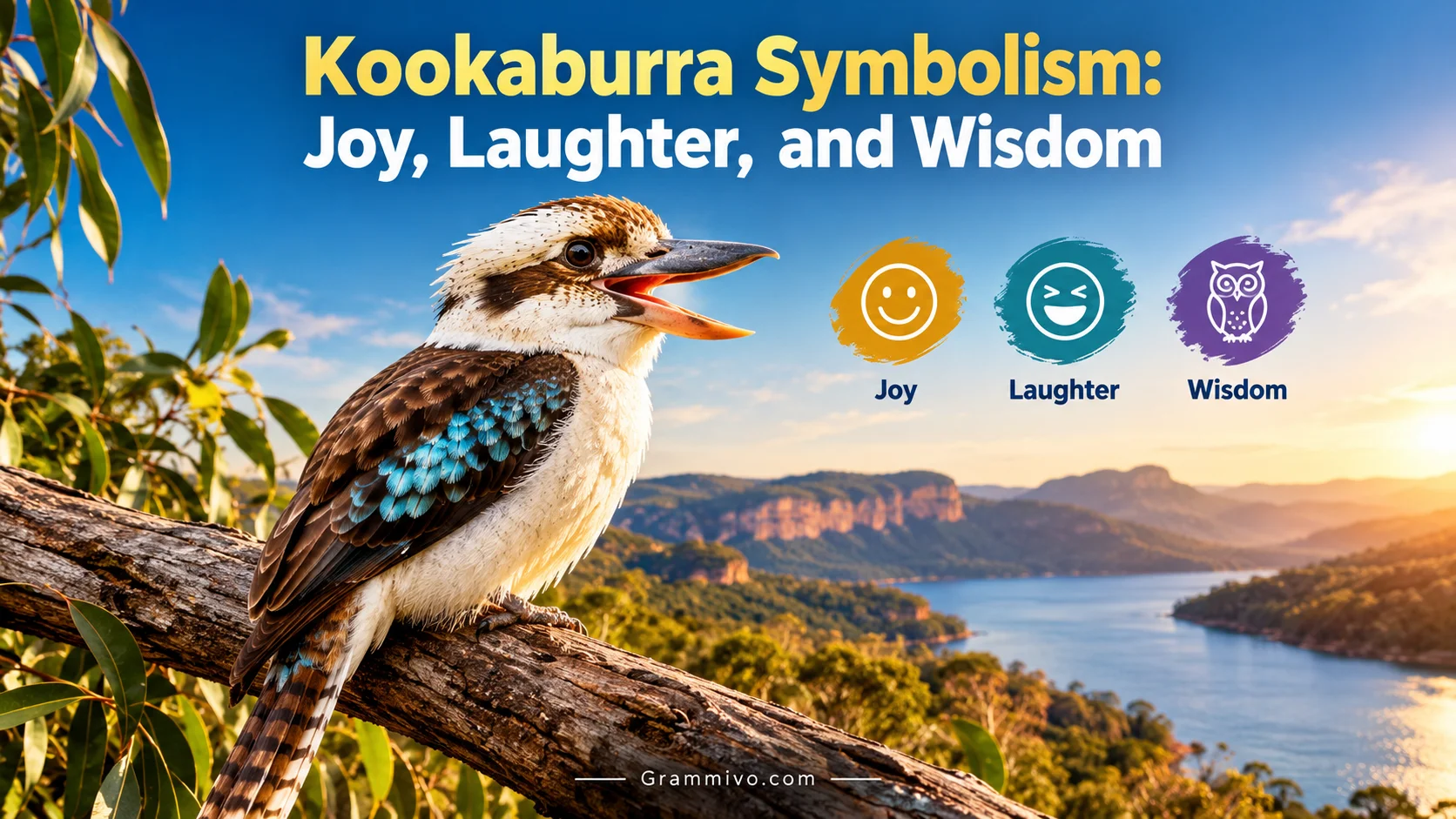
A kookaburra is famous for its laughter-like call, distinctive appearance, and strong connection to the Australian landscape. In Kookaburra Symbolism, this remarkable bird often represents joy, communication, resilience, and the ability to find lightness in everyday life. Its unusual voice makes it a memorable symbol of laughter, even when life feels uncertain.
For readers in the United States, the kookaburra may seem like an exotic bird from a distant continent. However, its symbolic themes are familiar. Americans often associate birds with freedom, hope, awareness, and personal growth. The kookaburra adds another layer through its recognizable call and its place in Australian stories, music, and wildlife culture.
People may encounter kookaburras in wildlife documentaries, travel photography, artwork, or spiritual discussions. Some interpret a sighting as a reminder to reconnect with happiness or pay attention to their surroundings. Others simply appreciate the bird’s intelligence and striking personality.
Understanding this bird’s symbolism requires separating documented cultural traditions from modern personal interpretations. Its strongest cultural associations come from Australia, especially Aboriginal traditions and broader Australian identity. Its spiritual meanings, meanwhile, can vary depending on individual beliefs and the context of an encounter.
Quick Answer
Kookaburra Symbolism in the United States commonly suggests laughter, joy, communication, resilience, and awareness of life’s lighter side. In its Australian cultural context, the kookaburra also carries associations with the natural world, distinctive vocal expression, and regional identity. Spiritual interpretations may connect it with happiness, truth, or renewed perspective, although these meanings aren’t universal traditions.
TL;DR
- Kookaburras commonly symbolize laughter, joy, communication, and resilience.
- Their distinctive calls make them recognizable symbols of Australia’s wildlife.
- Aboriginal cultural meanings vary between communities and traditions.
- Spiritual interpretations often emphasize lightness, awareness, and emotional renewal.
- Kookaburra tattoos can represent humor, individuality, and connection to nature.
- Their symbolism has expanded through wildlife media, travel, and contemporary art.
What Does a Kookaburra Symbolize?
The kookaburra’s most recognizable symbolic feature is its laughter-like call. This sound has helped shape its reputation as a bird associated with humor, social connection, and expressive communication. However, the bird’s meaning extends beyond its voice.
Kookaburras are members of the kingfisher family. The laughing kookaburra, Dacelo novaeguineae, is native to eastern Australia and has also been introduced to other regions. Its large head, sturdy beak, brown-and-white plumage, and blue markings on its wings make it visually distinctive.
The Main Symbolic Meanings
Several themes appear naturally when people interpret the kookaburra’s behavior and appearance.
- Joy and laughter: Its call reminds listeners not to overlook happiness.
- Communication: Its loud vocalizations suggest expression, connection, and being heard.
- Awareness: Its alert posture can represent attentiveness to the surrounding world.
- Resilience: Its adaptable nature can inspire persistence through changing circumstances.
- Community: Its social behavior can suggest cooperation and family connection.
These associations are symbolic interpretations, not fixed meanings shared by everyone. A person’s cultural background and personal experiences influence which qualities stand out most.
Why Its Laughter Matters
A kookaburra’s call often sounds like a series of chuckles that build into a loud chorus. In reality, these vocalizations serve natural purposes, including communication and territorial signaling.
People may hear the sound as cheerful, mischievous, or even mysterious. This difference between biological function and human interpretation makes the bird especially interesting as a symbol.
Historical Background of Kookaburra Symbolism
The kookaburra’s history begins with Australia’s unique wildlife and the long-standing relationships between Indigenous communities and the natural world. Its cultural significance predates its popularity in international wildlife media.
However, there isn’t one universal historical meaning for the kookaburra. Different communities have their own stories, beliefs, and relationships with local animals.
Aboriginal Australian Traditions
Aboriginal Australian cultures include many distinct nations, languages, and knowledge systems. Animals can hold important roles in traditional stories, teachings, and relationships with Country, the interconnected lands, waters, communities, and living beings.
Kookaburras appear in some Australian Aboriginal stories, including narratives connecting their calls with daylight or the natural world’s order. Yet these accounts aren’t identical across communities.
It’s important not to treat every Aboriginal tradition as one shared belief. Specific stories belong to particular cultural contexts, and some knowledge may be restricted or intended for community members.
The Bird in Australian Settler Culture
As European settlement expanded, the kookaburra became increasingly familiar through everyday encounters with Australian wildlife. Its loud call made it easy to recognize, even for people who couldn’t identify many other native birds.
Over time, the kookaburra became a recognizable feature of Australian identity. Its appearance in children’s entertainment, illustrations, and popular songs helped introduce it to audiences beyond Australia.
The well-known children’s song “Kookaburra” was written by Marion Sinclair in 1932. It helped make the bird’s name and laughter-like call familiar to generations of listeners, including many Americans.
From Local Wildlife to International Symbol
Wildlife documentaries, educational programs, and international travel have further expanded the kookaburra’s reach. Today, people may recognize it without having seen one in person.
As a result, the bird carries two broad kinds of significance: cultural associations rooted in Australia and more personal interpretations inspired by its behavior.
Kookaburra Symbolism in the USA
For American readers, the kookaburra doesn’t have the same established cultural position as the bald eagle, robin, or bluebird. Instead, its symbolism often develops through education, popular culture, wildlife appreciation, and personal reflection.
Its Australian origins make it a natural symbol of travel, biodiversity, and curiosity about other parts of the world.
Connection to American Ideas About Laughter
Laughter is widely associated with friendship, relief, celebration, and emotional connection in American culture. The kookaburra’s call fits these familiar associations, even though the bird itself isn’t native to the United States.
Someone who hears a kookaburra at a zoo might remember the encounter because its voice sounds so unusual. The experience can turn an ordinary wildlife visit into a moment of amusement and discovery.
However, the bird’s call doesn’t always sound cheerful. Some listeners find it eerie, especially when they hear it in an unfamiliar setting.
Wildlife Education and Cultural Exchange
American zoos, wildlife programs, and nature-focused media can introduce audiences to kookaburras and their habitats. These encounters often encourage interest in Australia’s ecosystems.
The bird can also represent a broader appreciation for animals that challenge familiar expectations. Its kingfisher classification, terrestrial hunting behavior, and unusual call make it a useful example of wildlife diversity.
Kookaburra and American Symbolic Themes
| Context | Common American interpretation | Main association |
| Wildlife encounter | Curiosity and discovery | Learning about nature |
| Laughter-like call | Joy and humor | Emotional lightness |
| Family imagery | Loyalty and togetherness | Social connection |
| Nature artwork | Freedom and individuality | Personal expression |
| Travel souvenirs | Adventure and exploration | Australian identity |
These meanings describe common personal interpretations rather than official American traditions. The kookaburra has no single, nationally established symbolic meaning in the United States.
Kookaburra Spiritual Meaning
In contemporary spiritual discussions, people sometimes interpret animal encounters as invitations to reflect on their emotions, choices, and relationships. The kookaburra’s distinctive voice makes it particularly suited to interpretations involving laughter and communication.
However, there is no universally accepted spiritual meaning for seeing a kookaburra. These interpretations depend on individual beliefs and shouldn’t be presented as guaranteed messages from the universe.
Joy During Difficult Times
One modern interpretation connects the kookaburra with finding moments of happiness during challenging periods. Its laughter-like call may encourage someone to make room for humor without ignoring genuine difficulties.
For example, a person experiencing a stressful transition might see a kookaburra illustration and use it as a reminder to reconnect with friends or enjoy a simple activity.
The symbolism doesn’t promise that problems will disappear. Instead, it offers a way to reflect on emotional balance.
Speaking Honestly and Clearly
Because the kookaburra is known for its loud vocalizations, some spiritual interpretations connect it with self-expression. The bird may represent the importance of communicating feelings, sharing ideas, or setting healthy boundaries.
This interpretation can be especially meaningful for people who struggle to speak up. Its value comes from personal reflection rather than a universal spiritual rule.
Awareness and New Perspectives
The kookaburra’s alert behavior may also inspire thoughts about paying attention to the present moment. A sighting can prompt someone to notice their environment or reconsider an assumption.
In this sense, the bird symbolizes awareness rather than supernatural certainty.
Kookaburra Symbolism in Aboriginal and Other Cultural Traditions
Cultural meanings deserve particular care because the kookaburra belongs to a place with rich Indigenous histories. Modern interpretations should recognize those roots without claiming that every cultural account means the same thing.
Stories About Daylight and the Natural World
Some Aboriginal Australian stories connect the kookaburra’s call with the arrival of daylight or the beginning of the day’s activities. Such narratives can express relationships between animals, natural events, and the wider world.
The details and significance of these stories vary. Readers should seek community-specific sources when exploring a particular Aboriginal tradition.
These narratives shouldn’t be reduced to generic claims about luck or personal destiny. They belong to living cultures, not merely collections of symbolic meanings.
Wider Global Interpretations
Outside Australia, people may interpret the kookaburra through broader themes associated with birds.
- Birds can symbolize freedom because they move through the sky.
- Vocal animals may represent communication or the expression of identity.
- Social species can suggest cooperation and relationships.
- Distinctive wildlife can inspire curiosity about unfamiliar environments.
These are broad human associations, not evidence that every culture assigns the same meaning to kookaburras.
Respecting Cultural Differences
A respectful interpretation recognizes the difference between documented tradition and modern spiritual invention. It also avoids presenting Indigenous knowledge as a single, universal belief system.
For American readers, learning about the bird’s Australian context can deepen its meaning. It turns a simple symbol of laughter into an opportunity to appreciate cultural diversity and ecological connection.
The Psychological Meaning of the Kookaburra
Animal symbols can help people express emotions that are difficult to describe directly. The kookaburra’s unusual voice, recognizable face, and alert behavior may trigger different reactions depending on the listener.
Psychological interpretations are personal associations rather than clinical conclusions.
Humor and Emotional Relief
The kookaburra’s call can sound like laughter, making it a natural reminder of humor. People often associate laughter with social bonding, relaxation, and relief from everyday tension.
For someone who has been taking life too seriously, the bird may represent permission to enjoy small pleasures. It can also remind people that humor and responsibility can exist together.
Confidence and Self-Expression
The kookaburra doesn’t make a quiet entrance. Its vocal behavior may inspire associations with confidence, visibility, and the willingness to be heard.
Someone drawn to this bird might value openness, independence, or a playful personality. However, choosing the symbol doesn’t automatically prove that someone possesses these traits.
Curiosity and Alertness
Kookaburras often sit upright while watching their surroundings. This appearance can suggest observation, patience, and readiness to respond.
For some people, the bird represents a balance between watching carefully and acting when the moment arrives.
What Does Seeing a Kookaburra Mean?
A kookaburra sighting can feel memorable, especially when the bird appears unexpectedly or makes its characteristic call. Some people interpret these moments spiritually, while others see them as enjoyable encounters with wildlife.
Neither interpretation needs to be treated as the only correct one.
Seeing a Kookaburra in Daylight
A daytime encounter may inspire thoughts about attention, curiosity, or appreciation for nature. The bird could simply be hunting, resting, or communicating with other kookaburras.
If the encounter feels personally meaningful, consider what you noticed first. Was it the bird’s voice, its posture, or the setting?
Your reaction may reveal more about the symbol’s personal meaning than any fixed interpretation.
Hearing a Kookaburra Call
Hearing its laughter-like call may remind someone to reconnect with joy or communication. The sound can also create surprise because it resembles human laughter.
In real life, kookaburras vocalize for natural reasons. Their calls aren’t reliable evidence of a warning, prediction, or supernatural event.
Seeing a Kookaburra Repeatedly
Repeated encounters can feel significant, particularly when someone is already thinking about a personal change. However, increased attention can also make a familiar animal seem more frequent.
You can use these moments as prompts for reflection without assuming they predict the future. Consider whether the bird reminds you of a value, relationship, or goal worth revisiting.
Read More: Honey Badger Symbolism: Courage, Strength, and Fearlessness
Kookaburra Symbolism in Dreams
Dreams often combine memories, emotions, sounds, and images in unexpected ways. A kookaburra appearing in a dream may therefore carry a personal meaning shaped by the dreamer’s experiences.
There is no scientifically established dictionary that assigns one universal meaning to every animal dream.
Dreaming of a Laughing Kookaburra
A laughing kookaburra might represent humor, social energy, or the need to lighten a difficult situation. If its call feels pleasant in the dream, the image may connect with positive memories or relationships.
If the laughter feels unsettling, the dream may reflect discomfort with a social situation. The emotional tone matters more than a universal interpretation.
Dreaming of a Quiet Kookaburra
A silent kookaburra may suggest a contrast between expected expression and actual silence. Some people might connect this image with unspoken feelings or a need for careful observation.
However, dreams don’t provide reliable predictions. Reflecting on current concerns is more useful than treating the image as a definite message.
Questions to Consider After the Dream
If the dream stays with you, consider these questions:
- What emotion did the kookaburra create?
- Did its call sound friendly, strange, or frightening?
- Were other people or animals present?
- Does the bird remind you of a particular place or memory?
- Is there something you want to communicate more clearly?
These questions help connect the dream with personal experience without imposing a fixed meaning.
Kookaburra Symbolism in Tattoos and Art
The kookaburra’s recognizable appearance makes it an appealing subject for wildlife-inspired artwork. Its symbolic range also allows people to express humor, cultural interest, individuality, or appreciation for nature.
For Americans, a kookaburra design may communicate a connection to Australia, a memorable journey, or a love of unusual birds.
Common Kookaburra Tattoo Meanings
A kookaburra tattoo can carry several personal associations.
- Laughter: A reminder to appreciate humor and everyday happiness.
- Family: A symbol inspired by the bird’s social behavior.
- Resilience: An image of adapting to different circumstances.
- Travel: A personal connection to Australia or a meaningful trip.
- Individuality: An appreciation for a distinctive and unexpected animal.
The intended meaning depends on the person wearing the tattoo. There is no standardized tattoo dictionary for kookaburras.
Design Styles and Visual Details
A realistic design may emphasize the bird’s brown plumage, pale chest, strong beak, and blue wing markings. A minimalist outline can focus on its profile or distinctive posture.
Some designs include eucalyptus branches, Australian landscapes, or sunrise scenes. These additions can strengthen the connection to place and nature.
People should consider cultural context when borrowing imagery from specific Aboriginal traditions. A generic kookaburra illustration is different from reproducing a culturally significant design without permission or understanding.
Kookaburra Symbolism in Home Decor and Social Media
In modern visual culture, animal imagery can communicate personality without requiring lengthy explanations. The kookaburra’s unusual appearance and familiar laugh-like call make it memorable in both artwork and online content.
Its popularity outside Australia is often tied to curiosity and humor.
Home Decor and Nature-Inspired Spaces
Kookaburra prints can bring an Australian wildlife theme into a living room, office, or nature-inspired space. They may also appeal to people who collect bird illustrations or travel souvenirs.
A realistic image emphasizes wildlife appreciation. A playful illustration highlights the bird’s humorous reputation.
Neither style has one required symbolic meaning. The choice often reflects the owner’s memories, interests, or preferred atmosphere.
Social Media and Digital Expression
Online, kookaburra videos often attract attention because of their distinctive calls and expressive appearance. People may share clips to communicate amusement, surprise, or fascination with wildlife.
The bird can also appear in educational posts about Australian ecosystems. In these settings, it represents both entertainment and an opportunity to learn.
Branding and Creative Identity
Artists, educators, and nature-focused projects may use kookaburra imagery to suggest friendliness, distinctiveness, or an Australian connection.
However, the bird doesn’t have one universally recognized commercial meaning. Its interpretation depends on the surrounding words, images, and cultural context.
Misunderstandings About Kookaburra Symbolism
Animal symbolism can become misleading when personal interpretations are presented as established facts. The kookaburra’s distinctive call makes it especially easy to attach dramatic meanings to ordinary behavior.
Understanding the difference between biology, cultural tradition, and personal belief helps avoid confusion.
Is the Kookaburra Always a Symbol of Happiness?
No. Its call resembles laughter, but the bird isn’t necessarily expressing happiness in the human sense.
Kookaburras use vocalizations for communication and territorial purposes. A listener may experience the sound as joyful, eerie, or surprising.
Therefore, laughter is a useful symbolic association, not a complete explanation of the animal’s behavior.
Does Seeing One Guarantee Good Luck?
There is no universal cultural rule stating that a kookaburra sighting guarantees good luck. Some modern spiritual interpretations may treat an encounter as encouraging, but such beliefs vary.
A sighting can still feel meaningful without predicting a specific event. Personal reflection doesn’t require certainty about supernatural causes.
Are All Kookaburra Stories the Same?
No. Australia’s Aboriginal communities have distinct traditions, languages, and cultural knowledge. A story associated with one community shouldn’t automatically be attributed to all others.
Similarly, modern internet interpretations shouldn’t be mistaken for ancient or widely shared traditions unless reliable cultural evidence supports that claim.
Avoiding Cultural Misrepresentation
Using kookaburras in art or personal symbolism isn’t inherently disrespectful. Problems can arise when people claim ownership of Indigenous stories, remove them from their context, or present invented interpretations as authentic tradition.
A thoughtful approach distinguishes personal inspiration from culturally specific knowledge. It also recognizes that living traditions deserve the same respect as other forms of cultural heritage.
How Kookaburra Symbolism Has Changed Over Time
The kookaburra’s public image has developed through changing relationships with wildlife, culture, entertainment, and international travel. Its meaning today combines longstanding Australian associations with newer personal interpretations.
From Local Bird to Cultural Icon
For generations, kookaburras have been familiar parts of Australia’s natural environment. Their calls and appearance made them recognizable features of local landscapes.
As Australian songs, stories, and wildlife imagery traveled internationally, the bird became familiar to people who had never visited Australia. Its image increasingly represented Australian wildlife as well as laughter.
From Cultural Symbol to Personal Meaning
Today, people may interpret kookaburras through spiritual reflection, tattoos, home decor, or social media. These meanings often emphasize happiness, confidence, awareness, and resilience.
Such interpretations can be valuable without replacing the bird’s biological reality or its culturally specific history.
What Remains Consistent?
The kookaburra’s recognizable call remains central to its public identity. Its connection with Australia also continues to distinguish it from more familiar American birds.
What changes is the meaning people attach to those features. Cultural history, personal experience, and modern media all influence how the bird is understood.
FAQs:
What Is the Main Spiritual Meaning of a Kookaburra?
Modern spiritual interpretations often connect the kookaburra with joy, communication, awareness, and emotional renewal. These meanings aren’t universal beliefs, so personal context matters.
Is Seeing a Kookaburra Considered Good Luck?
Some people may view an unexpected sighting as a positive sign or a welcome reminder to appreciate life. However, there is no universal tradition establishing that every kookaburra encounter brings good luck.
What Does a Laughing Kookaburra Symbolize?
Its laughter-like call often inspires associations with humor, social connection, and lightheartedness. Biologically, however, the call serves communication and territorial functions rather than simply expressing happiness.
What Does a Kookaburra Represent in Australian Culture?
The kookaburra is a recognizable symbol of Australian wildlife and national cultural identity. It also appears in popular songs and stories, while particular Aboriginal traditions may connect it with specific narratives about the natural world.
What Does a Kookaburra Tattoo Mean?
A kookaburra tattoo may represent humor, individuality, family, resilience, or a personal connection to Australia. Its meaning depends on the wearer’s intentions and the design’s details.
Conclusion:
Kookaburra symbolism brings together laughter, communication, resilience, and a deep connection to the natural world. For American readers, the bird offers a distinctive way to explore familiar themes through Australia’s remarkable wildlife and cultural heritage.
Its meaning can shift depending on whether someone encounters it in nature, discovers it through a song, dreams about it, or chooses it for a tattoo. Spiritual interpretations may encourage joy and awareness, while historical perspectives highlight the importance of understanding cultural traditions accurately.

1 thought on “Kookaburra Symbolism: Joy, Laughter, and Wisdom”