
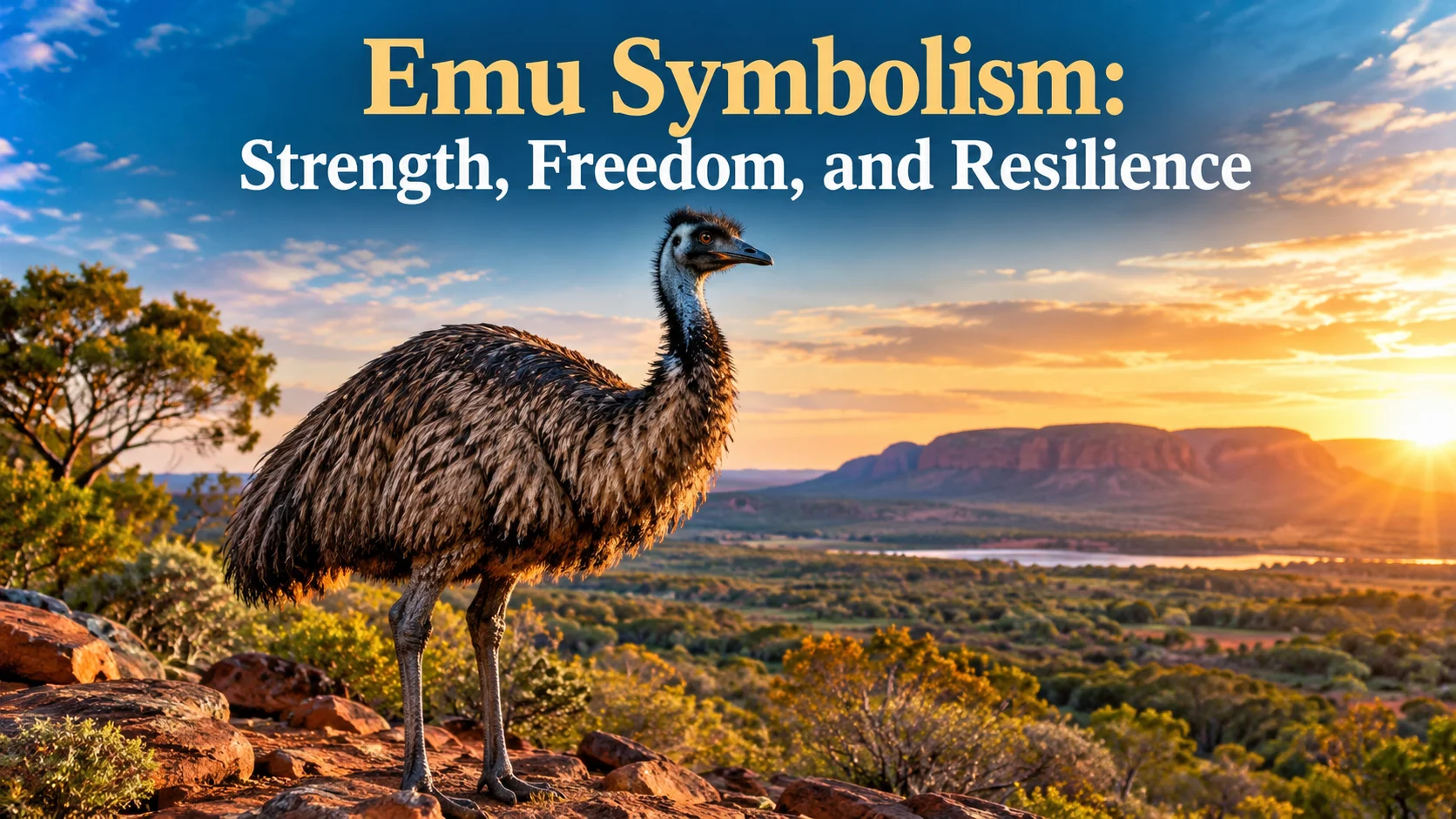
Emu symbolism explores the qualities people associate with this remarkable, flightless bird, including resilience, independence, adaptability, and forward movement. Although emus are native to Australia, their powerful appearance and unusual behavior offer meaningful lessons for readers in the United States. They remind us that strength doesn’t always require speed, and progress doesn’t always require following familiar paths.
In modern American culture, the emu can represent determination, individuality, and the courage to move forward without wings. Its long legs suggest steady progress, while its alert posture reflects awareness of changing surroundings. However, the bird doesn’t have one universally accepted symbolic meaning. Its interpretation depends on personal experiences, cultural traditions, and the setting in which it appears.
Some people explore emu symbolism through dreams, spiritual reflection, animal encounters, tattoos, or wildlife photography. Others connect with the bird because it looks different from familiar American wildlife. Understanding its symbolism begins with the emu’s natural characteristics and continues through the meanings people attach to those qualities.
The following guide examines the emu’s historical background, American associations, spiritual interpretations, psychological meanings, and modern uses. It also separates observable facts about this bird from personal beliefs about what it might represent.
Quick Answer
Emu symbolism commonly represents resilience, independence, adaptability, and steady progress in modern symbolic interpretations. In the United States, the bird can suggest self-reliance and the courage to follow an unconventional path. Spiritually, some people interpret the emu as a reminder to remain grounded, stay alert, and keep moving through life’s challenges.
TL;DR
- Strength: The emu represents endurance and the ability to overcome obstacles.
- Independence: Its unusual nature reflects individuality and unconventional choices.
- Adaptability: The bird symbolizes adjusting to changing circumstances.
- Forward movement: Its powerful legs suggest persistence and continued progress.
- Spiritual reflection: Some people associate the emu with grounding and awareness.
- Modern identity: Emu imagery can express resilience, freedom, and confidence.
What Does an Emu Symbolize?
The emu’s symbolic meaning begins with its distinctive appearance and behavior. It is a large, flightless bird with strong legs, shaggy feathers, and an upright body. These features naturally inspire associations with endurance, movement, and independence.
For American readers, the emu offers an interesting alternative to more familiar symbolic animals, such as the eagle, wolf, or bear. Rather than emphasizing flight, dominance, or hunting ability, its symbolism often focuses on persistence and adapting to life’s conditions.
Strength Without Flight
Emus cannot fly, but they can travel considerable distances on foot. Their powerful legs and physical endurance make them natural symbols of strength that doesn’t depend on possessing every possible advantage.
Symbolically, this idea can encourage people to recognize their existing abilities. You don’t need to imitate someone else’s strengths to make meaningful progress.
Independence and Individuality
An emu’s unusual appearance distinguishes it from many other birds. Consequently, people may associate it with individuality, unconventional thinking, and the confidence to be different.
This interpretation can resonate with anyone who feels out of place in a group. The emu suggests that being different doesn’t automatically mean being weak or unsuccessful.
Adaptability and Persistence
Emus inhabit environments that include grasslands, open woodlands, and shrublands. Their ability to navigate different conditions supports symbolic connections with flexibility and survival.
However, adaptability doesn’t mean accepting every situation without question. It can also mean recognizing when circumstances change and choosing a more effective direction.
Emu Symbolism in American Culture
Although the emu isn’t native to the United States, Americans encounter it through zoos, wildlife education, farms, documentaries, and online content. Its symbolic meaning in America is largely shaped by its unusual appearance and the qualities people associate with its behavior.
Unlike the bald eagle, which has an established role in American national identity, the emu has no comparable official national status in the United States. Its meanings are therefore more personal, informal, and dependent on context.
Self-Reliance and the American Spirit
American culture often celebrates independence, determination, and the willingness to take a different path. The emu fits these themes because it thrives without the ability to fly.
Its image can represent making progress with the resources you already possess. For example, someone beginning a new career might view the emu as a reminder to trust their abilities instead of comparing themselves with others.
Standing Apart From the Crowd
The emu’s tall body, long neck, and shaggy feathers make it instantly recognizable. Consequently, it can symbolize individuality and the confidence to stand out.
In contemporary American life, this interpretation may appeal to artists, entrepreneurs, students, and people rebuilding their lives. The bird becomes a symbol of personal identity rather than conformity.
Emus in American Popular Culture
Emus sometimes appear in humorous advertisements, internet videos, and farm-related content. These appearances can make the bird seem playful, unpredictable, or even comical.
However, humor doesn’t eliminate its potential symbolic depth. A creature that looks unusual can become a reminder that strength and dignity don’t always arrive in familiar forms.
Historical Background of Emu Symbolism
To understand emu symbolism, it’s important to distinguish ancient cultural traditions from modern personal interpretations. The bird has a long history in Australia, where Indigenous communities have developed relationships with emus through stories, art, food practices, and cultural responsibilities.
In contrast, many contemporary American interpretations are relatively recent and often draw on general ideas about animal behavior. They shouldn’t automatically be treated as ancient beliefs.
Indigenous Australian Connections
Emus hold deep cultural significance for many Aboriginal Australian peoples. Their meanings vary between communities, and particular stories belong to specific cultural traditions and places.
In some traditions, emus appear in creation stories and are connected with ancestral relationships, community identity, and responsibilities toward the natural world. These connections are more meaningful than a simple list of symbolic traits.
The Emu in the Sky is another important example. Some Aboriginal Australian traditions recognize the emu’s shape in the dark spaces of the Milky Way rather than outlining a figure using bright stars.
This celestial image connects observations of the sky with the changing seasons, land, and cultural knowledge. However, the details differ across communities, so no single account represents every Aboriginal Australian tradition.
Emus in Art and Everyday Life
Emus have appeared in Australian rock engravings, paintings, stories, and other cultural expressions for generations. Their importance reflects their presence in the environment and their relationships with people.
Historically, emus also provided food and other useful materials. Their eggs, feathers, and other parts held practical significance in different settings.
Consequently, emu symbolism cannot be separated entirely from the living animal. Its cultural importance developed through relationships with the bird itself, not merely through abstract ideas about strength or independence.
From Cultural Heritage to Modern Symbolism
As emus became familiar beyond Australia, their image entered broader wildlife education, commercial products, and popular media. This wider exposure encouraged new interpretations based on endurance, uniqueness, and adaptability.
Today, American audiences may encounter the emu without knowing its cultural history. Learning that history helps distinguish personal symbolism from traditions that carry specific meanings for Indigenous communities.
Spiritual Meaning of the Emu
In modern spiritual interpretation, the emu can represent grounding, resilience, independence, and trust in your own direction. These meanings are best understood as personal reflections rather than universal spiritual rules.
For someone who feels uncertain about the future, the bird’s steady movement may offer a useful image of continuing forward. For another person, its unusual appearance might represent the freedom to embrace an authentic identity.
Emu as a Symbol of Grounding
The emu spends its life walking on the ground rather than flying through the sky. This physical characteristic can inspire a symbolic connection with stability and awareness of the present.
Grounding, in this context, means paying attention to your surroundings and recognizing what you can influence. It doesn’t require a supernatural explanation.
You might use the emu as a reminder to slow down, review your priorities, and take practical steps toward a meaningful goal.
Emu as a Symbol of Spiritual Independence
Some contemporary spiritual approaches interpret animal encounters as opportunities for reflection. Under this approach, the emu may represent the courage to develop your own beliefs and values.
However, independence doesn’t mean rejecting every outside perspective. It means considering advice thoughtfully and making decisions that align with your circumstances and principles.
What Does It Mean When You Keep Seeing Emus?
Repeatedly noticing emu imagery can feel meaningful, particularly during a period of change. You might associate the bird with a decision, a personal challenge, or a quality you want to develop.
Consider these questions when reflecting on the experience:
- What was happening in your life when you noticed the emu?
- Which characteristic stood out most: strength, curiosity, or independence?
- Does the bird remind you of a challenge you’re currently facing?
- What practical action could help you move forward?
These questions turn symbolism into a personal reflection exercise. They don’t establish that the universe is sending a specific message.
Emu Symbolism in Dreams
Dreams involving emus can invite reflection on independence, confidence, persistence, and unfamiliar situations. However, dreams don’t have one fixed meaning, and their interpretation depends on personal associations and the surrounding details.
The most useful approach is to consider how the bird behaved and how you felt during the dream.
Dreaming of a Running Emu
A running emu might symbolize movement, urgency, or the desire to escape a difficult situation. If the dream felt exciting, it could reflect enthusiasm about an upcoming change.
If it felt frightening, consider whether you feel pressured in waking life. The dream itself cannot establish that something bad will happen.
Dreaming of a Calm Emu
A calm emu may bring to mind patience, self-confidence, or a need for greater awareness. Its relaxed behavior could reflect a desire to feel more secure in unfamiliar surroundings.
Your own feelings matter more than a universal dream dictionary. If the bird made you feel peaceful, that reaction may be more revealing than its appearance alone.
Dreaming of an Aggressive Emu
An aggressive emu might symbolize conflict, defensiveness, or a situation that feels difficult to control. It could also reflect a recent encounter with an unfamiliar animal or something you watched.
Instead of treating the dream as a prediction, consider whether any current situation brings up similar emotions. This approach allows interpretation without creating unnecessary fear.
Emotional and Psychological Meaning of the Emu
Animal symbols often become meaningful because they help people describe feelings that are otherwise difficult to express. The emu’s distinctive appearance and behavior can support several psychological associations.
For American readers, these connections may be especially useful when thinking about identity, confidence, and personal growth. They are reflective interpretations, not psychological diagnoses.
Confidence Without Perfection
The emu cannot fly, yet it remains an impressive and capable bird. Symbolically, this can represent the idea that limitations don’t erase your strengths.
People sometimes compare themselves with others who appear more successful or naturally gifted. The emu offers a different perspective: you can build a meaningful life without possessing every advantage.
Curiosity and Awareness
Emus are alert birds that explore their surroundings. Their behavior can inspire associations with curiosity, observation, and openness to new experiences.
In symbolic terms, curiosity helps people question assumptions and learn from unfamiliar situations. Awareness also encourages them to recognize risks before acting.
Resilience During Difficult Times
Resilience means responding to challenges and finding ways to continue. The emu’s physical endurance makes it a useful image for this idea.
Someone recovering from disappointment might use the bird as a reminder that progress can happen gradually. The symbolism doesn’t promise an easy outcome, but it can encourage a more patient attitude.
Emu Symbolism Across Cultures and Spiritual Traditions
Emu symbolism varies considerably across cultural settings. Its deepest traditional meanings are rooted in Australia, while interpretations elsewhere often reflect contemporary spiritual ideas or observations of the bird.
Respecting these differences prevents a modern personal interpretation from being mistaken for a traditional teaching.
Aboriginal Australian Traditions
For some Aboriginal Australian communities, the emu is connected with ancestral stories, kinship, cultural identity, and responsibilities toward Country. Here, Country means more than physical land; it can also include relationships, history, and spiritual significance.
The emu’s presence in the night sky is particularly important in some traditions. The dark shape known as the Emu in the Sky connects celestial observations with knowledge of the land and seasonal changes.
These traditions aren’t interchangeable. Each community has its own cultural knowledge, and some stories or practices may not be appropriate to reproduce outside their intended settings.
Contemporary Spiritual Interpretations
Outside its traditional cultural context, the emu may be interpreted through modern ideas about animal symbolism and personal growth.
Common contemporary associations include:
- Grounding: Staying connected to your present circumstances.
- Independence: Making thoughtful choices without excessive comparison.
- Adaptability: Responding constructively when life changes.
- Persistence: Continuing toward goals despite setbacks.
These are modern symbolic readings rather than beliefs shared by every spiritual tradition.
Why Cultural Context Matters
Animal symbolism becomes misleading when people treat every interpretation as universal. An association that feels personally meaningful to one individual may have a different significance within another community.
Therefore, it’s helpful to identify whether an interpretation comes from a documented cultural tradition, a modern spiritual practice, or personal reflection. That distinction makes the discussion more accurate and respectful.
Emu Colors, Appearance, and Their Symbolic Meanings
The emu’s physical features influence how people interpret its image. Its coarse brown feathers, long neck, dark eyes, and strong legs can suggest qualities such as endurance, alertness, and grounded confidence.
These associations aren’t official meanings attached to the bird. Instead, they arise from how people respond to its appearance and behavior.
Brown Feathers and Earthy Colors
Emus usually have shaggy brown or gray-brown plumage that blends with their surroundings. These natural colors can evoke earth, stability, practicality, and a connection with the outdoors.
In symbolic artwork, brown feathers may reinforce themes of patience and grounded strength. However, the color itself doesn’t carry one universal spiritual meaning.
Long Legs and Forward Movement
An emu’s long legs help it travel efficiently across open terrain. Symbolically, they can represent progress, endurance, and the ability to cover difficult ground.
This image can appeal to people who are pursuing long-term goals. It suggests that consistent movement may matter more than dramatic achievements.
The Upright Neck and Alert Posture
The emu’s long neck and watchful posture can symbolize awareness, curiosity, and readiness. Its appearance may remind viewers to pay attention before making important decisions.
When used in artwork, these features can communicate confidence without suggesting aggression. The overall impression is one of alertness and physical capability.
Emu Symbolism in Tattoos, Art, and Home Decor
Emu imagery offers an unusual way to express individuality, resilience, and appreciation for wildlife. In the United States, it may appeal to people who prefer less familiar animal designs or have personal connections with Australia.
Its meaning depends on the design and the reason someone chooses it. A tattoo, painting, or decorative object doesn’t automatically carry the same interpretation for everyone.
Emu Tattoos and Personal Identity
An emu tattoo can represent a personal commitment to persistence or independence. Some people might choose it to commemorate a period of change, while others simply appreciate the bird’s distinctive shape.
Possible design approaches include:
- A running emu representing movement and determination.
- A standing emu reflecting confidence and awareness.
- An emu silhouette expressing simplicity and individuality.
- An emu in a natural landscape celebrating wildlife and exploration.
- A parent emu with chicks highlighting care and family connections.
Anyone considering imagery inspired by Indigenous Australian traditions should learn about its specific cultural context. Generic emu artwork and culturally significant designs aren’t necessarily interchangeable.
Emu Artwork and Interior Design
Emu illustrations can complement natural, wildlife-inspired, or Australian-themed interiors. Their earthy colors work naturally with wood, stone, neutral fabrics, and outdoor photography.
A framed wildlife photograph may communicate appreciation for nature. In contrast, a stylized illustration might emphasize humor, individuality, or a sense of adventure.
Social Media and Online Identity
On social media, an emu image can express a playful personality or a preference for unusual animals. It might also represent persistence during a challenging period.
However, internet trends can change a symbol’s meaning quickly. Before interpreting an emu image, consider the caption, surrounding content, and the creator’s stated intention.
Emu Symbolism in Everyday Life: A Comparison Table
The emu can communicate different ideas depending on where and how it appears. Understanding the context helps distinguish personal symbolism from cultural meaning.
| Context | Possible Meaning | Common Association | Important Note |
| Wildlife photography | Awareness and adaptability | Curiosity about nature | The image may simply document wildlife. |
| Personal tattoo | Independence and persistence | Individual identity | Meaning depends on the wearer. |
| Spiritual reflection | Grounding and resilience | Personal growth | These are interpretations, not universal rules. |
| Indigenous Australian art | Cultural identity and ancestral relationships | Place, heritage, and community | Specific meanings depend on the tradition. |
| Social media | Humor or individuality | Unusual personality | Online meanings can shift with trends. |
| Home decor | Nature and exploration | Wildlife appreciation | Decorative use doesn’t necessarily imply spirituality. |
Choosing an Interpretation That Fits
When an emu appears in a particular setting, consider its purpose before assigning meaning. A wildlife photograph may have no symbolic intention, while a personal tattoo may express a deeply considered value.
Similarly, a culturally significant artwork deserves more careful interpretation than a generic decorative image. Context provides the difference between thoughtful appreciation and unsupported assumptions.
Read More: Mongoose Symbolism: Courage, Protection, and Adaptability
Misunderstandings and Controversies About Emu Symbolism
Animal symbolism can become confusing when personal beliefs, cultural traditions, and commercial messages overlap. The emu is a useful example because it has both contemporary symbolic associations and deep cultural significance for Indigenous Australians.
Understanding these distinctions helps avoid common mistakes.
Assuming the Emu Has One Universal Meaning
There is no single interpretation that applies to every person or culture. Resilience and independence are common modern associations, but they aren’t universal definitions.
Someone might connect the emu with family, humor, a memorable trip, or a personal experience. Another person may have no symbolic association with the bird at all.
Misrepresenting Indigenous Australian Traditions
A common mistake is treating Indigenous Australian symbolism as one uniform system. In reality, different communities maintain distinct stories, practices, and relationships with emus.
The Emu in the Sky, for example, has particular significance within specific cultural traditions. It shouldn’t be reduced to a generic spiritual slogan detached from its cultural setting.
Commercial use can also raise concerns when traditional knowledge or culturally significant designs are presented without appropriate recognition. Respectful interpretation begins with acknowledging the people and communities connected to those traditions.
Confusing Symbolism With Scientific Evidence
Some spiritual interpretations suggest that seeing an emu signals a coming change or confirms a personal decision. These ideas may provide comfort, but they aren’t scientifically established predictions.
Likewise, a dream about an emu doesn’t prove that a future event will occur. Symbolism can support reflection without being treated as evidence of supernatural certainty.
Recognizing Negative and Humorous Associations
Emus sometimes appear in jokes or stories about unusual behavior. In Australia, the historical account commonly known as the Emu War also contributes to the bird’s humorous reputation.
However, this reputation can overshadow the animal’s actual behavior and cultural importance. Humor is one interpretation, not the complete meaning of the emu.
How Emu Symbolism Has Changed Over Time
Emu symbolism has developed through changing relationships between people, animals, landscapes, and popular culture. Its history includes Indigenous Australian traditions, national imagery, practical uses, and contemporary interpretations.
For American readers, this history demonstrates why a symbol’s meaning can change when it moves between cultures.
Traditional Relationships With the Emu
For many Indigenous Australian communities, the emu has long been part of cultural knowledge and relationships with the natural world. Its significance extends beyond visual symbolism into stories, kinship, food practices, and responsibilities.
These relationships continue today. They shouldn’t be described as merely ancient beliefs that disappeared when modern society developed.
National Identity and Changing Attitudes
The emu appears alongside the kangaroo on Australia’s Commonwealth Coat of Arms. Together, the animals have become recognizable elements of Australian national imagery.
However, national symbolism doesn’t always reflect a country’s relationship with wildlife in a simple way. Historical farming conflicts and efforts to manage emu populations demonstrate that an animal celebrated as a national symbol can also be viewed as a practical challenge.
This contrast adds depth to the bird’s history. A symbol can inspire pride while remaining part of complicated human relationships with nature.
Modern Global Interpretations
Today, wildlife photography, online content, tourism, and animal-themed products introduce emus to audiences worldwide. As a result, modern interpretations often emphasize personality traits such as persistence, independence, and adaptability.
These meanings can be valuable, provided they’re presented honestly. Contemporary spiritual interpretations shouldn’t be confused with documented Indigenous traditions.
The broader lesson is that symbols aren’t fixed forever. They develop through cultural exchange, personal experiences, and changing attitudes toward the natural world.
FAQs:
What Does an Emu Symbolize Spiritually?
In contemporary spiritual interpretations, the emu can represent resilience, grounding, independence, and adaptability. Its meaning depends on your beliefs, personal experiences, and the circumstances in which you encounter it.
Is Seeing an Emu a Good Sign?
Some people interpret seeing an emu as a positive reminder to stay confident and keep moving forward. However, there is no universal belief that an emu encounter predicts good fortune or a specific future event.
What Does an Emu Represent in a Dream?
An emu in a dream may bring up themes of persistence, individuality, or uncertainty. Consider the bird’s behavior and your feelings during the dream instead of assuming it has one fixed meaning.
What Does an Emu Tattoo Mean?
An emu tattoo can express independence, resilience, determination, or appreciation for wildlife. Some people also choose the design for personal memories or connections with Australia.
What Does the Emu Mean in Indigenous Australian Culture?
The emu has important cultural and spiritual significance for many Aboriginal Australian communities. Its meanings can involve ancestral stories, kinship, cultural identity, and relationships with Country, although traditions differ between communities.
Is the Emu a Symbol of Strength?
Yes, strength is a common modern symbolic association with the emu. Its powerful legs and ability to travel across open landscapes make it a fitting image of endurance and persistence.
Conclusion:
Emu symbolism offers a meaningful way to explore resilience, independence, adaptability, and steady progress. In contemporary American interpretations, the bird can represent the confidence to follow your own path, even when you lack the advantages others seem to possess. Its distinctive appearance also makes it a memorable symbol of individuality and curiosity.

1 thought on “Emu Symbolism: Strength, Freedom, and Resilience”