
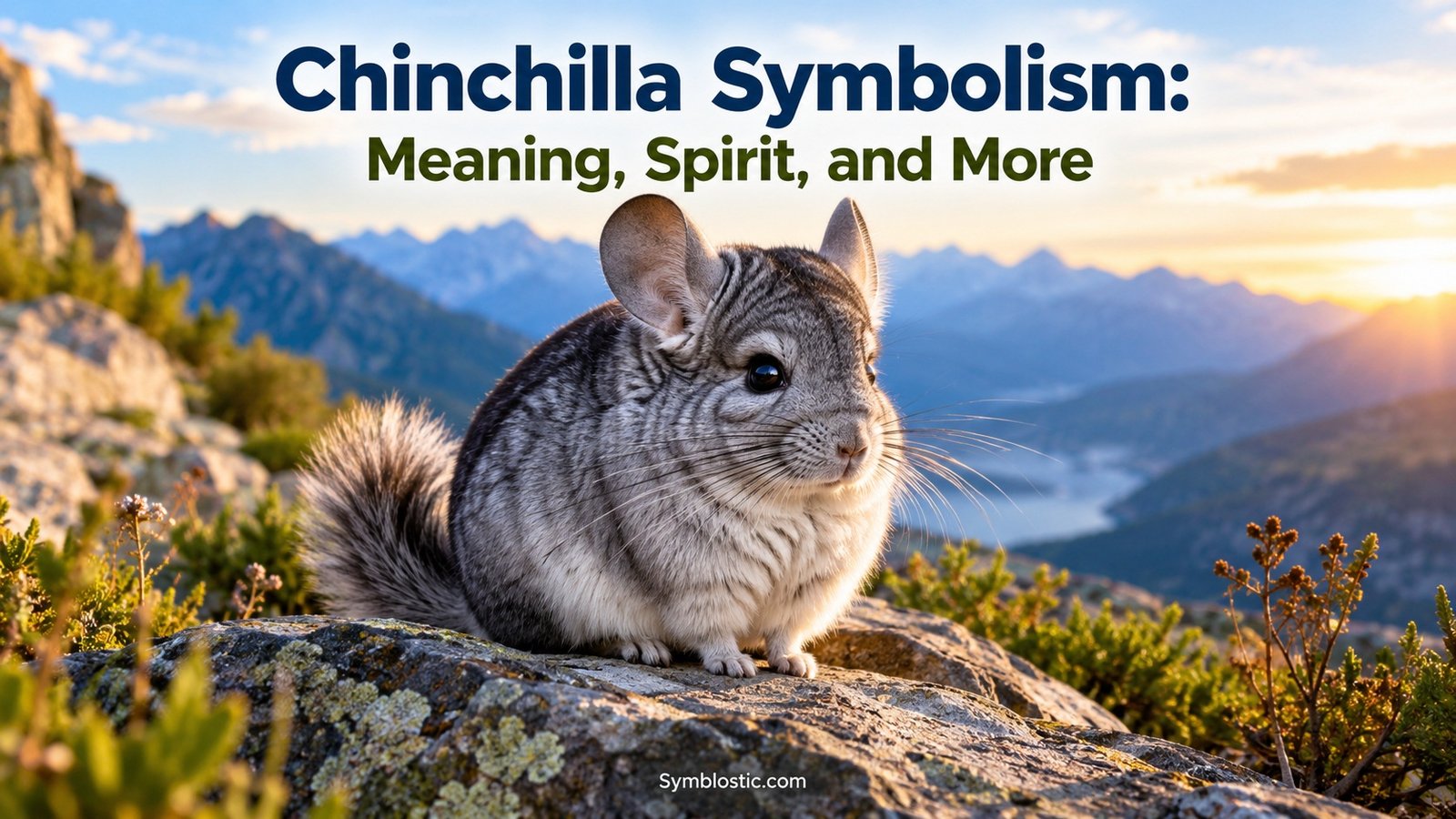
Chinchilla symbolism connects a small, gentle animal with surprisingly powerful ideas. Its soft fur may suggest comfort and innocence, while its alert ears, agility, and ability to survive harsh mountain conditions point toward awareness and resilience.
In the United States, chinchillas are especially familiar as companion animals. That gives them a modern image built around affection, curiosity, playfulness, and home life. However, their deeper story also includes the Andes, fur hunting, conservation, and their transformation into popular American pets.
Because of this history, the chinchilla can represent more than cuteness. It can symbolize soft strength, careful awareness, adaptability, self-care, and the value of protecting what is vulnerable.
Quick Answer
Chinchilla symbolism commonly represents gentleness, adaptability, awareness, resilience, curiosity, and comfort in modern American interpretations. Spiritually, some people also connect the animal with listening carefully, community, protection, and finding calm in difficult surroundings.
TL;DR
• Chinchillas often symbolize gentleness combined with hidden strength.
• Their alert nature connects them with awareness and careful observation.
• Their mountain habitat suggests adaptability, endurance, and resilience.
• In America, they’re strongly associated with pets, comfort, and companionship.
• Their fur history adds themes of value, exploitation, conservation, and protection.
• Modern symbolism often celebrates curiosity, softness, individuality, and self-care.
What Does a Chinchilla Symbolize?
The chinchilla has several symbolic meanings because its physical traits are unusually distinctive. Its tiny body looks delicate, yet the animal is highly adapted to a demanding environment.
For American readers, that contrast is one of the most interesting parts of its symbolism. A chinchilla can look soft and vulnerable while still being alert, agile, social, and capable of protecting itself.
Core symbolic meanings
The most common modern interpretations include:
• Gentleness because of its soft appearance and calm presence.
• Adaptability because it survives in challenging mountain environments.
• Awareness because of its sensitive hearing and alert behavior.
• Resilience because it evolved for cold, dry, high-altitude conditions.
• Curiosity because chinchillas actively explore their surroundings.
• Comfort because modern pets are associated with warmth and companionship.
These meanings aren’t fixed religious rules. Instead, they’re symbolic interpretations based on the animal’s behavior, appearance, history, and modern cultural associations.
Chinchilla Symbolism in the United States
In the United States, the chinchilla has developed an identity that differs from its original Andean setting. Americans often encounter chinchillas as unusual companion animals rather than wild mountain rodents.
This changes the emotional meaning of the animal. Instead of representing only survival, it can also represent friendship, home, playfulness, and the joy of caring for a small animal.
From exotic animal to companion
Chinchillas became established in the United States during the 1920s. Most domestic chinchillas in America descend from a very small group brought from South America during that period.
Over time, their identity shifted. The animal became connected with breeding, the fur trade, laboratory research, and eventually the companion-pet world.
Today, the pet image is especially important. A chinchilla sitting in a home can symbolize companionship without loudness, curiosity without aggression, and affection expressed through gentle care.
What the chinchilla can represent in American culture
| Context | Meaning in the USA | Common Association | Notes |
| Pet ownership | Companionship | Home and affection | Often emphasizes gentle personality |
| Wildlife | Adaptation | Mountain survival | Highlights resilience |
| Fur history | Luxury and exploitation | Wealth and conservation | Meaning can be positive or critical |
| Social media | Cuteness and personality | Memes and pet videos | Usually playful rather than spiritual |
| Tattoos | Individuality | Soft strength | Personal meanings vary |
| Conservation | Vulnerability | Protection of nature | Connects beauty with responsibility |
The American meaning therefore depends heavily on context. A chinchilla in a pet video doesn’t necessarily carry the same symbolism as one used in a conservation discussion.
Historical Background of Chinchilla Symbolism
The history of the chinchilla begins in the Andes of South America. These animals evolved in cold, dry, mountainous environments, where survival required specialized physical traits.
Their dense fur protected them from cold temperatures. Their powerful hind legs helped them move across rocky terrain, while their large ears contributed to their ability to detect sounds.
Andean origins
The name “chinchilla” is connected with the Chincha people of the Andes. Historical accounts describe the use of chinchilla pelts among Indigenous peoples in the region.
This history matters because it shows that the animal’s cultural meaning wasn’t created recently by the modern pet industry. Chinchillas have been connected with human life in the Andes for centuries.
However, it’s important not to invent a single spiritual belief for all Andean peoples. Different communities have distinct traditions, and modern internet descriptions sometimes combine separate Indigenous traditions too freely.
The fur trade changed the story
During the 18th and 19th centuries, demand for chinchilla fur increased dramatically. Commercial hunting became severe, especially in northern Chile.
By the early 20th century, wild chinchilla populations had suffered enormous losses. Their story therefore became connected with both luxury and environmental vulnerability.
That history gives the chinchilla a more complicated symbolism today. Its beautiful coat can represent value and beauty, but it can also remind people of the consequences of treating wildlife only as a resource.
What Does a Chinchilla Mean Spiritually?
Spiritual interpretations of the chinchilla are mostly modern and personal rather than part of one universal religious tradition. Many contemporary animal-symbolism traditions focus on traits such as awareness, adaptability, gentleness, and community.
For some people, the chinchilla becomes a reminder to listen before reacting. Its sensitive hearing makes that interpretation especially natural.
Listening before acting
A chinchilla can symbolize careful attention.
Its large ears and sensitive hearing make it an appealing image for people who value observation. Symbolically, this can mean noticing small changes before they become major problems.
The lesson isn’t necessarily supernatural. It can simply encourage patience, awareness, and thoughtful responses.
Community and connection
Chinchillas are social animals. They can live in groups, communicate through different sounds, and interact closely with others.
Because of this, spiritual interpretations sometimes connect the chinchilla with:
• Cooperation instead of unnecessary conflict.
• Communication that strengthens relationships.
• Finding safety within a supportive community.
• Balancing independence with social connection.
• Protecting yourself without becoming isolated.
These interpretations are best understood as modern symbolic readings rather than universal spiritual facts.
Chinchilla Symbolism in Different Cultures
The chinchilla’s strongest historical cultural connection is with the Andes. It isn’t a traditional animal symbol across every culture, and it shouldn’t be presented as one.
That distinction is especially important when discussing Indigenous traditions. A modern website interpretation should not automatically be described as an ancient Indigenous belief.
Andean connections
The chinchilla’s connection with Andean communities is rooted in its geographic home and historical use. Its fur had practical and cultural value, while the animal itself belonged to the mountain ecosystem.
Today, this history can inspire symbolic themes of adaptation, survival, natural beauty, and respect for the environment.
American and Western interpretations
In the United States and other Western countries, the chinchilla is now strongly associated with pets and exotic-animal ownership.
Its symbolic image therefore tends to focus on:
• Softness and comfort.
• Playfulness and curiosity.
• Individuality and unusual beauty.
• Gentleness and peaceful companionship.
• Luxury because of its historically valuable fur.
These meanings developed through modern culture rather than one established religious system.
Emotional and Psychological Meaning of a Chinchilla
Animals often become symbolic because people recognize familiar human qualities in them. The chinchilla is especially interesting because its appearance and behavior create a strong contrast.
It looks delicate, yet it is physically adapted to difficult conditions.
Softness can represent strength
A chinchilla doesn’t look powerful in the traditional sense. It has no intimidating appearance like a lion, bear, or wolf.
Yet symbolic strength doesn’t always need to look aggressive. The chinchilla can represent the idea that survival doesn’t require constant confrontation.
Its image may appeal to people who value calmness, sensitivity, and quiet confidence.
Sensitivity and vulnerability
The chinchilla can also represent emotional sensitivity. Its soft appearance naturally creates associations with tenderness and vulnerability.
However, vulnerability doesn’t always mean weakness. In symbolic language, it can mean recognizing what matters and knowing when protection is necessary.
This makes the chinchilla a useful symbol for people who see kindness as a form of strength.
Chinchilla as a Symbol of Adaptability
Adaptability is one of the strongest meanings that can be connected to the animal itself. Wild chinchillas live in harsh, high-altitude Andean environments.
Their bodies are specialized for cold and dry conditions. Their ability to move quickly across rocky landscapes also supports the broader image of flexibility.
Adapting without losing yourself
The chinchilla can represent adjusting to circumstances without completely changing who you are.
For example, someone going through a major life transition might connect with the animal as a reminder to remain flexible.
The symbolic message becomes simple:
Change your approach when necessary, but don’t abandon your core identity.
Quiet resilience
Resilience is another natural interpretation.
The chinchilla’s history includes severe population declines caused by hunting. Its continued presence in human care also represents a complicated story of survival, domestication, and conservation.
That makes the animal an interesting symbol of endurance.
Chinchilla Symbolism in Dreams
Dream symbolism is highly personal. A chinchilla appearing in a dream doesn’t have one scientifically established meaning.
Still, people who use symbolic dream interpretation often connect the animal with sensitivity, comfort, adaptability, curiosity, or a need for protection.
Dreaming of a friendly chinchilla
A friendly chinchilla may represent comfort or companionship in a personal symbolic reading.
It could also reflect something in your life that feels small but emotionally important. The dream’s setting and your feelings matter more than a universal dictionary definition.
Dreaming of a frightened chinchilla
A frightened chinchilla can symbolize vulnerability or a need to protect something valuable.
For some people, that might relate to a relationship, personal boundary, creative project, or sense of security.
Dreaming of a playful chinchilla
A playful chinchilla may represent curiosity and the need for more lightness.
If daily life has become overly serious, the dream could simply reflect a desire for relaxation and enjoyable connection.
The important point is that dream symbolism should be treated as reflection, not prediction.
Chinchilla Symbolism in Tattoos
Animal tattoos often carry personal meanings rather than one universal definition. A chinchilla tattoo can be especially distinctive because it isn’t among the most common animal designs.
For many people, its image can represent gentleness, individuality, adaptability, or affection for a beloved pet.
Common chinchilla tattoo meanings
• Gentleness represented through the animal’s soft appearance.
• Resilience inspired by survival in harsh environments.
• Individuality because chinchillas are less conventional tattoo subjects.
• Comfort connected with home and companionship.
• Adaptability inspired by life in the Andes.
• Personal memory honoring a cherished companion animal.
The design can also change the meaning. A realistic mountain chinchilla may emphasize nature, while a cartoon-style chinchilla may focus more on playfulness.
Read More: Squid Symbolism: Meaning, History, and Spiritual Signs
Chinchilla Symbolism in Social Media and Popular Culture
Modern internet culture has made animal symbolism more visual and personality-driven.
Chinchillas are especially suited to this environment because their appearance is immediately recognizable. Their large ears, round faces, soft fur, and energetic movements make them popular subjects for photographs and short videos.
The cute chinchilla
Online, the chinchilla often represents cuteness, harmlessness, curiosity, and humor.
This can make the animal a shorthand for someone who is shy but playful or soft-spoken but energetic.
The unusual pet identity
In American online communities, keeping a chinchilla can also become part of personal identity.
Someone may use chinchilla images, artwork, accessories, or profile pictures simply because the animal reflects their interests.
Not every use needs a deeper spiritual message. Sometimes the symbolism is simply affection.
Chinchilla Symbolism in Home Decor and Gifts
Chinchilla imagery can bring a soft, playful feeling into a room. It may appear on artwork, plush toys, mugs, clothing, stationery, or decorative objects.
In American homes, the image usually carries a lighter meaning than traditional religious symbols.
Common decorative meanings
A chinchilla design can suggest:
• Comfort and coziness.
• Love of animals.
• Playfulness and youthful energy.
• Gentle personality.
• Connection with nature.
• Appreciation for unusual pets.
For someone who owns a chinchilla, decorative imagery may also become a form of personal identity.
Chinchilla Symbolism and Self-Care
The chinchilla’s grooming behavior gives it another modern symbolic layer. Chinchillas use dust baths rather than ordinary water baths because their extremely dense fur isn’t suited to becoming soaked.
This unusual behavior can inspire a simple symbolic idea: care works best when you understand what you actually need.
The right kind of care
Self-care isn’t always about doing more. Sometimes it’s about using the right method.
Symbolically, the chinchilla can remind people that forcing the wrong solution may create new problems. Good care requires attention, patience, and understanding.
Rest and play
Chinchillas also have energetic and playful behaviors.
That creates a useful balance between two ideas:
Protect your energy, but don’t forget to enjoy it.
For modern readers, this can make the chinchilla a symbol of balanced living rather than constant productivity.
The Darker Side of Chinchilla Symbolism
Not every part of the chinchilla’s history is soft or comforting. Its fur was highly valued, and commercial hunting pushed wild populations toward severe decline.
This history cannot be separated completely from the animal’s modern symbolism.
Luxury and exploitation
Historically, chinchilla fur became associated with luxury because of its unusual softness and density.
As demand increased, however, intensive hunting caused devastating pressure on wild populations.
Therefore, a chinchilla can symbolize two opposing ideas at once:
• Beauty can create value but also attract exploitation.
• Luxury can have environmental consequences.
• Human affection can coexist with complicated animal histories.
• Conservation can change how society understands a species.
This doesn’t mean every modern chinchilla owner is connected to the fur trade. The point is that symbols can carry historical layers.
Conservation and responsibility
Today, the chinchilla can also represent the importance of protecting vulnerable wildlife.
That interpretation shifts the animal from something humans simply possess to something humans have responsibilities toward.
Its story encourages a broader question: How can we appreciate nature without reducing it to something we consume?
How Chinchilla Meaning Has Changed Over Time
The symbolism of the chinchilla has changed significantly.
Earlier human relationships with the animal were connected to its fur, practical value, and geographic setting. Later, commercial markets transformed it into a luxury commodity.
During the 20th century, the animal became established in the United States through captive breeding. Eventually, its role as a companion animal became increasingly visible.
From valuable fur to valued companion
The shift is important because it changes the emotional meaning of the animal.
A fur coat treats the chinchilla primarily as a source of material. A pet relationship treats the animal as a living companion.
Neither historical context should be erased. Together, they explain why modern chinchilla symbolism can include luxury, vulnerability, companionship, individuality, and conservation.
What remains consistent
Some symbolic themes remain surprisingly stable.
The animal continues to represent beauty and rarity. Its physical adaptations continue to suggest resilience. Its social behavior continues to support ideas about community and connection.
What changes is the human context surrounding those traits.
Chinchilla Symbolism: Meaning at a Glance
The easiest way to understand the symbol is to connect each meaning with a visible trait or historical association.
Key symbolic associations
• Softness: gentle appearance and extremely dense fur.
• Awareness: sensitive hearing and alert behavior.
• Adaptability: survival in challenging Andean conditions.
• Resilience: endurance despite environmental pressures.
• Community: social behavior and group living.
• Comfort: modern association with companion animals.
• Individuality: unusual appearance and uncommon pet status.
• Protection: vulnerability combined with clever self-preservation.
These meanings aren’t rules. Your personal experience with a chinchilla may create an entirely different association.
FAQs:
What does a chinchilla symbolize spiritually?
A chinchilla can symbolize awareness, gentleness, adaptability, resilience, and community in modern spiritual interpretations. Some people also associate it with listening carefully and protecting personal peace.
Is a chinchilla a symbol of good luck?
Some modern spiritual traditions describe chinchillas as positive or fortunate animals. However, there isn’t one universal cultural tradition that defines the chinchilla as a good-luck symbol.
What does seeing a chinchilla mean?
Symbolically, seeing a chinchilla may remind someone of curiosity, softness, adaptability, or companionship. The meaning depends strongly on the person’s circumstances and relationship with the animal.
What does a chinchilla mean in a dream?
A chinchilla in a dream can be interpreted as a symbol of vulnerability, comfort, curiosity, or resilience. However, dream meanings aren’t universal, so your emotions and the dream’s setting are important.
What does a chinchilla tattoo symbolize?
A chinchilla tattoo may represent gentleness, individuality, adaptability, comfort, or affection for a pet. For some people, it can also honor a personal experience or cherished animal companion.
Why are chinchillas associated with luxury?
Chinchillas became associated with luxury because their exceptionally dense fur was highly valued in the fur trade. Today, that history can symbolize both rarity and the complicated environmental cost of treating wildlife as a luxury resource.
Conclusion:
Chinchilla symbolism brings together softness and strength in a surprisingly meaningful way. The animal can represent gentleness, awareness, adaptability, resilience, curiosity, community, and comfort.
In the United States, its modern identity is strongly connected with companion animals. At the same time, its Andean origins and difficult history add deeper themes involving survival, conservation, and responsible relationships with wildlife.

1 thought on “Chinchilla Symbolism: Meaning, Spirit, and More”